souls of the righteous
by Elouise
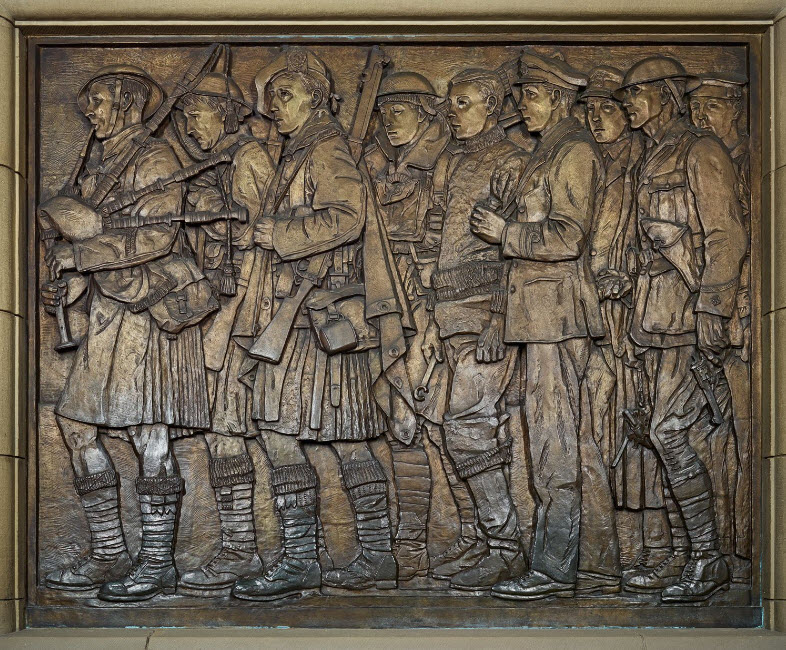
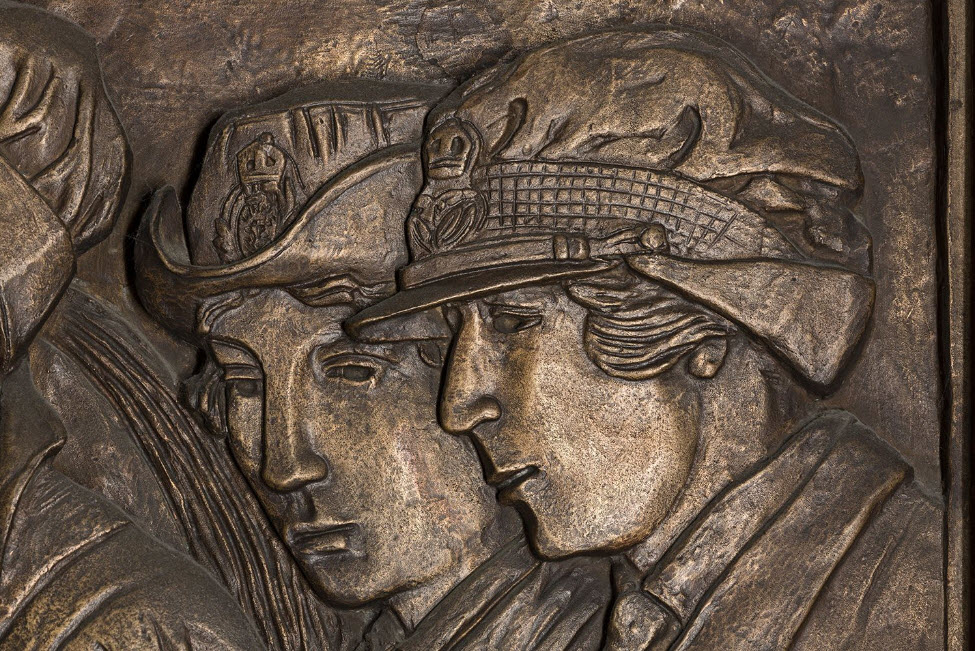
Part of a bronze frieze by Alice and Morris Meredith Williams
I wrote the words below when we visited the Scottish National War Memorial at Edinburgh Castle. It honors all Scots who fell in World War I. No photos were allowed inside the building.
When I saw the large bronze frieze by Alice and Morris Meredith Williams, I wanted to remember it. So I got out my small notepad and made my way slowly along the enormous, multi-part bronze frieze, scribbling down what I observed.
The photo above and those below are from the Scottish National War Memorial website. See the link below for examples of other bronze friezes in the Memorial.
This was one of the most moving war memorials I’ve ever seen. Around the top of the frieze are these words: “The souls of the righteous are in the hands of God. There can no evil happen to them.” The reference is to all Scots who fell in WW I. They’re depicted here not as heroes, but as ordinary skilled and unskilled citizens caught up in a hellish situation.
souls of the righteous plod
one body in single file
one foot in front of the other
young and old
rich and poor
a sad parade of the war-weary
horses, dogs, a pigeon
men and a few women
from all vocations with skills
necessary for war
men in front
a few women at the rear
nearly all faces grim, set, eyes vacant,
staring straight ahead or
at the ground
each clad in full uniform wearing
boots or flimsy shoes
no looking back
a moving, shuffling
host of the nearly dead
faces devoid of emotion
bearing weapons and
tools of their trades
pushing and dragging their
instruments of war and mercy
hand guns, shovels, rifles,
wrenches, satchels, gloves
clubs, pick axes, cups
bagpipes, canes, binoculars
artillery wire, water bags,
canteens, face mask with
steel veil and slits for eyes,
a skull-like bag hung around
a neck protecting a chest
rattan snow shoes
medical instruments
a doctor’s gown and
red cross capes
in line yet standing out from the others:
one officer tenderly cradles a pigeon
in his right hand and holds a birdcage
on his right forearm
two men in kilts follow
looking over his shoulder
three pairs of human eyes riveted
tenderly on this one pigeon
that might bring them life instead of death
they shuffle along with the others
a slow march to their destiny
no sign of looking or turning back
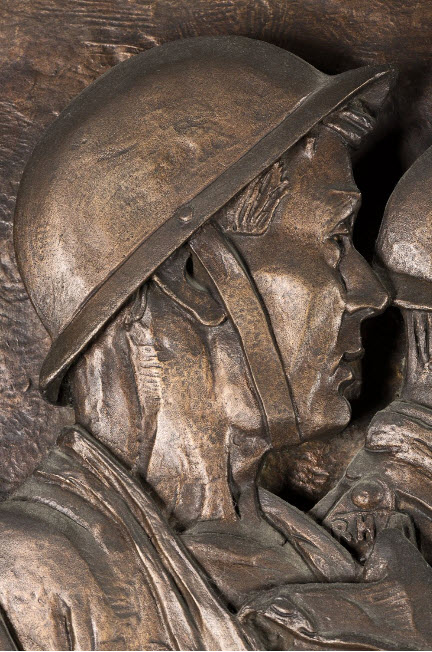
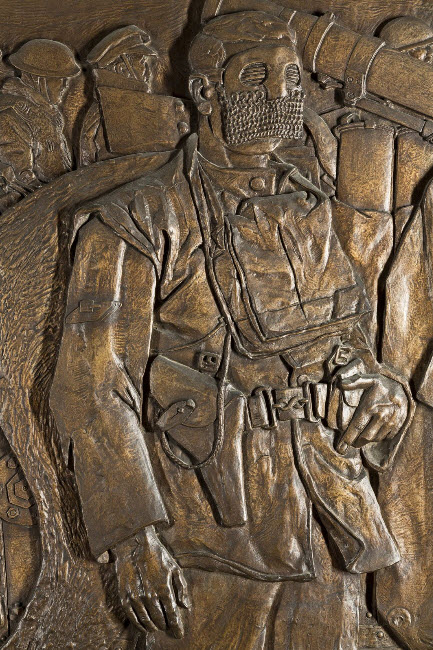
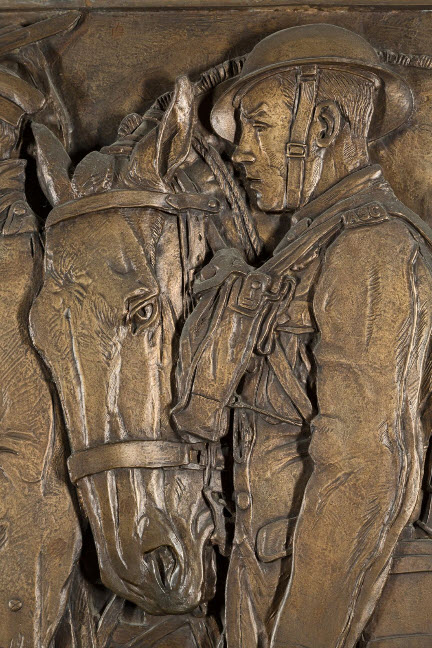

© Elouise Renich Fraser, 22 September 2015
Images from http://www.snwm.org/gallery/bronze-metal/
 Telling the Truth
The men of The Black Watch are some of the most fearless, fearsome soldiers the world has ever seen.
I’ll wager even the great Achilles and his Myrmidons would have trembled at the sight of them approaching, dressed for battle in their kilts, (the ancient Greeks wore something similar and played something similar, I understand) their piper leading the way striking dread into all that got in their way.
Brave men.
The Scots have a slightly different wording to the English ‘hymn’ “There’ll always be an England;
The second line, according to the Scots is “As long as Scotlands there”
Sing it, you’ll find it fits perfectly
LikeLike
Your final comment is interesting. I can’t even imagine an England without Scotland. And–though I agree the Black Watch were fearless, fearsome soldiers, I do wonder what went through their minds when they were in their ‘trenches’ so to speak, and when they returned home. I did love that panorama, though. I thought it did an outstanding job of showing the full range of women, men, and animals whose lives were touched by warfare.
LikeLike