Telling the Truth

connecting the dots of my life

A Prayer of Lament 2

I wrote the poem below just after the 2016 Presidential Election. It still resonates as a lament about the outcome of the election. It’s also about today.

It’s easy to point to Mr. Trump as the cause of our current troubles. Yet Mr. Trump didn’t get here alone. His supporters, wealthy or not, religious or not, played their roll by covering for him, lying for him, and making loyalty to him the sign of being a good citizen.

Mr. Trump also had help from white Christians, including those who didn’t vote for him. Their preferences have included looking the other way, acting like nothing’s wrong in the White House, raging, apathy and indifference, cozying up in order to get what they want, or holding their noses until the next election.

White Christian slave holders and non-slave holders enabled white supremacy from the beginning of our nation. Worse, they often did this by misappropriating or ignoring Scripture.

It’s easy to look the other way, blame others, and live our privileged lives in a giant fairy tale that still passes for “American History.” Mr. Trump is a product of this history. He didn’t, however, make it happen.

So here’s the lament again, this time for all of us. Especially for white citizens in the USA who claim to follow Jesus.

We’ve lost our way —
or never found it

Bitter bargains struck
Trust betrayed
Loyalties unexamined
Bodies scorned
Contempt exalted
Rage rewarded
Fear ignited
Self promoted

Spoils of a winning war

Good Shepherd, have mercy on us all.
Amen

© Elouise Renich Fraser, 30 July 2020
Image found at parkhillsrca.org

Faith — is the Pierless Bridge 2

Pierless Bridge - pinterest

Two months after breaking my jaw in 2016, I posted Emily Dickinson’s lovely poem. Given today’s troubles, I’m as uncertain now as I was then. How am I to live my life? My comments follow, lightly edited.

Faith – is the Pierless Bridge
Supporting what We see
Unto the Scene that We do not –
Too slender for the eye

It bears the Soul as bold
As it were rocked in Steel
With Arms of Steel at either side –
It joins – behind the Veil

To what, could We presume
The Bridge would cease to be
To Our far, vacillating Feet
A first Necessity.

c. 1864

Emily Dickinson Poems, Edited by Brenda Hillman
Shambhala Pocket Classics, Shambhala 1995

Emily describes an impossible Pierless Bridge stretching out, with no horizon in sight but the sky and water. It doesn’t seem to have visible supports or buttresses. Instead, it seems to stretch out not in front of me, but with me, step by step, as I make my pierless way across the water.

My feet vacillate, uncertain where to go. I’m far from the shore, maybe not far to go. But I don’t know how much farther, or what I’ll find when I reach the goal.

Boldness and courage seem paramount. Closing my eyes, I feel my way along. Not with my hands, but through the bare soles of my feet connecting with what must surely be a mammoth construction of steel, boulders and cement. How could there not be a pier?

I open my eyes, hoping for a glimpse of the goal, but see nothing ahead and nothing behind. Even more distressing, what’s supporting me is no larger and no more visible than one slender, fragile thread of a spider web.

Closing my eyes, I grope along, too far out to turn back. I don’t feel bold or courageous. The way is precarious. I’m full of questions  and more than a bit of doubt.

I don’t have a map or a friendly GPS system to tell me when to leave one foot behind and shift my weight onto the other foot. I just know I’m being drawn and supported by something or someone greater than myself.

Is this journey about strengthening my faith? Perhaps the point isn’t my faith, weak or bold. In fact, I can’t believe that by the time I’ve arrived at the goal, my faith will be strong.

Before my faith and before my birth there was someone or something else. I imagine the Source of my life greeting me from within the Veil to which Faith leads me. Here is the One who birthed me. The One who boldly and courageously watches for me from the other side of my human life, spinning out as needed a fragile yet steel-buttressed thread of Faith—my Creator’s Faith in me. Faith that leads me home, just as I am and yet will be.

© Elouise Renich Fraser, 24 June 2016, reposted 29 July 2020
Image found at pinterest.com

Thank you, Mr. Trump – Again

I have not changed my mind since I first published this on 20 June 2018. 

Thank you, Mr. Trump.

I don’t really want to say those words to you. Yet I must. It seems the abuse of power has more educational value than all the well-intended lectures and lessons of this world.

Just think about it for a half-minute. Who would have thought we could all so quickly know the meaning and the impact of things that are ‘systemic.’ Evil is systemic.

Simply put: What happens in one corner of the world has tentacles that reach to every other corner of the world, sooner or later.

Good is also systemic. Ultimately, as a follower of Jesus Christ, I believe good will triumph, though at an exceeding high cost. Perhaps we’re paying it now?

In the meantime, systemic evil seems to be our sad and sorry tutor these days. As I see it, thanks to your moves and counter-moves and flourishes of your pen, we now recognize and feel the impact of systemic evil.

Soy farmers get it; steel manufacturers get it; those without a living wage get it; people who live on the streets get it; human beings from the wrong side of our southern border get it; people with skin that isn’t your color get it; people in mansions get it; and so do people in power. All this and more.

Of course some ‘get it’ more than others. And some are happy to get it at great cost to others. This becomes crystal clear as the consequences of evil multiply and hive off faster than ants or bees. Though even the bees are feeling systemic neglect as well.

Perhaps the word evil is bothering you. No problem. I can use another word. How about systemic lying? Systemic cheating? Systemic abuse? Systemic violence? Systemic greed? Systemic robbery? Systemic inhumanity? Systemic distrust of scientific research? Systemic neglect of those most in need of help? Just to name a few.

We don’t live in air-tight surroundings. We live in complex webs of connections, even when we think we’re living disconnected. Or off the grid. Which is, in itself, another form of denial.

No President of the United States has made the word ‘systemic’ so clear in so little time as you have, Mr. Trump. As a theology professor who struggled often to explain how systemic evil works in the world, I have to hand it to you. You’ve done a masterful job in very short order.

There’s just one hitch. You give every sign that you believe you’re an island unto yourself. Able to push and shove the world around at will or by hook and crook, hiding beneath your POTUS status and your highly proclaimed ability to practice the art of the deal.

Sadly, your relentless pushing and shoving is painfully and abusively open to inspection every moment of every day, whether you attempt to hide it or not. I wish I could feel sad for you. Instead, I’m mourning what’s happening to my friends, my neighbors, my family, our country and our integrity as one nation among many.

Not that we were perfect before you became POTUS. We were not. Nor will we ever be. Still, it seems that what we’ve become as of today or even tomorrow will never, ever be called ‘great.’

©Elouise Renich Fraser, 20 June 2018, reposted on 28 July 2020
Image found at ideas.hallmark.com

From This River, When I Was a Child | Mary Oliver

Photo of the dock and river; taken by DAFraser in July 2010

A Mary Oliver poem for all of us. My comments follow.

From This River, When I Was a Child, I Used to Drink

But when I came back I found

that the body of the river was dying.

“Did it speak?”

Yes, it sang out the old songs, but faintly.

“What will you do?”

I will grieve of course, but that’s nothing.

“What, precisely, will you grieve for?”

For the river. For myself, my lost
joyfulness. For the children who will not
know what a river can be—a friend, a
companion, a hint of heaven.

“Isn’t this somewhat overplayed?”

I said: it can be a friend. A companion. A
hint of heaven.

© 2008 Mary Oliver
Poem found in Red Bird, p. 44
Published by Beacon Press

When I read this poem, I tear up. It takes me back to my childhood in the South. We lived on a branch of the Savannah River. Our smaller yet substantial river was named the Vernon River, part of the Intracoastal Waterway.

Vernon River spoke to me multiple times. Especially when I was feeling sad, misunderstood or inundated by the noise of four daughters living in one house with two parents. Plus small pets, parakeets, and the occasional baby flying squirrels rescued from certain death when they fell or were pushed out of their nests.

We lived in rural Chatham County, at the end of a narrow country road, 15 miles from Savannah, Georgia. I had three younger sisters. Frequently I needed a companion. A hint of heaven that was there for me, night and day.

The Vernon River did all that for me. No, I didn’t drink the salt water. But I swam in it. Better than a bath on a hot, humid day! Plus miraculous skin-healing properties of salt water free for the taking. Crabs to be caught, boiled, picked and eaten. Salt-water breezes to soothe my sad, sometimes lonely soul. The soft splash of tides coming and going like clockwork. The sound of seagulls chasing shrimp boats early in the morning and late in the afternoon.

When I read Mary’s poem, I’m out on the dock again. Alone. Sitting on top of the picnic table. Feeling the goodness of earth and heaven come together in one grand moment of peace.

Am I “somewhat” overplaying what I’ve lost? Or what the children of today may never experience?

I said: it can be a friend. A companion. A
hint of heaven.

Elouise

© Elouise Renich Fraser, 27 July 2020
Photo of dock and river taken by DAFraser, July 2010

The heaviness of being

Dear Friends,

Early yesterday morning D and I drove into downtown Philadelphia. Not the governmental center of the city, but a huge medical center of towering buildings. We parked in a huge garage and walked to the building where I had an appointment with a skin doctor. He removed some of my precious skin. Hopefully it will be the last visit for now.

What used to be a somewhat routine visit was now a Corona-Virus Visit writ large. For two weeks prior to my visit, I received multiple phone calls with instructions about what to do and not do before the visit, and what to expect when I arrived.

The streets and sidewalks were full of masked citizens coming and going, carefully avoiding close contact, perhaps smiling from time to time behind their masks. On the whole, however, most seemed grim and determined to get where they were going as quickly and safely as possible.

The heaviness of Covid-19 and Black Lives Matter underscores the heaviness of being I’m feeling these days. I had an interesting conversation with a masked woman sitting near me in the waiting room. The procedure was fairly straight-forward. Masked D was relieved to see masked me coming down the escalator. Still, it all felt disembodied. Regimented though considerate, with an edge of danger in the air.

No matter what Mr. Trump or anyone else says, there is no going back to Normal. Instead, I’m treating each day as a challenge to be met, with small daily goals to keep me on-track in a trackless world without a clear finishing line.

I grieve what we’ve lost, and what we thought we had but did not. I don’t, however, grieve the call to self-reflection. How did we come to this unholy disaster? Will we be wiser if and when this pandemic is over? How will we then live?

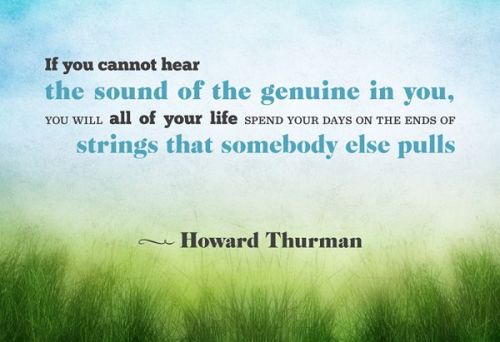
Praying your Sabbath is filled with rest and a nagging restlessness to “hear the sound of the genuine in you.”

Elouise

© Elouise Renich Fraser, 25 July 2020
Quote from Howard Thurman found at pinterest.com

It’s not just the Corona virus — bad theology is killing us

During the last few months I’ve been listening to/reading what Black church leaders are saying. It isn’t pretty. We here in the great USA have made our bed. Now we’re sleeping and dying in it (especially if you happen to be black or brown) whether we like it or not.

I’m a theologian and a follower of Jesus Christ. I care about the so-called guiding principles of government, AND the guiding heart of our government and its citizens. Especially, though not only those citizens who claim to be followers of Jesus Christ.

The current disaster has been building ever since our forefathers and foremothers arrived or were forcibly brought to this country. Bad theology didn’t cause the Corona virus. Rather, the reality of living and dying in the USA with the Corona virus makes clear what’s been at stake from the very beginning. White supremacy. And, in particular, well-to-do white wealth and access to healthcare, housing, jobs…. This didn’t happen overnight.

The title at the top is from a statement by Reverend William H. Lamar IV, Pastor of the Metropolitan African Methodist Episcopal Church in Washington, D.C. Whether you’re a follower of Jesus Christ or not, please read his clear, bold statement. Well worth the few minutes it will take to read it. Just click on his opening line:

There comes a time when being nice is the worst kind of violence.

Praying you’ll have a fruitful day with moments of peace, plus strength to do what’s right.
Elouise

© Elouise Renich Fraser, 23 July 2020
Photo of Rev. William H. Lamar IV found at nbcnews.com

strange and stranger

The last two weeks have been strange and stranger. This morning I set aside time to review instructions for an appointment to get yet another unhealthy bit of my skin removed. The amount of paperwork I just tried to wade through was ridiculous. Legalese from beginning to end.

It reminded me yet again that our health-care system has become a bastion of data (often not correctly entered). It has also become a frighteningly verbose machine responsible for staving off legal challenges that might properly be brought against medical facilities or personnel.

If it’s so dysfunctional for me, it must be totally dysfunctional for thousands of citizens or visitors in this so-called “land of the free and home of the brave.” I say the brave people are those who, against all odds, just keep going. Health care or no health care.

We’re not the nation we’ve been told we are. Nor is our data safe in so-called ‘secure’ records that could be highjacked in a heartbeat. Sadly,  many informal health-giving personal connections we used to have are fraying, some beyond repair.

In the midst of this, POTUS is showing up again behind his Covid-19 pulpit in the White House. His latest campaign strategy. I’d rather hear from Governors of states dealing with tough facts and truth about Covid-19, whether their citizens agree or not. It’s sad when a disbeliever in Covid dies of Covid. Yet it happens every day, and too many still think this is much ado about nothing. Fake Covid-19.

D is driving me into downtown Philly on Friday to get this bit of skin removed and analyzed further. Am I apprehensive? Yes and no. I’m not happy about having this procedure yet again. Still, I know and trust this doctor. My worst apprehensions are about navigating the medical center in downtown Philly–getting in and getting out. As quickly as possible. With my trusty chauffeur at the wheel!

Right now I’m going to get my disgustingly healthy smoothie lunch together, and think about doing a proper (or improper!) post for tomorrow.

Cheers for showing up and reading!
Elouise

© Elouise Renich Fraser, 22 July 2020
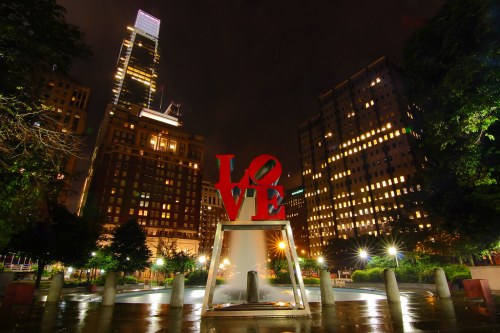
Photo of Love Park in Philadelphia found at flickr.com

A matter of life and death

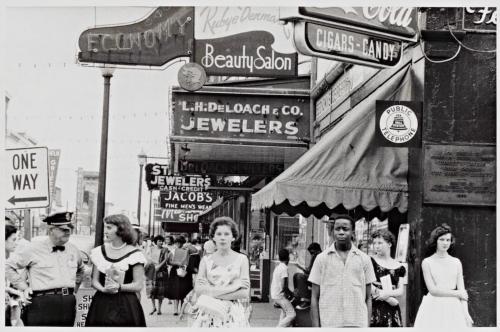
Downtown Savannah, Georgia, 1955
Note the historical marker on the far right of the photo

I’ve been thinking about the life and death of John Lewis. My generation paralleled his generation. Yet my life in the Deep South during the 1950s and 60s was light years from his life. It didn’t matter that I saw and heard about the Deep South every day. What mattered was the bubble in which I was raised.

In a nutshell: I didn’t have a clue how much I didn’t know, even though it was in plain view.

Back then, our family had room for many colored people. As a child, I assumed they were our friends. Still, our family was almost always in the mode of ‘helping’ them. Or joining them at special events at which my father sometimes preached. We daughters sat with our mother in reserved seats on the front row, always decked out in our Sunday best.

We also led regular, less formal Bible clubs for children in our rural setting and in Yamacraw Village. The Village was built on what had been a Yamacraw Indian settlement. Now it served colored people on the west side of Savannah.

The Bible clubs were also our family’s way of ‘helping.’ Plenty of fun, lots of singing (I often played the piano), a Bible lesson from my father, Bible verses to memorize, and snacks at the end. I always knew we ‘poor’ white people were more fortunate than they, and assumed they needed us.

Looking back, my family offered me only one role during my growing-up years in Savannah: a friendly helper. I didn’t have the means or courage to change what often felt unfair and even embarrassing.

Alongside family activities, I attended school. Beginning in grade school, we studied the glorified white history of Georgia. Especially the “Civil” War/War between the States. This continued through high school. Sometimes, especially in grade school, we celebrated heroes. A few were colored; most were white. Christopher Columbus was the greatest national hero. The slave trade remained shrouded in mystery, though Savannah was one of the largest East Coast importers of slaves, and exporters of cotton.

Praying you’re as well as you can be right now, and surrounded by activities that bring you joy, comfort, hope, and a challenge or two.

Elouise

© Elouise Renich Fraser, 20 July 2020
Photo of Downtown Savannah, Georgia (1955) found at reddit.com

Thank you, John Lewis

Today has been more than a bit somber. My most recent burning memory of Representative John Lewis is his sterling leadership during last fall’s Congressional impeachment investigation of Donald Trump. The 5-minute video above shows him supporting further impeachment investigation.

And now Mr. Lewis is gone. He was the last Black leader living who participated in the 1963 March on Washington, shortly before the 1963 Civil Rights Act became the law of the land. In his speech (below) he clarifies his opposition to the legislation.

The young Lewis is speaking to citizens gathered in Washington to demand racial justice. John Kennedy was President. As you can hear, John Lewis wasn’t one to tone things down. He speaks without apology, and without pretending the proposed legislation was what Black people needed. He was correct.

This nation has lost one of its true patriots. If you’d like to read and hear more, Vox has posted six speeches (including the two above) that capture John Lewis’ remarkable service to this country. You can find them here.

© Elouise Renich Fraser, 18 July 2018
Videos found on YouTube 

The High Cost of Living in the USA | Part 2 Revisited

This old post gets regular random visits these days. So here it is again, with one exception: The high cost of living in the USA is much higher today than it was two years ago.  

The high cost of living in the USA has fallen on African Americans from the beginning of this nation. The goal has been and still seems to be this: Keep ‘them’ in their places and optimize the gains of those in power. Including the power of those of us who think we have no power.

The high cost didn’t go down when slavery was outlawed. We simply notched it up with lynching, and then discovered mass incarceration. Some argue that mass incarceration is simply the latest way to get cheap labor and ‘disappear’ black or brown Americans without getting into legal trouble.

Are we the land of the free and the home of the brave? Yes and no. Yes if you’re able to reach and maintain inner freedom and courage in the face of overwhelmingly negative odds. Perhaps we’ve looked to the wrong heroes to show us what true freedom and bravery looks like.

More than one of my younger African American male seminarians said he didn’t think he’d live to be an adult. Besides a history of slavery, lynching and entrenched racism, we witness or read about random gun violence every day, entrenched poverty, and limited options regardless of ability. Add to this the availability of drugs and alcohol, and the mistake of being black or brown in public spaces.

In April 2018 a new Memorial to Peace and Justice opened. It makes visible our history of slavery, lynching and now mass incarceration. I want to visit this new Memorial before I die. Why? Because it’s also about part of my heritage.

In summer 1950, my family moved from California to rural Savannah, Georgia, just a short walk from what we called ‘colored town.’ I wasn’t aware of animosity between races. I was, however, painfully aware of economic disparities on display every day. Not just in our rural community, but in the city.

I now know, thanks to this interactive map, that the state of Georgia is #2 in states with the most lynchings on record between 1882 and 1930. From 1877 to 1950, Georgia lynched 586 black men, women and children. How many were lynched in your state?

I’m told I enjoy white privilege. It’s true. When I get up in the morning I don’t have to worry about things like being seen in public as a white woman. For me, this ‘privilege’ is white ignorance or worse. By breathing the air around me, I learned to be blind and unresponsive to what’s right before my eyes.

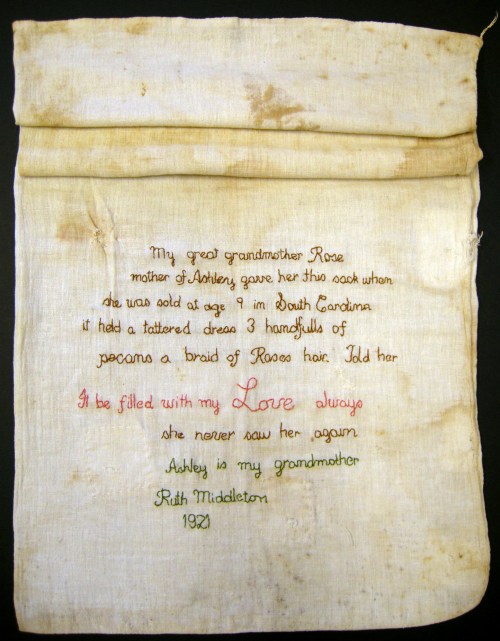
I don’t think the solution to our problem lies in miles of data. I’m rooting for poets, songwriters, storytellers, and truth tellers. Including truth-tellers like those who birthed this new National Memorial.  Plus pieces of lost history embroidered on small bags.

©Elouise Renich Fraser, 23 May 2018, edited and re-posted 17 July 2020
Photo found at Wickipedia; y Shameran81 – Courtesy Middleton Place, CC BY-SA 4.0, https://commons.wikimedia.org/w/index.php?curid=55786120