Telling the Truth

connecting the dots of my life

Category: Death and Dying

Living and Dying in Fake History

Lift up your eyes,
not your voices—
Weep with those who weep

Open your ears
to strangers

Resuscitate your heart
grown still and cold from neglect

Or have we already sold our souls
for greenbacks, glory
and false faith in firearms?

Listen

Hear the voice of our Creator
lamenting loudly over
distant hearts
grown accustomed to
the way we thought things were
yet will never be
in this life or the next

I’m in the process of reading several accounts of national history, including church history. Each study corrects fake history written to silence victims, and glorify victors who were as human as we are, and less than pure in their motives. They raise the obvious question: How did we get here centuries and decades later? And what must we do next if we want something better?

Reading won’t magically change the way I am in the world. Hopefully I’ll think more clearly and act with greater intent.

In addition, my soul won’t be in it if I haven’t also lamented loudly, listened silently, asked questions, meditated on what I see and hear, and made changes in my lifestyle.

What’s happening today isn’t just a matter of historical data or who we want to be the next POTUS. It’s about the content of our character, beginning with me and with you. How willing are we to stand up before friend and foe alike, on behalf of new friends and strangers?

Easier said (or written about) than done. But as they say rather glibly these days, “We’re all in this together.” Aren’t we?

Happy Monday, despite the lopsided agonies of Covid-19, the struggle against Black Lives Matter, and the failure of POTUS to lead by example. Which doesn’t let us off the hook.

Elouise

© Elouise Renich Fraser, 6 July 2020
Quote found at azitanahai.com
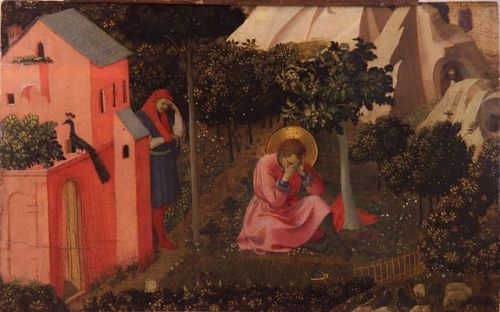
haunted streets and swollen cathedrals

The Conversion of Saint Augustine of Hippo
by Fra Angelico, between 1430 and 1435

signs and symbols
of wealth and poverty
thrown together
in a mixed stew
of pride and prejudice
haunt the streets
and swollen cathedrals
of life and death

take your pick
it’s free or
at least as painless
as possible
this habit of
indulging while
looking elsewhere
as though this
just happened
out of the blue

yes sir
no sir
thank you ma’am
and excuse me
for a moment if
I digress
to point out
obvious trinkets
decorating the outside
contaminating the inside
sick unto death

false pride and bankrupt prejudice
bursting now on streets
and in back alleys
everywhere

This is a comment on public or private displays of spite and outrage over what isn’t working well in this nation. And yet….so much needs to change. What’s a body to do? Yes to pointed protests. And what about our inner lives?

Augustine of Hippo leaves no space for disinterested onlookers or commentators on world or local history. In City of God, he suggests that every war ‘out there’ is at least an invitation, if not a mirror in which we are to discern our personal (invisible) wars. To his credit, he was at least as hard on himself as he was on anyone else.

This means my past as a white woman matters. Somewhere in me I still have unresolved warfare, some raging since my childhood. Other pieces were stirred up along the way. Life isn’t simply a gift to unwrap and enjoy in a personal orgy of bliss. It’s also an invitation to face hard truths about myself and my relationships.

Do I like this? Not necessarily. It’s difficult and time-consuming. The work of a lifetime. Right now the focus is on my inherited ‘whiteness,’ and how I’ve dealt with it (or not), and what comes next. What does it mean to tell the truth about that?

Elouise

© Elouise Renich Fraser, 2 July 2020
Image found at wickipedia.com

James Baldwin on Race Relations

It’s 1943, one of the years Harlem race riots break out. It’s also the day James Baldwin’s father was laid to rest.

In Notes of a Native Son, Baldwin talks about his relationship with his father. The chapter ends with his account of what sparked the 1943 Harlem riots, the nature of the rioting (only in the ghetto, chiefly against white businesses, not white people), and the nature of Black America’s long relationship with White America.

His account of this relationship is telling. Here’s how he describes “the Negro’s real relation to the white American.”

This relation prohibits, simply, anything as uncomplicated and satisfactory as pure hatred. In order really to hate white people, one has to blot so much out of the mind—and the heart—that this hatred itself becomes an exhausting and self-destructive pose. But this does not mean, on the other hand, that love comes easily: the white world is too powerful, too complacent, too ready with gratuitous humiliation, and, above all, too ignorant and too innocent for that. One is absolutely forced to make perpetual qualifications and one’s own reactions are always canceling each other out. It is this, really, which has driven so many people mad, both white and black. One is always in the position of having to decide between amputation and gangrene….The idea of going through life as a cripple is more than one can bear, and equally unbearable is the risk of swelling up slowly, in agony, with poison. And the trouble, finally, is that the risks are real even if the choices do not exist.

In some  ways, this is discouraging. As a white woman, it suggests I’m in bondage to a perpetual dilemma. Even more distressing is the possibility that this was brought on by my need to forget, not see, disremember, dress up in different clothes, and ultimately, dismiss as someone else’s battle or disease to fight.

Nonetheless, I find James Baldwin’s description of the relationship between Black and White Americans/America compelling. I’ve often heard Black women and men say they know us (White people) better than we know ourselves. I believe them, though they may not know me personally.

Put another way, I can’t count on being White-but-not-really due to my years of serving at a multiracial, multiethnic, multinational seminary. Instead, I can only be the White woman I am, a beginner every day of my life.

Elouise

© Elouise Renich Fraser, 30 June 2020
Moon Over Harlem painting by
William Henry Johnson found at americanart.si.edu

I am a Poor Wayfaring Stranger | Rhiannon Giddens

In the last few weeks I’ve noticed a small, steady stream of visitors to an earlier post on Rhiannon Giddens. It featured “Julie,” Giddens’ song about a black daughter and a white mother living in North Carolina during the brutal 1898 uprising against and slaughter of Black people. As she put it, “Julie” is her way of conveying the complexities of her own life as the daughter of a white mother.

A few days ago I listened to Giddens’ rendition of “Wayfaring Stranger” (above). I heard this haunting song frequently when I was growing up the Deep South. Now, having heard Giddens’ stunning interpretation, it’s playing at will in my psyche, night and day.

I’m guessing most of us struggle with multiple identities, as well as what it means to be human in one setting or another. I find myself bouncing back and forth between the ignorance and naivete of my childhood in the South, and my radically different experience of life here in Southeastern Pennsylvania. Especially when I was working at the seminary, and now experience in my home church.

In many ways, going home sounds like heaven. Partly because it would be the first safe home of my life. The first place where I know I don’t have to prove who I am and am not, or endure the agony of not knowing who I am. To say nothing of concerted attempts to put and keep me in my place. Or the internal desire to look the other way when someone else is supposedly being put in his or her place.

The difference, of course, is that I’m not mixed race, black, or facing the realities my black and mixed race friends and their families face daily. This human-made, aching chasm in our nation is begging for attention and understanding. The kind persuasively conveyed in music that softens us and invites us into a stranger’s perspective and our own self-examination.

Elouise

© Elouise Renich Fraser, 26 June 2020
Video found on YouTube

In the Evening, in the Pinewoods | Mary Oliver

Who knows the sorrows of the heart?
God, of course, and the private self.
But who else? Anyone or anything else?
Not the trees, in their windy independence.
Not the roving clouds, nor, even, the dearest of friends.

Yet maybe the thrush, who sings
by himself, at the edge of the green woods,
to each of us
out of his mortal body, his own feathered limits,
of every estrangement, exile, rejection—their
death-dealing weight.

And then, so sweetly, of every goodness also to be remembered.

© 2008 by Mary Oliver
Published by Beacon Press in Red Bird: Poems by Mary Oliver, p. 63

A few weeks ago, out walking in the evening, I heard a wood thrush. One of the most haunting, beautiful sounds on earth. It was singing in the woods behind a nearby church and graveyard.

So many deaths right now. So many regrets, angers, crushing sorrow and disbelief.

I’ll never forget the cries of a mother Canadian Goose nesting just outside my office at the seminary. A noisy raptor had been circling and screaming for too many minutes. Father Goose was sitting nearby, clearly agitated, watching the sky from time to time.

Yes, the inevitable happened. The raptor stole the baby from the nest, unmoved by the parents’ frantic, furious cries and attempts to save their newly-hatched chick.

When I arrived at the seminary early the next morning, Mama Goose was sitting immobile, holding silent vigil on grass in the back courtyard of the seminary. Her loyal partner sat nearby, watching her and waiting. It looked and felt like a mourning ritual. They were there for most of the day before they flew away.

So much sorrow and anguish right now. That’s why I need to hear a wood thrush from time to time, along with its many neighbors calling out to me: There’s more to life than meets the eye. Mourn, have faith, and carry on.

Written a few days after the loss of one of my forty-nine first cousins, and in view of my own mortality and the current situation in this world.

Thanks for visiting.
Elouise

© Elouise Renich Fraser, 23 June 2020
Video found on YouTube

Alternative tv | Dorothee Soelle

Four miners in mine shaft wearing hard hats and headlamps

Dorothee Soelle wrote this poem in the 1970s, an era roiled by the Vietnamese War. I was in my 30s. How old were you? My comments follow.

Alternative tv

The old man on the screen sang
in a loud and shaky voice
and had probably never been very clean
in addition he had hardly any teeth left
a miner with black lung
of course he spoke dialect and his grammar was bad
why after all should he
show his best side to the camera

When god turns on his tv
he sees old people like that
they sing
in a loud and shaky voice
and the camera of the holy spirit
shows the dignity of these people
and makes god say
that is very beautiful

Later
when we have abolished tv as it exists
and are allowed to look at the skin of aging women
and are unafraid of eyes
that have lost their lashes in weeping
when we respect work
and the workers have become visible
and sing
in a loud and shaky voice

Then we shall see
real people
and be happy about it
like god

Dorothee Soelle, Of War and Love, p. 171
English translation of selected pieces from the German text © 1983 Orbis Books, Maryknoll, NY 10545
First published as Im Hause des Menshenfressers, © 1981 by Rowohlt Tashenbuch Verlag in Hamburg, West Germany

Now that I’m in my mid to late 70s, I find this poem more truthful than ever. I don’t often see aging women or men on TV, just as they are. Maybe in a news piece or documentary. But rarely, if ever, in flashy shows or advertisements. They’re busy reflecting our captivity to spending money on ourselves, our houses, our lawns, our cars, eating out and eating in, or getting ‘fixed’ so our embarrassing flaws don’t show.

As Dorothee Soelle points out, our Creator is watching Alternative tv. The kind that accepts us just as we are when we’re willing to show up just as we are. Happy to be in the presence of one who understands and loves us in all our real flesh.

As always, thank for visiting and reading. These are hard times for all of us. I pray we’ll find ways to help bring about hope, peace, and reconciliation, and courage to show up for our Creator and each other, just as we are.

Elouise

© Elouise Renich Fraser, 15 June 2020
Photo of miners found at WestVirginiaInjuryLawyers.wordpress.com

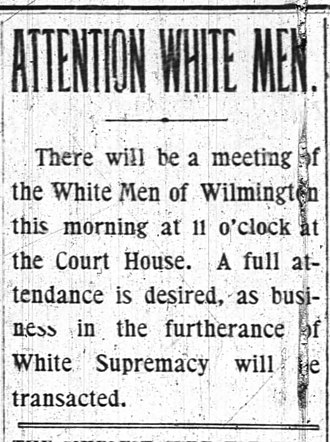
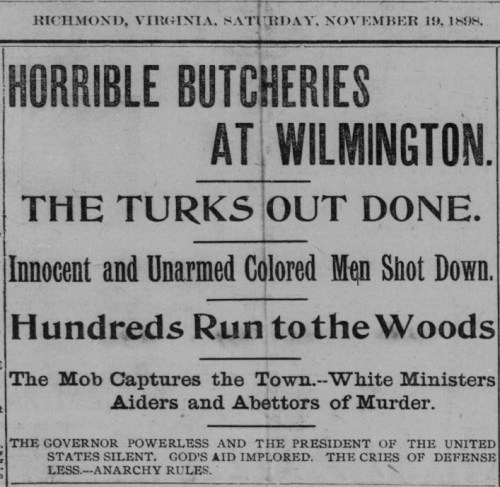
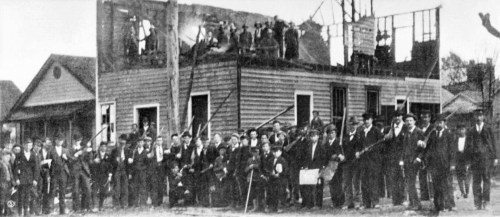
Lest we forget | Wilmington, NC, 1898

I first put these pieces together in February of this year. Why? Because I’m convinced most of us haven’t adequately studied the history of racism in the United States. Outstanding books are available for those with time and opportunity to read them.

Nonetheless, I found these news clips riveting, tragic, and sadly, an echo (in different language) of our current situation. These aren’t editorials about what happened years ago. They’re evidence documenting this tragedy as it unfolded.

If you’re not able to read books about the history of racism in this country, read these old documents and study the photo at the bottom. To learn more about the photo, check out this article about the Wilmington (North Carolina) insurrection and massacre of 1898.


© Elouise Renich Fraser, 14 June 2020
Photo and records found at Wickipedia.com

Longwood on the cheap and an update

I know. It isn’t quite the same as being there in person. But it’s the closest I’ve gotten to Longwood Gardens since last fall. Be sure to turn up the volume so you can hear the birds!

This morning I walked in our neighborhood and saw a few friends from years back. The humidity was atrocious. The birdsong, however, plus all the lovely green leaves were to die for. And yes, I wore my face mask.

I haven’t been out for any great adventures since the first Sunday of March. I’m grateful D is doing all our grocery shopping. Our ages put both of us in the high risk category for Covid-19. My health issues make me a higher risk than D. So I’m here at home virtually every day. I write, walk in the neighborhood, talk to family members on the phone, and keep in touch with our neighbors.

Speaking of family, our daughter turned 50 today! She and her husband live in Portland, Oregon. Our son, his wife and three children live about an hour away. But it might as well be Portland, given Covid-19 restrictions.

Even introverts don’t like being caged. Well….not exactly caged, but I’ve definitely had my wings clipped. I don’t foresee being out and about anytime in the near future.

I felt great relief after I wrote my most recent piece, It feels so good. Resisting Mr. Trump isn’t directly about resisting him personally. It’s about how I choose to spend my time. So I’ve made some choices, and will see how it goes.

I hear people talking about ‘getting back to normal.’ From my perspective, there is no going back to ‘normal.’ Instead, our country has a looming crisis on its hands. It didn’t begin with the current administration. It began centuries ago and has continued unabated ever since. Ignorance about our country’s history is rampant. So is ignorance about science and the way we’ve ignored and put off questions about the planet and our responsibility to look after it and the people who inhabit it.

I can’t tell you how grateful I am for the privilege of blogging. When I look back at my beginning posts, I’m stunned by how much you’ve contributed to my life. Some by reading faithfully; others by visiting from time to time; all a great encouragement to me.

Thank you. And may our Creator bless each of you with renewed vision for what you might do with your one, lovely life.

Elouise

© Elouise Renich Fraser, 29 May 2020
Longwood Gardens video found on YouTube

Exercise in concentration | Dorothee Soelle

It’s relatively easy to say I’m committed to resisting Mr. Trump. This includes resisting the noise that comes from and around him.

Like many Americans, I like to think we can ‘get things done’ if only we persist, act up, sound off, form a committee, create a ministry with a mission, advertise a lot, or pound the street recruiting foot soldiers.

In some senses, we can get things done. Yet there are moments in history when we need more than committees and ministries. This isn’t about organization. It’s about the content of our character.

Dorothee Soelle understood how difficult it is to resist without it being all about me and my ideas. Her exercise in concentration offers a more difficult starting point.

Exercise in concentration

If I’m absolutely still
I can hear the surge of the sea
from my bed
but it isn’t enough to be absolutely still
I also have to draw my thoughts away from the land

It isn’t enough to draw one’s thoughts away from the land
I also have to attune my breathing to the sea
because I hear less when I breathe in

It isn’t enough to attune one’s breath to the sea
I also have to ban impatience from my hands and feet

It isn’t enough to calm hands and feet
I also have to give up images

It isn’t enough to give up images
I have to rid myself of striving

It isn’t enough to be rid of striving
if I don’t relinquish my ego

It isn’t enough to relinquish the ego
I’m learning to fall

It isn’t enough to fall
but as I fall
and drop away from myself
I no longer
seek the sea
because the sea
has come up from the coast now
has entered my room
surrounds me

If I’m absolutely still

Dorothee Soelle, in Revolutionary Patience, pp. 42-43
Third printing, May 1984
© 1969 and 1974 by Wolfgang Fietkau Verlag, Berlin
English translation © 1977 by Orbis Books

A worthy challenge. Otherwise, I’m lost in a forest of my own making.

© Elouise Renich Fraser, 26 May 2020
Photo found at macmillandictionaryblog.com

Small Bodies | Mary Oliver

Here’s a small parable for today. What do you think it’s about? My comments follow.

Small Bodies

It is almost summer. In the pond
The pickerel leap,
and the delicate teal have brought forth
their many charming young,
and the turtle is ravenous.
It is hard sometimes, oh Lord,
to be faithful.
I am more boldly made
than the little ducks, paddling and laughing.
But not so bold
as the turtle
with his greasy mouth.
I know you know everything—
I rely on this.
Still, there are so many small bodies in the world,
for which I am afraid.

© 2008 by Mary Oliver
From her 2008 collection, Red Bird, p. 31
Published by Beacon Press 2008

Without top-dog animal predators, the natural world would cease to function efficiently. Without judicious pruning, trees wouldn’t develop strong, healthy branches or fruit.

But what about this ravenous, bold turtle with his greasy mouth? And what small bodies does Mary have in mind? Is this only about the pickerel, young teal and little ducks?

Mary Oliver opened her heart to nature – observing, describing and pondering what it might be telling or showing her. I imagine she discerns allegories or sees mirrors of what she experiences in human nature, including herself.

Given our current situation here in the USA, Mary might make connections between our pandemic world and the pond. We, too, have ‘so many small bodies’ vulnerable to predators and greasy-mouthed turtles. So many that, like Mary, I don’t know what to do or say except this:

I know you know everything—
I rely on this.

To be small and needy today is as dangerous as being a small duck in a ravenous turtle’s pond. Predatory behavior thrives at every level of governmental, public and private life. Especially when the pond is well-stocked with small bodies unable to fend for themselves, the number of ponds is drying up, and greasy-mouthed turtles grow ever larger and more ravenous.

Mary’s poem wasn’t meant to be a sermon. Still, it asks me to consider how I’m looking out (or not) for small bodies in our USA-style shrinking pond with its ravenous turtles.

© Elouise Renich Fraser, 21 May 2020
Photo of baby Wood Ducks found at pinterest