Telling the Truth

connecting the dots of my life

Category: Emily Dickinson

Not in this World to see his face —

~~~~~Antique Primer, School Reader  ca. 1923, Bolenius Illustrations

Here’s a clever piece by Emily Dickinson. In it she comes to a well-considered outcome. One that happens to suit her immensely. Who says you can’t strike a bargain with Himself? My comments follow.

Not in this World to see his face –
Sounds long – until I read the place
Where this – is said to be
But just the Primer – to a life –
Unopened – rare – upon the Shelf –
Clasped yet – to Him – and me –

And yet – My Primer suits me so
I would not choose – a Book to know
Than that – be sweeter wise –
Might some one else – so learned – be –
And leave me – just my A – B – C –
Himself – could have the Skies –

c. 1862

Emily Dickinson Poems, Edited by Brenda Hillman
Shambhala Pocket Classics, Shambhala 1995

The setting, not described directly but alluded to, seems to be a Library. One that contains a rare Book, Unopened, on a Shelf. I imagine Emily standing there pondering her options.

It seems she longs to see his face, but doesn’t want to wait until she’s in another World. By the end of this short poem, she has adroitly moved to a solution that solves not one, but two problems! What could be better?

I think her logic goes something like this.

It seems I must wait to see his face in another life, another World. Yet haven’t I read somewhere that this life is a Primer to a life as yet unseen? Unseen because it hasn’t yet been opened.

In fact, this life is hidden over there on the rare Book shelf. See it? There’s a Clasp that keeps the Book tightly shut. Not just to me, but to Himself.

Hmm. You know, the more I think about it, the more I like my small Primer. After all, it introduces me to whatever comes next, and it’s filled with lovely things that point toward whatever comes next.

How about this for a solution? I keep my Primer, and leave the more mysterious Clasped Book for Himself. And maybe for the learned theologians! Surely they would love to figure out the other-World secrets locked within the Book. Then one day they can all see Himself in another World and find out whether they were correct!

As for me, I’m more than content to stay with my simple A-B-Cs. The birds and bees, butterflies and flowers, oceans and sunsets. I already see in them more than enough glimpses of Himself and of me.

Is Himself content with simple A-B-Cs? I don’t know, but if he’ll let me be content with my Primer right here on this earth, I’ll gladly leave the Skies and all other locked mysteries to Himself and the learned theologians.

Something like this. Maybe….

Hoping your Sabbath Primer is filled with mysteries that point to Someone greater than ourselves and to the persons we’re invited to become.

Elouise 

© Elouise Renich Fraser, 8 July 2017
Images  found at pinimg.com (Primer), and edenworkshops.com (Rare Book with Clasps)

The Wind took up the Northern Things

Winds of change overtake us every day. Natural and unnatural disasters intrude. Emily Dickinson invites us to take a closer look. My comments follow.

The Wind took up the Northern Things
And piled them in the south –
Then gave the East unto the West
And opening his mouth

The four Divisions of the Earth
Did make as to devour
While everything to corners slunk
Behind the awful power –

The Wind – unto his Chambers went
And nature ventured out –
Her subjects scattered into place
Her systems ranged about

Again the smoke from Dwellings rose
The Day abroad was heard –
How intimate, a Tempest past
The Transport of the Bird –

c. 1868

Emily Dickinson Poems, Edited by Brenda Hillman
Shambhala Pocket Classics, Shambhala 1995

The calm before a storm is nothing compared to the calm after a storm. Wind, dust, earthquakes, locusts, famine, fire, floods. Devastating, destructive, unpredictable. Then it’s over. Deadly silent. Until nature ventures out, surveys the damage and begins reclaiming her rhythms, colors, textures and stunning beauty.

There’s nothing romantic about the destructive forces of nature. No one who has survived their fury can forget the terror. Or the people, animals, natural resources and futures gone or changed forever.

Nonetheless, I hear Emily inviting us to consider the other side of the storm. What happens following unpredictable upheaval? What happens when everything is different and nothing can be taken for granted?

Healing and rebirth don’t happen overnight. Nature will take its time just as it always has. We can count on her subjects and systems doing their thing, even though everything will be different, changed in some way.

As for us, life changes immediately in the aftermath of major upheaval. Belongings and people we took for granted or undervalued yesterday are suddenly precious. Whether missing or found against all odds, each person and each item becomes the subject of conversation, tears and thoughts shared around fireplaces. Personal and intimate.

This everyday hearth fire, unlike a firestorm, warms our hearts. We’re not alone. A bird sings. Was it blown here by the storm? I don’t know. Still, its simple song says I’m not forgotten, even though my small world just got turned upside down.

I hear in Emily’s poem an invitation to think about the value of human life as well as the value of our planet. Both seem under siege right now. Not just by politicians or corporations, but by people such as you and I. I don’t have answers. I do, however, have hope that we’ll wake up before it’s too late.

© Elouise Renich Fraser, 26 June 2017
Response to WordPress Prompt: Local

A word is dead

Another short gem from Emily Dickinson, for children of all ages and all stations in life. My free verse response follows.

A word is dead
When it is said,
Some say.
I say it just
Begins to live
That day.

Emily Dickinson: Poetry for Young People
Edited by Frances Schoonmaker Bolin
Illustrated by Chi Chung
Sterling Publishing Co., 1994

Words spoken
thought
given away
on faces
in body language
live and multiply—
shaping us
shaping them
into people
we are
or are not
together

Spoken words
birth attitudes
expectations
hope and despair
inextricably linked
in this short life

Not the answer
to our wildest dreams

Not a solution
for the world’s woes
or private sorrows

But like smiles—
small change
of treasure
received
or withheld

***

© Elouise Renich Fraser, 16 June 2017
Image found at twimg.com
Response to WordPress Daily Prompt: Create

In this short life

Here’s another wise comment from Emily Dickinson, found in a volume of poetry for young people. I think it’s for us older folks, too. My comments follow.

In this short life
That only lasts an hour,
How much, how little,
Is within our power!

Emily Dickinson: Poetry for Young People
Edited by Frances Schoonmaker Bolin
Illustrated by Chi Chung
Sterling Publishing Co., 1994

Not much here for me to love. If life is short and only lasts an hour, and since I’m nearer the end of my hour than ever before, my time to make an impact has come and almost gone.

Or so it seems. How do we assess the impact of one human life?

It’s easy to understand the quandary Emily describes. I want to make an impact. I want to make things better. I want to do volumes of good. I want my life to count for something. I don’t want to do it all, have it all, climb every mountain or ford every stream. I just want to make a measurable difference. For good, of course.

Yet life as lived is almost unbearably repetitious and often filled with poor decisions.

Emily Dickinson spent most of her short, painfully private life taking care of others, enjoying nature, reading, scribbling words on paper, and stuffing them away unseen. Today they’re everywhere in collections and volumes. The gift of a short life now gifting us with insights into nature and human nature.

St. Thomas Aquinas suggests we can’t judge the power of one person’s life narrative at the time of his or her death. The full, true meaning of a human life can’t be known until it plays out in the lives of others. Thus our good looms longer and larger than our lives; so does our evil or neglect of the good. What we do and what we don’t do matters.

Emily’s words ring painfully true. We’re faced with an exasperating quandary. Each day the seconds tick away, presenting us with limited options, limited time and limited power.

Because of this, we can’t pronounce final judgment on ourselves, much less others. Not just judgment about the meaning of our lives, but about the meaning of any one day, hour or minute.

Instead, I choose to focus on loving God, loving myself, and loving my neighbors. Not just my next-door neighbors, but those who live on the other side of this globe or the other side of the road.

Further, I choose to do this as a woman loved in all my glory and ignominy by my Creator. Every second of every day. And yes, I still choose to make a difference for good. Even though that means making a difference for ill from time to time, regardless of my best intentions.

© Elouise Renich Fraser, 12 June 2017
Image found at alphacoder.com 

Response to WordPress Daily Prompt: Volume

The Life we have is very great

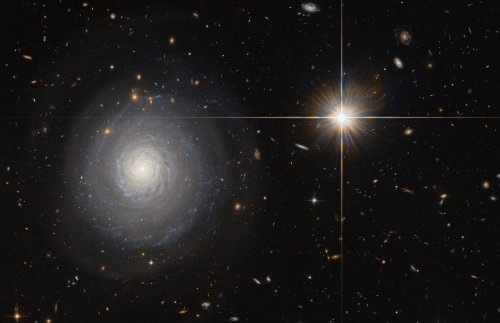
Here’s a second look at Emily Dickinson’s poem about Life, Infinity, and the Human Heart. A good poem for today when we’re missing family members or friends for any reason, plus Covid-19, political standoffs, hate crimes, or the harsh reality of wildfires, avalanches and hurricanes. My comments follow.

The Life we have is very great.
The Life that we shall see
Surpasses it, we know, because
It is Infinity.
But when all Space has been beheld
And all Dominion shown
The smallest Human Heart’s extent
Reduces it to none.

c. 1870

Emily Dickinson Poems, Edited by Brenda Hillman
Shambhala Pocket Classics, Shambhala 1995

It doesn’t matter how many worlds we discover beyond this world. It doesn’t matter how far the distance is from here to there and beyond. It doesn’t even matter that the universe is still expanding.

None of this, as surpassingly great or expansive as it may be, holds a candle to the smallest of human hearts.

According to Emily, the Life we now have is ‘very great.’ The Life we’ll have beyond this Life is even greater. Yet it’s infinitesimal compared to what our hearts can see and grasp right now.

Emily describes the heart’s capacity to love Life. Especially when we can’t see those we love. She suggests that the expansiveness of one small human heart outshines infinity itself.

Yes, it’s fascinating to explore the universe, what may lie beyond it and how it’s ordered. Yet what we discover externally will never match the capacity of one small human heart to connect with another human heart.

It doesn’t matter whether that heart is what we call dead or alive, here or there, or somewhere in between. Nor do we need to understand exactly what Space encompasses, how it is governed, or where Infinity resides.

This isn’t about measuring or mapping Life beyond our present Life. Or discovering where those we love now reside.

It’s about connections. All it takes is one small human heart to leap beyond unmapped, immeasurable boundaries, expanding outward in a heartbeat to enfold the hearts of those we love. No matter where they or we may be.

© Elouise Renich Fraser, first posted 28 May 2017, lightly edited and reposted 10 December 2020
Image taken from Hubble Spacecraft, found at nasa.gov

My flying carpet

There is no frigate like a book
To take us lands away,
Nor any coursers like a page
Of prancing poetry.
This traverse may the poorest take
Without oppress of toll;
How frugal is the chariot
That bears a human soul!

Poem by Emily Dickinson
Poetry for Young People, Sterling 2008

Nearly every flat space and bookshelf in my home office is blanketed with books. It seems the only thing I’m missing is an Emily Dickinson throw blanket to wrap around me on my adventures!

I found the text above in my collection of Emily Dickinson Poetry for Young People. The poem comforts me these days as I adjust to new health realities. They include not being as mobile as I would like.

Since I don’t own the blanket in the photo, I’ll dream about it and baptize one of my other throws with its magic. A bit like a flying carpet to carry my imagination far away. At bargain prices and on my schedule.

Right now I’d like to find a book filled with “prancing poetry.”

© Elouise Renich Fraser, 27 April 2017
Image of Emily Dickinson Poem Throw Blanket found at zazzie.com/poem+blankets
Response to WordPress Daily Prompt:Blanket

Some keep the Sabbath going to Church —

This poem from Emily Dickinson makes me smile every time I read it. My comments follow.

Some keep the Sabbath going to Church –
I keep it, staying at Home –
With a Bobolink for a Chorister –
And an Orchard, for a Dome –

Some keep the Sabbath in Surplice –
I just wear my Wings –
And instead of tolling the Bell, for Church,
Our little Sexton – sings.

God preaches, a noted Clergyman –
And the sermon is never long,
So instead of getting to Heaven, at last –
I’m going, all along.

c. 1860

Emily Dickinson Poems, Edited by Brenda Hillman
Shambhala Pocket Classics, Shambhala 1995

From about 1860 until her death in 1886, Emily lived as a recluse, writing and serving as a caretaker for her family and servants. She left her family’s house only rarely. Today’s poem comes near the beginning of this prolific period of her life.

Imagine Emily looking around, seeing and hearing life in a great outdoor Orchard Dome. Perhaps leafy branches overhead? Like a cathedral dome, this one echoes with music–birdsong, a bell tolling and a soloist. And then there’s that noted Clergyman God, whose sermons are never long. Emily doesn’t need special Sunday clothes. She just dons her Wings and joins the chorus! Is she an angel? I doubt it. I think she’s probably a little bird. Perhaps the Bobolink?

The contrast is clear. Unlike others who keep the Sabbath by going to Church, Emily keeps it by staying at Home. Is this by choice, or due to the circumstances of her life? Probably by choice, temperament and the circumstances of her life.

In any case, Emily isn’t explaining or defending herself. Instead, she imagines a great advantage in her situation. She also suggests there’s more to Sabbath than meets the eye when we confine it to one day out of seven days. In fact, her situation is far better than the one-day-a-week slow track to Heaven.

Emily isn’t arguing a point of theology. Nor is she explaining why she isn’t showing up in church every Sabbath.

Rather, she celebrates God’s presence in the created world, and the delightful participation of all creatures great and small. As she sees it, she’s going to church daily in God’s outdoor cathedral! A mysterious world of truth that invites her to draw nearer to Heaven. Unlike the slow trackers, she doesn’t have to wait until the end to get to Heaven “at last.” She’s going there every day!

For me, this poem is about more than sunny days and a beautiful orchard. It’s also about more than Emily’s religious practices. I hear an invitation to view every day as a day of rest. A Sabbath. Why? Because Heaven is reaching out, wanting to connect with me every day. Not simply one day a week.

As for my part, I don’t need special clothes. I just don my Wings, retreat to the orchard, listen expectantly for nature’s music, join in when I feel like it, and listen to a short sermon from God. I, too, could be going to Heaven all along — with Emily! Even though I may never leave the house.

© Elouise Renich Fraser, 25 March 2017
Photo found at midewinrestoration.net

A Day! Help! Help!

I think Emily wrote this little gem just for today. Read on. My comments follow.

A Day! Help! Help! Another Day!
Your prayers, oh Passer by!
From such a common ball as this
Might date a Victory!
From marshallings as simple
The flags of nations swang.
Steady – my soul: What issues
Upon thine arrow hang!

c. 1858

Emily Dickinson Poems, Edited by Brenda Hillman
Shambhala Pocket Classics, Shambhala 1995

Emily Dickinson wrote this poem in the years leading up to the Civil War (April 12, 1861-May 9, 1865). I can’t help making a connection to what’s happening now in our country.

The short poem grabs my attention. There’s no such thing as an ordinary day. Like an arrow poised to fly through the air, each day arrives full of potential for Victory. Which I take to be a Victory for good. The good of all who dwell on ‘such a common ball as this.’

Common ball, you say? Doesn’t that mean a formal occasion focused on gorgeous apparel and elegant dancing? The kind of show that delineates the rich from the poor, the ins from the outs, the titled from the untitled?

Perhaps, but I can’t help noticing these are the years leading up to the Civil War, also known as the War Between the States. Or the North against the South, or vice versa.

And so I vote for the ball being this terrestrial ball. The planet on which we live. Or even better, this great dance of life to which all are both invited and entitled. A dance choreographed by our Creator, the true Host of the Party.

For me, the question is simple: Will I participate as a full partner? Or will I be relegated to the kitchen, the stables, the dungeon, or any other situation that keeps me in ‘my place.’

“Your prayers, oh Passer by!” Will each and all of us win together? Or will business return to business as usual?

I pray your day might be dated a Victory that bodes good for us all. No matter how insignificant your Victory seems to you.

© Elouise Renich Fraser, 24 March 2017
Response to WordPress Daily Prompt: Ordinary

It might be lonelier

emily-bp-blogspot-com-blue-peninsula

I see myself in this poem. And my mother. And other women I’ve known who seem to wear a mantel of sorrow, even when they’re happy. My comments follow.

It might be lonelier
Without the Loneliness –
I’m so accustomed to my Fate –
Perhaps the Other – Peace –

Would interrupt the Dark –
And crowd the little Room –
Too scant – by Cubits – to contain
The Sacrament – of Him –

I am not used to Hope –
It might intrude upon –
Its sweet parade – blaspheme the place –
Ordained to Suffering –

It might be easier
To fail – with Land in Sight –
Than gain – My Blue Peninsula –
To perish – of Delight –

c. 1862

Emily Dickinson Poems, Edited by Brenda Hillman
Shambhala Pocket Classics, Shambhala 1995

Emily already knows Loneliness and perhaps wants something else. Yet she fears that giving it up will lead to even greater Loneliness. Her life might not have enough room for Peace, Hope or Delight—in addition to Loneliness.

Change of that magnitude would make too much noise, demand too much space. Intrude upon the Lonely, Dark existence she experiences in her crowded little Room. Or worse, she might lose the little everyday happiness and security she already has in her crowded little Room. I take this to be her life, a life of creative solitude and family duties.

In addition, Emily says her little Room might be too crowded for Him. Who is He? Perhaps a man or someone else who wants to be in her life? Or perhaps the One who offers her the Sacrament of Peace and Hope, with or without anyone else in her life? I don’t know.

It seems a sense of Fate hangs heavy over Emily’s life, taking up almost all the room or energy she has for human emotions of Delight. Yes, she may welcome relief from time to time, but the cost of giving up her Ordination to Suffering seems too heavy to bear.

Emily hasn’t renounced happiness. It still manages to creep in. Yet giving herself completely to Delight might annihilate her. She wouldn’t be able to count on predictability or control. Perhaps she wouldn’t be able to write as much. Perhaps she wouldn’t be safe from betrayal or disappointment. Her worst fears might be realized.

In the end, Emily would rather drown with land in sight, than arrive only to “perish – of Delight.”

This poem may not be gender-specific, yet in my experience a similar debate rages inside many women. Especially when the heavy hand of authority keeps reminding them of their Fate. That to which they were Ordained–duties and distractions that don’t allow space or time to exercise personal gifts and welcome Delight into their lives.

This is Women’s History Month. I celebrate women the world over who had a late start or haven’t yet found Delight, Hope and Peace in this world. If women seem complicated and unpredictable, maybe that’s because we’ve lived multiple lives for too long. Masking and denying our true selves to survive. Creatively. The way Emily survived.

I celebrate Emily Dickinson’s creativity. Her poetry speaks to me about courage and commitment to truth. Best of all, her enigmatic voice lives on, suggesting a different, slanted way to view the natural world and the dynamics of our inner and outer lives.

© Elouise Renich Fraser, 5 March 2017
Photo found at bloggingdickinson.blogspot.com

I dwell in Possibility —

Emilio Magistretti, il Duomo, General exterior view from the east, 1921.

~~Emilio Magistretti, il Duomo, General exterior view from the east, 1921.

Do you remember They shut me up in Prose – ? Here Emily proclaims the superiority of her fairer House. That would be Poetry, of course! Here’s her poem, followed by my comments.

I dwell in Possibility –
A fairer House than Prose –
More numerous of Windows –
Superior – for Doors –

Of Chambers as the Cedars –
Impregnable of Eye –
And for an Everlasting Roof
The Gambrels of the Sky –

Of Visitors – the fairest –
For Occupation – This –
The spreading wide my narrow Hands
To gather Paradise –

c. 1862

Emily Dickinson Poems, Edited by Brenda Hillman
Shambhala Pocket Classics, Shambhala 1995

Several things catch my eye immediately.

  1. This poem isn’t directly about Possibility and Impossibility. It’s about ‘the fairer House than Prose.’ That would be Poetry.
  2. Emily’s sequence of thought moves from the concrete to nature, and on to Paradise! Nothing small or narrow in her vision of Poetry.
  3. Within this House, Emily’s internal Chambers allow total privacy—‘Impregnable of Eye.’ Perhaps unnumbered Chambers of fragrant Cedar make sure no prying Eyes (like moths) intrude to eat or destroy their contents.
  4. Above this ‘fairer House than Prose’ lies no ordinary gambrel (a type of roof), but the Sky itself. Higher than high, spacious, deep, wide, unbounded.
  5. Emily doesn’t even bother with a formal front door, lock or key. Instead, this dwelling place is already filled with light, vistas and Visitors. Who are these ‘fairest’ Visitors?
  6. It seems Emily doesn’t need to go outside to practice her Occupation. Instead, she makes a simple gesture—“spreading wide my narrow Hands To gather Paradise.”

At first, Emily’s simple gesture irritated me. As though this Occupation (writing poetry) could be like falling off a cliff into magic land. But I don’t think that’s her meaning.

Emily says her Hands (perhaps literal, certainly figurative) are narrow, and must be spread wide to catch a bit of Paradise. There’s humility and expectation in this gesture. An acknowledgment that ‘something’ is out there waiting to be gathered. And so she spreads her narrow hands wide and receives an overflow of Paradise.

Emily also acknowledges her ‘fairest’ Visitors. Maybe they’re poets, or their inspiring poetry resides on the bookshelves of her fairer House than Prose. Perhaps they’re also birds, bees, butterflies, sunsets and sunrises. All creation great and small. No matter their identity, Emily welcomes them into her fairer House than Prose.

I suggest Emily herself is the ‘House’ in which she dwells. A House that’s both narrow (limited as any of our bodily houses are), and exceptionally open to what lies beyond her limited capacity to discern with her eyes.

And so she spreads wide her narrow Hands to gather Paradise into her cryptic, hesitant, enigmatic and captivating Poetry. And we are the happy recipients–now politely, of course, visiting her Poetry.

© Elouise Renich Fraser, 23 February 2017
Image found at thewinedarksea.com