A Toast to Diane

Diane, 1954?
And to sisterly conversations. My Number One Unplanned Series. Early last July, I decided to engage Diane in sisterly conversations. Read the rest of this entry »
Diane, 1954?
And to sisterly conversations. My Number One Unplanned Series. Early last July, I decided to engage Diane in sisterly conversations. Read the rest of this entry »
Leftovers. Sometimes they’re wonderful. Then there are the other times. They just sit there in the refrigerator waiting for me to do something with them. In reviewing my blog posts this past year, I couldn’t overlook unfinished business I still have with my father.
It isn’t as though I’ve been twiddling my thumbs. Read the rest of this entry »
My Number One Surprise this past year? Coming to terms with my mother’s role in my life. For years I’ve harbored cold resentment toward her. Much more than I have toward my father. Yet in this first year of blogging, I’ve done an about-face.
Here’s a dream I had about her in August 2012. In the dream Mom is an attractive, even endearing figure. Where did this come from? I’m still not sure, but here it is, followed by some of my reflections.
17 August 2012
I’m in a rink-like area with other women. A woman in the rink is telling us about the new surface that’s just been completed. It’s so smooth that no ice or roller skates are required. Just regular flat shoes. Several women are trying it out.
I’ve just arrived, and know my mother is nearby. I call out for her to come and see. The minute she hears how it works she gets in the rink and takes off in a graceful glide around the far end of the rink. She does a beautiful leap, turn, and ballet-like move, lands smoothly, and keeps going.
She’s smiling, happy and totally healed in her body. Her hair is cut short. It’s dark auburn, wavy, and lovely. She’s wearing a skating/ballet-like outfit with a short full skirt that floats into the air as she leaps and comes back down. She looks youthful and mature—perhaps in her late 20s or early 30s. She’s beautiful and obviously accomplished. I feel proud that she’s out there doing her thing.

Is this Mom?
When I wake up from the dream I feel surprised, happy and sad all at the same time. I recall a fragment of another dream I had several days earlier. I’m in a room. I don’t know where. I’m standing behind a woman seated in a chair. Her back is toward me, and she’s leaning over something she is creating—a work of art? I’m not sure.
My attention goes to her beautiful hair—just like the hair I see on my mother in the skating rink dream. However, in this earlier dream I don’t recognize the woman right away as my mother. I know I’ve seen hair like that before, and when I look at the sliver of profile on the right side of her face, I’m surprised and delighted to see this is my mother. She seems totally at ease with herself and focused on what she’s doing, even though others are in the room.
I don’t recall many pre-polio dreams about Mom or about her looking this young, content, rested, and energetic. When she married my father, she seemed to accept the world she entered. Yet my writing project highlights not simply how damaging that world was to me, but how damaging it was to her. Yes, she was my father’s collaborator.
If, however, I put her role in the context of human trafficking, she becomes a victim collaborator—like other women victims who earn the trust of their male ‘owners.’ It seems they survive by denying human bonds of affection or compassion for the victims over whom they are given limited power.
In Our Backyard by Nita Belles includes a chilling story that suggests this. A daughter and then her mother get lured into human trafficking via a modeling agency. The mother eventually becomes trusted enough to pave the way for new recruits, and is allowed limited ‘freedom’ to carry out tasks on behalf of her traffickers. One day, this mother sees an opportunity to escape, and takes her daughter along.
It seems only a mother would remain connected enough by human bonds to even dare this—risking her own freedom and life by bringing her daughter along. Ironically, however, this tiny crack in their prison was made possible by first demonstrating she could and would treat her daughter no differently than she treated all the other young women.
Though my mother collaborated with my father, she retained her capacity to relate to me, especially after I was married. I’ve often regretted that she died before my father. Perhaps a bit of my stumbling courage when I confronted my father openly in 1993 gave her permission to own her own humanity and womanhood.
A New Year’s toast to Mom: My Number One Creative Ally!
© Elouise Renich Fraser, 28 December 2014
Christmas pictures from Longwood. Here they are! We got there about 4:15pm, early enough to miss the rush. Here’s what we saw as we walked toward the conservatory.
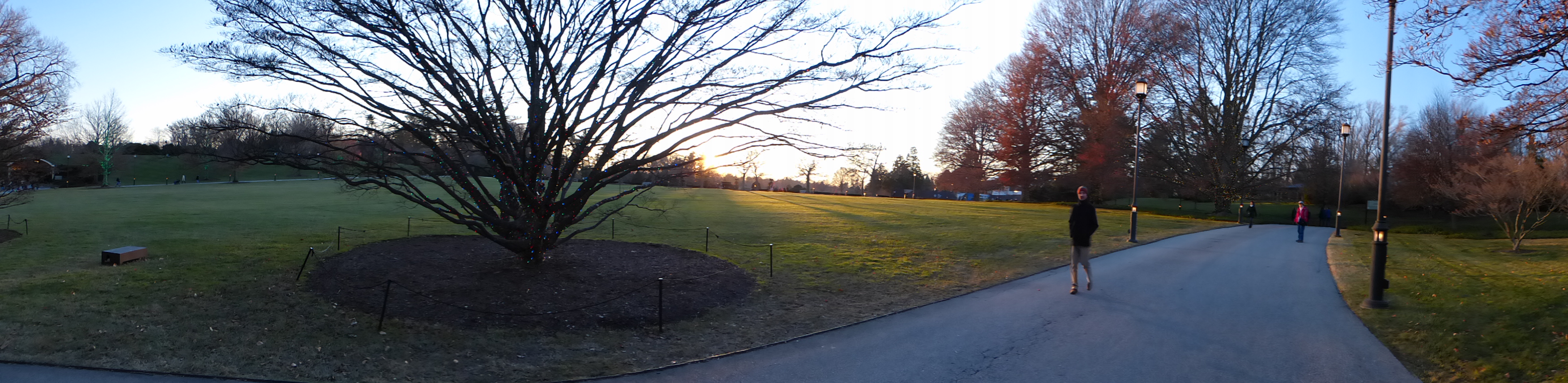
We stopped for a quick supper in the café. Read the rest of this entry »
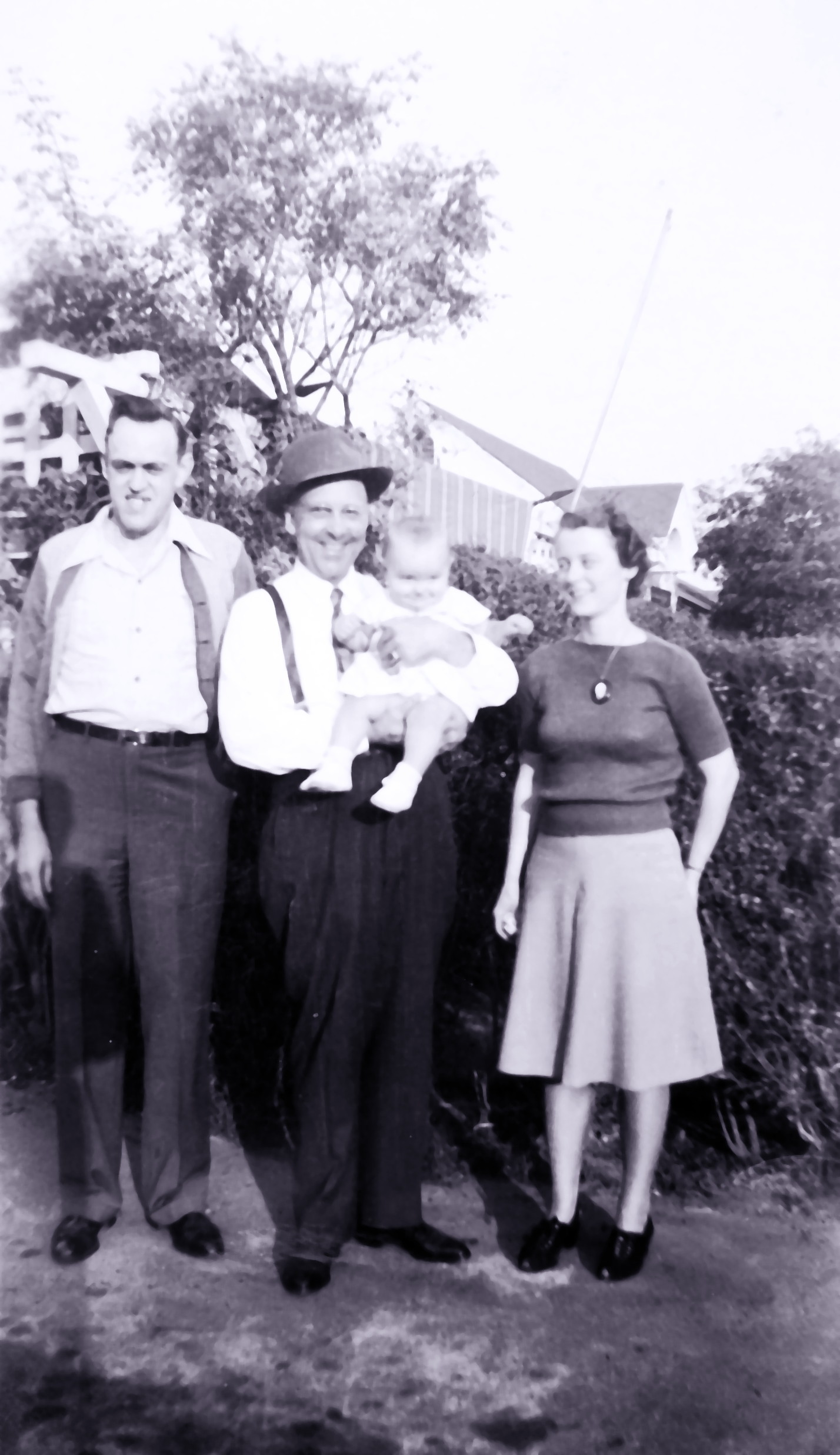
My Parents, and My CA Grandpa holding Me, Christmas 1944. I’m 1 year old.
The Christmas Present got me thinking about Grandpa–my mother’s father. Here’s what I’ve concluded: In my list of influential men in my life, especially my childhood, my California Grandpa would stand at the top of the ‘good guys’ list!
A few months ago I found out he was a child of divorce. I would never have dreamed this about him. I knew from way back that his wife, my Grandma Z, abandoned him and his two children (my mother and her younger brother), and filed for divorce. Back then I saw her as the villain, and Grandpa as the innocent victim. As an adult, I know it takes two to make a relationship work. That means there’s probably a lot more I don’t know about Grandpa.
Still, if I put him side by side with my father and other men I encountered as a child, Grandpa wins first prize for positive influence. He was a bright spot in a sometimes scary childhood. He was like a kid himself. He knew what kids wanted and needed, and he knew how to get right down there with them. In my memory, he’s the one person who most encouraged me to be myself as a child. Just the way I was.
When I married, Grandpa ‘gave me away’ to my future (now present!) husband. My father officiated at our double wedding with Sister #2 and her beloved. So we had ‘giving away’ stand-ins. I got Grandpa! In our wedding pictures he looks like a short, mischievous elf. Proud, happy, honored and thrilled to walk me down the aisle. I was equally thrilled to have him playing that role.
I sometimes wonder what my childhood might have been without his presence, his cards and his letters. I know from my mother that he wasn’t happy about her marriage to my father. But he never let on to any of us, and never asked for reports on how things were going. He just kept showing up in person, going with us on adventures to the zoo and the park, and writing Grandpa love-letters to his little women.
© Elouise Renich Fraser, 16 December 2014

Conservatory at Longwood Gardens, Christmas 2005

Conservatory at Longwood Gardens, Christmas 2005
I’ve been listening to Christmas music and thinking about you these days. Remembering what it was like to sing together as a family during the Christmas season, with you at the piano leading us. We stood behind you, looking over your shoulder or singing from memory Read the rest of this entry »
This story is from a book I wrote in the 1990s. It’s my most vivid childhood memory of Christmas.
I couldn’t forget the look on my mother’s face when I opened my Christmas present from my grandfather. I was about 12 years old. My mother’s father lived in California; we now lived in Georgia. Gifts and letters had replaced lively visits to his apartment. Read the rest of this entry »
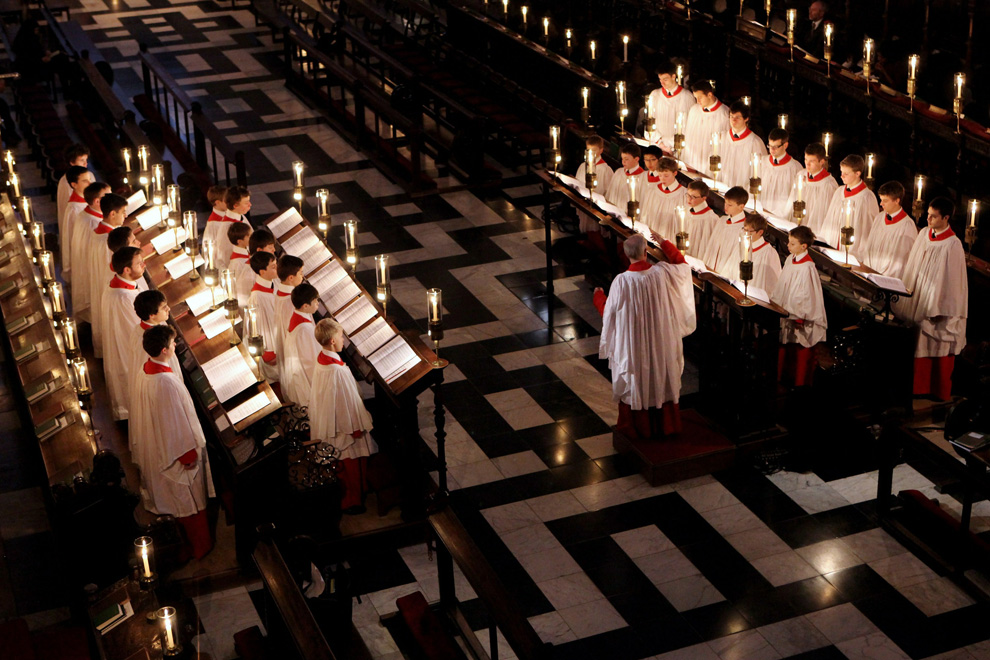
~ ~ ~ King’s College Choir, Cambridge, U.K.
It’s Christmas Eve, 1998. I’m sitting in a chair in our living room, facing our stereo speakers. Tears stream down my face. I’m listening to the annual live broadcast Read the rest of this entry »
Is there anything ‘normal’ about ALS? If so, I haven’t yet discovered it. That’s ironic, since life itself is fraught with unexpected events, twists and turns. Yet we call it ‘normal.’ Why not ALS, too?
I learned early how to answer the inevitable question of my heart: Why me? Why my family? Read the rest of this entry »
 Telling the Truth