Telling the Truth

connecting the dots of my life

Category: Family

A personal letter

fraser_s_0238b

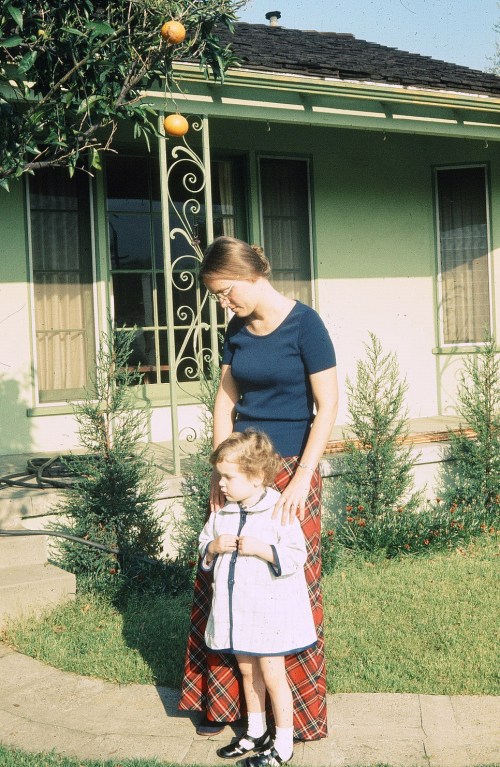
~~Mom Elouise and Daughter, 1974, Altadena, California on a Sunday morning

Death and dying are on my mind these days. Not just because of Covid-19, but because of how I’m feeling about my own death, plus regular reports of friends dying or facing end of life decisions. I’ve lightly edited this post from February 2017. 

Today was our adult daughter’s last full day visiting us. Tomorrow she flies back to the West Coast. I’m teary, lethargic, achy, sad, and already lonely.

I’m also feeling the certainty of death these days. Nothing in particular. Just the awareness that every time I see our daughter it might be for the last time. So what do I want to say to her before she leaves?

I lay awake a bit last night thinking about this. Whatever I say, I don’t want to pretend I’m taking life for granted, as though neither of us is going to die just yet. I also don’t want to say simply, “I love you.” Even though I will and I do!

Here’s what I want her to know.

  • I want you to know how honored I am to be your mother, and how much I admire you as a woman. You’re a fighter. A brook-no-nonsense human being. An artist in every way, especially as a musician.
  • You’re an intelligent, gifted woman who knows how to engage others, and when to disengage. An astute political observer. A woman who knows how and when to get help. A survivor of trials and tribulations. A wise observer of human nature and of yourself. A faithful ally and friend.
  • I’m grateful you’re in my life. You’re a touchstone. Sensible and funny. Kind and clear. And you’re my daughter! I still don’t understand how you became the woman you are today. I do know it was “through many dangers, toils and snares….”
  • I gave you to God decades ago, knowing I would never have the answers to all the challenges you would meet. Instead, I pray for you regularly, that God’s grace that has kept you so far will lead you home. No matter whether you go first or I do.

One more thing. I feel old age coming on. Not like a flood, but with slow certainty, accompanied by a number of health issues that challenge me. I don’t want to give up. I want to be fully alive, and alert enough to enjoy my family and friends as long as I can.

Not so many years ago I was afraid to let my heart show to my family members. I was afraid to let them know how much I’ll miss them if they die before I die. Better to stay cool and calm than show my feelings. That way maybe the pain of loss won’t be so great. But that’s another topic.

Thanks for reading and listening with your hearts.
Elouise

© Elouise Renich Fraser, 18 February 2017, reposted 17 May 2021
Photo credit: DAFraser, 1974, Altadena, California

My Mother’s Depression

I’m reposting this in honor of my Mother and all other mothers who have suffered from depression. As you may already know, depression is a widespread problem here in the USA. Especially for mothers.  

My mother’s depression
Is not my depression

It doesn’t belong to me
Nor did I invite it in to stay
Yet it lives in me now and again
A link to this woman who bore me

Deftly intertwined it moves
As though it were mine
A weight I bear unbidden
My lot in this half-life

What would it be like
To let it go as an alien?
To visit without falling into the pit?
To understand it from her point of view?

I’ve been turning things like this over in my mind and heart for the last week. The insight isn’t mine. It’s a gift from a friend who has walked with me for several decades.

‘My’ depression isn’t mine. Yes, it’s real and present. Yet it was and still is my mother’s deep depression, fed by my father’s behavior toward her and toward me.  It’s the sad price of being a gifted white woman in post-depression (ironic) and post-World War II life in the USA.

Held back, kept in check, insanely busy with housework and babies, submissive preacher’s wife, versatile church musician without a pay check, resourceful volunteer ever ready to help others in return for nothing, cheery and even-tempered, industrious and persistent, she held it all together in her bent and broken body.

Uncomplaining, weary, in pain 24/7 and depressed. Sometimes crying herself to sleep. Other times waking with horrifying cramps.

My heart goes out to her today in ways it couldn’t years ago.

Yet I can’t accept her depression as my depression. It isn’t mine. This one insight invites me to stay connected to her reality without making it my reality. I can only breathe my air, not hers.

These days it seems ever more acceptable to trash women of all colors and make them into problems they are not. In response, I want to do justice to the woman my mother was while showing mercy to her as the woman she could not be or become.

She was not the problem then, just as I am not the problem now.

© Elouise Renich Fraser, 16 November 2018, reposted for Mother’s Day on 8 May 2021
Book cover photo found at bookdepository.com

Chasing Spring at Longwood | Photos

This morning I woke up wishing I were in Longwood Gardens. So here’s a quick tour of my first visit to the Gardens nearly one year after breaking my jaw in April 2016. Our daughter and her husband were visiting from Portland, Oregon. 

Two days ago we took a chance on the weather. D and I, our daughter and her husband piled into the car and drove to Longwood Gardens. My first visit since April 2016. The forecast promised breaks of sun during the day, and temperatures above 60 degrees F. Here are choice photos from our great adventure. Enjoy!

The garrulous catbird in the top photo greeted us in the parking lot.
Never missed a beat.

Here’s a first glimpse of Spring 2017 at Longwood Gardens,
just outside the visitor’s center.

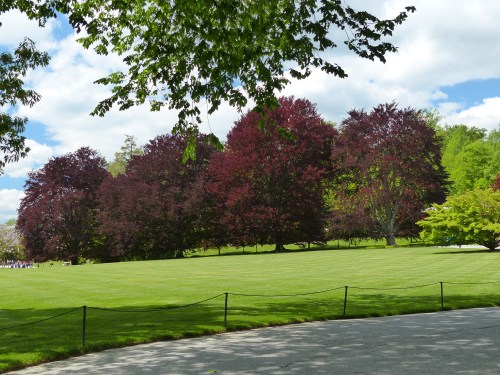
These giant copper beech are across the field,
a first gorgeous sight as we leave the visitor’s center.
Note tiny people on the left side of the tree walk.

Heading toward the flower walk, we’re walking into
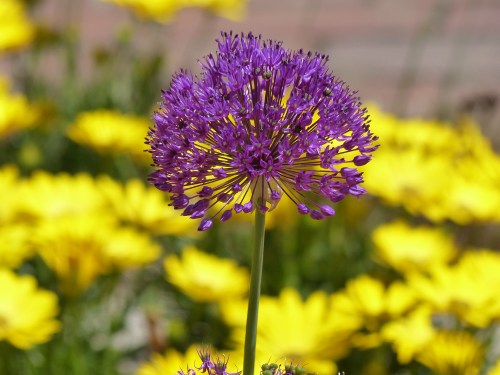
the small desert garden of sun-lovers.
No trees overhead.

Turning right, we start down the ‘cool’ color end of the flower walk.
Imagine masses of flowers that look like a living
patch-work quilt that changes each season and every year.

Just to the right of the center fountain in the flower walk
is a beautiful sunken garden
with a serpent fountain overlooking a water pot.
Imagine the sound of water almost everywhere in the gardens.

Now we move into ‘warm’ colors, followed at the end
by a patch of cool green foliage and flowering whites.


Finally, gorgeous blooming wisteria in a shady space
just downhill, beside the flower walk.


© Elouise Renich Fraser, 17 May 2017, reposted 5 May 2021

Photo credit: DAFraser
Longwood Gardens in Kennet Square, Philadelphia

Farewell, Savannah

secrets of the Deep South
are etched in and on my body

scars and memories fester
even as they grow faint with age

what I love about Savannah
no longer makes up for what I loathe

steaming fear and flashbacks
to my growing up years sometimes boil

transporting me back to childhood trials
and the belief that I’m a misfit

not entitled to happiness or joy
or feelings of deep satisfaction

hence the necessity of these two words
I don’t want to say–

Farewell, Savannah

I’ve been pondering these two words for the past week. My youngest sister (#4) is selling the last house she and her deceased husband, and our deceased parents lived in.  It’s a small, cozy, beautiful little house. Full of memories and full of heartache.

I didn’t grow up in this house. I grew up in a large house that looked out on the Vernon River (above). I only know the house that’s now up for sale because I visited as often as possible after my parents moved in. It’s a lovely house in a small semi-rural community. A great place to visit. Neighborhood houses are built along and near marshy muddy banks and creeks near the end of the Vernon River.

It isn’t that the house holds memories (it does). It’s the reality of the Deep South and the way it both encouraged  and covered up abusive behavior in families like ours, in churches, in schools, and in work places.

Sometimes, when I’m discouraged or frightened, my mind, body and emotions revert to childhood fears and realities of my growing up years in the Deep South. Especially, but not only, my father’s treatment of me. I’m tempted to believe The Big Lie that says I’m Nobody. Or the other Big Lie that says Things Will Never Change.

It’s time to move on. Which is exactly what my youngest sister is doing. I celebrate her bravery and her sense of adventure as she moves from Savannah to be with her granddaughter and family far from the shores of the Vernon River.

Thanks for stopping by.
Elouise

© Elouise Renich Fraser, 28 April 2021
Photo of the Vernon River taken by DAFraser in 2010

Easter Lilies and Justice

Easter Lilies

This story still makes me teary. As a nation, we haven’t figured out how to ensure justice for today’s children. Easter offers an opportunity to ponder this tragedy and ask ourselves what we’re doing on behalf of our children. All of them. Diane is Sister #3 in our family. She was born on Easter Sunday in 1949, and died of ALS in February 2006.

Dear Diane,

Easter Sunday always reminds me of you. Not just because you were born on Easter Sunday in 1949, but because the Easter lilies at church always take me back to your funeral service and heaps of Easter lilies around the casket at the front of the church.

Today was no different. I walked in, saw the Easter lilies and tulips, and dissolved into tears as we sang the first hymn. It all came flooding back, along with a story Dad told me when he was in hospice care.

The story was about you and his flower garden in our back yard. Maybe you remember it. That was when we lived on the river. The flower garden had tons of flowers, including Easter lilies and Dianthus, all planted by Dad. He used to say the Dianthus were there because they reminded him of you.

Dianthus

One day Dad noticed that some of his special Easter lilies were missing from his flower garden. When he went back into the house he found them–in flower vases and glass jars here and there!

It didn’t take long to find out you had done this dastardly deed. He said you listened quietly without tears. Then as you turned to walk away you asked, “Where are the flowers for the children?” Cut him to the quick, he said. And I have to admit, he had tears in his eyes as he told the story.

Do you remember that square patch of flowers near the rear of the back yard? It wasn’t very large. Maybe 5 feet wide. It had posts with twine supports for some of the flowers. Most were bright zinnias.

Dad told me, with tears in his eyes, that he planted that flower garden just for the children. We could pick them anytime, as many as we wished. All because you had the guts to ask the most important question of all. “Where are the flowers for the children?”

Today I wonder the same thing. Sadly, we’ve gone downhill when it comes to things for the children. Flowers for the children tend to show up after children or teenagers are killed with guns. Survivors are asking all of us so-called grownups, “Where are the safe places for the children?”

That’s another subject, except for this: It takes guts to stand up and fight for the rights of children and young people. I’m rooting for the children and young people.

Love and hugs, plus Happy Easter and Happy April Birthday—not that you’re counting anymore!
Elouise

©Elouise Renich Fraser, 1 April 2018, adapted from an earlier post, reposted 2 April 2021
Photo credit: wallpapersup.net (Easter Lilies); robsplants.com (Dianthus)

Eulogy for Sister #3 – revisited

Diane, Sister #3, is on my mind today. Diane died from ALS in February 2006. Her death was a mixed blessing. A release from imprisonment in her physical body, and a reminder that the ‘good’ life is about more than being free of catastrophic illness. Including Covid-19.

Houston, Texas – 17 February  2006

Diane directed that my remarks today be “personal, with no preachy tones.”  As I thought about what to say, I came up with only one topic that guarantees I’m being personal—that I’m not avoiding the subject Diane knows none of us can avoid when we talk about her.

Remembering Diane’s Body

Diane had a human body—loved by God
A female body:
—The body of God’s beloved daughter child
—Known to Jesus Christ as a sister for whom he died
—A female temple of God’s Holy Spirit on this earth

A one-of-a-kind body:
—Created and sustained by God
—Loved and nurtured by God’s ministering servants here on earth:
——Her husband, two sons and one daughter
——Her large, extended biological family
——Her church family
——Her nursing family
——Even the family collection of dogs

Diane’s life was shaped by bodily infirmity.
—She would hate that I just used that word!

Diane refused to think, act or behave as a person identified by an “infirmity.”
Yet the truth is simple:
—Diane’s life was shaped by loss in her left arm due to polio.

From a parental point of view, Diane’s weak arm was cause for protective measures.

From Diane’s point if view it was cause for excelling in whatever she supposedly couldn’t or shouldn’t do.

Not only would she do all these things,
She would do most of them better than any of us, things like
—Riding a bike, swimming and playing basketball
—Sewing dresses and suits
——not hankies and curtains, but fancy dresses, and suits with tailored blazers
—Then there was photography, not with small, lightweight equipment,
——b
ut with the best possible equipment and attachments she could afford and lug around!

Diane developed an uncanny knack for figuring out how to carry out activities like these without compromising quality or expertise in the slightest.

She also developed an uncanny knack for taking advantage of our parents’ desire to protect her.

Only as an adult did she confess that her habit of disappearing from the house to do yard work (and not housework) was not motivated chiefly by her pure desire to help Daddy.  Rather, she knew neither Daddy nor Mother would send or call her back inside the house for the latest instruction or practice in vacuuming, dishwashing, dish-drying, table setting, ironing or putting clothes away.

To us, Diane’s body was both normal and different—though it all felt pretty normal most of the time.  Certainly not life-threatening.

Then each of us, her three sisters, got a telephone call from Diane in January 1996.
Diane had ALS.  She was direct and clear:
—There is no cure.
—The disease is terminal.
—I’m going to need help.  Lots of help.

Diane’s left arm shaped her as a child, as a young person and as an adult.
Now Diane’s entire body began shaping her and her family,
beginning most painfully with her husband, two sons and daughter,
and reaching out to all of us gathered here today.

For the last 10 years I’ve flown down to Houston about 4 times a year to visit Diane.  But not just to visit her.  I’ve come to witness a journey—Diane’s very personal journey with ALS.  A journey that relentlessly put Diane’s physical body at the center of attention.

As young girls we weren’t encouraged to pay much attention to our bodies. 
Bodies were a necessary but usually uncomfortable necessity—especially female bodies.  Now, with ALS, Diane was consumed by what was and was not happening in her body.

She suffered losses beyond comprehension—most in fairly rapid succession over a period of years, starting with physical losses such as mobility, ability to care for her own personal needs, eating and swallowing, ability to speak on her own, and breathing. 

She also suffered loss of her position here at the church:
—Loss of her dream of being ordained
—Loss of work and personal relationships as her body more and more seemed to intrude as a difficulty or a problem to be solved
—Loss of time for herself or her family and friends, as personal care began gobbling up hours out of each day
—Loss of privacy:  total and absolute, with only one exception—the thoughts in her mind, which included her life with God
—Loss of little things such as swatting at a mosquito feasting on her neck (as she put it); scratching where it itches; singing in church; being in the middle of the action and making wisecracks

More painfully, she suffered loss of other things such as giving her children a hug, or embracing her husband face to face.  As a female she suffered what most women dread—loss of control over personal presentation of herself:  hairstyle, makeup, body language.  She became the subject of stares and quickly averted eyes.

Diane’s body seemed to be calling the shots.

True to who she already was, however, Diane kept showing up—fully with and in her body marked more and more by ALS.  It was as though she were saying

  • I’m still here—in my body
  • I’m still Diane—in this body
  • I am not whatever you think a terminally ill person should be
  • I am not predictable
  • I am not a saint
  • I’m still Diane!
  • I’m still here and I’m still fully engaged in living–living with ALS
  • I will be who I am—angry, frustrated, filled with anxiety, filled with human longings and everyday needs; direct and clear without being mean
  • I’m dying
  • We need to talk
  • Now

As always, nothing was too sacred for a good healthy laugh.  Especially about her body with its unpredictable body parts, behaviors and small crises:  facial movements, biting her own lip, laughing uncontrollably, head falling over from time to time, drooling from time to time.

Diane continued to be who she already was:
—Determined to speak for herself in her own words, not yours or mine
—Determined to be heard and heeded

She was still directive—now in ways that boggled the mind:
—To-do and Do-not-do lists for family, nurses, friends and strangers
—Rules for how Mom is to be driven in her new van and who gets to say when the rules are being broken (Mom, of course).
—She was still a masterful strategic planner—only now she had to figure out how to get you to do what she could no longer do, but somehow knew must be done.

As always, Diane wasn’t about to fade into the woodwork.  She kept showing up in the flesh—in her ALS-shaped flesh:  at church, in shopping malls, at weddings for her daughter and one of her sons, and even—one month ago, believe it or not, to inspect her daughter, son-in-law and granddaughter’s new home.

Diane remained insistent that she be given choices, and that her choice was the final choice:
—Clothes and accessories for church
—Medical options
—What to keep and what to discard from the kitchen cupboards
—Which movie to watch
—And how this service today would be shaped,
——including the names of all active male pallbearers
——and the names of all 25 honorary female pallbearers!

Diane made her concrete mark in, with and through her concrete, ALS-shaped body.
To deny she was among us in the flesh would be to deny her existence.

To some extent, each of us gathered here to honor and grieve her passing has been a witness.  So many of you are so full of memories.  I can’t speak for you and I won’t get preachy, but I will be confessional:

  • I’m listening, God, for what my relationship to Diane means for the rest of my life in this world you love so much.  Amen.

Eulogy delivered 17 February 2006, © Elouise Renich Fraser, 17 February 2006
Blog post © Elouise Renich Fraser, 15 April 2014
Memories and Old Photos Revisited

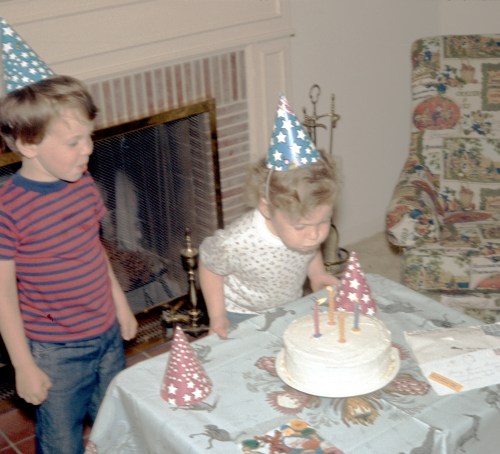
1974 May Sherry's 4th Birthday in Altadena

before my eyes
they swim
in salt water

old photos
fresh with memories

I blink
reluctant to move
my eyes

tears water
my face

 ***

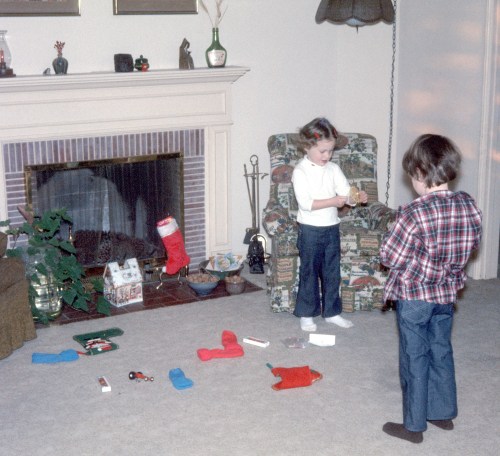
Christmas stockings in Altadena

1974 Christmas Altadena Stocking stuffers Sherry and Scott
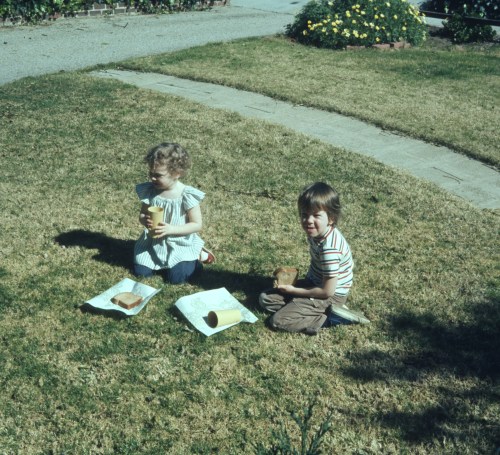
Peanut butter sandwiches and milk on the lawn

1974 Feb Scott and Sherry eating on the front lawn Altadena house

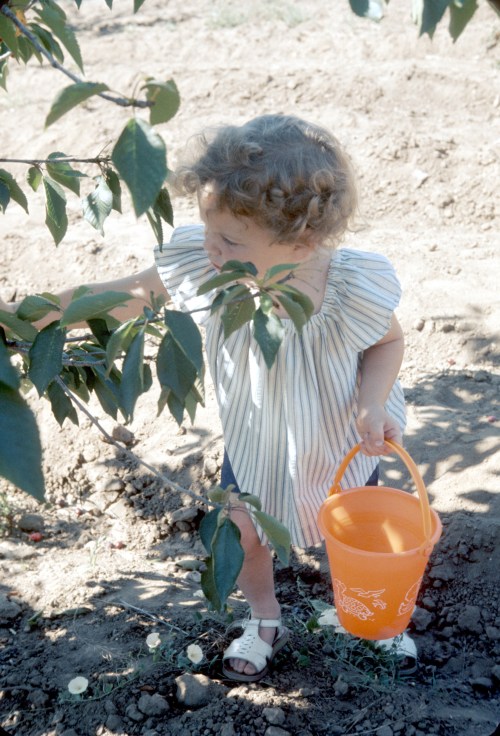
Picking cherries in California

 1974 Aug Sherry Cherry picking in California

 Thinking deep thoughts with Rosey Grier

FRASER_S_0099

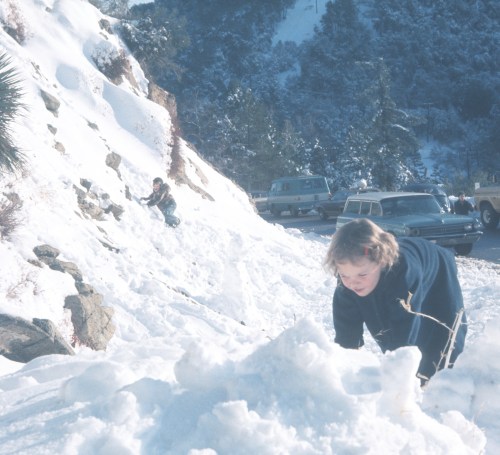
Not sure what to do with all this snow above Altadena!

1975 Jan Sherry and Scott in the snow San Gabriel Mountains

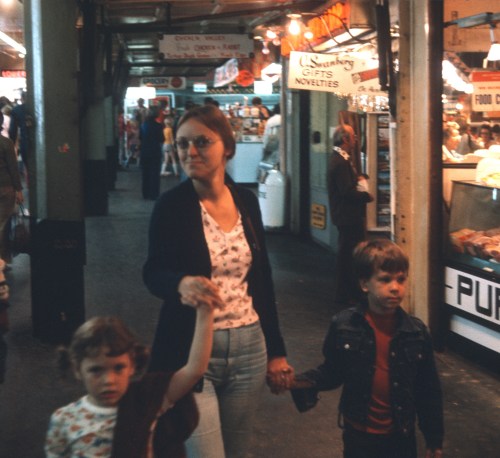
Shopping with Mom – Note boa (?) on daughter’s arm

1975 Elouise with Sherry and Scott shopping ND
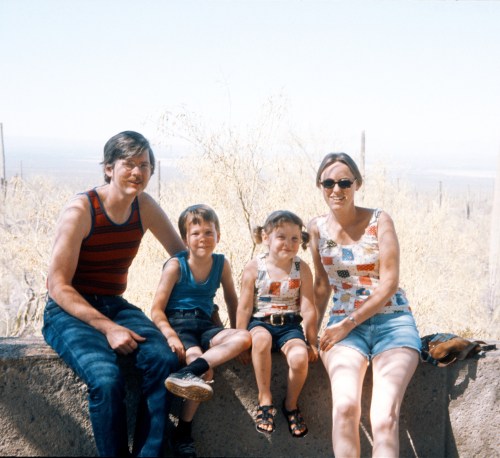
Posing with Mom and Dad on a hot day in Arizona

1975 Sep Family portrait in Arizona

Those were the days!
Beauty and memories captured on camera
Reminders of what endures from generation to generation

Have a happy weekend!
And don’t forget to take a few photos.

© Elouise Renich Fraser, 11 March 2016, reposted 23 August 2020
Photo credit: DAFraser, except last photo — taken by D’s mother

Mom and Auntie T | 1950s

Mom with first three daughters; dresses and hair by Mom, 1950s 

It’s 1951. Our ‘new’ house on the Vernon River feels like a fairy tale. Fireplaces on both floors, huge pieces of heavy dark furniture, woven cane mats covering dark wooden floors—often with rugs on top of the mats.

Both floors facing the river had screened-in porches, with rocking chairs on the first floor porch. They also had tall French windows that opened onto the porches facing the Vernon River.

The old frame house stood on stilts so water didn’t leak into the first floor. Almost every room in the house had an old steam radiator plus a fireplace.

I felt like I’d died and gone to heaven. Even better, this was now (sort of) ‘our’ house. Including the dark brown oiled pine slats covering the living room and dining room walls. Heaven for sure.

Until it wasn’t.

Looking back, I can’t imagine what Mom went through. The house didn’t come with a house-cleaner. Mom could do it all, with her three daughters (soon to be four). Surely that would do for servant-power. With Mom in charge of course.

Except she wasn’t.

Auntie T and her husband Dr. T lived in the old slave quarters just behind the big house. Too small for Auntie T’s fancy furniture. So there most of it sat for us to use—and keep clean. Not according to Mom’s already high standards, but according to Auntie T’s higher standards. The kind that got reviewed every time Auntie T dropped by to see how things were going.

Mold grew on the lovely dark pine walls, on books and on dark wood furniture. Dust and pollen accumulated on the porch, and on the linoleum covered grand hallway from the back to the front of the house. Auntie T’s clean white handkerchief found every speck! No matter what Mom did, there was always something she needed to do better.

I think Auntie T was trying to turn Mom into a respectable White Southern Lady. I didn’t often hear Mom complaining. She knew who buttered her bread. Still, in my eyes Mom was the most efficient, organized person in the world.

Looking back, I’m chagrined. We moved to Georgia because Mom was recovering from a serious case of polio. Our California mission house (with 4 to 5 families, and constant guests from abroad) was like a circus. Mom needed to rest and recuperate.

In Savannah, she frequently rested in the middle of the day, sometimes crying softly to herself. Maybe the money was running out, or there wasn’t enough food for supper, or Dad still wanted a son. Or maybe she felt trapped by Auntie T’s expectations and intrusiveness.

Bottom line: Mom didn’t know how to tell us why we weren’t to play with our new black friend. I’m guessing Auntie T’s helper didn’t hesitate to report this to her eldest daughter. Even so, I can’t prove it.

© Elouise Renich Fraser, 18 August 2020
Photo taken by JERenich at Montgomery house, near Savannah, Georgia, 1950s.

A Lesson in Deep South Manners | 1950s

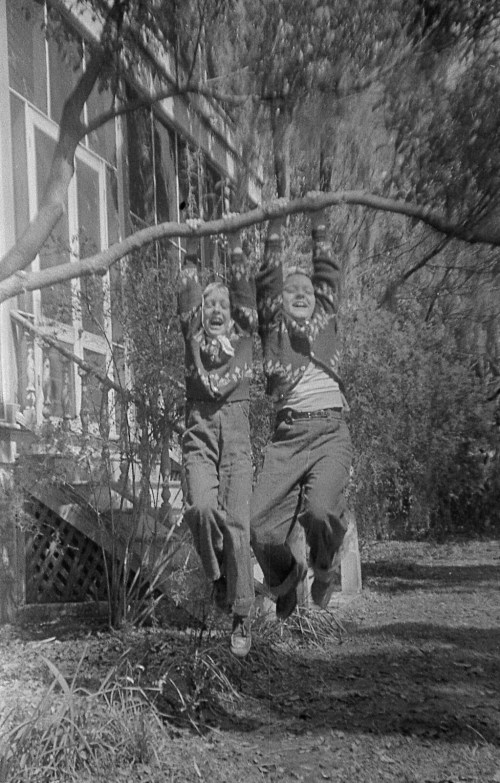
Sister #2 and I hanging onto the front-yard Mimosa tree, 1950s

I don’t remember her name. Her mother was the cook and household helper for Dr. and Mrs. Turner.  Her father took care of yard work and repairs to the Turner’s house.

Dr. Turner was a retired physician. Auntie Turner had worked as his nurse. Once upon a time they owned and lived in the big house. Then they gave it to the mission organization my parents served, and moved out. Now they lived in the old servants’ quarters. The simple wood frame two-story structure sat behind the big house. No one lived on the second floor anymore.

One day the Turner’s cook brought her oldest daughter to work. She was my age. After polite introductions, she and I ran off to play in the front yard by the river. She came several times. When Sister #2 played with us it was even better. That meant we could run races, play dodge ball, hide and seek, or Simon-says.

Our front yard stretched into the neighbor’s front yard which stretched into the next neighbor’s front yard and beyond. All the back yards (where the driveways and garages were) had fences. Most front yards didn’t.

The front yards were beautiful. The river, marsh grass and docks were right there next to us. Our next-door neighbors were often at their main house in the city. They told us we could play in their front yard any time we wanted to. So we did. They were very friendly.

We didn’t dare go beyond their yard, though, because the man in the next big house was mean. He shot Bambi one night with his rifle and Bambi died. Bambi was our new puppy. Sometimes Bambi barked little puppy barks. Mr. S didn’t like barking dogs, even though his great big guard dog barked and even snarled. Mr. S also gave rowdy drinking parties on his dock. We stayed away from Mr. S.

But we didn’t stay away from the huge water oak in our neighbor’s yard. We also had one in our yard. The two oaks became our start and finish lines for all kinds of races and made-up games.

One morning we had great fun racing back and forth between the oaks and then seeing who could twirl around the longest before collapsing on the ground.

The next day Mother quietly told us we weren’t to play with our new friend anymore. In fact, she wasn’t coming back. Ever. Mother looked uncomfortable. I was shocked.

I could tell she wasn’t giving us the full story. She said something like ‘It will be better for all of you if you don’t play together anymore.’ Furthermore, we were to say nothing to anyone else about this and ask no questions. Just do as we’re told.

I still don’t know the full truth. It was clearly about skin color. Our friend was colored; we were white.

I don’t think Mother came up with that by herself. I also don’t think our mean neighbor said anything. But the fact that he was unpredictable, white and rowdy with lots of money probably entered in.

And then there was Auntie Turner. She was never shy about telling us (especially Mother) how things are and how they must remain. Especially when it came to the way Mother took care of the big house, and our manners.

This was my low-key, ice-cold introduction to the social politics of race in the Deep South. My first lesson in Deep South manners and morals. Always ‘for my own good.’

No mixing of coloreds with whites.
Don’t tell the full truth.
Keep your mouth shut.
Don’t ask questions.
Just do as you’re told.
It’s dangerous if you don’t.
You can’t be too careful.

I wonder what Auntie Turner told my friend’s mother, and what she then said to her daughter. I wish I knew.

© Elouise Renich Fraser, 18 February 2015, lightly edited and reposted 17 August 2020
Photo taken by JERenich in the 1950s; Sister #2 and I hanging onto the Mimosa tree in the front yard.

A matter of life and death

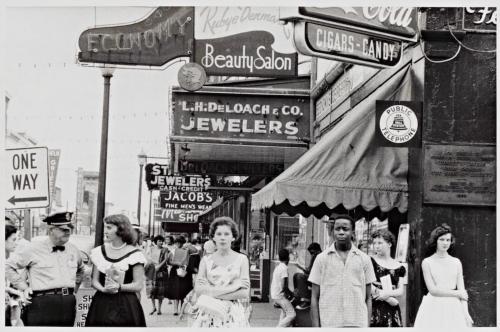
Downtown Savannah, Georgia, 1955
Note the historical marker on the far right of the photo

I’ve been thinking about the life and death of John Lewis. My generation paralleled his generation. Yet my life in the Deep South during the 1950s and 60s was light years from his life. It didn’t matter that I saw and heard about the Deep South every day. What mattered was the bubble in which I was raised.

In a nutshell: I didn’t have a clue how much I didn’t know, even though it was in plain view.

Back then, our family had room for many colored people. As a child, I assumed they were our friends. Still, our family was almost always in the mode of ‘helping’ them. Or joining them at special events at which my father sometimes preached. We daughters sat with our mother in reserved seats on the front row, always decked out in our Sunday best.

We also led regular, less formal Bible clubs for children in our rural setting and in Yamacraw Village. The Village was built on what had been a Yamacraw Indian settlement. Now it served colored people on the west side of Savannah.

The Bible clubs were also our family’s way of ‘helping.’ Plenty of fun, lots of singing (I often played the piano), a Bible lesson from my father, Bible verses to memorize, and snacks at the end. I always knew we ‘poor’ white people were more fortunate than they, and assumed they needed us.

Looking back, my family offered me only one role during my growing-up years in Savannah: a friendly helper. I didn’t have the means or courage to change what often felt unfair and even embarrassing.

Alongside family activities, I attended school. Beginning in grade school, we studied the glorified white history of Georgia. Especially the “Civil” War/War between the States. This continued through high school. Sometimes, especially in grade school, we celebrated heroes. A few were colored; most were white. Christopher Columbus was the greatest national hero. The slave trade remained shrouded in mystery, though Savannah was one of the largest East Coast importers of slaves, and exporters of cotton.

Praying you’re as well as you can be right now, and surrounded by activities that bring you joy, comfort, hope, and a challenge or two.

Elouise

© Elouise Renich Fraser, 20 July 2020
Photo of Downtown Savannah, Georgia (1955) found at reddit.com