Telling the Truth

connecting the dots of my life

Category: Spiritual Formation

Is Mr. Trump the Problem?

Or is he a convenient and problematic distraction?

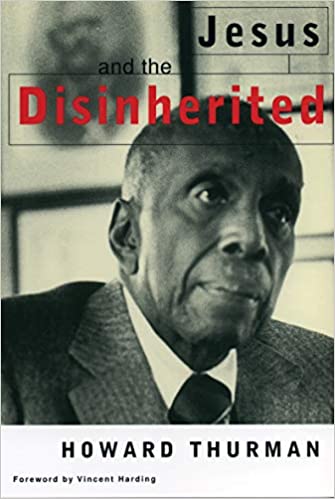
After working on An American Lament and reading Howard Thurman’s Jesus and the Disinherited, I can’t in good conscience say Mr. Trump is The Problem. Nor is he the Solution.

Our Problem began the moment white people arrived on these shores, proclaimed this “our” country, and wedded politics with religion.

Yes, we can say this was ‘allowed by law’ back then to explorers of so-called ‘undiscovered’ lands (a figment of the imagination). However, it stretches my imagination to say this means we’re legally a White Country run by and for White People with the occasional Great Exception.

Jesus, like all children of Israel, was one of the Disinherited. He was a man without a country and without the protection of the reigning monarch. When they came for him, he endured a mock trial and was hung on a ‘tree’ with other convicted men. This scenario has been played out over and over in the history of slavery in the USA.

Today, many white citizens claim to be following Jesus and following Mr. Trump. Yet choosing to serve both is not an option.

Nor is it about which party we choose to follow. We can no more ‘follow’ a party than we can ‘follow’ Mr. Trump or any other POTUS. Not if we say we’re following Jesus of Nazareth. Though we vote, we aren’t pledging allegiance to the winner. Our allegiance is already clear.

Unfortunately, the white Christian church has too often chosen to follow and actively support those with Presidential Power. Though there are remarkable exceptions, they haven’t become the rule. Instead, many white churches have retained the name “Christian” while marching to the drumbeat of politicians, big donors, and fat endowments.

Howard Thurman argues that each Christian church (of any color or ethnicity) must be the one place in life where privileged and underprivileged persons work together. Not on great projects, but to ensure an environment that supports fellowship between the so-called privileged and the underprivileged. Not a program here and there, but the kind of everyday fellowship that produces “a sense of mutual worth and value.” On both sides.

I can’t help thinking about programs such as AA or AlAnon. Places where each member is considered worthy and valuable. Not because each member is herded through a process, but because, in Thurman’s words, it’s “a real situation, natural, free” (p. 88).

A tall order for any church, regardless of its membership.

Happy Monday, and thanks for reading!

Elouise

© Elouise Renich Fraser, 14 September 2020
Photo found at theviresvision.wordpress.com

Considering Loss on the Eve of Our Wedding Anniversary 2020

Wedding Day, 11 September 1965
11 September 1965

Fear of loneliness
Drifts in and out unbidden

Heavy eyelids droop
Head hangs low over keyboard

Tangled thoughts intrude
Try to distract me as though
I were the intruder

I am not.

Pulling myself together
I rouse myself to the occasion
Reaching for stars and light
I do not own.

What if he dies first?
What if I die first?

I don’t know.

So what do I know?
Only this –
That if he dies first, I will grieve.

And what will be the shape of that grief?
A hole that stretches from here to eternity
An unreachable planet long ago and faraway
A place I can no longer visit
An ocean of heaving sobs
Seaweeds of bitter regret and sweet longing
Washing up on the shore of each long day and night

Tomorrow David and I will celebrate our 52nd (now 55th) wedding anniversary. I thought I knew a thing or two about love the day we married. I did not. Nor will I know all about love the day one of us dies.

The older I get, the more precious each day becomes. I remember dreading retirement. Not simply because I would miss my colleagues and students, but because I would be spending much more time with D. More than I’d spent with him most of our married life.

Could we live with each other in the same house, including the same kitchen, every day? Would we get bored out of our gourds without deadlines and meetings and endless reports? Would one of us decide to find a part-time job just to get away from it all?

Happily, we’ve survived so far, including Kitchen Wars. But that would be another story.

I’ve had death on my mind in the last weeks, given events here and around the world. Death is about more than statistics, more than a moving memorial service, more than a huge display of candles and flowers. More than a gut-wrenching news story of the moment.

Somewhere, each moment of every day, someone is grieving. I want to honor the value of just one person’s life and the value of grief. The kind that can soften us, making us more human than we were before.

It looks like Monday, our anniversary day, will be a beautiful Longwood Garden day. Maybe another walk in the Meadow? We’ll see.

Thanks for reading!
Elouise

© Elouise Renich Fraser, 9 September 2017, reposted for our 55th Anniversary, 11 September 2020
Photo taken at our wedding reception, 11 September 1965

the red cardinal revisited

the red cardinal
sings his bright clear spring song
perched on bare branches

When I published my first post, Dear Dad, on 27 Dec 2013, my voice was anything but bright and clear. Singing was definitely out of the question. As a survivor of childhood PTSD, I used an elaborate strategy of calculated silence and half-truth.

How much did I owe the world? How much did I owe my family? How much did I owe the church? My father was a clergyman. Revered, respected, loved and sought after by people with sorrows such as mine.

But I wasn’t one of his followers. I was his first-born of four daughters. I watched my tongue constantly. Smiled when expected. Stifled tears. Did as I was told. Set an example. And took the beatings like the contrite spirit I was not.

Breaking my silence of decades took decades. It started in my 40s, with trips to Al-Anon meetings for five years. There I learned to relax and share things I’d never told anyone. Then I worked with an intern therapist who helped me complete a genogram (family tree, with notes). Finally, in the early 1990s, I began working with a psychotherapist.

I put in hours and years of work. Did tons of homework. Cried buckets of tears. Filled unnumbered journals with dreams and personal entries.

Yet my recovery isn’t measured in months, years or numbers of pages written in journals. It’s measured in my voice. At first feeble, halting, self-conscious and terrified. Beginning with my husband and immediate family, then with my sisters and parents, slowly but surely with several trusted friends, and finally, a few years before I began blogging, with my large extended family on my father’s side.

My voice is the measure of my recovery.

Regardless of the weather, the political climate or my health, the question is the same: How free am I to tell the truth? That’s the thermometer that matters.

I’ve always cared about issues that have to do with women. I used to think getting a decent academic position would somehow ‘prove’ my worth. Or set me free. Especially if I was granted tenure.

Well, that wasn’t my riddle to solve. My riddle was my voice.

I began blogging because I knew it would challenge me to tell the truth freely, with words chosen by me, not by someone else.

So the little red cardinal outside my window caught my attention. The ground was covered with snow, and the laurel bush had been beaten down by more than one Nor’easter. Yet the little red cardinal sang his heart out. Freely. Telling his truth about life and announcing his territory and the hope of spring.

Though I’m a follower of Jesus, this doesn’t make life easier. In fact, it’s more difficult because it means both living and telling the truth. Especially when it’s most unwelcome or unexpected.

I still owe Candice thanks for this topic! Though I’ve written elsewhere about this blog, this is another way of looking at it. Equally true and challenging. Especially today.

© Elouise Renich Fraser, 17 March 2018, lightly edited and reposted 7 September 2020
Cardinal duet found on YouTube

Glory Falls | Maya Angelou

It’s Labor Day Weekend, and we have yet another timely poem from Maya Angelou. My brief comments follow. Please note that periods indicate indentations in the poem.

Glory Falls

Glory falls around us
as we sob
a dirge of
desolation on the Cross
and hatred is the ballast of
the rock
….which lies upon our necks
….and underfoot.
We have woven
….robes of silk
….and clothed our nakedness
….with tapestry.
From crawling on this
….murky planet’s floor
….we soar beyond the
….birds and
….through the clouds
….and edge our way from hate
….and blind despair and
….bring honor
….to our brothers, and to our sisters cheer.
We grow despite the
….horror that we feed
….upon our own
….tomorrow.
We grow.

Maya Angelou, poet; found in Sterling’s Poetry for Young People series, page 47.
Published in 2013 by Sterling Children’s Books, New York, an imprint of Sterling Publishing Co., Inc.
Editorial material © 2007 by Edwin Graves Wilson; Illustrations © 2007 by Jerome Lagarrigue|

On Monday, we celebrate Labor Day. Typically a holiday to celebrate the end of summer, the beginning of the school year, and all people who count as laborers. Who, of course, have Monday off unless they’re indispensable. A day for fun, relaxation, sports, the beach, the boardwalk, hiking in the mountains, and hotdogs.

In light of this, Maya Angelou’s poem may seem out of place. Yet given our history of slavery, her poem is a grim reminder of the cost slave laborers and people of color paid and still pay today. It also suggests a connection with Jesus’ death and resurrection. This connection can generate growth away from the horror of hate and despair. It can free the soul to “soar beyond the birds and through the clouds,” despite the horror “we feed upon our own tomorrow.”

Is there room for me in this poem? For you? I don’t know the answer for you. However, I believe this poem invites me to become brave. Not just in my personal homework, but in our current political context that reeks of unfinished business.

I’m grateful for your visits, especially given all that’s going on around us these days. I pray we’ll find ways this weekend to nurture our spirits and bodies with courage and strength. Plus enjoy unexpected moments with friends, neighbors and strangers. And grow just a bit closer to the persons we were meant to be.

Elouise

© Elouise Renich Fraser, 5 September 2020
Book Cover image found at amazon.com

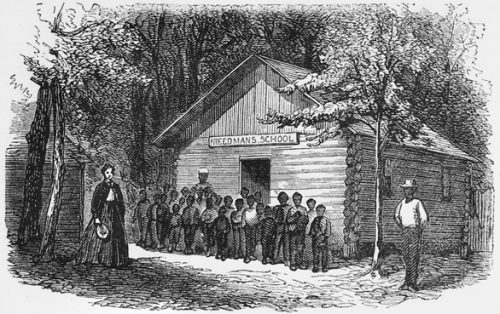
How to outlaw teaching slaves to read or write

Below is one example. Other states had similar methods. Sadly, this is only part of the unasked-for baggage our educational systems struggle with today.

A Bill to Prevent All Persons from Teaching Slaves to Read or Write,
the Use of Figures Excepted (1830)

The North Carolina General Assembly first prohibited anyone from teaching slaves to read or write in 1818, then strengthened the law in 1830 (in the bill reprinted here). The following year, another bill made it illegal for not only slaves but free people of color “to preach or exhort in public, or in any manner to officiate as a preacher or teacher in any prayer meeting or other association for worship where slaves of different families are collected together.”
__________________
Whereas the teaching of slaves to read and write has a tendency to excite dissatisfaction in their minds and to produce insurrection and rebellion to the manifest injury of the citizens of this state: Therefore

Be it enacted by the General Assembly of the State of North Carolina, and it is hereby enacted by the authority of the same, that any free person who shall hereafter teach or attempt to teach any slave within this State to read or write, the use of figures excepted, Shall be liable to indictment in any court of record in the State having jurisdiction thereof, and upon conviction shall at the discretion of the court if a white man or woman be fined not less than one hundred dollars nor more than two hundred dollars or imprisoned and if a free person of colour shall be whipped at the discretion of the court not exceeding thirty nine lashes nor less than twenty lashes.

Be it further enacted that if any slave shall hereafter teach or attempt to teach any other slave to read or write the use of figures excepted, he or she may be carried before any justice of the peace and on conviction thereof shall be sentenced to receive thirty nine lashes on his or her bare back.

Credit text: Legislative Papers, 1830–31 Session of the General Assembly.

For nearly three decades I taught and worked with seminarians in a multiracial, multinational community. Most students were able to thrive. Still, there were some I couldn’t reach. Today I wonder how this legacy of punishing black and brown students and their teachers is being passed on.

These are heavy days and heavy nights. Reaping the Whirlwind comes to mind yet again. Not because of what’s happening now, but because of what was set in motion centuries ago. I pray each of us will become part of a solution.

Elouise

© Elouise Renich Fraser, 4 September 2020
Image of NC Freedman’s School (1860s) found at ncpedia.org

Bitter fruit of ignorance

Weariness and
Overload conspire
Eyes numb
Mind on go
Finds a mess
In everything

Neat and tidy lists
Stare at nothing
Wondering
If I’m lost
And whether
I’ll ever return

Feelings of
Futility wash over
Heart and brain

I want to cram
A lifetime of
Undigested history
Into my heart and mind
Even though
There isn’t time
Or space
To accommodate
The bitter fruit
Of ignorance
Looking the other way
Making false assumptions
Keeping secrets
And smiling
In weak attempts
To make all things
Come out right

Sounds pretty gruesome. And yet…

I wouldn’t change for a second the opportunity to examine the history of racism in the USA, the way it shaped me from the day I was born, and what needs to happen now, not later. Yes, it would be nice to have a President who cared about this as well.

Unfortunately, this buck doesn’t stop with POTUS. It stops with me. I owe it to myself, my neighbors, strangers, and my Higher Power who weaves all things well. Even though I don’t always get it, I’m committed to muddling through as needed.

Right now, the muddling is about what this 76-year old retired theologian, educator, administrator, writer might do. All things considered.

Thanks for stopping by today. Check out this link to read about W.E.B. Du Bois.
Elouise

© Elouise Renich Fraser, 2 September 2020
Quotation found at azquotes.com

I felt a Cleaving in my Mind — | Emily Dickinson

chaos-in-markets-britain

I wrote this immediately after the November 2016 election of Mr. Trump. It still rings true–no matter who wins the November 2020 election. 

Here’s a timely poem from Emily Dickinson. What’s it like to be at loose ends? My comments follow.

I felt a Cleaving in my Mind –
As if my Brain had split –
I tried to match it – Seam by Seam –
But could not make them fit.

The thought behind, I strove to join
Unto the thought before –
But Sequence raveled out of Sound
Like Balls – upon a Floor.

c. 1864

Emily Dickinson Poems, Edited by Brenda Hillman
Shambhala Pocket Classics, Shambhala 1995

Things undone aren’t easily put back together. Especially when accompanied by relentless news reports and photos I’d rather not see. Faces of jubilation; women and men in shocked disbelief; children weeping from fear. The presidential election was a massive Cleaving in my Mind.

Is this our new reality? Out of control. Out of bounds. Out of patience. Out of solutions. Out of hope. Out of compassion. Out of generosity. Out of truth-telling. Our deficits are phenomenal.

Yet I’m called to faithfulness, courage, boldness and creativity.

There isn’t a magic or even supernatural solution to all this confusion. Human confusion is our normal state of being. Confusion about who I am, who you are, what’s going on, who’s in charge, what’s right and what’s wrong, what will bring me happiness, and how to get out of this mess.

I know one thing: I won’t get out of this confusion. Though my thoughts and emotions are important, they don’t offer answers that dispel all confusion. Even my best efforts won’t drive confusion away. They may, in fact, make things worse.

The answer isn’t about what I do, feel or think. It’s about who I am. Right now. True, this affects what I do, feel and think. Yet the starting point is always ‘Who am I right now?’

Thankfully, this hasn’t changed. No election can take this away. I’m God’s beloved daughter child. Not by privilege, but by grace. I’m not God’s only or special child. God has more than enough love, patience, mercy and kindness for each of us. In a strange way, it isn’t about us; it’s about God.

I don’t know what this looks like from one day to the next, or exactly where it’s leading. I do know that moving forward one tiny step each day as God’s beloved daughter child is more than enough. All I need to do is keep taking baby steps. Especially when the mist is so dense I can’t see where this is leading, and ocean swells rise deep within me.

Knowledge about who I am doesn’t reconstruct my brain and it won’t restring the tiny beads that just skittered all over the floor. It does, however, refocus my anxiety and confusion. I am responsible for three things: loving God with all my heart; loving myself, and loving my neighbor as I love myself.

I don’t need to understand everything. I do need to keep inching forward step by step, based on the situation I’m facing. I can’t control human confusion—mine or anyone else’s. But I can speak with my neighbor, comfort a child, offer a listening ear or send up a silent prayer.

I pray this finds you listening and trusting, no matter how bleak or uncertain things look right now.

© Elouise Renich Fraser, 12 November 2016, lightly edited and reposted 1 September 2020
Image found at wsj.com (Wall Street Journal)

A lesson in humility

Great Blue Heron by John James Audubon

Aging waterfowl
Gaze into moving mirrors
Searching for treasure

This morning I watched
As daylight faded quickly
Into today’s tasks

Life slips into dreams
Grown old before their time
Bowing to reality

Growing old is a lesson in humility. Not so much about who I am, but about what I can do in the space of one day. Upkeep is a harsh taskmaster. Not to be ignored. And yet…

Life keeps slipping by, whether I’m ready or not.

This week I’m working through the sixth (of seven) sections in An American Lament. I’m also thinking about how to participate in ways that require more than my everyday bravery or courage.

What I most want to do is listen to the untold, under-appreciated stories of at least one traveler in a life and time I thought I knew, but didn’t. One story at a time. Unfiltered.

I wonder…How do you hope to spend your one precious life?

Happy Monday!
Elouise

© Elouise Renich Fraser, 31 August 2020
John James Audubon’s Great Blue Heron print found at http://altoonsultan.blogspot.com/

Governance by and for the people?

I’m sitting here
Wondering
How long
We have until
The end of governance
By and for the people
As we’ve never known it?

How long until
The end of faking it
As though we were one nation
On the streets
In the pubs
Or on the beaches
To which many
Seem wedded?

Then again,
Perhaps I’m wondering
About the wrong things
Asking myself
The wrong questions

How about this instead?

How long do we have
Until the last gasp
Of looking the other way
In nearly invisible glances
Drips end-stage poison
Into our veins
Insuring apathy forever
And the death of desire
For a more perfect
Union?

Confession: I didn’t watch Mr. Trump’s RNC “convention.” I have, however, paid attention–though not with much enthusiasm, and in small pieces.

I’m struck by how quickly our country has fallen under the spell of this man whose speech and behavior have crossed the line on innumerable occasions. It doesn’t matter whether we’re Democrats, Republicans, or Independents. Where has all our mojo gone?

Apathy is a silent poison. Strengthened every time we look the other way, or get mesmerized with The Show. Entertained even if horrified, outraged or fill in the blank. Addicted comes to mind.

Every day I wonder how much energy I’m using up in relation to Mr. Trump. Especially when I need my best energy for staying on course. Doing what I can to promote and support a more perfect union. Not for some, but for all of us–citizens, immigrants and refugees alike.

Thanks for reading, visiting, and doing what you can to promote and support “a more perfect union.”

Elouise

© Elouise Renich Fraser, 28 August 2020
Image found at slideplayer.com

Jesus and the Disinherited | Howard Thurman

His days were nurtured in great hostilities
Focused upon his kind, the sons of Israel.
There was no moment in all his years
When he was free.

Poem fragment quoted on p. 34 of Jesus and the Disinherited. From Thurman’s privately published volume of poems, The Greatest of These, p. 3.

This summer I’ve been reading Howard Thurman’s relatively short book (less than 100 pages), Jesus and the Disinherited. It’s more relevant today than ever before. A sad commentary on our nation’s untenable situation, past and present.

Thurman’s book describes

  • What happens inside the disinherited
  • What their most difficult struggles are about, daily
  • And why Jesus (not Paul) is the person to whom they are drawn when it comes to real life as they know it.

Like the disinherited of today, Jesus faced fear, deception, hate, and the command to love one’s neighbor as oneself. This didn’t happen one challenge at a time, but every day, no matter the circumstances. In addition, Jesus was one of the disinherited. He was not a Roman citizen, or an official religious leader of Judaism.

It’s one thing to study our history as a nation (which we must), or the history of slavery in this country (which we must), or our individual backgrounds that led to the prejudices and blindness that shape our lives today. All of this is important.

Still, one thing has eluded me. I’m finding it in Howard Thurman’s book, even though he didn’t write the book for me or other white people. He’s clear about this: This book is for people who are black and disinherited, every day of their lives. What white people will do or think when it comes to the disinherited of today is up to them.

I highly recommend Thurman’s book as a way of recognizing everyday racial realities from the inside out. For me, it makes crystal clear what I’ve lived with all my life. This isn’t just about different approaches to life. It’s about the disinherited, and what it takes for them to survive in this country.

I hope you’ll consider reading it. It won’t change everything overnight. It can, however, strengthen our understanding of what our black and brown citizens and church members are up against every day of their lives. It also shows the importance of listening. Silently. Without attempts to explain or justify ourselves.

Elouise

© Elouise Renich Fraser, 27 August 2020
Photo of book cover found at amazon.com