Telling the Truth

connecting the dots of my life

Category: Spiritual Formation

What the world needs | Howard Thurman
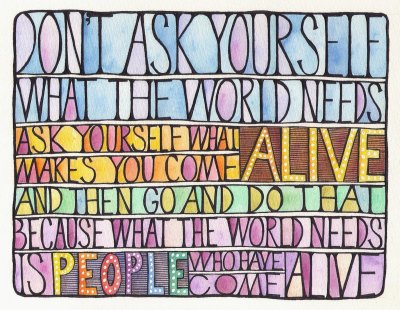
Howard Thurman made things straightforward, simple and down to earth. My father did not. I was raised in a Christian culture (presided over by my father) that saw life outside our ‘safe’ space under attack by twin demons: complexity and danger. Especially if life outside made me come alive.

  • Dancing? No way! Definitely the first step toward raucous, immoral behavior.
  • Lipstick? No way! A sure sign of debauchery. (Until it suited my father to make it imperative.)
  • Dating unchurched and thus unreliable (might grope or rape me) males? No way! (Not that dating was high on my list.)

So here I am today. A supposedly grown-up white woman still figuring out how, at this age and under our current circumstances, to go and do what makes me come ALIVE!

All things  considered, I don’t plan on going anywhere for a while. However, reading and writing make me come alive. Along with music and poetry. Talking with my children and grandchildren. Stopping for a street-side chat with neighbors. Hearing from friends all over the world. Playing with Smudge.

Then there are lovely morning walks. I’m just back from one with D, seeing and hearing birds sing at will. No officious patrol cars tracking them down and locking them up for looking suspicious or disturbing the peace.

The end of the matter is this: I’m most alive when I’m an uncaged songbird! I want to spend my short life singing songs of truth, especially when I’m surrounded and it looks like the sky is falling.

These are trying times. It’s the 4th of July. I wish I could say Hurray for the USA! We’ve come a long way baby! Break out the champagne! Let the fire crackers fly through the air!

But I cannot. Why not? Because right now this contentious, at-risk world needs people who have come alive. Women, men and children willing to tell the truth about their lives regardless of the cost. Willing to listen long and hard to songs they’ve never heard before. Willing to look into the eyes of strangers, smile, and say “Good morning! Would you be willing to tell me about your life?”

Hoping you have a thoughtful 4th of July filled with songs and stories you’ve not heard before.

Elouise

© Elouise Renich Fraser, 4 July 2020
Image found at quoteswave.com
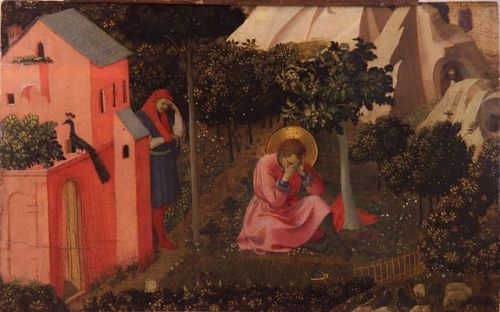
haunted streets and swollen cathedrals

The Conversion of Saint Augustine of Hippo
by Fra Angelico, between 1430 and 1435

signs and symbols
of wealth and poverty
thrown together
in a mixed stew
of pride and prejudice
haunt the streets
and swollen cathedrals
of life and death

take your pick
it’s free or
at least as painless
as possible
this habit of
indulging while
looking elsewhere
as though this
just happened
out of the blue

yes sir
no sir
thank you ma’am
and excuse me
for a moment if
I digress
to point out
obvious trinkets
decorating the outside
contaminating the inside
sick unto death

false pride and bankrupt prejudice
bursting now on streets
and in back alleys
everywhere

This is a comment on public or private displays of spite and outrage over what isn’t working well in this nation. And yet….so much needs to change. What’s a body to do? Yes to pointed protests. And what about our inner lives?

Augustine of Hippo leaves no space for disinterested onlookers or commentators on world or local history. In City of God, he suggests that every war ‘out there’ is at least an invitation, if not a mirror in which we are to discern our personal (invisible) wars. To his credit, he was at least as hard on himself as he was on anyone else.

This means my past as a white woman matters. Somewhere in me I still have unresolved warfare, some raging since my childhood. Other pieces were stirred up along the way. Life isn’t simply a gift to unwrap and enjoy in a personal orgy of bliss. It’s also an invitation to face hard truths about myself and my relationships.

Do I like this? Not necessarily. It’s difficult and time-consuming. The work of a lifetime. Right now the focus is on my inherited ‘whiteness,’ and how I’ve dealt with it (or not), and what comes next. What does it mean to tell the truth about that?

Elouise

© Elouise Renich Fraser, 2 July 2020
Image found at wickipedia.com

James Baldwin on Race Relations

It’s 1943, one of the years Harlem race riots break out. It’s also the day James Baldwin’s father was laid to rest.

In Notes of a Native Son, Baldwin talks about his relationship with his father. The chapter ends with his account of what sparked the 1943 Harlem riots, the nature of the rioting (only in the ghetto, chiefly against white businesses, not white people), and the nature of Black America’s long relationship with White America.

His account of this relationship is telling. Here’s how he describes “the Negro’s real relation to the white American.”

This relation prohibits, simply, anything as uncomplicated and satisfactory as pure hatred. In order really to hate white people, one has to blot so much out of the mind—and the heart—that this hatred itself becomes an exhausting and self-destructive pose. But this does not mean, on the other hand, that love comes easily: the white world is too powerful, too complacent, too ready with gratuitous humiliation, and, above all, too ignorant and too innocent for that. One is absolutely forced to make perpetual qualifications and one’s own reactions are always canceling each other out. It is this, really, which has driven so many people mad, both white and black. One is always in the position of having to decide between amputation and gangrene….The idea of going through life as a cripple is more than one can bear, and equally unbearable is the risk of swelling up slowly, in agony, with poison. And the trouble, finally, is that the risks are real even if the choices do not exist.

In some  ways, this is discouraging. As a white woman, it suggests I’m in bondage to a perpetual dilemma. Even more distressing is the possibility that this was brought on by my need to forget, not see, disremember, dress up in different clothes, and ultimately, dismiss as someone else’s battle or disease to fight.

Nonetheless, I find James Baldwin’s description of the relationship between Black and White Americans/America compelling. I’ve often heard Black women and men say they know us (White people) better than we know ourselves. I believe them, though they may not know me personally.

Put another way, I can’t count on being White-but-not-really due to my years of serving at a multiracial, multiethnic, multinational seminary. Instead, I can only be the White woman I am, a beginner every day of my life.

Elouise

© Elouise Renich Fraser, 30 June 2020
Moon Over Harlem painting by
William Henry Johnson found at americanart.si.edu

Poor little rich white girl

Poor little rich white girl
from everywhere
and nowhere in particular
Shrinks in horror
And confusion from
Imperious or friendly voices
Vying for her attention
Her full support
Her obedience
Her submission
Her silence

To be or not to be?

Fear wins the lottery
As she retreats into
Familiar shadows
Of false safety
Unraveling her soul
From the inside out
One stitch at a time
Drifting into slumber
Overflowing with dreams
Of what might have been
Once upon a time before
The clock struck midnight

Covid-19 has disrupted my life. Black Lives Matter has galvanized me. Not because I think we’ll overcome racism in my lifetime, but because I grew up as a poor rich white girl. I was ignorant, confused, and filled with shame about being white and female. Questions about obvious inequalities on display every day of my life went unanswered.

As a preacher’s kid I was fully immersed in the culture of conservative Christianity as interpreted by my father, plus other male preachers and Bible teachers I encountered along the way.

When I married D and left home, I chose to follow a different understanding of Christian faith. Yet even this didn’t give adequate attention to underlying disasters and sins of this country. These included treatment of native American Indians, and treatment of Black women, men and families captured and put on sale to serve as slaves to white Americans.

Being silent today is not an option. Neither is carrying on life as usual.

So I’m asking questions. What does all this mean for me at this time in my life? How will it affect my reading and writing? How will it affect my relationship to the church? What can I do, and What must I NOT do? This isn’t about my generation; it’s about our collective future. With and without me.

I’m also wondering how all this impacts your daily life.

Elouise

© Elouise Renich Fraser, 29 June 2020
Photo of me with my younger sisters; taken by JERenich in 1953; mixed rural neighborhood outside Savannah, Georgia

Coming down from a high | Day 1 Photos revisited

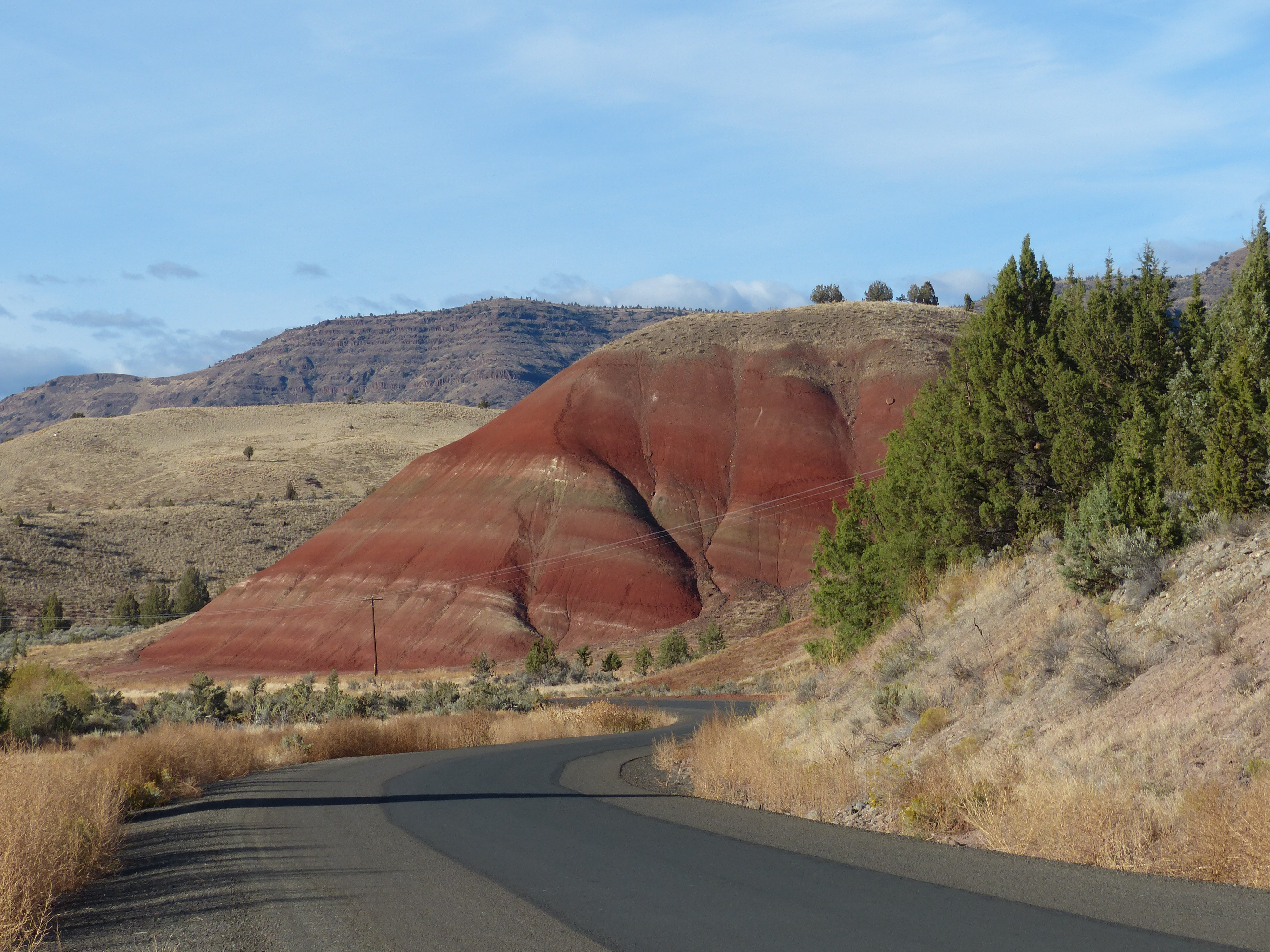
P1090805 The High Dessert in Oregon, on the way to Mitchell, Oregon – October 2015

It’s time for a teeny tiny (safe!) vacation from Covid-19 precautions. Click on photos to enlarge them. And ENJOY! 🙂

Have you ever seen the high desert in central Oregon? The one many early settlers had to travel across to reach the West Coast? Without maps and only occasional guides?

No? Neither had I until last week. I’d seen wheat ranches in Oregon, sea stacks and beaches on the coast, snow on Mt. Hood, Crater Lake, lush forests and state parks drenched with green mosses, waterfalls, creeks running alongside mountain roads, puffins on the sea stacks, and spectacular sunsets. But until a year ago I hadn’t even heard of what I saw last week.

Ten days ago D and I flew out to Portland, Oregon for a visit with our daughter and her husband. It included a two-day road trip to the high desert to see the Painted Hills. Did you know there are painted hills in the USA? I didn’t. Here’s our first photo–a tiny peek as we approached the Painted Hills entrance on Day 1 of our adventure.

P1090807
Painted Hills is one of three units in the John Day Fossil Beds National Monument. We visited two of the three units—Painted Hills, and Sheep Rock.

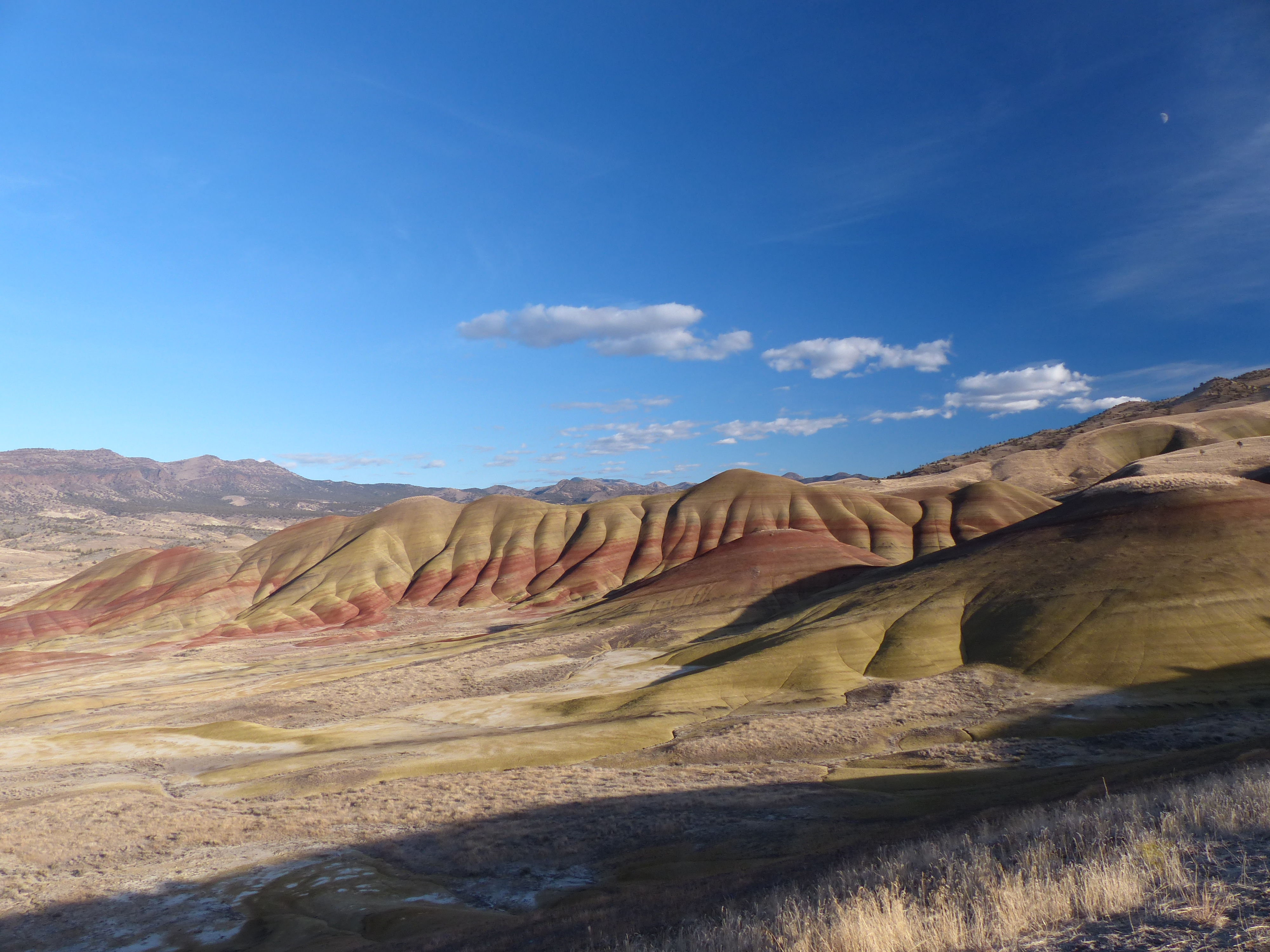
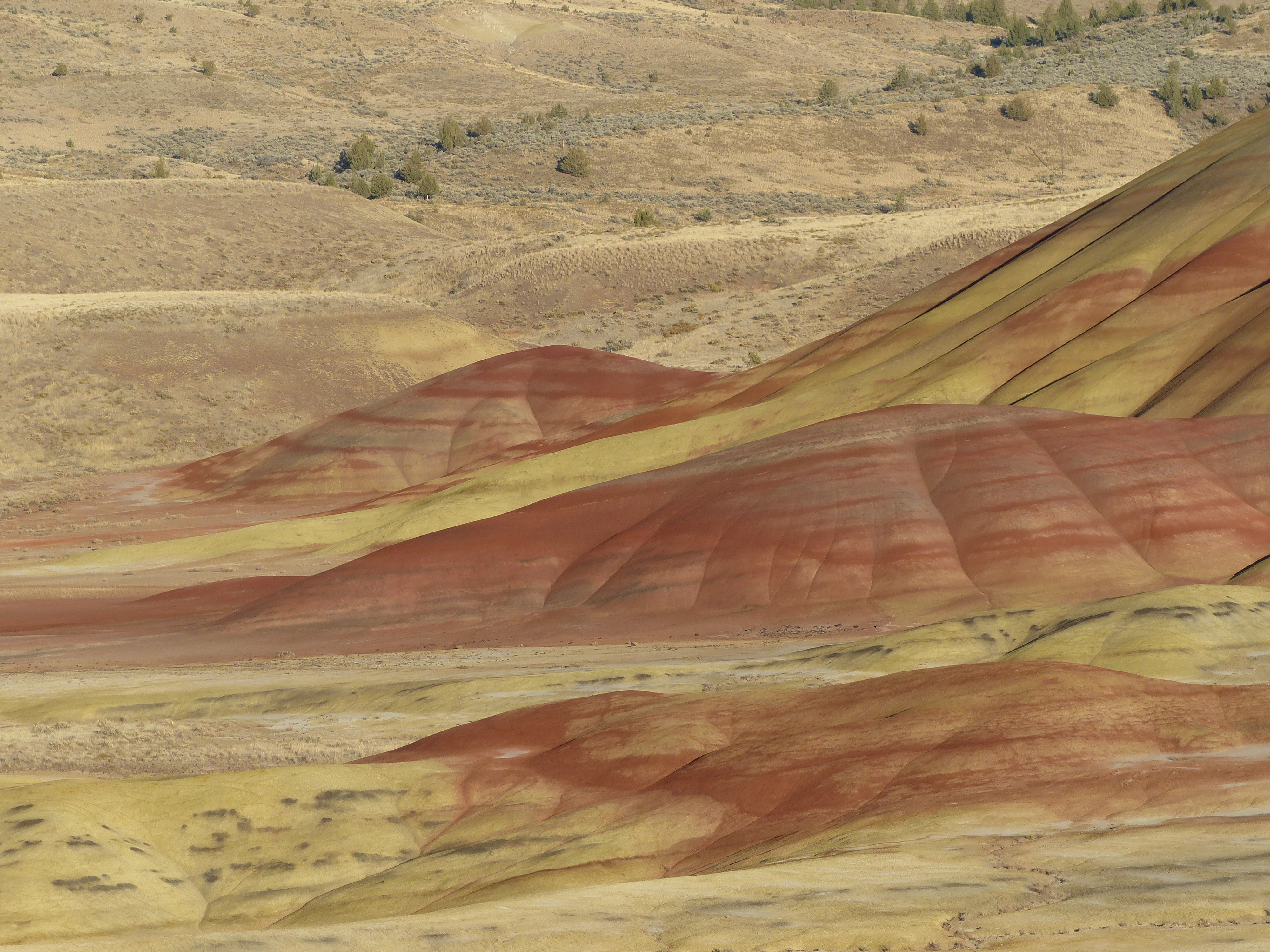
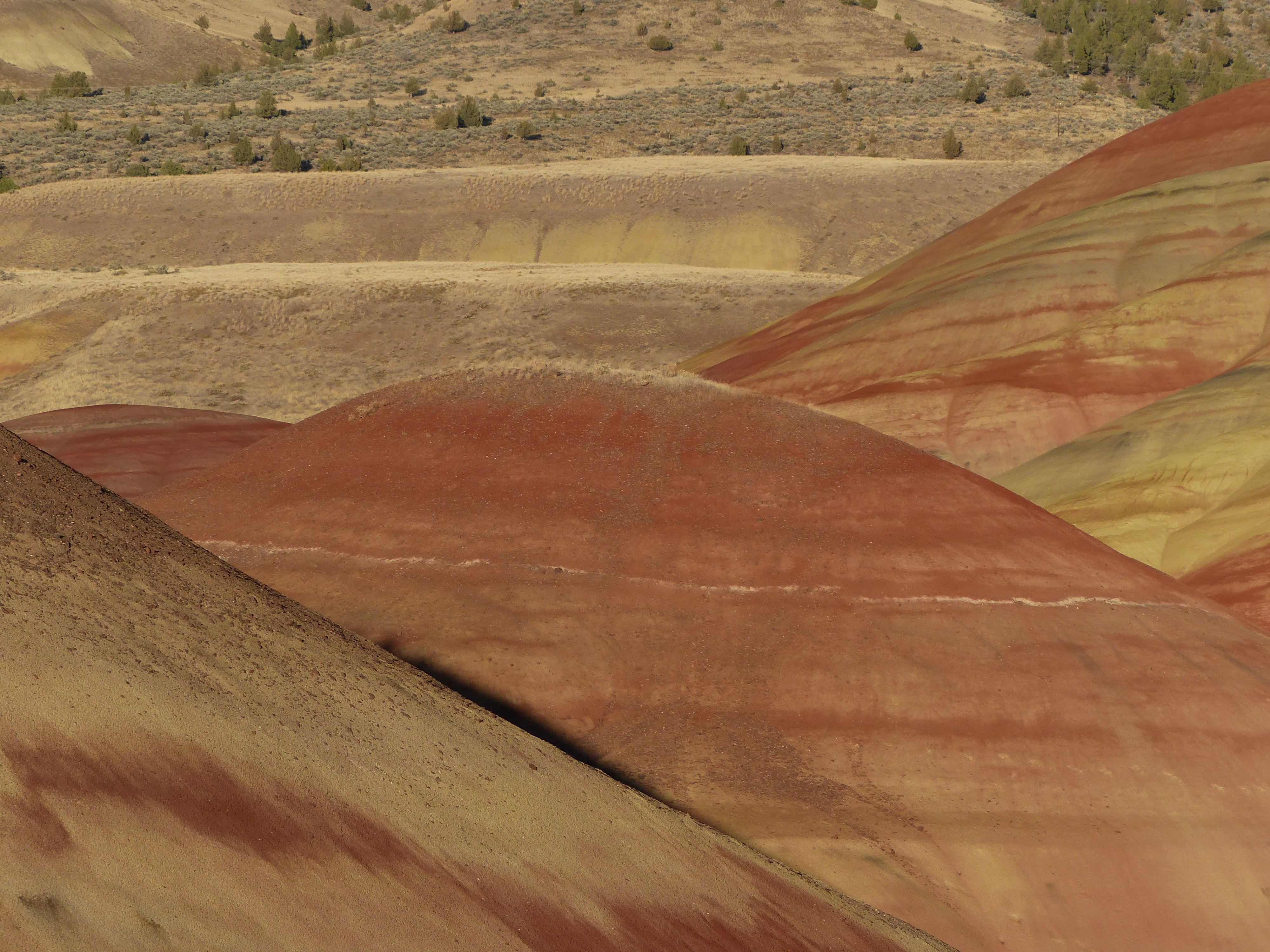
The photos below are from our first day at the Painted Hills Unit. We arrived in the late afternoon on a picture-perfect day. Warm weather with a cool steady wind, dry air, and very few visitors.

P1090827

P1090828 Can you find the spot where DAFraser zoomed in for this close-up? Also, look for animal trails and tracks. No humans allowed!

Here we’re on our way to a lookout at the top of the trail.
Notice the moon hanging in the brilliant blue sky!

P1090875

When we were walking on this path we stopped to listen.
All I heard was silence and the beat of my heart.
“…All nature sings, and ’round me rings
the music of the spheres….”

P1090897 Velvet tones and texture, stripes like a soft woolen blanket; colors of the West

P1090847


P1090891

P1090870

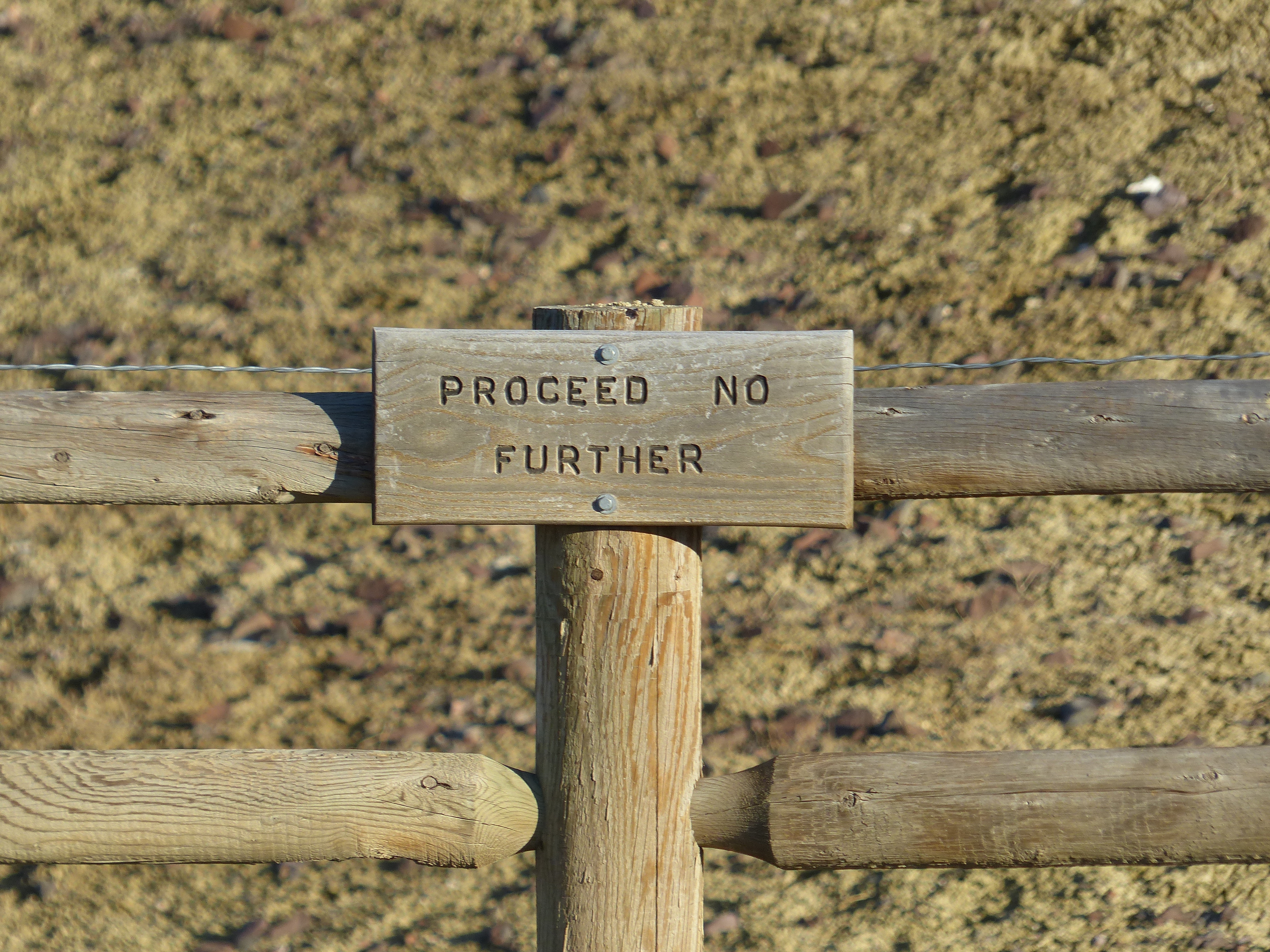
Polite signs like this kept reminding us to stay on the path!
In this case, turn around and go back the way you came.
Which we did!

End of Day 1, back at our motel:

P1090905 Wild turkeys on the road up to our motel, after chasing unwelcome cat away….

Hoping you find a way to vacation safely today, even if it’s only in your lovely mind and heart!
Elouise

© Elouise Renich Fraser, 26 October 2015 and 27 June 2020
Photo credit: Elouise (top photo), DAFraser (all the rest), October 2015
John Day Fossil Beds National Monument, Painted Hills Unit

I am a Poor Wayfaring Stranger | Rhiannon Giddens

In the last few weeks I’ve noticed a small, steady stream of visitors to an earlier post on Rhiannon Giddens. It featured “Julie,” Giddens’ song about a black daughter and a white mother living in North Carolina during the brutal 1898 uprising against and slaughter of Black people. As she put it, “Julie” is her way of conveying the complexities of her own life as the daughter of a white mother.

A few days ago I listened to Giddens’ rendition of “Wayfaring Stranger” (above). I heard this haunting song frequently when I was growing up the Deep South. Now, having heard Giddens’ stunning interpretation, it’s playing at will in my psyche, night and day.

I’m guessing most of us struggle with multiple identities, as well as what it means to be human in one setting or another. I find myself bouncing back and forth between the ignorance and naivete of my childhood in the South, and my radically different experience of life here in Southeastern Pennsylvania. Especially when I was working at the seminary, and now experience in my home church.

In many ways, going home sounds like heaven. Partly because it would be the first safe home of my life. The first place where I know I don’t have to prove who I am and am not, or endure the agony of not knowing who I am. To say nothing of concerted attempts to put and keep me in my place. Or the internal desire to look the other way when someone else is supposedly being put in his or her place.

The difference, of course, is that I’m not mixed race, black, or facing the realities my black and mixed race friends and their families face daily. This human-made, aching chasm in our nation is begging for attention and understanding. The kind persuasively conveyed in music that softens us and invites us into a stranger’s perspective and our own self-examination.

Elouise

© Elouise Renich Fraser, 26 June 2020
Video found on YouTube

What ‘human rights’ don’t look like

Recently a friend sent me the following list. I haven’t been able to get it off my mind. It was compiled by Dr. Valerie Bryant, a Black therapist in Brooklyn, NY. In the list she names black citizens threatened or killed in recent years while engaging in the behaviors she names.

Think of Dr. Bryant’s list as a roll call clarifying the difference between living black or brown, and living white in the USA. It’s also an invitation to reflection about ourselves, and the meaning of human rights.

…As a white person when you go out in the street, you don’t have to think twice of being murdered by a police officer or citizen acting like a police officer.

Or as a white person,

I can go birding (#ChristianCooper).
I can go jogging (#AmaudArbery).
I can relax in the comfort of my own home (#BothemSean and
#AtatianaJefferson).
I can ask for help after being in a car crash (#JonathanFerrell and
#RenishaMcBride).
I can have a cellphone (#StephonClark).
I can leave a party to get to safety (#JordanEdwards).
I can play loud music (#JordanDavis).
I can sell CD’s (#AltonSterling).
I can sleep (#AiyanaJones)
I can walk from the corner store (#MikeBrown).
I can play cops and robbers (#TamirRice).
I can go to church (#Charleston9).
I can walk home with Skittles (#TrayvonMartin).
I can hold a hair brush while leaving my own bachelor party (#SeanBell).
I can party on New Years (#OscarGrant).
I can get a normal traffic ticket (#SandraBland).
I can lawfully carry a weapon (#PhilandoCastile).
I can break down on a public road with car problems (#CoreyJones).
I can shop at Walmart (#JohnCrawford) .
I can have a disabled vehicle (#TerrenceCrutcher).
I can read a book in my own car (#KeithScott).
I can be a 10yr old walking with our grandfather (#CliffordGlover).
I can decorate for a party (#ClaudeReese).
I can ask a cop a question (#RandyEvans).
I can cash a check in peace (#YvonneSmallwood).
I can take out my wallet (#AmadouDiallo).
I can run (#WalterScott).
I can breathe (#EricGarner).
I can live (#FreddieGray).
I can be arrested without the fear of being murdered. (#GeorgeFloyd)

***These are NOT human rights if only white people have them.*

With compassionate rage
Valerie Bryant, PhD
Fort Greene Bklyn 11205

How would my world change if I woke up with different colored skin than I now have? Can I remember how I was taught to think or talk about skin color?

© Elouise Renich Fraser, 21 June 2020
Image found at stlpublicradio.com

I just struck gold!

Who was Amelia Boynton Robinson, and who is that young man sitting next to her? And do you know who’s in the photo on the right? Or what year it was? To find out more, check it out right here. It’s the second entry from the top. You can read more about Amelia Boynton Robinson’s life right here.

For the last few weeks I’ve been searching for gold, interpreted by me as

  • easy to read/watch
  • lively and informative
  • brief, riveting commentary with real photos of real people
  • a semi-crash course only better
  • attention to women as well as men
  • inspiring without glib promises
  • tuned into today’s challenges
  • excellent communicator

It’s impossible to take in everything all at once. So I’m now following Chris Preitauer’s blog.

Beginning at age 7 I grew up, went to college and had my first ‘adult’ job in the Deeply Segregated South. I saw and heard a lot. Sadly, I didn’t formally or informally hear much about Black Lives. Nor was I encouraged to get curious about why. In the 1950s and 60s, Black citizens were treated differently than White citizens. Not just in the Deep South, but in the not so Deep North.

So yes, I’ve found gold! Someone from my era (sort of) who became involved.

I hope you’ll look at a few of his pieces. They’re to the point, challenging, and inspiring without pretending our current challenges will be easily resolved.

Thanks again for visiting, reading, and leaving your footprint!
Elouise

© Elouise Renich Fraser, 17 June 2020
Photos found at ChrisPreitauer.com

Alternative tv | Dorothee Soelle

Four miners in mine shaft wearing hard hats and headlamps

Dorothee Soelle wrote this poem in the 1970s, an era roiled by the Vietnamese War. I was in my 30s. How old were you? My comments follow.

Alternative tv

The old man on the screen sang
in a loud and shaky voice
and had probably never been very clean
in addition he had hardly any teeth left
a miner with black lung
of course he spoke dialect and his grammar was bad
why after all should he
show his best side to the camera

When god turns on his tv
he sees old people like that
they sing
in a loud and shaky voice
and the camera of the holy spirit
shows the dignity of these people
and makes god say
that is very beautiful

Later
when we have abolished tv as it exists
and are allowed to look at the skin of aging women
and are unafraid of eyes
that have lost their lashes in weeping
when we respect work
and the workers have become visible
and sing
in a loud and shaky voice

Then we shall see
real people
and be happy about it
like god

Dorothee Soelle, Of War and Love, p. 171
English translation of selected pieces from the German text © 1983 Orbis Books, Maryknoll, NY 10545
First published as Im Hause des Menshenfressers, © 1981 by Rowohlt Tashenbuch Verlag in Hamburg, West Germany

Now that I’m in my mid to late 70s, I find this poem more truthful than ever. I don’t often see aging women or men on TV, just as they are. Maybe in a news piece or documentary. But rarely, if ever, in flashy shows or advertisements. They’re busy reflecting our captivity to spending money on ourselves, our houses, our lawns, our cars, eating out and eating in, or getting ‘fixed’ so our embarrassing flaws don’t show.

As Dorothee Soelle points out, our Creator is watching Alternative tv. The kind that accepts us just as we are when we’re willing to show up just as we are. Happy to be in the presence of one who understands and loves us in all our real flesh.

As always, thank for visiting and reading. These are hard times for all of us. I pray we’ll find ways to help bring about hope, peace, and reconciliation, and courage to show up for our Creator and each other, just as we are.

Elouise

© Elouise Renich Fraser, 15 June 2020
Photo of miners found at WestVirginiaInjuryLawyers.wordpress.com

Still I Rise | Maya Angelou

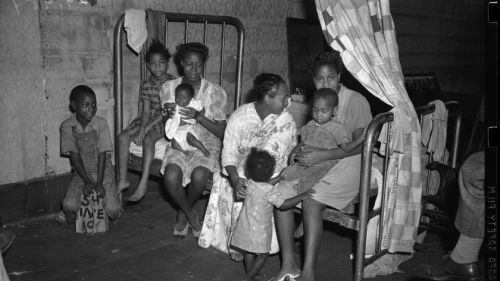
A family of African American war workers in a makeshift bedroom in Little Toyko, Los Angeles in the 1940s. (Los Angeles Daily News/UCLA Archive)

“Still I Rise” is Maya Angelou’s tribute to the courage and endurance of African American women. It’s also the title of one of her books of poetry. My brief comments follow.

Still I Rise

You may write me down in history
With your bitter, twisted lies,
You may trod me in the very dirt
But still, like dust, I’ll rise.

Does my sassiness upset you?
Why are you beset with gloom?
‘Cause I walk like I’ve got oil wells
Pumping in my living room.

Just like moons and like suns,
With the certainty of tides,
Just like hopes springing high,
Still I’ll rise.

Did you want to see me broken?
Bowed head and lowered eyes?
Shoulders falling down like teardrops,
Weakened by my soulful cries?

Does my haughtiness offend you?
Don’t you take it awful hard
‘Cause I laugh like I’ve got gold mines
Diggin’ in my own backyard.

You may shoot me with your words,
You may cut me with your eyes,
You may kill me with your hatefulness,
But still, like air, I’ll rise.

Out of the huts of history’s shame
I rise
Up from a past that’s rooted in pain
I rise
I’m a black ocean, leaping and wide,
Welling and swelling I bear in the tide.

Leaving behind nights of terror and fear
I rise
Into a daybreak that’s wondrously clear
I rise
Bringing the gifts that my ancestors gave,
I am the dream and the hope of the slave.
I rise
I rise
I rise.

Maya Angelou, poet; found in Sterling’s Poetry for Young People series, page 30.
Published in 2013 by Sterling Children’s Books, New York, an imprint of Sterling Publishing Co., Inc.
Editorial material © 2007 by Edwin Graves Wilson; Illustrations © 2007 by Jerome Lagarrigue|

Maya Angelou’s poem is worth reading out loud and slowly, using every ounce of imagination to join her. Not necessarily as a sister, but as a beginner or better yet, a follower.

I struggle over what I can and cannot do to join her in these closing days of my life. For now I’m reading poetry, watching documentaries, reading news articles and editorials, and listening online to black friends and strangers talk about what’s happening.

For centuries, racial injustice has bled into today’s mega-epidemic of prisons, soaring rates of Covid-19 deaths among African Americans, closed or understaffed medical facilities, corporate greed, random killings, modern-day enslavements, distrust, fear and weeping rage. Unaddressed, this blatant, calculated and habitual injustice also stokes our current epidemic of unleashed white supremacy.

As noted above, try reading Angelou’s poem out loud and slowly. What do you hear?

Praying for discernment, courage and peace,
Elouise

© Elouise Renich Fraser, 8 June 2020
Photo found at http://www.latimes.com