Telling the Truth

connecting the dots of my life

Category: Spiritual Formation

The distance between then and now

The distance between then and now
Boils down quickly to a handful of
Opportunities lost in translation

Heavy baggage dumped in swamps
Still unopened and never claimed

On-demand smiles of yesterday hidden
Beneath faces lined with sadness and grief

Moments of vulnerability unexplored
In favor of stiff upper lips and privacy

The openness of childhood and youth
Shut down in favor of family reputation

Yet miles of heart-stopping space open
Like the Grand Canyon between us and
old photos tugging at our lonely hearts

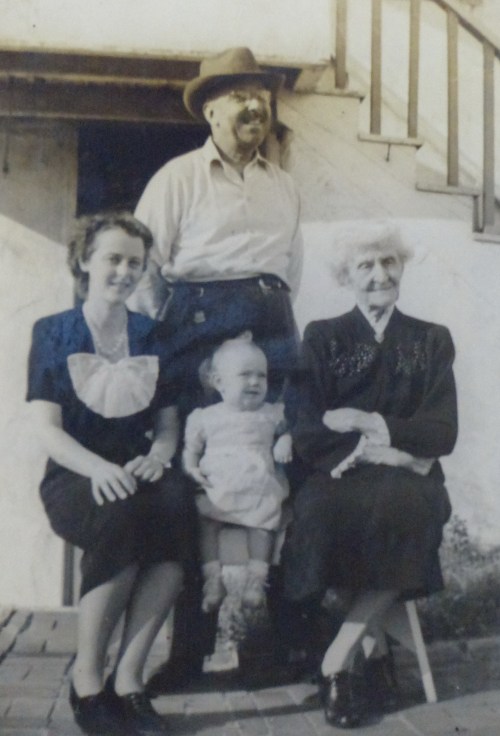
I feel sad and happy every time I look at this old photo. I’m sitting on the bench surrounded by my mother, her father, and her father’s mother. Four generations. The poem reflects how difficult I find it to become a human being. Especially when working on family-related issues.

Becoming human may be our greatest achievement. Not wealth or happiness or helping people all over the world, but the ability to become who we are from the inside out. Sort of like the velveteen rabbit, so that by the time we leave this world, we’ve become Real human beings.

Here’s to heaps of practice and a few great breakthroughs every now and then!

The photo at the top was taken by my father in 1944. We’re in California, visiting with my Grandpa Gury and my very proper Great Grandmother Gury (an immigrant from France). I’m sitting in the middle; my beautiful mother is on my right.

Elouise

© Elouise Renich Fraser, 20 February 2020
Photo taken by my father, JERenich in 1944, California

Frances Ellen Watkins Harper | Poet and Abolitionist

Thanks to Poem-a-Day for introducing me to Frances Ellen Watkins Harper’s poetry. And thanks to Black History Month for bringing it to mind. My comments follow.

Aunt Chloe’s Politics

Of course, I don’t know very much
About these politics,
But I think that some who run ’em
Do mighty ugly tricks.

I’ve seen ’em honey-fugle round,
And talk so awful sweet,
That you’d think them full of kindness,
As an egg is full of meat.

Now I don’t believe in looking
Honest people in the face,
And saying when you’re doing wrong,
That “I haven’t sold my race.”

When we want to school our children,
If the money isn’t there,
Whether black or white have took it,
The loss we all must share.

And this buying up each other
Is something worse than mean,
Though I thinks a heap of voting,
I go for voting clean.

First published by Ferguson Brothers in Sketches of Southern Life (1891), now in the public domain
Published online by Poem-a-Day on 23 June 2019, by the Academy of American Poets

“Honey fugle” means to deceive by flattery or sweet talk, to swindle or cheat. Click here to see the full definition.

I love Aunt Chloe’s straightforward language. Rigged voting machines and gerry-mandering didn’t begin yesterday. Nor did pie-in-the sky promises and ‘street money’ handed out to influence our votes. As Aunt Chloe points out, it doesn’t matter what color your skin is if the money isn’t there to fund those lovely promises. Everyone loses, no matter the color of our skin.

Aunt Chloe nailed it decades ago. Her words are presented in a no-nonsense voice that invites us to believe her and do something about it. Maybe it’s as simple as getting off our political bandwagons and taking a look at ourselves.

So….The next time you hear politicians making promises too good to be true, think of a flugel horn (profuse apologies to lovers of flugel horns). It may sound sweet and mellow. Nonetheless, sweet music and stars in our eyes won’t buy groceries, pay for medical bills, or turn manipulation into truth. Instead, the cost will continue falling on all of us.

© Elouise Renich Fraser, 19 February 2020
Image found at Wikipedia.org

At loose ends with myself

I posted this poem with brief comments a few days after mid-term elections in November 2018. Now there’s another election coming up in November, with large stakes for all of us. My biggest challenge today is to stay on target. Not just with my health and well-being, but the reality of our current state of our disunion. I want to ignore it, and cannot. My poem and earlier comments follow.

At loose ends with myself
Wandering up and down
The stairs of my distraction
Overturning this and that
Within my overactive mind
A clock ticks relentlessly
Counting down the corridors
Of tasks undone and words
Never recorded yet dissipating
Into a gray atmosphere silent
And secretive not yet menacing
Though the thought occurs
to me that I am being unraveled
strand by limp strand falling
to the floor of unknown reality

Unraveled. A word rich with possibilities. Terrifying and welcome all at the same time. Loss of control. Change of direction. Once-blind eyes coming out of misty half-truth and patched-together personas. Fragility unbound and hanging out there. Human. Vulnerable. Out of control in the best possible way.

All this and more went through my mind today. It isn’t just about getting older. It’s about getting real. Becoming a real rabbit, a real human being, a real baby. Not just a make-believe look-alike.

Here’s to more loose ends of the fruitful kind. Those that lead to something greater than you or I could ever become on our own.
Elouise

© Elouise Renich Fraser, 7 November 2018, reposted 12 February 2020
Image of unraveling butterfly found at movestrongkbs.com

On the other side of yesterday

Morning rain drops and
tears of cleansing spread
welcome relief on streets
torn with grief and disbelief

An ambulance screams
by my window racing
to aid the sick the dying
and the dismembered

A distant bell tolls mindlessly
chiming out its last breath
of hope for better tomorrows –
Or at least a reprieve from public preening
blind to yesterday’s attempted slaughter
of truth and justice for all

No, Mr. Trump, you did not receive justice.
Nor did many of your friends honor you with truth.
Sadly, enablers are a dime a dozen.

I applaud each leader and member of congress who dared stand up and be counted on the side of truth and justice.

I do not applaud congressional and religious leaders who cheered and applauded Mr. Trump’s rant at yesterday’s nonpartisan, interdenominational and interreligious prayer breakfast. We are all dishonored by behavior like this, no matter what our political preferences may be.

© Elouise Renich Fraser, 7 February 2020
Photo found at bbc.co.uk.jpeg

The Resistance

Bursting dams explode
Fueling unhinged tongues

Roiling water floods old landscapes
scarred beyond recognition

The end of this world collides
with the untimely birth
of a new world ruled by
winners of a rigged lottery

How shall we then live
with death-dealing word-bombs
hanging over our heads
seeking to silence the resistance?

I woke up this morning with yesterday’s impeachment vote on my mind.

I’ve known resistance all my life–as a girl child, and later as an adult woman. This includes fierce resistance inside me when my full humanity isn’t honored, and sometimes polite, unrelenting resistance brought to bear against me as an adult woman with a mind of her own.

I’m also one of the so-called fortunate whose skin is white, whose citizenship is not in question, who isn’t living on the streets due to gentrification….and I could go on, but won’t. You get the picture.

I was deeply moved by Senator Romney’s courageous statement and vote yesterday to impeach our President on one count. The morning news was full of POTUS comments and other tirades against Romney. The news was also full of support for Senator Romney. He isn’t a saint (which I find comforting). He simply and directly told the truth and cast his vote as he saw it, against every other member of his party.

Silence is deadly. So is speaking out, especially when it’s costly. As I see it, I have a choice. Shut up and sit down, or stand up and open my mouth. I choose the latter. How about you?

© Elouise Renich Fraser, 6 February 2020
Image found at pinterest.com

Human indignity for all?

Is this the best we can offer?

Indignity: treatment or circumstances that cause one to feel shame or to lose one’s dignity. Regardless of gender, race, ethnicity, religion or country of origin. Which, in my book, amounts to indignity for all of us.

Martin Luther King, Jr.’s dream was simple: human dignity for all.

Or, as Dr. King put it when writing in 1963 about his own children:

I dream that one day soon
they will no longer be judged by the color of their skin
but by the content of their character.

The quote comes from the opening pages of Dr. King’s book, Why We Can’t Wait.

Today, 57 years later, we’ve gone backwards. Especially, though not only for African Americans.

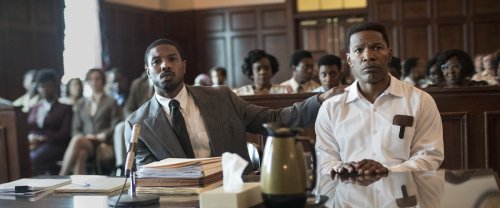
Yesterday D and I went to see Just Mercy, a recently released movie. It’s based on Bryan Stevenson’s book, Just Mercy: A story of Justice and Redemption. Stevenson, a Harvard-trained attorney and recipient of a MacArthur Genius Grant, writes about one of his first cases as a young black attorney working in the South.

The movie depicts what happens to two black men placed on death row before receiving a fair trial, and what it takes to deal with the status quo. The judicial system’s message is clear: You won’t get out of here alive, no matter what evidence is produced in your trial or on appeal. But what happens in the end, and how?

February is Black History Month here in the USA. Just Mercy is being shown in several cinemas in the Philadelphia area. If you haven’t or can’t see the movie, check out a copy of the book. It’s at least as clear, heartbreaking and challenging as the movie.

This movie was my choice yesterday evening, rather than watching/listening to the President’s State of the Union address. It was a splendid choice.

© Elouise Renich Fraser, 5 February 2020
Image from the movie found at rogerebert.com

Kindness Matters | Memories

kindness

This post from January 2016 came to mind this morning.
A sobering read, given the current state of our disunion.

My Mom died in 1999. During the last year of her life she showed me a photo of a childhood friend, a write-up about her, and an obituary.

Sybil was a few years younger than I. Her mother kept the outdoor hog pen I describe in my poem, 1951. To me, Sybil was a friend in name only. I was put off by her lack of manners, her unkempt clothes, constant problems at home, poor grammar and general lack of social graces. I was also embarrassed to be seen with her.

Sybil and I were thrown together in grade school. We were scholarship students—unable to pay our own ways. I saw her as ‘poor,’ though I didn’t identify myself that way. We lived in a big house on the river. She lived about three-quarters of a mile down the road toward the city, just beyond colored town, in a rickety old structure beside a large hog pen and across the road from the tavern.

Sybil lacked social graces and, in my eyes, physical beauty. She was sometimes rough, callous, loud, rude and sarcastic. She was an only child, living with her mother on the second floor of a now closed, dilapidated gas station.

The hog pen sat beside this structure. About 20-25 adult hogs roamed free in a large fenced-in area and wallowed in muddy pig slop laced with decaying food scraps. To say they stank would be an understatement.

Sybil’s mom owned and cared for the hogs. They were her ticket to food and money—at least enough for survival. She lived with a man on the second floor of the old filling station.

Were they married? I was never sure. He liked alcohol. They both liked cigarettes. They didn’t always get along. Sometimes Sybil got the worst of it. Sometimes she missed school.

As chance would have it, for a couple of years Sybil’s mom took turns with my father picking us all up after school in downtown Savannah, and driving us 15 miles home.

In spite of my impressions about Sybil, she became a sometime ‘friend’ who reminded me daily of what I did not want to be. She didn’t seem to have other friends, and assumed that because we rode together after school, I was her friend.

When Sybil’s mom came to pick us up, I held back. I pretended I didn’t see the noisy old run-down car waiting right there in front of the school. I didn’t want my friends to see me getting into it. They might think it was our car.

So I waited until the last minute, suddenly ‘saw’ the car, got into the back seat and immediately bent over as though I’d just dropped something on the floor. I didn’t sit up straight until we were at least a block away from the school.

My wish to distance myself from Sybil and her life generated nothing but guilt, shame and anger in me. Being seen with Sybil was not an asset.

Mom, however, stayed in touch regularly with Sybil and with her mom. She treated Sybil with kindness. She visited her mom, helped her out in small ways, and seemed to enjoy her company.

A few years before Mom died, Sybil got in touch with her. She had graduated from high school and studied to be an officer in a military unit. She brought Mom a photo of herself in uniform—beautiful, serene and confident. It was her way of thanking Mom for taking an active interest not just in her, but in her mom. Sadly, Sybil died about a year before my Mom died.

You might say I had a ‘normal’ child-like response to Sybil and her mom. I don’t know. Contempt is a learned behavior, often accompanied by invisible self-contempt. Sybil and I were damaged goods. She may have recognized herself in me; I didn’t recognize myself in her. Not back then.

Nonetheless, we were and are sisters, if not friends.

© Elouise Renich Fraser, 11 January 2016
Image from trans4mind.com
Everlasting | Mary Oliver

In this poem, Mary Oliver tells us clearly what she wants to accomplish when she writes poems. It’s a high order. Some might say impossible. My brief comments follow.

I want to make poems that say right out, plainly
what I mean, that don’t go looking for the
laces of elaboration, puffed sleeves. I want to
keep close and use often words like
heavy, heart, joy, soon, and to cherish
the question mark and her bold sister

the dash. I want to write with quiet hands. I
want to write while crossing the fields that are
fresh with daisies and everlasting and the
ordinary grass. I want to make poems while thinking of
the bread of heaven and the
cup of astonishment; let them be

songs in which nothing is neglected,
not a hope, not a promise. I want to make poems
that look into the earth and the heavens
and see the unseeable. I want them to honor
both the heart of faith, and the light of the world;
the gladness that says, without any words, everything.

© 2005 by Mary Oliver in New and Selected Poems Volume Two, p. 4
Published by Beacon Press

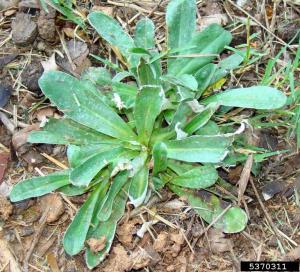
The lovely photo at the top is deceptive. It omits the everything of those fields Mary Oliver is crossing. In particular, it should include “daisies and everlasting and the ordinary grass.” What is this thing called everlasting? Think invasive pest, cudweed, or more properly, American everlasting. In case you haven’t met up with it yet, here’s the other photo I might have put at the top.

When I read this poem about writing poetry, I hear Mary’s emphasis falling on beauty. Everyday beauty that wants to be seen just as it is, not dressed up. Unfortunately, this includes beauty that doesn’t always strike us as beautiful. We prefer words like ‘invasive’ and devote time to keeping them out of our fields and gardens.

Just as creation includes everything, so Mary Oliver wants her poetry to honor everything, no matter how beautiful or invasive or downright ugly we think it is. Hope and promise, hearts of faith and the light of the world point to the unseeable, never to be underestimated or second-guessed due to our timebound, limited sight.

I wonder whether Mary Oliver knows her poem begs to be preached. She sets a high bar for herself and for us–whether we write poetry or not.

Elouise

© Elouise Renich Fraser, 29 January 2020
Top photo found at pinterest.com; invasive American everlasting photo found at http://www.invasive.org

Habits of firstborns die hard

What is this burden
I can’t seem to lay down
Yet know I can’t carry
On these weary shoulders

Unknowns and what ifs
Flood my mind
Plus the nagging weight
Of being the eldest

A shadow cloud follows me
Day and night in one door
And out another
Searching for solace

And understanding
Not my thing you see
Especially now that
I’m older and should know

By heart how to carry
The weight of the world
Without a care or fleeting
Thought of rest or peace

Habits of firstborns die hard
Eternally peering back
Making sure we’re all here
Even when we are not

I don’t know if what I just wrote is true of all firstborns with siblings. I know it’s true of me.

I look back through old photos and see a sober, sometimes somber young woman with the face of a responsible first daughter. The lovely photo above, taken by my father in the 1950s is an exception to the rule. Nonetheless, being the responsible first daughter felt normal back then. Not quite, but almost my destiny.

My youngest sister is making slow, steady progress on her rehab issues. As for me, I’m getting plenty of practice being and feeling relatively helpless to be physically present with her. Which leaves open the possibility of learning, at this difficult time in her life, to be her creative cheerleader and long-distance friend. Right?

Thanks for your visit today, and Happy Wednesday to each of you!

Elouise

© Elouise Renich Fraser, 22 January 2020
Photo of Sister #1 and me taken by JERenich on Easter Sunday, mid 1950s, Savannah, Georgia

No Coward Soul Is Mine | Emily Brontë

This poem from Emily Brontë resonates more each time I read it. Here we have a woman of great intellect who daily faced the male-dominance of her generation. Not that things have changed that much. In fact, because dominance can be rather polite these days, it can also be more difficult to maintain a clear female voice.

Dominance doesn’t mean domination. Rather, it’s an invitation to step up to and into full humanity, in full voice, with full right to my own open and informed outlook on things theological.

Saying this is easier than living it. In addition, I don’t know all the ins and outs of Emily’s life. I do, however, know this poem grows more powerful for me every time I read it.

One note on Emily’s use, in the third stanza, of a male pronoun. I suggest this was intentional, given the overall theme of the poem, and her life as the daughter of a clergyman.

No Coward Soul Is Mine

No coward soul is mine
No trembler in the world’s storm-troubled sphere
I see Heaven’s glories shine
And Faith shines equal arming me from Fear

God within my breast
Almighty ever-present Deity
Life, that in me has rest
As I Undying Life, have power in thee

Vain are the thousand creeds
That move men’s hearts, unutterably vain,
Worthless as withered weeds
Or idlest froth amid the boundless main

To waken doubt in one
Holding so fast by thy infinity
So surely anchored on
The steadfast rock of Immortality

With wide-embracing love
Thy spirit animates eternal years
Pervades and broods above,
Changes, sustains, dissolves, creates and rears

Though Earth and moon were gone
And suns and universes ceased to be
And thou were left alone
Every Existence would exist in thee

There is not room for Death
Nor atom that his might could render void
Since thou are Being and Breath
And what thou art may never be destroyed

From selected poems of Emily Brontë, pp. 40-41
Published in Everyman’s Library by Alfred A. Knopf, 1996
© 1996 by David Campbell Publishers Ltd., sixth printing

Praying for each of you a spirit-animated Sabbath rest, and vision as immense as Emily’s “Almighty, ever present Deity.”

Elouise

© Elouise Renich Fraser, 18 January 2020
Image found at wikipedia.org; from a portrait of all three sisters, painted by their brother Bramwell