Telling the Truth

connecting the dots of my life

Tag: Childhood

Why this sudden lethargy?

Why this sudden lethargy
Unable to read today
A book that kept me awake
Yesterday riveted and alert

There is no cure it seems
For this childhood dis-ease
Struggling to be heard
Above distracting noise

That never ends beneath
The skins of white women
Caught looking back on life
Far from home and short on rest

Where did this come from? It feels like a bad dream or even a nightmare. Trapped in a situation not of my making, without survival skills, and unable to find or make my way home. Yes, it could be about Covid-19 or the state of our disunion. But it’s deeper than that.

Most of my early life was about mastering behaviors and attitudes that would insure my silence, cooperation, and ‘purity.’ The goal was put before me every day of my life. I was to be the opposite of cheeky females who dared speak and act for themselves or registered outrage at outrageous acts of neglect and violence toward themselves and others.

How many white women born in the USA look back and wonder, What was it all about? And have I yet found my way home to the voice and work I was meant to have from the beginning?

I’m not despondent. I’m angry. I don’t always know what to do with this anger of not being prepared for whatever ‘the real world’ was and still is. So I write.

And then I get on with the life I now have, for which I’m grateful.

Thanks for listening.
Elouise

© Elouise Renich Fraser, 30 January 2021
Image found at medium.com

A bit of bravado

The space between
My father’s voice and
The voices of those
In authority over me
Is very small indeed

With one quick stroke of
A heartbeat my confidence
Drains away like blood
Refusing to flow through
My body red and strong

I spoke my naked mind
To my father hoping to
Reclaim a voice lost
Somewhere in the now
Distant past of childhood

Today I must speak my mind
To systems that like my father
Believe they have the answers
Without any desire to listen
To real people with real lives.

I don’t have visible power or
The glory of being in charge
Or standing without guilt before
God and country or even the
Church I still love despite it all

Thoughts and feelings like these resurfaced in the last several days. It began with the attack on the Capitol building, followed by the feeling of being invaded in my own home. Which led to wondering whether I should smooth out some of my yet to be written blog entries.

I’m grateful I’ve moved beyond that for now. Still, I’m no less aware that we here in the USA are in a situation for which there is no map.

My mother wasn’t allowed to speak her truth. Neither was I or my three younger sisters. Instead, we often ended up vying for Daddy’s favor. My main objective was to get through the next bad scene without another beating. It took bravado, though I often got into trouble anyway. Still, I scraped together enough bravado to maintain my sense of self, desecrated as it was.

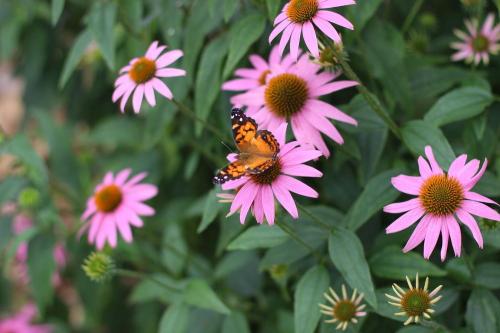
For this coming year I’m counting on truth, and hoping for a bit of bravado! My blog is still about telling the truth. Now notched up a bit, given the woman I am today, the situation in which we find ourselves, and the reality of my impending death. Time is running out.

Elouise

© Elouise Renich Fraser, 18 Jan 2021
Photo of Bravado Echinacea (coneflower family) found at garden.org

What next? | Dear Friends

Dear Friends,

As some of you know, I’m a survivor of childhood PTSD. My father’s behavior toward me was the most difficult part of my growing-up years. It cost time, money and effort to become the woman I am today.

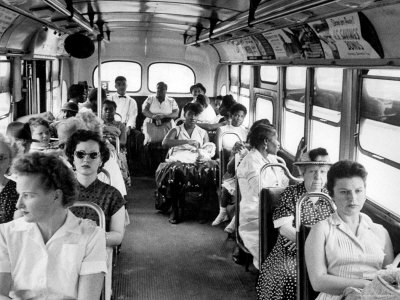
Yet I still haven’t faced what it means to be a white woman right now. Specifically, this particular white woman whose childhood set the table for racial blindness. It’s ironic. Nearly every day of my life from age 7 ½ to 14 I rode through colored town, and witnessed the realities of colored life in the Deep South.

My father’s approach to Deep South manners amounted to ‘be polite, smile a lot, and just keep going.’ Don’t ask questions, don’t debate anything, and remember you’re the eldest daughter of the white preacher who speaks from time to time at the Colored Community House.

Still, I was inquisitive. I remember asking my father more than once why things were this way. I’d lived most of my early life on the West Coast. I don’t remember seeing black people in Seattle or in Southern California.

According to my father, it all came down to the way colored people ‘like’ to live. Or what they found ‘most comfortable.’ Or how much money they made, or how they spent it. That was their choice.

Every school day during my grade school years, my father or a neighbor drove us through colored town on our way to and from school in the city. Colored town was about a quarter of a mile from our house.

Yet my father never talked with us about why colored town was there in the first place, why most of the houses needed repair, or what this meant in the larger picture of the Deep South. Perhaps he’d never looked into it.

I’ve decided I can’t avoid looking into it. Not as an academic exercise, but to face what happened before, during and after Jim Crow years, and how I’m now part of the problem.

Thanks for reading. This is a busy month for everyone, so I appreciate your visits even more than usual!

Gratefully,
Elouise

© Elouise Renich Fraser, 8 December 2020
Photo of segregated city bus in the 1950s found at aapf.org

a foreign land

Display at Jim Crow Museum of Memorabilia

I’m 71/2 years old. We just moved from California to a rural neighborhood 15 miles from Savannah, Georgia. It’s 1951.

Today we drove
Out of our long driveway
Into a foreign land

Don’t stare, Elouise
Those are colored people
They were born that way

Which means
Many things you can’t
Understand just yet

See their small gardens
And rows of cheery flowers
In front of their homes?

And look!
That woman just waved
At us driving by

She’s even hung out
Her handiwork
A handmade quilt

Isn’t it lovely?
I wish we had enough
Money to buy it

Adults and children smile
When we drive by
Some even wave

It’s as though they already
Knew us even though
We’ve never met

Indeed

© Elouise Renich Fraser, 15 September 2020
Photo of Jim Crow Memorabilia found at ferris.edu

the red cardinal revisited

the red cardinal
sings his bright clear spring song
perched on bare branches

When I published my first post, Dear Dad, on 27 Dec 2013, my voice was anything but bright and clear. Singing was definitely out of the question. As a survivor of childhood PTSD, I used an elaborate strategy of calculated silence and half-truth.

How much did I owe the world? How much did I owe my family? How much did I owe the church? My father was a clergyman. Revered, respected, loved and sought after by people with sorrows such as mine.

But I wasn’t one of his followers. I was his first-born of four daughters. I watched my tongue constantly. Smiled when expected. Stifled tears. Did as I was told. Set an example. And took the beatings like the contrite spirit I was not.

Breaking my silence of decades took decades. It started in my 40s, with trips to Al-Anon meetings for five years. There I learned to relax and share things I’d never told anyone. Then I worked with an intern therapist who helped me complete a genogram (family tree, with notes). Finally, in the early 1990s, I began working with a psychotherapist.

I put in hours and years of work. Did tons of homework. Cried buckets of tears. Filled unnumbered journals with dreams and personal entries.

Yet my recovery isn’t measured in months, years or numbers of pages written in journals. It’s measured in my voice. At first feeble, halting, self-conscious and terrified. Beginning with my husband and immediate family, then with my sisters and parents, slowly but surely with several trusted friends, and finally, a few years before I began blogging, with my large extended family on my father’s side.

My voice is the measure of my recovery.

Regardless of the weather, the political climate or my health, the question is the same: How free am I to tell the truth? That’s the thermometer that matters.

I’ve always cared about issues that have to do with women. I used to think getting a decent academic position would somehow ‘prove’ my worth. Or set me free. Especially if I was granted tenure.

Well, that wasn’t my riddle to solve. My riddle was my voice.

I began blogging because I knew it would challenge me to tell the truth freely, with words chosen by me, not by someone else.

So the little red cardinal outside my window caught my attention. The ground was covered with snow, and the laurel bush had been beaten down by more than one Nor’easter. Yet the little red cardinal sang his heart out. Freely. Telling his truth about life and announcing his territory and the hope of spring.

Though I’m a follower of Jesus, this doesn’t make life easier. In fact, it’s more difficult because it means both living and telling the truth. Especially when it’s most unwelcome or unexpected.

I still owe Candice thanks for this topic! Though I’ve written elsewhere about this blog, this is another way of looking at it. Equally true and challenging. Especially today.

© Elouise Renich Fraser, 17 March 2018, lightly edited and reposted 7 September 2020
Cardinal duet found on YouTube

Mom and Auntie T | 1950s

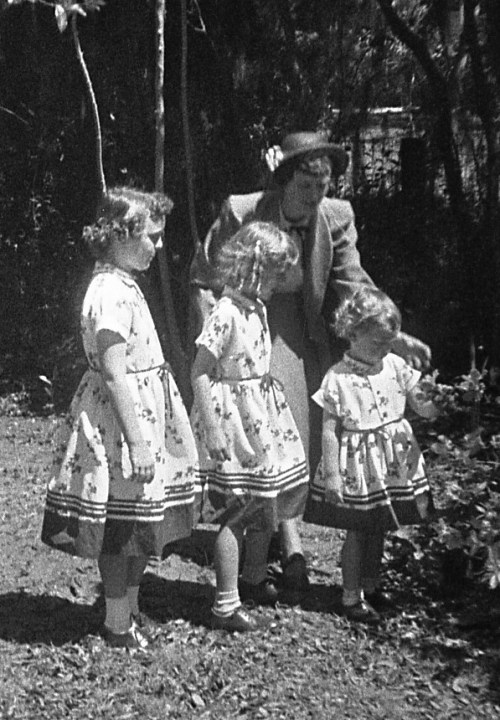
Mom with first three daughters; dresses and hair by Mom, 1950s 

It’s 1951. Our ‘new’ house on the Vernon River feels like a fairy tale. Fireplaces on both floors, huge pieces of heavy dark furniture, woven cane mats covering dark wooden floors—often with rugs on top of the mats.

Both floors facing the river had screened-in porches, with rocking chairs on the first floor porch. They also had tall French windows that opened onto the porches facing the Vernon River.

The old frame house stood on stilts so water didn’t leak into the first floor. Almost every room in the house had an old steam radiator plus a fireplace.

I felt like I’d died and gone to heaven. Even better, this was now (sort of) ‘our’ house. Including the dark brown oiled pine slats covering the living room and dining room walls. Heaven for sure.

Until it wasn’t.

Looking back, I can’t imagine what Mom went through. The house didn’t come with a house-cleaner. Mom could do it all, with her three daughters (soon to be four). Surely that would do for servant-power. With Mom in charge of course.

Except she wasn’t.

Auntie T and her husband Dr. T lived in the old slave quarters just behind the big house. Too small for Auntie T’s fancy furniture. So there most of it sat for us to use—and keep clean. Not according to Mom’s already high standards, but according to Auntie T’s higher standards. The kind that got reviewed every time Auntie T dropped by to see how things were going.

Mold grew on the lovely dark pine walls, on books and on dark wood furniture. Dust and pollen accumulated on the porch, and on the linoleum covered grand hallway from the back to the front of the house. Auntie T’s clean white handkerchief found every speck! No matter what Mom did, there was always something she needed to do better.

I think Auntie T was trying to turn Mom into a respectable White Southern Lady. I didn’t often hear Mom complaining. She knew who buttered her bread. Still, in my eyes Mom was the most efficient, organized person in the world.

Looking back, I’m chagrined. We moved to Georgia because Mom was recovering from a serious case of polio. Our California mission house (with 4 to 5 families, and constant guests from abroad) was like a circus. Mom needed to rest and recuperate.

In Savannah, she frequently rested in the middle of the day, sometimes crying softly to herself. Maybe the money was running out, or there wasn’t enough food for supper, or Dad still wanted a son. Or maybe she felt trapped by Auntie T’s expectations and intrusiveness.

Bottom line: Mom didn’t know how to tell us why we weren’t to play with our new black friend. I’m guessing Auntie T’s helper didn’t hesitate to report this to her eldest daughter. Even so, I can’t prove it.

© Elouise Renich Fraser, 18 August 2020
Photo taken by JERenich at Montgomery house, near Savannah, Georgia, 1950s.

A Lesson in Deep South Manners | 1950s

Sister #2 and I hanging onto the front-yard Mimosa tree, 1950s

I don’t remember her name. Her mother was the cook and household helper for Dr. and Mrs. Turner.  Her father took care of yard work and repairs to the Turner’s house.

Dr. Turner was a retired physician. Auntie Turner had worked as his nurse. Once upon a time they owned and lived in the big house. Then they gave it to the mission organization my parents served, and moved out. Now they lived in the old servants’ quarters. The simple wood frame two-story structure sat behind the big house. No one lived on the second floor anymore.

One day the Turner’s cook brought her oldest daughter to work. She was my age. After polite introductions, she and I ran off to play in the front yard by the river. She came several times. When Sister #2 played with us it was even better. That meant we could run races, play dodge ball, hide and seek, or Simon-says.

Our front yard stretched into the neighbor’s front yard which stretched into the next neighbor’s front yard and beyond. All the back yards (where the driveways and garages were) had fences. Most front yards didn’t.

The front yards were beautiful. The river, marsh grass and docks were right there next to us. Our next-door neighbors were often at their main house in the city. They told us we could play in their front yard any time we wanted to. So we did. They were very friendly.

We didn’t dare go beyond their yard, though, because the man in the next big house was mean. He shot Bambi one night with his rifle and Bambi died. Bambi was our new puppy. Sometimes Bambi barked little puppy barks. Mr. S didn’t like barking dogs, even though his great big guard dog barked and even snarled. Mr. S also gave rowdy drinking parties on his dock. We stayed away from Mr. S.

But we didn’t stay away from the huge water oak in our neighbor’s yard. We also had one in our yard. The two oaks became our start and finish lines for all kinds of races and made-up games.

One morning we had great fun racing back and forth between the oaks and then seeing who could twirl around the longest before collapsing on the ground.

The next day Mother quietly told us we weren’t to play with our new friend anymore. In fact, she wasn’t coming back. Ever. Mother looked uncomfortable. I was shocked.

I could tell she wasn’t giving us the full story. She said something like ‘It will be better for all of you if you don’t play together anymore.’ Furthermore, we were to say nothing to anyone else about this and ask no questions. Just do as we’re told.

I still don’t know the full truth. It was clearly about skin color. Our friend was colored; we were white.

I don’t think Mother came up with that by herself. I also don’t think our mean neighbor said anything. But the fact that he was unpredictable, white and rowdy with lots of money probably entered in.

And then there was Auntie Turner. She was never shy about telling us (especially Mother) how things are and how they must remain. Especially when it came to the way Mother took care of the big house, and our manners.

This was my low-key, ice-cold introduction to the social politics of race in the Deep South. My first lesson in Deep South manners and morals. Always ‘for my own good.’

No mixing of coloreds with whites.
Don’t tell the full truth.
Keep your mouth shut.
Don’t ask questions.
Just do as you’re told.
It’s dangerous if you don’t.
You can’t be too careful.

I wonder what Auntie Turner told my friend’s mother, and what she then said to her daughter. I wish I knew.

© Elouise Renich Fraser, 18 February 2015, lightly edited and reposted 17 August 2020
Photo taken by JERenich in the 1950s; Sister #2 and I hanging onto the Mimosa tree in the front yard.

From This River, When I Was a Child | Mary Oliver

Photo of the dock and river; taken by DAFraser in July 2010

A Mary Oliver poem for all of us. My comments follow.

From This River, When I Was a Child, I Used to Drink

But when I came back I found

that the body of the river was dying.

“Did it speak?”

Yes, it sang out the old songs, but faintly.

“What will you do?”

I will grieve of course, but that’s nothing.

“What, precisely, will you grieve for?”

For the river. For myself, my lost
joyfulness. For the children who will not
know what a river can be—a friend, a
companion, a hint of heaven.

“Isn’t this somewhat overplayed?”

I said: it can be a friend. A companion. A
hint of heaven.

© 2008 Mary Oliver
Poem found in Red Bird, p. 44
Published by Beacon Press

When I read this poem, I tear up. It takes me back to my childhood in the South. We lived on a branch of the Savannah River. Our smaller yet substantial river was named the Vernon River, part of the Intracoastal Waterway.

Vernon River spoke to me multiple times. Especially when I was feeling sad, misunderstood or inundated by the noise of four daughters living in one house with two parents. Plus small pets, parakeets, and the occasional baby flying squirrels rescued from certain death when they fell or were pushed out of their nests.

We lived in rural Chatham County, at the end of a narrow country road, 15 miles from Savannah, Georgia. I had three younger sisters. Frequently I needed a companion. A hint of heaven that was there for me, night and day.

The Vernon River did all that for me. No, I didn’t drink the salt water. But I swam in it. Better than a bath on a hot, humid day! Plus miraculous skin-healing properties of salt water free for the taking. Crabs to be caught, boiled, picked and eaten. Salt-water breezes to soothe my sad, sometimes lonely soul. The soft splash of tides coming and going like clockwork. The sound of seagulls chasing shrimp boats early in the morning and late in the afternoon.

When I read Mary’s poem, I’m out on the dock again. Alone. Sitting on top of the picnic table. Feeling the goodness of earth and heaven come together in one grand moment of peace.

Am I “somewhat” overplaying what I’ve lost? Or what the children of today may never experience?

I said: it can be a friend. A companion. A
hint of heaven.

Elouise

© Elouise Renich Fraser, 27 July 2020
Photo of dock and river taken by DAFraser, July 2010

A matter of life and death

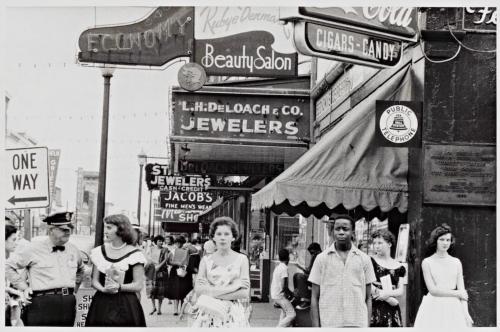
Downtown Savannah, Georgia, 1955
Note the historical marker on the far right of the photo

I’ve been thinking about the life and death of John Lewis. My generation paralleled his generation. Yet my life in the Deep South during the 1950s and 60s was light years from his life. It didn’t matter that I saw and heard about the Deep South every day. What mattered was the bubble in which I was raised.

In a nutshell: I didn’t have a clue how much I didn’t know, even though it was in plain view.

Back then, our family had room for many colored people. As a child, I assumed they were our friends. Still, our family was almost always in the mode of ‘helping’ them. Or joining them at special events at which my father sometimes preached. We daughters sat with our mother in reserved seats on the front row, always decked out in our Sunday best.

We also led regular, less formal Bible clubs for children in our rural setting and in Yamacraw Village. The Village was built on what had been a Yamacraw Indian settlement. Now it served colored people on the west side of Savannah.

The Bible clubs were also our family’s way of ‘helping.’ Plenty of fun, lots of singing (I often played the piano), a Bible lesson from my father, Bible verses to memorize, and snacks at the end. I always knew we ‘poor’ white people were more fortunate than they, and assumed they needed us.

Looking back, my family offered me only one role during my growing-up years in Savannah: a friendly helper. I didn’t have the means or courage to change what often felt unfair and even embarrassing.

Alongside family activities, I attended school. Beginning in grade school, we studied the glorified white history of Georgia. Especially the “Civil” War/War between the States. This continued through high school. Sometimes, especially in grade school, we celebrated heroes. A few were colored; most were white. Christopher Columbus was the greatest national hero. The slave trade remained shrouded in mystery, though Savannah was one of the largest East Coast importers of slaves, and exporters of cotton.

Praying you’re as well as you can be right now, and surrounded by activities that bring you joy, comfort, hope, and a challenge or two.

Elouise

© Elouise Renich Fraser, 20 July 2020
Photo of Downtown Savannah, Georgia (1955) found at reddit.com

moss-laden oaks loom | 1950s in the Deep South

moss-laden oaks, magenta azaleas

I posted this poem in 2014. It’s an attempt to capture my first impressions of the Deep South, including strict segregation between Black and White citizens. There were 5 of us in the car (Sister #4 yet to be conceived). We’d just driven from Southern California to rural Georgia, 15 miles outside of Savannah. Another world. One I’d never imagined in my 7 1/2 years of life. 

moss-laden oaks loom
magenta azaleas blaze
deep south path through woods 

* * *

Late summer, 1950

It’s past midnight
I’m asleep with Sisters #2 and #3
Are we almost there?

Mother’s tired voice wakes me up
Nothing but darkness outside
and cobwebby stuff hanging from tree limbs

A log-cabin tavern fades into view
Neon beer ads flicker on parked cars, old trucks
Daddy reluctantly stops for directions

He goes into the tavern.
Are we lost?
No. We just aren’t there yet.

Daddy drives slowly
No street lights no signs
The old road is dark, narrow, mysterious

Mossy oaks loom overhead reflecting
weak rays of yellow light from car headlights
Weary shacks line the road

Unexpectedly we pass grand fenced-in wooded lots with driveways to nowhere
Then modest houses and a few larger houses
The road ends abruptly.

Daddy stops, gets out, peers at the giant mailbox
He turns into the driveway
We’re there.

Deep South
moss-laden oaks, no blazing azaleas
Just heavy humid air, wealth next door to poverty, fiercely guarded secrets

© Elouise Renich Fraser, 10 March 2014, reposted with intro14 July 2020
Google image – Springtime in Savannah, Georgia