Telling the Truth

connecting the dots of my life

Tag: Christian Faith

Desmond Tutu, Mary and the oppressed

Pin on madonna

Mary’s song came to mind this morning when I read about Archbishop Desmond Tutu’s life and death. Not the version we hear in church during the Christmas season, but Rev. Zephania Kameeta’s version below.

Mary is often depicted in sumptuous gowns. Yes, we honor her faithfulness to her son, right up to his unjust death. At the same time, I can’t forget her social status. She wasn’t born into a privileged life, and her neighbors may have raised an eyebrow or two when she became pregnant.

The sting in Mary’s song is large, especially when we remember her status in society. From my perspective, Rev. Kameeta captures the sting and the reality of Mary’s song and Jesus’ birth. Not in general terms, but as it relates to his own rejected brothers and sisters in Namibia.

Zephania Kameeta sings the song of Mary – Luke 1:46-55

Today I look into my own heart and all around me,
and I sing the song of Mary.

My life praises the Lord my God
who is setting me free.
He has remembered me, in my humiliation and distress!
From now on those who rejected and ignored me
will see me and call me happy,
because of the great things he is doing
in my humble life.

His name is completely different from the other names in this world;
from one generation to another,
he was on the side of the oppressed

As on the day of the Exodus, he is stretching out
his might arm to scatter the oppressors
with all their evil plans.
He has brought down mighty kings
from their thrones
and he has lifted up the despised;
and so will he do today.
He has filled the exploited with good things,
and sent the exploiters away with empty hands;
and so he will do today.

His promise to our mothers and fathers remains new and fresh to this day.
Therefore the hope for liberation which is burning in me
will not be extinguished.
He will remember me, here now and beyond the grave.

Rev. Zephania Kameeta’s song was published in Why, O Lord? Psalms and sermons from Namibia, p. 15.
© 1986 World Council of Churches, published as part of the Risk book series

Thanks for stopping by today. These are troubled and troubling times. I pray we’ll find our way home, one day at a time.

Elouise

© Elouise Renich Fraser, 26 December 2021
Image found at pinterest.com

Why writing feels dangerous

How do I write when life is still a numbed-out muddle?

Last night I read about a woman who couldn’t get in touch with sensations in her body because she felt disconnected. Numb.

I relate to her. All my life I’ve experienced numbing out—sometimes on purpose; other times as the general go-to mode of my body. That means I feel out-of-place, lost, or just not interested in the vulnerability of connecting.

Years of neglect also hang out in my body. No wonder I get weary and can’t always stay awake emotionally. Perhaps some part of me has lost its memory or its ability to function with and for me.

And so I move on to something else instead of sitting with it. Or wondering about it, loving or even soothing it. Or welcoming it as a major part of the woman I’ve been and have become.

I’m a writer. I want to connect with what’s going on inside me, not just with thoughts running through my mind. I want to listen to myself, speak from within myself. Yet I’ve guarded so much for so long.

Can numbness lead to death? I don’t know. Perhaps I’m hiding from my voice. Sometimes I’m apprehensive about what I might discover or write and then let go. Even before I understand it fully.

From the moment I became a living human being, You’ve been there. Even when I was too terrified to be there. Too terrified to sit quietly with whatever was going on inside this woman I keep calling ‘me.’

Am I afraid right now? I want to believe You hold me close and won’t let me stray far from home. Yet I still think it’s my job to keep myself from straying. Maybe that’s why writing feels dangerous. My words are out there. I can’t control how they’re read or used or abused. Or heard and dissected.

A voice seems more fragile than a body. More connected to soul. More vulnerable to attack. Yet when I’ve done my best to be truthful, and have given it away so that the river moves on within and through me, I’m not sure what else I can do except build a dam.

I know about dams. I’ve constructed many in my lifetime. Little dams. Big dams. Complex, contorted, impenetrable dams. Trying desperately to escape the truth about me.

And what if the truth about me is beautiful? Lovely? What then? Have I killed it?

A small Christmas cactus blossom rests in front of me on my desk. A lovely, fading pinkish magenta. Its fragile petals look like limp gauze wings folded around its core. It isn’t ugly; it’s dying. Doing what lovely flowers do after giving themselves away.

It’s the only way to live. Not forever, but in this present moment. My calendar lies to me daily. It promises more than it or I can deliver. I want to live this one day as if there were no tomorrow. No more, and no less.

© Elouise Renich Fraser, 15 January 2018, reposted 10 December 2021
Photo found at pxhere.com

Peace is a Gift

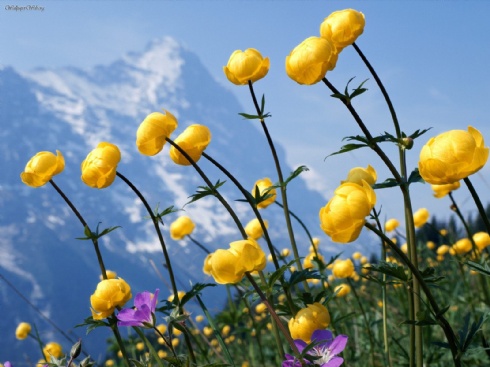
alpine-flowers_25137

Sometimes the most helpful thing I can do is listen to what I’ve already written. The last several weeks have been difficult. Not just for me, but for this tired old world that isn’t holding together very well. The poem below, first posted in August 2016, calls me back to what matters most for today and tomorrow, no matter what happens next.         

Nurture peace in your heart—
Welcome and savor it
Cultivate it
Water it
Let it rest
Give it space

Take its time for your time
Wrap it around your body yourself

Your shawl becomes you—
Blue as the heavens
Green as the garden
Brown as the good earth

Living, fragile
Strong, unpredictable
Invasive and healing
Tiny alpine flowers
Silken threads of peace
Woven into mortal beauty
Whispers of heaven

Peace is a gift waiting to be discovered. Not ‘out there,’ but in my heart. Sometimes I lock it away. Give it up for dead. Crowd it out because of fear, sorrow or disbelief. Throw up my hands and let it go as an unrealistic dream.

Other times I want someone to hand me peace on a platter. But peace won’t come from anyone else. It’s already in me, waiting to be re-discovered and cared for. Not once or twice, but as often as needed.

Some people talk about their prayer shawls. I want a ‘peace shawl.’ An outer reminder of an inner reality that’s mine when I’m willing to care for it. No matter what’s going on in my inner or outer world.

© Elouise Renich Fraser, 13 August 2016, reposted 14 August 2021
Photo of Alpine Flowers found at WallpaperWeb.org

For Today and Tomorrow | Psalm 121

The last several weeks have been a roller coaster ride. Up one day, down the next. Hot/cold. Content/discontent. Causes known and unknown such as unresolved health issues, political moves of the unhelpful kind, war and destruction, plus the sinking feeling we’re stuck in old patterns that leave the future of this planet in the hands of the next generation.

This morning D and I went for a walk. The air was warm, humid, and heavy with the sound of cicadas. Just drawing a breath felt like the beginning of the end. As we were walking home, the words of Psalm 121 popped into my head. It’s one of several Psalms I memorized as a child. That would be in the King James Version, of course!

Here it is, slightly updated by me. The Psalm invites me to do something besides ruminating on how I feel or what I think about what’s happening in and all around me.

I lift up my eyes unto the hills, from whence comes my help.
My help comes from You, the Holy One who made heaven and earth.
You will not suffer my foot to be moved; You keep me without drifting off to sleep.
Indeed, You who keep all creation shall neither slumber nor sleep.
You are my keeper; You are the shade upon my right hand.
The sun shall not smite me by day, nor the moon by night.
You will preserve me from all evil; You alone shall preserve my soul.
You will preserve my going out and my coming in from this time forth,
and even for evermore.

No promise of rose gardens, or an easy coast from this life to whatever comes next. Instead, I’m reminded that I owe my full allegiance to our Creator, and that whatever comes next, I won’t be abandoned.

Good words for a mixed-up world full of anxious people everywhere. Including me.

Elouise

© Elouise Renich Fraser, 10 August 2021
Photo of hills in Judea taken by David Shankbone; found at wikipedia.com

A Moral Obligation | Chinua Achebe


When things fall apart it isn’t an accident. Especially when religion or so-called patriotism is involved.

I don’t find the long view very encouraging these days. The temptation to rewrite history has routinely injected politics into the picture, particularly as presented in or omitted from school textbooks. Usually this favors those in positions of political power over against those with the least power, beginning with Native American Indians.

This need to make things fall apart from time to time has not served the best interests of the powerless, no matter where they live in these so-called United States. Or in Africa, as Chinua Achebe relates in his masterpiece, Thing Fall Apart.

Here’s how Achebe describes the problem–a description in which I hear echoes of our own dysfunctional situation in the USA. Near the end of Things Fall Apart, a disputed piece of land has been given (by the white man’s court) to an African family that had given money to the white man’s messengers and interpreter. Okonkwo, Achebe’s main character throughout the book, responds with the following question and answer (p. 176, emphasis mine).

Does the white man understand our custom about land?

How can he when he does not even speak our tongue? But he says that our customs are bad, and our own brothers who have taken up his religion also say that our customs are bad. How do you think we can fight when our own brothers have turned against us? The white man is very clever. He came quietly and peaceably with his religion. We were amused at his foolishness and allowed him to stay. Now he was won our brothers, and our clan can no longer act like one. He has put a knife on the things that held us together and we are fallen apart.

As I see it, we must be crystal clear about those we elect to serve the common good, not their own good. The stakes are high not just for this generation, but for those yet to come. As Achebe puts it at the top, this is a moral obligation. And yes, it will cost dearly. Not so much in money, as in humility and determination against all odds.

Thanks for visiting and reading. These are troubling days filled with expected and unexpected challenges. Praying for clarity and for the ability to do what we can where we are, no matter which way the wind seems to be blowing.

Elouise

© Elouise Renich Fraser, 2 August 2021
Quotation at the top found at forreadingaddicts.co.uk

The Sixth Recognition of the Lord | Mary Oliver

Every summer the lilies rise
and open their white hands until they almost
cover the black waters of the pond. And I give
thanks but it does not seem like adequate thanks,
it doesn’t seem
festive enough or constant enough, nor does the
name of the Lord or the words of thanksgiving come
into it often enough. Everywhere I go I am
treated like royalty, which I am not. I thirst and
am given water. My eyes thirst and I am give
the white lilies on the black water. My heart
sings but the apparatus of singing doesn’t convey
half what it feels and means. In spring there’s hope,
in fall the exquisite, necessary diminishing, in
winter I am as sleepy as any beast in its
leafy cave, but in summer there is
everywhere the luminous sprawl of gifts,
the hospitality of the Lord and my
inadequate answers as I row my beautiful, temporary body
through this water-lily world.

© 2006 by Mary Oliver
Published by Beacon Press in Thirst, p. 28

Dear Mary,

Your poem made me weep. I don’t know if you intended this, but your “Recognition of the Lord” is also a recognition of your “beautiful, temporary body.”

I long for a permanent body as beautiful as your water-lily world. Not the kind of beauty that gets attention, but the beauty that’s carried in our hearts and souls. No matter what’s happening to our aging bodies.

I never thought of myself as beautiful when I was growing up. Even now, the most I can usually admit is that I’m acceptable. My husband of many years has trouble convincing me that to him, I’m more than acceptable.

What challenges me when I think about the water lilies, roses, peonies, lilacs, and azaleas is that they never complain about the astonishing brevity of their beauty. Here today and gone tomorrow.

Do I want to be like they are? Sadly, no amount of makeup or other ways we try to fool nature will ever satisfy me. So this lovely Recognition of the Lord, the One who created us, is incredibly demanding. Yes, we have our time to flourish, and yes, we fade. Like flowers of the field and water lilies.

If this is meant to comfort me in my aging body, I still have work to do. Letting go isn’t my favorite pastime. Which, I’m guessing, wasn’t yours, either.

Thank you for prodding my heart and mind today, and sharing your lovely and beautiful voice with all of us.

Elouise

© Elouise Renich Fraser, 28 July 2021
Photo taken by DAFraser at Longwood Gardens, June 2019

Masks


Horst Lemke sketch for Psalm 139:1-6, Die Gute Nachricht, published by Deutsche Bibelstiftung Stuttgart, 1978

Every morning, along with enjoying the birds and squirrels, I read a bit of German. It’s a way to stay in touch with a language in which I was once fluent. I begin with a Bach Chorale each day (music plus 1st stanza in German). Most of the time that’s more than enough!

However…A few days ago, right after the Bach Chorale, I picked up my copy of The Good News in German, purchased in July 1980. It fell open to the sketch above by Horst Lemke. It struck a chord in me, partly because of our current situation in the USA and elsewhere. But mainly because Psalm 139 rightly assumes each of us owns at least one mask–though we may not own or be wearing a Covid-style mask.

I teared up as I read the passage below, given our current national and international challenges and catastrophes.

Psalm 139:1-12 from the Good News Bible in English (pp. 744-45)

Lord, you have examined me and you know me.
You know everything I do; from far away you understand all my thoughts.
You see me, whether I am working or resting; you know all my actions.
Even before I speak, you already know what I will say,
You are all around me on every side; you protect me with your power.
Your knowledge of me is too deep; it is beyond my understanding.

Where could I go to escape from you? Where could I get away from your presence?
If I went up to heaven, you would be there; if I lay down in the world of the dead, you would be there.
If I flew away beyond the east or lived in the farthest place in the west,
you would be there to lead me; you would be there to help me.
I could ask the darkness to hide me or the light around me to turn into night,
but even darkness is not dark for you, and the night is as bright as the day. Darkness and light are the same to you.

The rest of Psalm 139 is equally beautiful and powerful. Just what I need during these days of chaos, unplanned disasters, deep divisions, and masks behind masks.

Praying you’ll find your way today, knowing that the One who created each of us hasn’t forgotten our names, our faces, or our circumstances.

Elouise

© Elouise Renich Fraser, 17 July 2021
Sketch by Horst Lemke found in Die Gute Nachricht, p. 419
©1978 Deutsche Bibelstiftung Stuttgart

I’m ceded — I’ve stopped being Theirs | Emily Dickinson

harvest-moon-sept-2016

I’m drawn to this poem from Emily Dickinson for two reasons. First, I sometimes call myself Queen Elouise. Second, it captures the difference between belonging to Them and belonging to Grace. In my view, it describes what we need today in this world of stunning beauty, visible misery, and stunning injustice. My comments follow.

I’m ceded – I’ve stopped being Theirs –
The name They dropped upon my face
With water, in the country church
Is finished using, now,
And They can put it with my Dolls,
My childhood, and the string of spools,
I’ve finished threading – too –

Baptized, before, without the choice,
But this time, consciously, of Grace –
Unto supremest name –
Called to my Full – The Crescent dropped –
Existence’s whole Arc, filled up,
With one small Diadem.

My second Rank – too small the first –
Crowned – Crowing – on my Father’s breast –
A half unconscious Queen –
But this time – Adequate – Erect,
With Will to choose, or to reject,
And I choose, just a Crown –

c. 1862

Emily Dickinson Poems, Edited by Brenda Hillman
Shambhala Pocket Classics, Shambhala 1995

Emily’s poem reminds me of the biblical exhortation to put away childish things. Here, Emily is ready to put away her childhood name—the name They chose and dropped on her face at her infant baptism.

In fact, They can put that name (Princess?) in the attic trunk along with childhood toys and activities she no longer needs. Perhaps they served her well, but they have no place in her new, freely chosen baptism into the fullness of her personhood.

And so Emily announces her conscious Declaration of Independence. Her rebaptism is possible because of Grace, not because of someone else’s past decision for her, or their approval of her decision now. This choice is hers alone, made possible by Grace! Not forced, not from shame or blame, and not as a power move.

This independence won’t come without clarity of speech and action. Even more difficult, since it’s driven by Grace this means clarity driven by the Grace of truth, not by anger or a desire for revenge or retribution.

I respect you, and I am not your possession. I’m not interested in childish approaches to life. The name you gave me no longer fits. I don’t want or need your affirmation. I have a new, fuller Calling. I’m not the silver sliver of a Crescent moon. I’m a full-orbed Harvest Moon, signified by this ‘one small Diadem’ I now wear.

I’ve outgrown my childish identity. Back then I was at best a half conscious Queen. Today I’ve come of age. No more baby crown, and no more cute crowing or baby talk. I am Adequate and Erect. I don’t want or need the kingdom, fancy parades, or pandering obeisance. I’m content with a simple Crown and telling the truth in my own voice, as I see it.

Need I say Queen Elouise again? Now, more than ever, I long to be

…Adequate – Erect –
With Will to choose or to reject,
And I choose, just a Crown –

© Elouise Renich Fraser, 15 November 2016, lightly edited and reposted 18 June 2021
Photo of Harvest Moon by Robin Osbon found at almanac.com

On being Black in America | Frederick Joseph

Late last week a friend sent me the quote below from Frederick Joseph. She found it at Blavity, which she describes as “an excellent source to learn what is newsworthy to the black community.”

Here’s what Frederick Joseph had to say:

As a Black person in America, I’m tired.
Tired of waking up and not knowing
what new trauma will seep into my bones.
What new video of injustice will be etched into my memory.
What new name will become a hashtag.
Whether I will become a hashtag.

~~~

I don’t know what it’s like to live in black or brown skin. Nonetheless, here’s a first attempt to imagine how it might feel if the new “black or brown” were now “white.”

Feeling my White way along
this unfamiliar path I stop
to consider what it would
take to live for just one day
and one long night in the skin
of a Black person in the USA

Trapped with nowhere else to go
I’m caught in the glare of unsought
publicity turning uglier while the
latest news bulletin breeds fear
in the hearts of women and men
caught on camera in White skins

Newsy chats with experts and officials
don’t calm my racing heart already
sinking beneath words doled out about
future solutions while I want only
the honor of being recognized
today as the Full Citizen I already am

As a white citizen, I know the tug of wanting to keep going based on myths, hopes, dreams and a heavy dose of addiction to sham. We would rather live on tomorrow’s promises that yesterday and today’s reality. So where do we go from here?

I don’t know. However, I’m going to start checking out Blavity. Otherwise, I might miss what’s most important to the very citizens whose lives are routinely in jeopardy.

Elouise

© Elouise Renich Fraser, 14 June 2021
Photo found at alphanewsmn.com

A prayer for our nation | Zephania Kameeta

Dear Friends,

Today is Memorial Day. A day to honor those who served or lost their lives in various wars. I love our country, and I honor those who served with honor.

Sadly, many of us have denied, forgotten or minimized how little our country does for living veterans. Their bodies and spirits fight daily against disabilities and diseases directly related to their military service. I reject the argument I heard again just this week: These disabilities and diseases are part of what they signed up for.

It is not an exaggeration to say our military personnel of color have suffered the most neglect. Not just in terms of health, but in terms of post-war benefits. Our country applauded them while they were serving in active duty. Yet adequate funds for housing, education, health and other benefits have been withheld from most of them for decades.

I remember how distressed our black ex-military seminarians were when their academic support from the USA was diminished far below that being received by our white ex-military students. It wasn’t the first time this had happened to black ex-military personnel.

This is a problem for the USA government. However, it’s also a problem for all of us in the USA. We’ve lost our way with ex-military personnel (and their families), women military personnel, and everyday citizens of all colors. They are entitled to their just rights and honor.

I love this country. I also love Reverend Zephania Kameeta’s rendition of Psalm 114 for today’s world. An honored and honorable church leader in Namibia, he offers a timely challenge for all of us.

Psalm 114

When the oppressed people left the house of colour worshippers,
when the despised left the state of slavery and racism,
they became the Lord’s holy people,
the oppressed became his own possession.

The oppressors looked and ran away;
the worshippers of race and colour were paralyzed.

The mountains skipped like goats with joy;
and the hills jumped about like lambs in happiness.

Tremble, earth, at the coming of our Liberator,
at the presence of our God,
who hears the prayers of the poor,
who changes despair into hope and sorrow into joy!

A prayer from Why O Lord? Psalms and sermons from Namibia, by Zephania Kameeta, p. 41
© 1986 World Council of Churches, Geneva, Switzerland

Thanks for stopping by this Memorial Day.
Elouise

© Elouise Renich Fraser, 31 May 2021
Photo found at parkhillsrca.org