Telling the Truth

connecting the dots of my life

Tag: Christian Faith

Bitter fruit of ignorance

Weariness and
Overload conspire
Eyes numb
Mind on go
Finds a mess
In everything

Neat and tidy lists
Stare at nothing
Wondering
If I’m lost
And whether
I’ll ever return

Feelings of
Futility wash over
Heart and brain

I want to cram
A lifetime of
Undigested history
Into my heart and mind
Even though
There isn’t time
Or space
To accommodate
The bitter fruit
Of ignorance
Looking the other way
Making false assumptions
Keeping secrets
And smiling
In weak attempts
To make all things
Come out right

Sounds pretty gruesome. And yet…

I wouldn’t change for a second the opportunity to examine the history of racism in the USA, the way it shaped me from the day I was born, and what needs to happen now, not later. Yes, it would be nice to have a President who cared about this as well.

Unfortunately, this buck doesn’t stop with POTUS. It stops with me. I owe it to myself, my neighbors, strangers, and my Higher Power who weaves all things well. Even though I don’t always get it, I’m committed to muddling through as needed.

Right now, the muddling is about what this 76-year old retired theologian, educator, administrator, writer might do. All things considered.

Thanks for stopping by today. Check out this link to read about W.E.B. Du Bois.
Elouise

© Elouise Renich Fraser, 2 September 2020
Quotation found at azquotes.com

I felt a Cleaving in my Mind — | Emily Dickinson

chaos-in-markets-britain

I wrote this immediately after the November 2016 election of Mr. Trump. It still rings true–no matter who wins the November 2020 election. 

Here’s a timely poem from Emily Dickinson. What’s it like to be at loose ends? My comments follow.

I felt a Cleaving in my Mind –
As if my Brain had split –
I tried to match it – Seam by Seam –
But could not make them fit.

The thought behind, I strove to join
Unto the thought before –
But Sequence raveled out of Sound
Like Balls – upon a Floor.

c. 1864

Emily Dickinson Poems, Edited by Brenda Hillman
Shambhala Pocket Classics, Shambhala 1995

Things undone aren’t easily put back together. Especially when accompanied by relentless news reports and photos I’d rather not see. Faces of jubilation; women and men in shocked disbelief; children weeping from fear. The presidential election was a massive Cleaving in my Mind.

Is this our new reality? Out of control. Out of bounds. Out of patience. Out of solutions. Out of hope. Out of compassion. Out of generosity. Out of truth-telling. Our deficits are phenomenal.

Yet I’m called to faithfulness, courage, boldness and creativity.

There isn’t a magic or even supernatural solution to all this confusion. Human confusion is our normal state of being. Confusion about who I am, who you are, what’s going on, who’s in charge, what’s right and what’s wrong, what will bring me happiness, and how to get out of this mess.

I know one thing: I won’t get out of this confusion. Though my thoughts and emotions are important, they don’t offer answers that dispel all confusion. Even my best efforts won’t drive confusion away. They may, in fact, make things worse.

The answer isn’t about what I do, feel or think. It’s about who I am. Right now. True, this affects what I do, feel and think. Yet the starting point is always ‘Who am I right now?’

Thankfully, this hasn’t changed. No election can take this away. I’m God’s beloved daughter child. Not by privilege, but by grace. I’m not God’s only or special child. God has more than enough love, patience, mercy and kindness for each of us. In a strange way, it isn’t about us; it’s about God.

I don’t know what this looks like from one day to the next, or exactly where it’s leading. I do know that moving forward one tiny step each day as God’s beloved daughter child is more than enough. All I need to do is keep taking baby steps. Especially when the mist is so dense I can’t see where this is leading, and ocean swells rise deep within me.

Knowledge about who I am doesn’t reconstruct my brain and it won’t restring the tiny beads that just skittered all over the floor. It does, however, refocus my anxiety and confusion. I am responsible for three things: loving God with all my heart; loving myself, and loving my neighbor as I love myself.

I don’t need to understand everything. I do need to keep inching forward step by step, based on the situation I’m facing. I can’t control human confusion—mine or anyone else’s. But I can speak with my neighbor, comfort a child, offer a listening ear or send up a silent prayer.

I pray this finds you listening and trusting, no matter how bleak or uncertain things look right now.

© Elouise Renich Fraser, 12 November 2016, lightly edited and reposted 1 September 2020
Image found at wsj.com (Wall Street Journal)

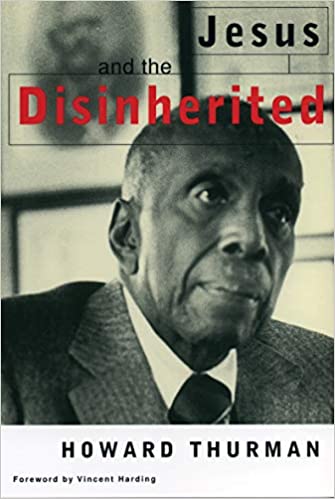
Jesus and the Disinherited | Howard Thurman

His days were nurtured in great hostilities
Focused upon his kind, the sons of Israel.
There was no moment in all his years
When he was free.

Poem fragment quoted on p. 34 of Jesus and the Disinherited. From Thurman’s privately published volume of poems, The Greatest of These, p. 3.

This summer I’ve been reading Howard Thurman’s relatively short book (less than 100 pages), Jesus and the Disinherited. It’s more relevant today than ever before. A sad commentary on our nation’s untenable situation, past and present.

Thurman’s book describes

  • What happens inside the disinherited
  • What their most difficult struggles are about, daily
  • And why Jesus (not Paul) is the person to whom they are drawn when it comes to real life as they know it.

Like the disinherited of today, Jesus faced fear, deception, hate, and the command to love one’s neighbor as oneself. This didn’t happen one challenge at a time, but every day, no matter the circumstances. In addition, Jesus was one of the disinherited. He was not a Roman citizen, or an official religious leader of Judaism.

It’s one thing to study our history as a nation (which we must), or the history of slavery in this country (which we must), or our individual backgrounds that led to the prejudices and blindness that shape our lives today. All of this is important.

Still, one thing has eluded me. I’m finding it in Howard Thurman’s book, even though he didn’t write the book for me or other white people. He’s clear about this: This book is for people who are black and disinherited, every day of their lives. What white people will do or think when it comes to the disinherited of today is up to them.

I highly recommend Thurman’s book as a way of recognizing everyday racial realities from the inside out. For me, it makes crystal clear what I’ve lived with all my life. This isn’t just about different approaches to life. It’s about the disinherited, and what it takes for them to survive in this country.

I hope you’ll consider reading it. It won’t change everything overnight. It can, however, strengthen our understanding of what our black and brown citizens and church members are up against every day of their lives. It also shows the importance of listening. Silently. Without attempts to explain or justify ourselves.

Elouise

© Elouise Renich Fraser, 27 August 2020
Photo of book cover found at amazon.com

Sursum Corda | G. A. Studdert Kennedy

What kind of day did you have so far? Mine was productive, though not the way I thought it would be. Here’s one of my favorite Studdert Kennedy poems. It seemed appropriate, given the state of things today.

*Sursum Corda

There are cowslips in the clearing,
With God’s green and gold ablaze,
And the distant hills are nearing,
Through a sun-kissed sea of haze.

There’s a lilt of silver laughter
In the brook upon its way,
With the sunbeams stumbling after
Like the children at their play.

There’s a distant cuckoo calling
To the lark up in the sky
As his song comes falling, falling
To his nest—a happy sigh.

Sursum Corda! How the song swells
From the woods that smile and nod.
Sursum Corda! Ring the bluebells
Lift ye up your hearts to God.

From The Unutterable Beauty: The Collected Poetry of G. A. Studdert Kennedy, pp. 95-96
First published by Hodder and Stoughton Limited (London, 1927)
Published in 2017 by Pendlebury Press (Manchester, U.K., August 2017)

*Sursum Corda -“Lift up your hearts.” The opening phrase of a traditional Christian liturgy dating back to the 3rd century. Normally used before celebrating the Eucharist.

Can there be beauty in a warzone? Especially with people dying all around, often in prolonged agony.

Studdert Kennedy, also known as Woodbine Willie, wrote this poem during World War I. He served as a chaplain, witnessing and participating in the laments, loneliness, pain and deaths of British soldiers. He dealt with the horror of war by writing poetry.

Many of his poems are heartbreaking. They deal with harsh realities of early 20th century warfare on the ground, and the daily struggles of human beings separated from their families. They also include some reality talk with God. This poem, like a number of others, found something to celebrate. A reason to hope, despite the daily suffering and dying that surrounded everyone.

Even though nature can’t solve all our problems, it’s there for the taking. A gift. Just look around. Lift up the eyes of your heart! In your memory, listen to the birds and admire the bluebells. They’re sending us an invitation to look and listen to the larger picture of nature, not just to our own small worlds.

Elouise

© Elouise Renich Fraser, 13 August 2020
Image of cowslips found at first-nature.com

The dam has been leaking for years

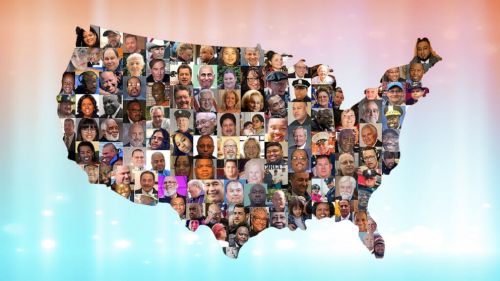
In honor of Covid-19 victims in the USA, from NBC News

The dam has been leaking for years
Giving up secrets great and small
Holding back others for fear
They’ll be rejected or tossed into
Another bin of bankrupt fake news
Now delivered daily from the top down
Burnished with self-righteous contempt
For humanity and all self-evident
Truths now being exposed as lies

The so-called mighty are falling
Taken down by the truth of a virus
Delivered daily without fanfare
And without so much as a knock
On the door or nod to fake protocols
Of a society already drowning in
A flood of its own making

One day at a time
One human being at a time
One lust for wealth at a time
One unanswered call for help at a time
One refusal to repent at a time

***

I don’t feel defeated. I feel lost. And challenged to change, thanks to Covid-19 and Black Lives Matter.

I’m relieved to be one of many citizens immersing themselves in the untold, untaught, neglected history of how we in the USA got to this point. How can it be that we still don’t honor and practice equal rights for each citizen of this nation?

So yes, I’m feeling lost in my own backyard, though not without hope. The kind that feeds on truth, and grows a bit stronger each day.

Elouise

© Elouise Renich Fraser, 6 August 2020
Image found at abcnews.go.com

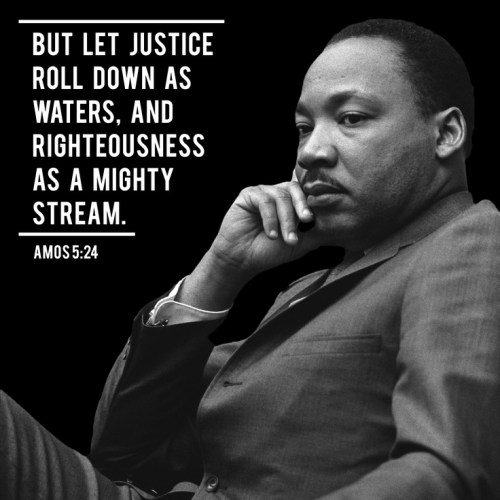
Let Justice Roll Down Like Waters

Justice doesn’t trickle down, any more than wealth at the top trickles down. Yet church-related efforts at justice sometimes seem to try trickling down. Through the cracks and around the edges.

Why? Because this is a politically-charged issue. The stakes are high, and it seems injustice is winning. Black Lives Matter and Covid-19 have together exposed our glaring weaknesses as a nation. Especially when it comes to race.

This past week I began a 40-day “journey through America’s history of slavery, segregation, and racism.” It’s titled “An American Lament.”  You can take a look or download it here. It was originally an exercise for Lent.

No one ever taught me to lament. Especially about my personal history with slavery, segregation, and racism.

I’ve always thought of myself as a seriously ‘with-it’ woman. In seminary, in the 1970s, I studied both sexism and racism. At university, in the 1980s, I focused my dissertation research on women’s issues. I mistakenly thought that by understanding feminism, I had an advantage when it came to understanding racism.

However, the very first day of this 40-day exercise, I listened online to a riveting, challenging address about racism and Christian churches in the USA. It was recorded in 2018, the year of mid-term elections. The full title is “Let Justice Roll Down Like Waters: Racism and our Need for Repentance.”

I highly recommend Rev. David Platt’s address for pastors, church leaders, church members, and anyone who cares about racism in the USA.

As for the rest of life these days, I’m walking every chance I get (way too hot on many days), listening to birds, helping stomp out lantern flies, talking with neighbors (outside and with a mask, of course), and learning more than I wanted to know about my history with racism.

Cheers to each of you for making it through another week!
Elouise

© Elouise Renich Fraser, 1 August 2020
Quote and image found at blockislandtimes.com

A Prayer of Lament 2

I wrote the poem below just after the 2016 Presidential Election. It still resonates as a lament about the outcome of the election. It’s also about today.

It’s easy to point to Mr. Trump as the cause of our current troubles. Yet Mr. Trump didn’t get here alone. His supporters, wealthy or not, religious or not, played their roll by covering for him, lying for him, and making loyalty to him the sign of being a good citizen.

Mr. Trump also had help from white Christians, including those who didn’t vote for him. Their preferences have included looking the other way, acting like nothing’s wrong in the White House, raging, apathy and indifference, cozying up in order to get what they want, or holding their noses until the next election.

White Christian slave holders and non-slave holders enabled white supremacy from the beginning of our nation. Worse, they often did this by misappropriating or ignoring Scripture.

It’s easy to look the other way, blame others, and live our privileged lives in a giant fairy tale that still passes for “American History.” Mr. Trump is a product of this history. He didn’t, however, make it happen.

So here’s the lament again, this time for all of us. Especially for white citizens in the USA who claim to follow Jesus.

We’ve lost our way —
or never found it

Bitter bargains struck
Trust betrayed
Loyalties unexamined
Bodies scorned
Contempt exalted
Rage rewarded
Fear ignited
Self promoted

Spoils of a winning war

Good Shepherd, have mercy on us all.
Amen

© Elouise Renich Fraser, 30 July 2020
Image found at parkhillsrca.org

Faith — is the Pierless Bridge 2

Pierless Bridge - pinterest

Two months after breaking my jaw in 2016, I posted Emily Dickinson’s lovely poem. Given today’s troubles, I’m as uncertain now as I was then. How am I to live my life? My comments follow, lightly edited.

Faith – is the Pierless Bridge
Supporting what We see
Unto the Scene that We do not –
Too slender for the eye

It bears the Soul as bold
As it were rocked in Steel
With Arms of Steel at either side –
It joins – behind the Veil

To what, could We presume
The Bridge would cease to be
To Our far, vacillating Feet
A first Necessity.

c. 1864

Emily Dickinson Poems, Edited by Brenda Hillman
Shambhala Pocket Classics, Shambhala 1995

Emily describes an impossible Pierless Bridge stretching out, with no horizon in sight but the sky and water. It doesn’t seem to have visible supports or buttresses. Instead, it seems to stretch out not in front of me, but with me, step by step, as I make my pierless way across the water.

My feet vacillate, uncertain where to go. I’m far from the shore, maybe not far to go. But I don’t know how much farther, or what I’ll find when I reach the goal.

Boldness and courage seem paramount. Closing my eyes, I feel my way along. Not with my hands, but through the bare soles of my feet connecting with what must surely be a mammoth construction of steel, boulders and cement. How could there not be a pier?

I open my eyes, hoping for a glimpse of the goal, but see nothing ahead and nothing behind. Even more distressing, what’s supporting me is no larger and no more visible than one slender, fragile thread of a spider web.

Closing my eyes, I grope along, too far out to turn back. I don’t feel bold or courageous. The way is precarious. I’m full of questions  and more than a bit of doubt.

I don’t have a map or a friendly GPS system to tell me when to leave one foot behind and shift my weight onto the other foot. I just know I’m being drawn and supported by something or someone greater than myself.

Is this journey about strengthening my faith? Perhaps the point isn’t my faith, weak or bold. In fact, I can’t believe that by the time I’ve arrived at the goal, my faith will be strong.

Before my faith and before my birth there was someone or something else. I imagine the Source of my life greeting me from within the Veil to which Faith leads me. Here is the One who birthed me. The One who boldly and courageously watches for me from the other side of my human life, spinning out as needed a fragile yet steel-buttressed thread of Faith—my Creator’s Faith in me. Faith that leads me home, just as I am and yet will be.

© Elouise Renich Fraser, 24 June 2016, reposted 29 July 2020
Image found at pinterest.com

Thank you, Mr. Trump – Again

I have not changed my mind since I first published this on 20 June 2018. 

Thank you, Mr. Trump.

I don’t really want to say those words to you. Yet I must. It seems the abuse of power has more educational value than all the well-intended lectures and lessons of this world.

Just think about it for a half-minute. Who would have thought we could all so quickly know the meaning and the impact of things that are ‘systemic.’ Evil is systemic.

Simply put: What happens in one corner of the world has tentacles that reach to every other corner of the world, sooner or later.

Good is also systemic. Ultimately, as a follower of Jesus Christ, I believe good will triumph, though at an exceeding high cost. Perhaps we’re paying it now?

In the meantime, systemic evil seems to be our sad and sorry tutor these days. As I see it, thanks to your moves and counter-moves and flourishes of your pen, we now recognize and feel the impact of systemic evil.

Soy farmers get it; steel manufacturers get it; those without a living wage get it; people who live on the streets get it; human beings from the wrong side of our southern border get it; people with skin that isn’t your color get it; people in mansions get it; and so do people in power. All this and more.

Of course some ‘get it’ more than others. And some are happy to get it at great cost to others. This becomes crystal clear as the consequences of evil multiply and hive off faster than ants or bees. Though even the bees are feeling systemic neglect as well.

Perhaps the word evil is bothering you. No problem. I can use another word. How about systemic lying? Systemic cheating? Systemic abuse? Systemic violence? Systemic greed? Systemic robbery? Systemic inhumanity? Systemic distrust of scientific research? Systemic neglect of those most in need of help? Just to name a few.

We don’t live in air-tight surroundings. We live in complex webs of connections, even when we think we’re living disconnected. Or off the grid. Which is, in itself, another form of denial.

No President of the United States has made the word ‘systemic’ so clear in so little time as you have, Mr. Trump. As a theology professor who struggled often to explain how systemic evil works in the world, I have to hand it to you. You’ve done a masterful job in very short order.

There’s just one hitch. You give every sign that you believe you’re an island unto yourself. Able to push and shove the world around at will or by hook and crook, hiding beneath your POTUS status and your highly proclaimed ability to practice the art of the deal.

Sadly, your relentless pushing and shoving is painfully and abusively open to inspection every moment of every day, whether you attempt to hide it or not. I wish I could feel sad for you. Instead, I’m mourning what’s happening to my friends, my neighbors, my family, our country and our integrity as one nation among many.

Not that we were perfect before you became POTUS. We were not. Nor will we ever be. Still, it seems that what we’ve become as of today or even tomorrow will never, ever be called ‘great.’

©Elouise Renich Fraser, 20 June 2018, reposted on 28 July 2020
Image found at ideas.hallmark.com

It’s not just the Corona virus — bad theology is killing us

During the last few months I’ve been listening to/reading what Black church leaders are saying. It isn’t pretty. We here in the great USA have made our bed. Now we’re sleeping and dying in it (especially if you happen to be black or brown) whether we like it or not.

I’m a theologian and a follower of Jesus Christ. I care about the so-called guiding principles of government, AND the guiding heart of our government and its citizens. Especially, though not only those citizens who claim to be followers of Jesus Christ.

The current disaster has been building ever since our forefathers and foremothers arrived or were forcibly brought to this country. Bad theology didn’t cause the Corona virus. Rather, the reality of living and dying in the USA with the Corona virus makes clear what’s been at stake from the very beginning. White supremacy. And, in particular, well-to-do white wealth and access to healthcare, housing, jobs…. This didn’t happen overnight.

The title at the top is from a statement by Reverend William H. Lamar IV, Pastor of the Metropolitan African Methodist Episcopal Church in Washington, D.C. Whether you’re a follower of Jesus Christ or not, please read his clear, bold statement. Well worth the few minutes it will take to read it. Just click on his opening line:

There comes a time when being nice is the worst kind of violence.

Praying you’ll have a fruitful day with moments of peace, plus strength to do what’s right.
Elouise

© Elouise Renich Fraser, 23 July 2020
Photo of Rev. William H. Lamar IV found at nbcnews.com