Telling the Truth

connecting the dots of my life

Tag: Creation

Emily Dickinson meets Mary Oliver
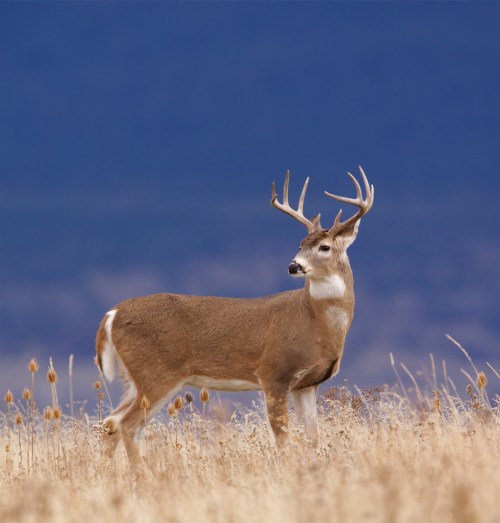
Last year a friend gave me a volume of poems by Mary Oliver. It’s safe to say I’m as mesmerized by Mary’s poetry as I am by Emily’s. Both are keen observers of nature, both external nature and human nature.

Which brings me to the reason for this post.

For the last few weeks I’ve been tantalized by a small poem of Emily’s. Cryptic as always, but not totally mysterious. Even so, I’ve wondered what to say about it. Then a few weeks ago I was reading Mary’s poems and was caught by a stanza in one of her longer poems.

First, Emily Dickinson’s poem:

To see the Summer Sky
Is Poetry, though never in a Book it lie –
True Poems flee –

c. 1879

Emily Dickinson Poems, Edited by Brenda Hillman
Shambhala Pocket Classics, Shambhala 1995

Now the third stanza of Mary Oliver’s poem:

The deer came into the field.
I saw her peaceful face and heard the shuffle of her breath.
She was sweetened by merriment and not afraid,
but bold to say
whose field she was crossing: spoke the tap of her foot:
“It is God’s, and mine.”

But only that she was born into the poem that God made, and
called the world.

Mary Oliver, Thirst, stanza 3 from “More Beautiful than the Honey Locust Tree Are the Words of the Lord,” Beacon Press 2006

Mary’s words helped me think about Emily’s poem. So here’s what I’m suggesting as one way to interpret them together.

  • No mortal words of poetry will ever do justice to this world, God’s poem. Nor do we understand ourselves unless we give up all efforts to capture in our words the reality of what God created and invited us to inhabit as caretakers. We can look and point; we cannot replicate.
  • Furthermore, no poetic words of ours will ever improve upon God’s great poem. Still, as humans we’re at our best when we reflect in our lives the grandeur of  creation.
  • Surely the summer sky, the deer, and all parts of God’s creation are dignified not because of what each does, understands or even writes in flowing poetry. Rather, we owe our dignity to being part of “the poem that God made, and called the world.”

Have a wonderful Sabbath rest.
Elouise 

© Elouise Renich Fraser, 26 August 2017
Image found at smartpress.com

Response to WordPress Daily Prompt: Dignify
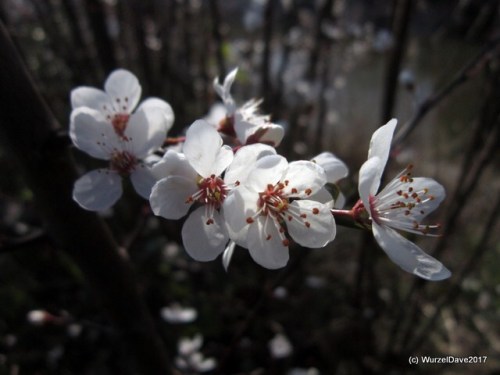
subtle changes

subtle changes in color and texture
create a minimalist feast for spring-starved eyes

***

© Elouise Renich Fraser, 21 March 2017
“WU Blossoms” taken by WurzelDave in Somerset, UK
Posted on the WeatherUnderground App in February 2017
Response to WordPress Daily Prompt: Minimal

Nature’s Panoply

winter-night-sky-c194e70b2bb102854731a6a4f9ff98e8

Nature’s panoply
Unfathomed spectacle
Universe greater than I
Galaxies of marvel and portent
Flung into space beyond comprehension
By One who knows my name
Each hair on my head
Each scar in my body
Each longing of my heart
My beginning and my end 

~~~ 

Our lovely musician daughter left a lasting spectacle on the ceiling of her old bedroom—now my office. When I feel lost, lonely or distressed I darken the room, lie down on the sofa, and look at the sparkling ceiling. Tiny glowing stars and dots placed there decades ago, still give off their comforting light. 

I think of this every time I hear the word ‘panoply.’ The vision our daughter created situates me in my little universe here on earth, directly in sight of the One who made and knows me best of all.

© Elouise Renich Fraser, 3 December 2016
Response to Daily Prompt: Panoply

Image found at  wallpaperup.com

When thou art far away | From an Old Soul

When are you most alive? That’s the puzzle George MacDonald is chewing on in today’s sonnet. His answer is unexpected. Read the rest of this entry »

Never Ending Birth | From an Old Soul

Even though this isn’t the way I want things to be, I’m encouraged by these two sonnets. I can’t say I’ve had any great miraculous spurts of growth when it comes to making my way home.

It’s all been a bit of a slog in the dark. Read the rest of this entry »

“Once in a granite hill. . .”

11050815

Here’s a happy poem from Amy Carmichael.  It reminds me of creation, Sabbath rest, children, and what it takes to survive in a sometimes desolate landscape.  These bluebells are in the British Isles.  Amy grew up in Ireland, and doubtless enjoyed bluebells like these when she was growing up.

Texas bluebells, the state’s flower, were one of Diane’s favorites.  On one of my spring trips to Houston, which happily included our daughter, Diane and her family drove us out into the country to view spectacular Texas bluebells.  This post is in honor of Diane, whose eyes were as blue as the bluebells of Texas.

I think Amy wrote this poem especially for children, of which she was one at least in spirit.  You might try reading it out loud–just for fun!

Bluebells 

Once in a granite hill
God carved a hollow place,
Called the blue air, and said, “Now fill
This emptiness of space.” 

Or was it angels came,
And set among the fells
A crystal bowl, and filled the same
With handfuls of bluebells? 

Hot hours walked overhead;
Our valley grew more sweet,
Though elsewhere gentle colors fled
Fearing those burning feet. 

Those burning feet—the fells
Are withered where they go,
But still the misty blue bluebells
Only the bluer blow. 

O God, who made the bowl
And filled it full of blue,
Canst Thou not make of this, my soul,
A vase of flowers, too? 

Let not the hot hours make
Thy child as withered fells,
But fill me full, for love’s dear sake,
With blue as of bluebells. 

*  *  *

Amy Carmichael, Mountain Breezes:
The Collected Poems of Amy Carmichael, pp. 132-33
© 1999, The Dohnavur Fellowship, published by Christian Literature Crusade.
Published in Pans (prior to 1917) and Made in the Pans (1917)

© Elouise Renich Fraser, 24 January 2015
Photo credit:  http://www.loweswatercam.co.uk

sinking daylight

sinking daylight births
spirit mist rising over
dark flowing river

* * * * *

infinitesimal
droplets Read the rest of this entry »