Telling the Truth

connecting the dots of my life

Tag: Daily Prompt

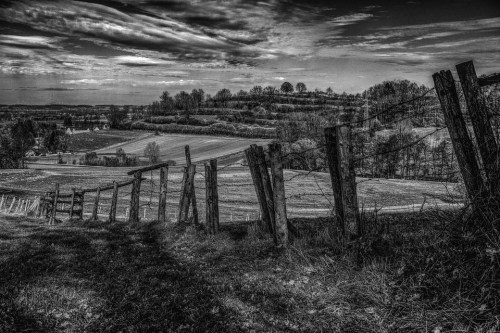
weathered fence

weathered fence and drifting clouds obscure lush landscape

***

my eyes strain to clarify
what stands before me
and what lies ahead

© Elouise Renich Fraser, 18 April 2017
Photo found at pixabay.com
Response to WordPress Daily Prompt: Opaque

Monday Morning Jolt

Fair warning, my friends. I’m writing this primarily for myself. I woke up this morning feeling gray, drippy and overcast. Just like the weather. Miserable.

Were there reasons? There always are, aren’t there? Still, if I don’t put one foot in front of the other, this day will take longer to traverse than it otherwise would.

On my way down to make my morning smoothie, I picked up a small book I read when I was in graduate school. Less than 100 pages. Written in honor of one of the most beloved preachers of the Nazi era, Christoph Blumhardt. Speaking on behalf of those begging for a cup of cold water, he wrote the following:

We must not be silent. The social struggle of millions in our time is not a coincidence….The ferment in the nations, the agitation of the poor, the crying out for the right to live—a crying, given into the mouths of even the most miserable of [us], which can no longer be silenced—these are signs of our Lord Jesus Christ…They do not know that it is Jesus who wants it.” (Action in Waiting, p. 8)

Yet Blumhardt didn’t pour his entire life’s energy into political life. He saw that neither political nor church movements for social justice could deliver a final solution to the world’s agony. Instead, we long for human fellowship that both waits for and experiences the fulfilment of that for which we are created. Not simply in our places of worship, but in everyday life.

Was Blumhardt a dreamer? I don’t think so. I believe he saw within the misery of his world the seeds of something greater. Yet not so overwhelming that we can ignore right now the work to which we’re called daily. Especially in the midst of political, national, social, religious and economic warfare in which some are winners at great cost to everyone else.

Even so, he argued we’re not called simply to work for social justice. We’re called to delight in the beauty of each day:

The earth is so beautiful, the earth is so lovely and full of joy, every little midge rejoices, every tree rejoices; all things are arranged delightfully and beautifully by God so that we too can live and move among them in joy and graciousness…. (Action in Waiting, p. 25)

Finally, just as all nature is ordered toward its Creator, so too are we:

God has already put into us what God is and what God wanted to put into us so that we should become God’s image. (Action in Waiting, p. 27)

I’m not an outlier, and neither are you. We’re already in the vision held close in our Creator’s great heart. My work is to move in the right direction, do what I’m called to do, trust, fear not, and keep my eyes on the goal.

© Elouise Renich Fraser, 17 April 2017
Photo found at pixabay.com, Golden Regulus

All quotes from Karl Barth, Action in Waiting, Plough Publishing House, 1969
Response to WordPress Daily Prompt: Jolt

Living in a haze

Living in a haze
of trance-like ghosts
we move through life
reenacting scenes
from childhood
played by ear
with great skill
and small vision

I’ve been thinking about my father, and the strangle-hold of symbolic behaviors I adopted in order to survive with my will intact.

My father lived in a haze of his own trance-like ghosts and scripts. A small world in which he was determined to survive my grandfather’s brutality.

Almost invisible and automatic, his ghosts and scripts drove him to replay the roll he learned by heart as a child. He hoped to keep himself safe, and demonstrate his superiority without disrespecting his father.

When he was in his 80s, Dad shared with me a recurrent dream. It troubled him greatly. So much that he sometimes began crying as he talked about it. The dream returned from time to time right up to his death at age 96.

In the dream, he’s in a physical fight with his father. Fighting for his life. No one else is in the room. It seems they’re in a barn. Both my grandfather and my father were tall, strong men shaped by years of hard physical labor on family farms.

Eventually, Dad wrestles his father to the floor, wins the match, and wakes up, caught in a nightmare of guilt and self-judgment. He disrespected his father. A cardinal sin, according to Dad. According to him, just having the dream proved his guilt.

Taking the measure of my father’s struggle against his guilt and self-judgment, along with his early, harsh judgment of me, helps me understand him. It doesn’t take away any blame for what he did.

It does, however, invite me to pray to our Creator, “Forgive him, for he knew not what he did.” Dad lived in the haze of his own trance-like ghosts and scripts. Unable to see beyond his own survival.

This also invites me to face my trance-like ghosts. Scenes from childhood played by ear with great skill and small vision of myself and others.

It’s Good Friday. A good day for self-examination and forgiveness.

© Elouise Renich Fraser, 14 April 2017
Response to WordPress Daily Prompt: Measure

My life a ravel

My life a ravel
of tightly bound strands
resists sorting
into heaps of trash
or reusable remnants
for a waif
left numb and cold
by winds of
unrighteous judgment

***

© Elouise Renich Fraser, 11 April 2017
Response to WordPress Daily Prompt: Unravel

The Shape of Healing

Describing the unspeakable
Welcoming the unbearable
Embracing the unimaginable

These phrases came to mind this morning when I saw the Daily Prompt. They capture what recovery looks like for me, an adult survivor of childhood trauma within my family.

No erasing the past, no magic pills, no overnight miracles, no shortcuts and no looking back. Sometimes I think I’m finally ready to be born. Or maybe it happened somewhere back there on the road to recovery, and I’m now an adolescent?

Today I’m working on the last piece of my series on The Shape of Forgiveness. I can scarcely believe I’ve lived to see this day. Much less write about it.

This week I’ve recalled seemingly random circumstances in the last 30 years of my life. I’m stunned by the way pieces came together. People, programs, books, articles, blog posts, conversations, life circumstances and more. They reinforced each other and kept me, inch by inch, moving in a direction, one trembling step of faith at a time.

Am I there yet? It doesn’t matter. Though the process is demanding, the payoff makes it all worthwhile. I’d rather write and rewrite my Grown Up Girl Rules than keep Daddy’s Good Girl Rules any day.

I think about you out there, on the other side of whatever I’ve posted. You’ve been my public audience at each step. The twists and turns of life will continue, as will my healing. Today I celebrate where I am right now. And you, my dear readers.

Have a lovely Sabbath!
Elouise

© Elouise Renich Fraser, 8 April 2017
Response to WordPress Daily Prompt: Heal

scattered remnants

scattered remnants
sculpted rocks of ages
soar above me

***

© Elouise Renich Fraser, 7 April 2017
Photo credit: DAFraser, July 2013
Colorado Springs, Garden of the Gods
Response to WordPress Daily Prompt: Outlier

The Shape of Forgiveness | Part 3

“Forgiving does not remove our scars any more than a funeral takes away all of our grief.”
“We cannot forgive a wrong unless we first blame the person who wronged us.”
Lewis Smedes, in The Art of Forgiving, Moorings 1996

Denial. I lived with it daily. Not simply denial about my father, but about precisely what he had done to me. In a dark room in my mind I still, in knee-jerk fashion, hadn’t given up bearing ‘my’ share of responsibility for the nature of our relationship.

I experienced it as unrelenting warfare. Yet if you’d asked me about this even three years ago, I would have protected my father by denying the truth. All it took was an add-on phrase or two like these:

  • I wasn’t always an easy child.
  • Sometimes I deserved what I got.
  • Sometimes I asked for it by being stubborn.
  • I know I’m not entirely guilt-free.

All intended to soften the truth and point away from my father as the responsible adult party. If I didn’t, I feared no one would listen to me. I had to remind them that I know I’m not perfect, either.

One of the most difficult exercises of my adult life was to blame my father. Not generally, but specifically, and in writing. With clear reasons, and naming the reality for what it was. I worked on this during the summer of 2014, using Lewis Smedes’ book, The Art of Forgiving, as a guide to rethinking my relationship to Daddy (the term my father required us to use when addressing him).

According to Smedes, I couldn’t forgive unless I first blamed my father for what he had done–concretely, specifically, and with reasons that held water. I had never blamed him in that way. I’d spent all my life trying to share the blame. That had to go.

Forgiveness has a shape. It isn’t a feel-good exercise driven by required words or even attitudes of reconciliation. Nor is it intended to deflect my attention from the Big Stuff truth. What happened to me changed my life in negative ways that are not outweighed by any positives I might name as ‘balancing’ factors.

What, then, do I mean when I say, ‘I blame Daddy’? My denial was so deep that it took several weeks to clarify this. Here it is in short form. You can read more here and here.

I blame you, Daddy, for

  • Willfully, intentionally and without coercion from anyone, using your power in ways that abused my body, my spirit, my mind, my emotions, my developing sexuality, and my overall identity/sense of self
  • Abusing your power as my father, as an adult male, and as an ordained clergyman
  • Not knowing or loving me as I was and am, beginning from early childhood and continuing throughout my adult years
  • Creating an atmosphere of intimidation at home, not an atmosphere of safety

Thanks for listening!

To be continued (one more post) . . . .

© Elouise Renich Fraser, 6 April 2017
Daily Prompt: Denial

family secrets

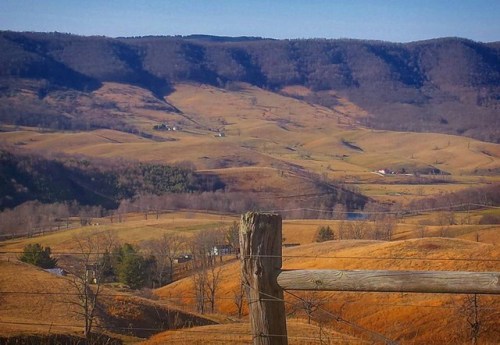
scattered farmhouses
grace idyllic surroundings —
guard family secrets

***

I can’t see the secrets; they’re underground. Have you ever watched Midsomer Murders? Very instructive. When open spaces are being closely guarded against land developers, the reason sometimes has to do with buried family secrets. Usually in the form of skeletons.

I don’t know if any secrets lie beneath the hills in this gorgeous Virginia valley. Yet the photo struck me as evocative. What happened in the past, matters. Even though we may take the secrets to our graves. Or create lovely graves for ugly secrets.

© Elouise Renich Fraser, 3 April 2017
Photo by marciadc70, found at Weather Underground Photos
Response to WordPress Daily Prompt: Prudent

The treasure we are

….when our hearts are free. Take a look and a listen. My comments  follow.

What would it take for me to be so free and focused? There’s no magic formula for what this pastor and his choir accomplished. What mattered was hard work, determination, shared vision, faithful allies and free spirits. Plus a Visionary Shepard who showed the way, encouraged, directed, reminded members of the goal, and participated in every painful, joyful step. Without apology, reticence, or pretense.

And what about us? There aren’t any short cuts. No magic wands. No overnight miracles. Just tons of practice plus the vision of becoming the treasures we are. Not alone, but alongside our Visionary Shepard. Each of us embodied treasure poured out freely, regardless of the high cost. Which, it seems, is full investment in a process that’s already taking us places we never dreamed we would go.

© Elouise Renich Fraser, 30 March 2017
Clip from Britain’s Got Talent, found on YouTube

Response to WordPress Daily Prompt: Fortune

Defending My Space

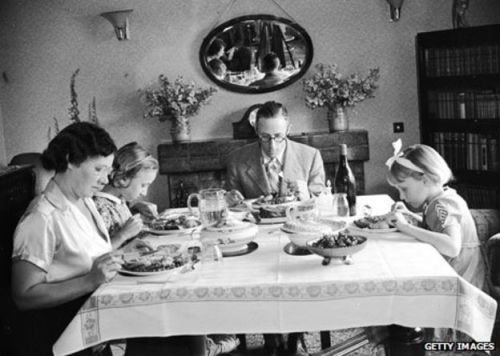
I’m about eight years old. I’m sitting at the dinner table, just around the corner from my father. The table is set, the food is spread before us, and we’re all in our seats waiting to begin. We haven’t yet asked the blessing. I’m playing with my dinner fork, just to the left of my plate. I’ve moved it a few inches away from my plate.

My father’s voice interrupts me. “Elouise, put the fork back where it belongs.”

I move it to the right, in the direction of my plate. “Elouise, put the fork back where it belongs.”

I move it slightly closer. My father’s voice remains firm and controlled. “Elouise, put the fork back where it belongs.”

By now my sisters are watching to see what will become of me. My mother is silent. This has become an event. Slowly I raise my hand to my fork and move it ever so slightly closer to my plate.

My father persists. So do I. Many repetitions later he’s satisfied; the fork has been returned to its proper place.

He proceeds with the blessing. He doesn’t know what I know: the fork is ever so slightly to the left of its proper place.

My father’s mission as a parent was to train us to keep the rules. My mission as his child was to break and keep the rules simultaneously.

Back then, perseverance meant getting through another day, using whatever survival skills lay close at hand.

If my father was persistent, I would be more persistent. If outward rebellions were too costly, I would invent creatively invisible yet superbly effective inward rebellions. If I was ordered to sit down and stop talking, I could continue standing and talking on the inside for as long as it took to comfort myself.

Indeed, this was the better way. In the private spaces of my mind no one could put me down, refuse to listen to me or try to break my will. In a family system intent on turning out obedient daughters, I survived by being secretly disobedient.

This memory from the 1950s, published nearly 20 years ago, is as vivid today as it was then.

The territory I defended was interior. I applaud the little girl who figured out how to do this. Nonetheless, my efforts were costly. They required constant vigilance, no matter where I was.

Abuse of power destroys safe space. It expects and demands behaviors, words, looks on faces, subtle and open signs of unquestioning and subservient submission.

What does it take to create and maintain safe space? Not just in our marriages and families, but in neighborhoods, nations, churches and schools? And how does my personal history connect with the racial history of the USA?

© Elouise Renich Fraser, 29 March 2017
Photo of 1938 family dinner found at bbc.com
Story excerpted from my book, Confessions of a Beginning Theologian (InterVarsity Press 1998)
Response to WordPress Daily Prompt: Territory