Telling the Truth

connecting the dots of my life

Tag: Health and Wellbeing

In the presence of my enemies

It’s January 2006. I got to my office early, and was preparing to drive to the airport and catch a flight to Houston, Texas, to be with my sister Diane who was dying of ALS. She had opted for comfort care at home. No food and no medication. Just fluids and whatever would comfort her. This might be my last visit with her.

As I was about to leave my office, the phone rang. It was D. His premonitions were correct. The president of the university had just requested D’s resignation. So here it was, after several years of difficult personnel and budget issues.

No, D didn’t want me to cancel my flight. Instead, I flew to Houston in a stupor of spousal pain and rage, and gave D a call that evening. I continued as dean at the seminary. D was now free to follow his heart and eventually accepted a position with an international organization he’d helped birth.

Now it’s August 2008. I’m on a platform in the university gym along with other dignitaries. We’re in full regalia, ready for the fall convocation, installation of new faculty, and installation of the new chancellor of the university. The man chosen as the next provost, one of D’s friends and faculty colleagues, would be installed as the new chancellor. My job was to offer the installation prayer.

Inside, I was a mess. When the time came, I stood at the lectern facing the university faculty along with our seminary faculty. A number of university faculty had been unhappy with D’s administration. Some bitterly so.

On the outside I was a professional. On the inside I was in melt-down, shaking in my spirit and fully aware I was facing some university faculty who felt like enemies, along with many others who still grieved D’s resignation.

The newly minted chancellor stood next to me, and I invited everyone to stand with me for the prayer. It was simple and direct. And yes, it was a prayer for me and for D, not just for the new chancellor.

The prayer made use of Psalm 23. I couldn’t find the original script. It went something like this:

Because the Lord is your shepherd and knows everything about you, you will never lack for anything you need.
When you’re weary, may you find rest in green pastures, and follow your shepherd to pools of quiet waters.
When your soul is troubled, may you find restoration, and be guided in paths of right relationships that bring honor to your shepherd.

When you go through times of deepest darkness and despair, may you fear no evil;
Your shepherd will be with you, to find and comfort you no matter what happens.
When your shepherd prepares a banquet for you, and your enemies are looking on or sitting at the table, know that you are an honored guest in the Lord’s house, worthy of the best wine in the world.

Finally, remember that this goodness and mercy will be with you all the days of your life, and you will dwell in the house of the Lord, your good shepherd, forever.

Amen

I don’t understand all the dynamics of this event. Nonetheless, when I sat down I was calm inside, ready for whatever came next.

©Elouise Renich Fraser, 28 June 2018
seeping through pores

Seeping through pores
The virus takes root
Invisible at first
A sense of not being
At home or abroad
In this sea of strangers
Wandering in and out
Filled with good will
They come and  go
Dry and desolate
A thought takes root
Without reason
The only welcome visitor
Whose words unheard
Make perfect sense
In this dying hope for miracles
That never arrive on time

In recognition of our most recent national upsurge in suicides attempted and/or completed, and in honor of family members and friends who ended their lives on this earth, or made the attempt and failed.

Always a thousand unanswered questions. Always a sense of ‘what could I or we have done differently?’ Always a desire to go to sleep and hope for something better when I wake up.

Multiple resources are available online. Hotlines and chat rooms are open night and day. Sitting there, waiting to be used. Sometimes they are, sometimes they aren’t.

©Elouise Renich Fraser, 25 June 2018

retiring to the attic

Heaviness of
Disciplined living
Wears me down

An ounce of this
Two drops of that
And maybe –
If you’re a good girl –
A slice of life

Need a break?
There isn’t one
Except this –
To retire to the attic
Sit in peace and quiet
And sleep your life
Away

I have to laugh when I read these words. I scribbled them down in desperation earlier this week. I was in the kitchen, exhausted, slicing and cutting up various veggies for yet another notoriously cruciferous Vitamix smoothie.

Our renovated attic has become my favorite place to go when I’m feeling down, or need a bit of peace and quiet. It’s uncluttered, undemanding, serene and accessible. My reading/sleeping chair and rigged-up leg and foot cushion stand ever-ready. Along with a compelling book and a radio for music, not for talk.

When I read the first two parts of the poem, I was horrified. These are my childhood feelings! Yet by the time I got to the end of the third part, I had retired to the attic. At least in mind and heart!

I’ve always dreamed of having a room of my own, not just an office where I do my ‘homework.’ I never dreamed it would be so large, inviting and quiet, with multiple views front, back and to the sky above. Yes, Smudge likes to share it with me. Probably for similar reasons, plus going to sleep on my lap.

Isaiah’s passage about crooked places becoming straight comes to mind. For decades our attic has been like those crooked wilderness places where you have to watch where you step. Over time it became a repository of junk and not-quite-junk, along with paper files, family treasures and row upon row of books. Small and large disasters waiting to happen.

The same Isaiah passage talks about streams flowing in the desert, and the wilderness blossoming like a rose. Somehow, the attic feels like a rose beginning to open. With more than enough room to multiply and fill space with good things, not bad.

Happy Friday!
Elouise

©Elouise Renich Fraser, 22 June 2018
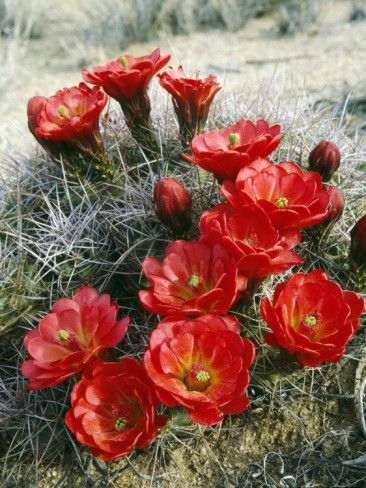
Photo of desert flowers found at Pinterest.com

A vision for the last chapter

What is my vision for Telling the Truth? Many thanks to Lea, one of my followers, for this question!

As it happens, it’s timely. Not because I’m changing course, but because I’m finally beginning to feel I’m on course. Not that I was totally lost. I wasn’t. I was, however, writing what I needed and wanted to write to get from there to here.

So now here I am, in the final chapter of my life. Now what?

Here’s what I envision going forward.

No matter what I write, each post will love, honor and respect my voice at this age, not someone else’s and not the voice I think you might prefer to hear. I can’t control what happens when you read what I write. Nonetheless, I want my posts to encourage, challenge or cheer you along wherever you are. Just the way many of you cheer me along with your distinct voices.

I can’t do this if I write in a whisper, halfheartedly, coyly, or with malice. Or if I choose not to write about something because it’s controversial.

Rather, I envision my voice coming straight from my heart, with my mind acting as a midwife, not as a gatekeeper. I can’t afford speaking from fear, or with too much confidence.

Whatever I choose to write, I envision it having heart and soul up front. Poetry. Commentary about the state of things in this world. Memories. Photos I love. Self-reflection. Devotional writing. All of it.

This vision challenges my family upbringing, my college years, and most of my graduate work and teaching years. If I learned anything well, it was how to speak and write strategically. It was exhausting and harmful to my health. It also demeaned my voice and was unfair to my audience.

At my age, it would be foolish and self-defeating in the extreme to leave things festering in my mind that need clear expression. It isn’t about being or sounding sure of myself. And it isn’t about changing you or anyone else.

This is about loving my voice. Standing up and having my say, without fear or shame.

To those who follow and read regularly, I can’t thank you enough for your presence in my life. If you’re visiting, I hope you’ll consider joining this group of diverse human beings scattered around the globe. Whether we like it or not, we’re all in this together. And my pledge to you is that I’ll dish up whatever’s happening in my small corner of the world.

Thanks for stopping by today.
Elouise

©Elouise Renich Fraser, 21 June 2018
Photo taken by DAFraser, June 2018 – Oak-leaf Hydrangea blossoms in our front yard

Thank you, Mr. Trump

I don’t really want to say those words to you. Yet I must. It seems the abuse of power has more educational value than all the well-intended lectures and lessons of this world.

Just think about it for a half-minute. Who would have thought we could all so quickly know the meaning and the impact of things that are ‘systemic.’ Evil is systemic.

Simply put: What happens in one corner of the world has tentacles that reach to every other corner of the world, sooner or later.

Good is also systemic. Ultimately, as a follower of Jesus Christ, I believe good will triumph, though at an exceeding high cost. Perhaps we’re paying it now?

In the meantime, systemic evil seems to be our sad and sorry tutor these days. As I see it, thanks to your moves and counter-moves and flourishes of your pen, we now recognize and feel the impact of systemic evil.

Soy farmers get it; steel manufacturers get it; those without a living wage get it; people who live on the streets get it; human beings from the wrong side of our southern border get it; people with skin that isn’t your color get it; people in mansions get it; and so do people in power. All this and more.

Of course some ‘get it’ more than others. And some are happy to get it at great cost to others. This becomes crystal clear as the consequences of evil multiply and hive off faster than ants or bees. Though even the bees are feeling systemic neglect as well.

Perhaps the word evil is bothering you. No problem. I can use another word. How about systemic lying? Systemic cheating? Systemic abuse? Systemic violence? Systemic greed? Systemic robbery? Systemic inhumanity? Systemic distrust of scientific research? Systemic neglect of those most in need of help? Just to name a few.

We don’t live in air-tight surroundings. We live in complex webs of connections, even when we think we’re living disconnected. Or off the grid. Which is, in itself, another form of denial.

No President of the United States has made the word ‘systemic’ so clear in so little time as you have, Mr. Trump. As a theology professor who struggled often to explain how systemic evil works in the world, I have to hand it to you. You’ve done a masterful job in very short order.

There’s just one hitch. You give every sign that you believe you’re an island unto yourself. Able to push and shove the world around at will or by hook and crook, hiding beneath your POTUS status and your highly proclaimed ability to practice the art of the deal.

Sadly, your relentless pushing and shoving is painfully and abusively open to inspection every moment of every day, whether you attempt to hide it or not. I wish I could feel sad for you. Instead, I’m mourning what’s happening to my friends, my neighbors, my family, our country and our integrity as one nation among many.

Not that we were perfect before you became POTUS. We were not. Nor will we ever be. Still, it seems that what we’ve become as of today or even tomorrow will never, ever be called ‘great.’

©Elouise Renich Fraser, 20 June 2018

Why we’re here, together

What’s it all about, anyway? Is there any method to this madness?

This past Saturday I attended a gathering of people from our church, the community, the seminary where I served, and visitors from other churches and states. We celebrated the ordination of a graduate, now a faculty member at the seminary, who has served at our church since the early 1990s. She was one of my students, and later became a colleague on the faculty.

Since retiring in 2011, I haven’t returned to the seminary for social or formal occasions. What happened with the seminary since I departed hasn’t been easy. From my point of view, the less I knew, the better. It was easier to be somewhere else, and better for my health.

But now many colleagues from the seminary were coming to our church for a celebration I wasn’t about to miss.

Was I uneasy? Let’s just say I was a bit short of a basket case last week. First of all, I had to decide what to wear. My normal church clothes (blue jeans, t-shirts and jackets) wouldn’t do.

Yet what to wear was nothing compared with apprehension about seeing colleagues and students I hadn’t seen in years.

I needn’t have worried. From the moment I walked into the sanctuary and saw one of my colleagues, I felt like I’d just come home. In fact, sitting there, surrounded by several rows of ‘us’ felt a bit like going to heaven. I think. I’ve never been there, so I can’t be sure….

Among my colleagues was a woman I’d hired as our director of student formation. My mind went back to the first sermon she ever preached at the seminary. It was about when we all get to heaven.

She asked us why we were all there on the corner of City and Lancaster Avenues, just across the street from the city of Philadelphia and just on the edge of the western suburbs of Philadelphia. And why were we such a diverse group?

We weren’t simply diverse as Americans, but as international students from all over the globe. All now thrown together in this little seminary on the corner of City and Lancaster Avenues. Perhaps feeling culture shock. Never quite sure what someone meant by that turn of phrase, or that look or that comment or question. Or why some people laughed now and some people laughed then. And others didn’t laugh much at all.

At the end of her sermon, she suggested we were at this specific location to  practice getting to know each other now, getting along with each other now, breaking the ice with each other now, so that when we get to heaven we won’t have culture shock when we see who else is there!

I’ll admit to a bit of creative memory here. But I know that was the point of her sermon. We closed with a rousing hymn, “When We All Get to Heaven.”

Just seeing and being with former colleagues and students made me grateful to be welcomed into a seminary alive with humanity. Imperfect, yet alive in ways I’ve rarely experienced in other institutions of so-called ‘higher’ learning.

©Elouise Renich Fraser, 18 June 2018

morning alarm and my father’s shame

chasing me from bed
sun rays dance across my face
catbirds clear their throats

Today is Thursday. Market day. And there I was this morning, sound asleep. What a wonderful feeling. My sleep patterns have inched in the right direction for the last several months, and last night was the best yet.

The Market will wait. It’s almost time for lunch, and I’m just poking along without shame, enjoying the sun (not yet too hot) and the morning light. And thinking about my father and me. And shame. Partly because of recent posts about how women and girls are often shamed, and partly because Sunday is Father’s Day here in the USA.

I woke up thinking about my father’s shame. It was there long before I arrived. Shame about his father mercilessly shaming him. Shame about his face and crooked teeth that weren’t as handsome as he thought he might have been. Shame about not having at least one son. Shame about his social awkwardness and so much more.

From the moment I was born, my father’s shame was in the air. I believe it began with his father passing his own shame on to my father. I remember suggesting this to him when I was older. He thought my idea was nonsense. Yet I can’t ignore the reality that children are the recipients of unfinished business between their parents and grandparents. My father’s unfinished business was Shame.

From my childhood on, I believe my father projected a heavy dose of his shame on me. Sadly, I could never be the submissive little girl he believed I should be. In addition, my mother was never able (to her shame?) to present to him the son he desperately wanted. Score: 4 daughters, 0 sons. He joked about it sometimes. Yet living with him was no joke.

If there’s one thing I would wish for Dad on Father’s Day, it’s that he would look into a mirror, smile at himself without seeing all his defects, and see instead a man loved and sought by his Creator.

©Elouise Renich Fraser, 14 June 2018
Gray Catbird photo found at Birds of North America Online

Whose body is it anyway?

Several days ago I posted the poem below. It came to mind this week when I thought about the way women’s bodies are shamed and punished. Sometimes to such an extent that we don’t recognize our bodies anymore as gifts. And many of us haven’t learned to be their vociferous, ferocious and loving advocates.

This body
Like my heart
A house of Your creation
Stands ready to greet the stranger
Whose form and visage
Isn’t as expected
Lost
Dust of the earth
Sorrowful yet not without hope
She stands
Waiting

Who is this stranger who stands waiting? I think I’m the stranger. Alienated from my female body even though I call it ‘my’ body. Part of this is a hangover from childhood and youth. The consequences of being directly and indirectly abused in my female body.

It seems my body keeps trying to get my attention,. It’s tired of hanging around waiting to do my bidding, or carrying me here and there no matter how it feels.

Instead, it wants me to stand up for it and stop forcing it to keep going. Or hoping someone else will save the day, like Prince Charming.

Several evenings ago at the end of an unusually busy day, I stood at the kitchen sink slogging through a pile of dirty dishes. It was late. My feet and back were screaming for mercy.

All I wanted to do was lie down and go to sleep. That, or be rescued by a prince who would gallop into the kitchen and do for me what I refused to do for myself—take care of my weary body.

It struck me as odd if not self-defeating that I wanted help from someone else. There I was, supposedly a grown-up woman with a mind of her own, unable to do what I needed to do. Stop. No matter what happened or didn’t happen to the dirty dishes.

My body works and waits every day, hoping against hope. Have I forgotten how to take the initiative? How to sit down and give it a rest, fuss over it in a kindly way, and thank it for the ways it helps me get through each day?

As a child, it sometimes seemed other people owned my body. They did not. God owns it, and has given me the privilege and responsibility of being in charge of it.

It’s as though God said to me,

Here. Take this body. I created it just for you. It’s the only body you’ll have in this life. Treat it as an ever-present stranger you’ll want to get to know at least a thousand times over. Someday I’ll come knocking at your door, eager to see how you’ve treated it and what you’ve learned from its wisdom.

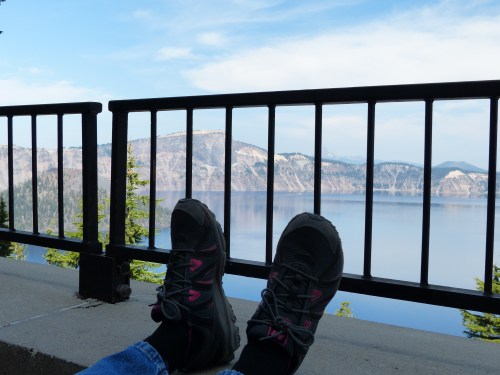
Women’s bodies are demeaned and pushed beyond their limits every day. Sadly, I can’t put an end to all of it. I can, however, actively love and care for my body. Which strikes me as more than enough. Upstairs attic, here I come! Though Crater Lake would be nice, too.

©Elouise Renich Fraser, 11 June 2018
Photo taken by DAFraser at Crater Lake, Oregon, 2015

Shaming and Punishing Women

One of my longtime followers, Fran Macilvey, left the following request in response to my recent post, Voices long silent.

I’d like to hear more about your view on “….shaming rituals and periodic public displays of what happens to strong women…” because I’m sure it doesn’t just happen to women, and I’m curious to consider why we do it. What are we frightened of? Disapproval??

I don’t pretend to have all the answers, especially about how things like this happen to men. At the same time, from my childhood on it seemed women and girls had to be kept in their places. My personal fear wasn’t disapproval. It was harsh punishment. Not just as a child, but even as a professional. It was important to ‘walk the line’ and remember that I was not in charge. Today I might simply walk out. But that freedom didn’t happen overnight.

In a recent telephone conversation with one of my sisters, we talked about ways young boys shamed us at school when we were in the 5th grade. Our father also shamed us at home every time one of us was beaten. I was the prime example of what would happen to my three younger sisters if they dared to live ‘outside’ the lines of what my father considered proper behavior for females.

So we shared our experiences in the 5th grade. Both involved shaming by a male classmate. There was no one safe to talk with us. Not at school, and not at home. Each of us lived with the burden of believing we were the problem. The truth, however, is that our young, developing female bodies were the problem. Not to us, but to the boys who tormented us.

Silence about things like this, when carried for decades and magnified by repeated body shaming is like carrying a dead weight in one’s body and soul. Still, the only safe way to get through was to keep our young mouths shut and just keep going.

I can’t begin to describe the feeling of release I felt because my sister and I had finally dared tell each other about this insult to our souls and bodies.

Then there’s the companion side of this dilemma. Often when women stand up and report harassing behavior, they become the subject of investigation. Maybe it was your clothes, your tone of voice, the look in your eyes, the perfume you wore to work today. Hence the silence of women afraid to report abuse of any kind on the job, at home, in schools and universities, in churches, or even in friendship circles.

I’m not saying all women are as pure as the driven snow. Instead, I’m saying that experiences like this need to be unpacked. Perhaps we can change our behavior. Not because what we’re doing is ‘wrong,’ but because it isn’t putting our own safety first. Often we need trusted friends and qualified psychotherapists to walk with us.

Reading books about how to survive various forms of shaming or PTSD isn’t a bad thing to do. We can learn a lot. Yet there’s that internal stuff that isn’t going to go away because we read a book. Sometimes we need a safe person to hear us out and help us examine our feelings and behaviors without blame or judgment.

©Elouise Renich Fraser, 9 June 2018

Voices long silent

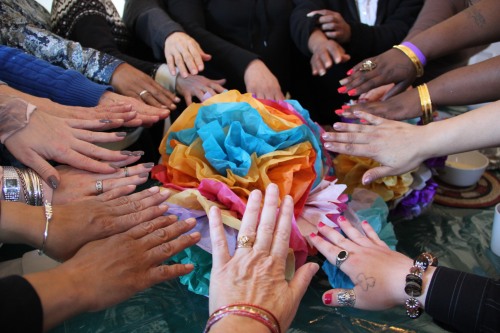
Dawn's Place circle of friends making paper flowers february 2014

Voices long silent
Spill over each other
Dying to be heard

Sisters on a mission
To recover lost youth
Find each other instead

Secrets never shared
Comfort never given
Tears never cried
Sink into the ground
Of love-starved hearts

How many of us are there? Blood relatives or total strangers, it doesn’t matter. The more I read and hear about the untold lives of women, the more horrified I am at the way we’ve been silenced. I also wonder how long we’ve taken it out on each other?

Starving for sisterly conversation. That’s how I grew up. Silence was enforced and reinforced a thousand ways. Not just at home but in church, in school and in every social or public setting of my life. Even, strangely, in settings that seemed to be made up of women only.

As a child and teenager I was surrounded by a seen and unseen assemblage of rules, shaming rituals and periodic public displays of what happens to strong women. Especially women who speak their minds and make trouble for the rest of us.

Fast forward, and it feels too familiar. Not so much from the bottom up as from the top down. It doesn’t take many men and like-minded women to turn the tide. Especially when women can easily be publicly shamed, if not ruined, in this age of social media.

Many, if not most of us are starving for love. Not for glory or fame, but for safety, acceptance and affection. We’re dying for a listening ear. At least one other woman who will confirm our experience. Laugh and weep with us. Comfort and support us. Especially now, when female life around the world is still fragile, no matter how many grand laws are on the books. Including right here at home in these United States of America.

I know. There are all kinds of barriers and circumstances that seem to discourage this. Yet a smile and a warm hello might be that last drop that turns the tide for another woman. I’d even suggest it’s a way of knocking on a door. Especially in a country gone sour on social niceties.

With hope and persistence,
Elouise

©Elouise Renich Fraser, 8 June 2018
Photo: Women at Dawn’s Place, a therapeutic residential program for women