Telling the Truth

connecting the dots of my life

Tag: Interpreting Poetry

Caught in a near nightmare
This morning I woke up feeling strangely empty. And weeping. Partly because of a near-nightmare and partly because we’re living, it seems, in a near-nightmare.

In the dream, I’m alone in a small room, just getting ready to exit. I’ve decided this small room isn’t going to work for me. Suddenly a man I don’t know and have never seen before walks into the room. He isn’t impressive in stature or looks, yet I know in my gut that he’s potentially bad news. He immediately flops down on the single bed near the door.

As I walk toward the door to exit, he reaches out and grabs my hand. His face clouds over with contempt and a sneer. I know I’m done for if I don’t take charge. I feel small and defenseless. Caught in a nightmare not of my making. I feel his grip tightening on my hand.

I wake up not knowing what to say or do next.

The man’s eyes, the sneer on his face, and the totally invasive nature of his presence and behavior communicated his firm belief that I was totally irrelevant. In his eyes my life mattered not a whit.

It’s sometimes difficult these days, especially since I’m on the older end of the age spectrum, to maintain a sense of relevance. But this was bigger than that. It was about the invader’s power and willingness to exercise it no matter who I might have been. Though I’ll admit it didn’t help to be female.

This tired old world is in a season of growing visible and present chaos. The kind this world has seen before, though not with so many growing warehouses of nuclear arms and an over-supply of trigger-happy leaders ready to prove their supposed virility. Ordinary people seem to have become irrelevant. Except as props on a political stage.

I don’t fixate on this every day. Nonetheless, it’s always in the air begging for my addictive attention. If I remain fixated, I’m a goner, dead or alive.

Instead of playing along with the ‘dream’ man’s agenda for me, I relax, ignore his eyes and disgusting speech, and pray out loud and in a strong voice these challenging words from Mary Oliver’s poem, “Six Recognitions of the Lord.”

Oh feed me this day, Holy Spirit, with
The fragrance of the fields and the
Freshness of the oceans which you have
Made, and help me to hear and to hold
In all dearness those exacting and wonderful
Words of our Lord Christ Jesus, saying:
Follow me.

Mary Oliver, Thirst, stanza 5 from “Six Recognitions of the Lord”
Beacon Press 2006

Which is my prayer for all of you as well. No matter what comes next.

© Elouise Renich Fraser, 23 September 2017
Image found at givaudan.com

Daily Prompt: Irrelevant

Who has not found the Heaven — below —

Wouldn’t you love to find heaven on earth? If so, Emily Dickinson’s little poem offers food for thought. My comments follow.

Who has not found the Heaven – below –
Will fail of it above –
For Angels rent the House next ours,
Wherever we remove –

Emily Dickinson, Poem #1543
Found on Wikisource.org

When I went looking for this poem, I found a second version. One of the pitfalls of having poems published is dealing with editors who think they have a better way of saying things. In general, Emily’s cryptic, almost abrupt speech and layout betrays her hand.

Just for comparison, here’s the edited version that’s out there. All cleaned up and, from my perspective, changed in its meaning.

Who has not found the heaven below
Will fail of it above.
God’s residence is next to mine,
His furniture is love.

Found in Emily Dickinson, Collected Poems, published by Courage Books 1991

Sweet, but not what Emily wrote.

In the poem at the top, Emily says the key to finding Heaven lies with us, not with God or even with Angels. Not because they don’t exist, but because it all depends on our ability to recognize them. Not high above this earth, but right beside us, no matter where we are.

Emily suggests that each of our neighbors has the capacity to point us toward Heaven. It isn’t because they have deep theological insights, or preach sermons or make statements about heaven. Nor is it because they’re perfect, glow in the dark, or have wings and shining robes.

Rather, it’s because from time to time they bring a bit of heaven into our lives. Just when we most need it. It doesn’t matter what they believe or don’t believe about angels. What matters is that they bring a bit of heaven into our lives. Just when we most need it, even though we don’t always like to admit we’re needy.

This little poem seems to put us on notice. Emily isn’t asking us to become Angels. She’s asking us to keep our eyes open for Angels. They may show up on our doorsteps when we least expect them. Not from Heaven, but from “the House next to ours.”

This life offers preparation for something beyond our current sight. Not doctrinal proof of Heaven or of Angels. Rather, a whisper, a suggestion, a hint of reality that visits us from time to time. Especially when we’re in need, whether we realize it or not.

Sometimes it isn’t easy to accept help from Angels who aren’t wearing brilliant robes or sprouting wings from their shoulders. They might look like the people next door, or just around the corner, or standing next to us in the checkout line at the grocery store. We may have decided they couldn’t possibly be angels.

Yet there they are, momentary messengers from God who let us know we’re not alone. With their words and deeds they show us a bit of what Heaven looks like on this earth. All so that we’ll recognize it “above.”

Have you been visited lately by an Angel?

© Elouise Renich Fraser, 16 September 2017
Painting: Granville Redmond (1871-1935), A Sunset Sacrament
Found at parabola-magazine-tumblr.com

We never know how high we are

Dear Emily,
I have one small suggestion to make about your poem below. Please add ‘or queen’ to your last line. Just in case that’s not possible, I’m going to do it for you every time I read it. You’ll find my comments below your lovely poem.
Respectfully,
Elouise

We never know how high we are
Till we are called to rise;
And then, if we are true to plan,
Our statures touch the skies –

The heroism we recite
Would be a daily thing
Did not ourselves the cubits warp
For fear to be a king –

Poem #1176, written about 1870
Found on Poets.org

Dear Friend of this World,
I’m sending you this little poem today from Emily Dickinson. Maybe you never heard of her. I think she was a bit shy and bashful. You know, like many of us who don’t want to become a public ‘thing,’ even though we do enjoy being noticed and appreciated.

I think that deep down, Emily wanted us to know about her little poem. Or at least to notice it. So please read it over, and over again. Once is good, five times is better.

Do you know how important your words and deeds are? Perhaps you’re tempted to water them down by over-thinking. Or you get stuck in fear. Especially fear of failure, or fear of going against expectations–your own or those of others. I do.

Sometimes I wonder whether Emily understood her own queenly power.

If you have any doubt about yourself, look and listen to what you already do every day. Just getting up in the morning is a big deal. Or smiling and offering to help a friend or stranger. Or doing what you know will honor your body and spirit or someone else’s.

The way I see it, God gave us our selves, each other, and this world with its unnumbered inhabitants as our earthly home. We’re the only caretakers God has on this earth. We’re a big deal, individually and together.

In fact, God loves nothing more than watching us step up to our full kingly and queenly stature. Especially despite our worst fears, and without expectation of payment, reward or even a ‘thank you.’ Sometimes it takes an emergency to jumpstart our royal blood. But we don’t want to wait for that, do we?

Thank you most kindly for visiting and reading.
Elouise 

© Elouise Renich Fraser, 12 September 2017
Image found at pinterest

Response to WordPress Daily Prompt: Disobey

He fumbles at your Soul

Hurricane Harvey’s recent visit brought me back to this poem from Emily Dickinson. My comments follow.

He fumbles at your Soul
As Players at the Keys
Before they drop full Music on –
He stuns you by degrees –
Prepares your Brittle Nature
For the Ethereal Blow
By fainter Hammers – further heard –
Then nearer – Then so slow
Your Breath has time to straighten –
Your Brain – to bubble Cool –
Deals – One – imperial – Thunderbolt –
That scalps your naked Soul –

When Winds take Forests in their Paws –
The Universe – is still –

c. 1861

Emily Dickinson Poems, Edited by Brenda Hillman
Shambhala Pocket Classics, Shambhala 1995

A disclaimer: I don’t think this poem from Emily is to be figured out. It resists. Emphatically.

Yet after more than a year of pondering it and the events of the last weeks, I’m ready to comment on it. Strangely, I’m sticking with my first impressions.

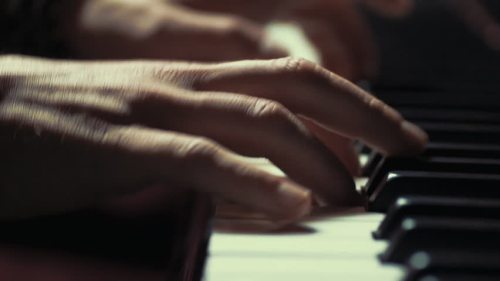
I’m a musician. A pianist. This poem is about music and a lot more. Not everyday music, but music that happens rarely in a lifetime.

I hear Emily describing a pianist, the power of music in the hands of a gifted performer, and the effect on the listener. This isn’t just any music, but the kind that begins innocently enough and ends with power that stuns the soul into silence. Not applause, but silence.

Some musicians were masters at this. Chopin comes to mind. I’m thinking about what’s called ‘the Raindrop Prelude.’ You can watch and hear Vladimir Horowitz perform it here. It doesn’t follow the flow of Emily’s poem precisely, but the opening raindrop notes, repeated throughout, set the stage for what’s coming. In the finale, Chopin doesn’t end with a flourish, but with a gradual distancing of the storm, raindrops still falling and fading into the distance.

I hear Emily describing the music of Nature. The kind that begins with the far-away sound of approaching thunder, and the first erratic fall of rain. Hammers, set in motion by fingers hitting piano keys, strike strings hidden from view. We hear the storm approaching. Sometimes waning, yet always moving our way.

The music draws us in, adding voices and turns of phrase, shifting and turning from here to there, sometimes lulling the listener into a reverie. Then, without warning, like the closing bars of Beethoven’s Pathetique, comes that unanticipated bolt of thunderous lightning followed by utter silence. You can watch and hear Daniel Barenboim’s performance here.

After that, nothing else matters. The music/storm has undone you. Totally. Silence is the only appropriate response. All the standup applause and shouts for more mean nothing. The finale already said everything.

Emily believed in God, and seems to have had a healthy on-again, off-again relationship with God. She also believed in the power of nature to reveal truth about us and about God. I wonder what Emily would make of Hurricane Harvey and its aftermath.

I can’t help noticing that the Winds in Emily’s poem take Forests in their Paws, not in their teeth or claws. Perhaps there’s an invitation to see more than cruel destruction here, or a vengeful God who is somehow punishing us.

Maybe God wants our attention, and is offering us another chance to attend to each other. Strangers as well as friends and family. Costly? Yes. No matter how you look at it. Pain free? Never.

© Elouise Renich Fraser, 6 September 2017
Photo found at Shutterstock

Response to WordPress Daily Prompt: Anticipate

Emily Dickinson meets Mary Oliver

Last year a friend gave me a volume of poems by Mary Oliver. It’s safe to say I’m as mesmerized by Mary’s poetry as I am by Emily’s. Both are keen observers of nature, both external nature and human nature.

Which brings me to the reason for this post.

For the last few weeks I’ve been tantalized by a small poem of Emily’s. Cryptic as always, but not totally mysterious. Even so, I’ve wondered what to say about it. Then a few weeks ago I was reading Mary’s poems and was caught by a stanza in one of her longer poems.

First, Emily Dickinson’s poem:

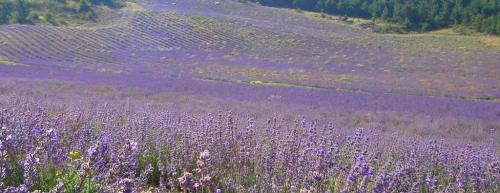
To see the Summer Sky
Is Poetry, though never in a Book it lie –
True Poems flee –

c. 1879

Emily Dickinson Poems, Edited by Brenda Hillman
Shambhala Pocket Classics, Shambhala 1995

Now the third stanza of Mary Oliver’s poem:

The deer came into the field.
I saw her peaceful face and heard the shuffle of her breath.
She was sweetened by merriment and not afraid,
but bold to say
whose field she was crossing: spoke the tap of her foot:
“It is God’s, and mine.”

But only that she was born into the poem that God made, and
called the world.

Mary Oliver, Thirst, stanza 3 from “More Beautiful than the Honey Locust Tree Are the Words of the Lord,” Beacon Press 2006

Mary’s words helped me think about Emily’s poem. So here’s what I’m suggesting as one way to interpret them together.

  • No mortal words of poetry will ever do justice to this world, God’s poem. Nor do we understand ourselves unless we give up all efforts to capture in our words the reality of what God created and invited us to inhabit as caretakers. We can look and point; we cannot replicate.
  • Furthermore, no poetic words of ours will ever improve upon God’s great poem. Still, as humans we’re at our best when we reflect in our lives the grandeur of  creation.
  • Surely the summer sky, the deer, and all parts of God’s creation are dignified not because of what each does, understands or even writes in flowing poetry. Rather, we owe our dignity to being part of “the poem that God made, and called the world.”

Have a wonderful Sabbath rest.
Elouise 

© Elouise Renich Fraser, 26 August 2017
Image found at smartpress.com

Response to WordPress Daily Prompt: Dignify