Telling the Truth

connecting the dots of my life

Tag: Life and Death

In the Evening, in the Pinewoods | Mary Oliver

Who knows the sorrows of the heart?
God, of course, and the private self.
But who else? Anyone or anything else?
Not the trees, in their windy independence.
Not the roving clouds, nor, even, the dearest of friends.

Yet maybe the thrush, who sings
by himself, at the edge of the green woods,
to each of us
out of his mortal body, his own feathered limits,
of every estrangement, exile, rejection—their
death-dealing weight.

And then, so sweetly, of every goodness also to be remembered.

© 2008 by Mary Oliver
Published by Beacon Press in Red Bird: Poems by Mary Oliver, p. 63

A few weeks ago, out walking in the evening, I heard a wood thrush. One of the most haunting, beautiful sounds on earth. It was singing in the woods behind a nearby church and graveyard.

So many deaths right now. So many regrets, angers, crushing sorrow and disbelief.

I’ll never forget the cries of a mother Canadian Goose nesting just outside my office at the seminary. A noisy raptor had been circling and screaming for too many minutes. Father Goose was sitting nearby, clearly agitated, watching the sky from time to time.

Yes, the inevitable happened. The raptor stole the baby from the nest, unmoved by the parents’ frantic, furious cries and attempts to save their newly-hatched chick.

When I arrived at the seminary early the next morning, Mama Goose was sitting immobile, holding silent vigil on grass in the back courtyard of the seminary. Her loyal partner sat nearby, watching her and waiting. It looked and felt like a mourning ritual. They were there for most of the day before they flew away.

So much sorrow and anguish right now. That’s why I need to hear a wood thrush from time to time, along with its many neighbors calling out to me: There’s more to life than meets the eye. Mourn, have faith, and carry on.

Written a few days after the loss of one of my forty-nine first cousins, and in view of my own mortality and the current situation in this world.

Thanks for visiting.
Elouise

© Elouise Renich Fraser, 23 June 2020
Video found on YouTube
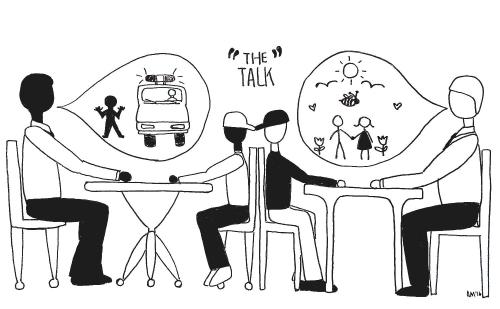
What ‘human rights’ don’t look like

Recently a friend sent me the following list. I haven’t been able to get it off my mind. It was compiled by Dr. Valerie Bryant, a Black therapist in Brooklyn, NY. In the list she names black citizens threatened or killed in recent years while engaging in the behaviors she names.

Think of Dr. Bryant’s list as a roll call clarifying the difference between living black or brown, and living white in the USA. It’s also an invitation to reflection about ourselves, and the meaning of human rights.

…As a white person when you go out in the street, you don’t have to think twice of being murdered by a police officer or citizen acting like a police officer.

Or as a white person,

I can go birding (#ChristianCooper).
I can go jogging (#AmaudArbery).
I can relax in the comfort of my own home (#BothemSean and
#AtatianaJefferson).
I can ask for help after being in a car crash (#JonathanFerrell and
#RenishaMcBride).
I can have a cellphone (#StephonClark).
I can leave a party to get to safety (#JordanEdwards).
I can play loud music (#JordanDavis).
I can sell CD’s (#AltonSterling).
I can sleep (#AiyanaJones)
I can walk from the corner store (#MikeBrown).
I can play cops and robbers (#TamirRice).
I can go to church (#Charleston9).
I can walk home with Skittles (#TrayvonMartin).
I can hold a hair brush while leaving my own bachelor party (#SeanBell).
I can party on New Years (#OscarGrant).
I can get a normal traffic ticket (#SandraBland).
I can lawfully carry a weapon (#PhilandoCastile).
I can break down on a public road with car problems (#CoreyJones).
I can shop at Walmart (#JohnCrawford) .
I can have a disabled vehicle (#TerrenceCrutcher).
I can read a book in my own car (#KeithScott).
I can be a 10yr old walking with our grandfather (#CliffordGlover).
I can decorate for a party (#ClaudeReese).
I can ask a cop a question (#RandyEvans).
I can cash a check in peace (#YvonneSmallwood).
I can take out my wallet (#AmadouDiallo).
I can run (#WalterScott).
I can breathe (#EricGarner).
I can live (#FreddieGray).
I can be arrested without the fear of being murdered. (#GeorgeFloyd)

***These are NOT human rights if only white people have them.*

With compassionate rage
Valerie Bryant, PhD
Fort Greene Bklyn 11205

How would my world change if I woke up with different colored skin than I now have? Can I remember how I was taught to think or talk about skin color?

© Elouise Renich Fraser, 21 June 2020
Image found at stlpublicradio.com

It’s been an age

Tree

This is one of my favorite poems, at least as true today as it was when I posted it in November 2014. Today has been filled with a mixture of happiness and contentment, along with a lurking feeling that we’re all at sea, and the ship of state is stressed.

How do you see yourself and others today? I hope you’ll give yourself a great big smile before the day is done. Then give away at least one more smile. All we can count on is the present.

It’s been an age since I first met you—
You there, looking back at me
Three score years plus eleven to be exact
You haven’t changed a bit, they say
You and I know better
Sometimes I can’t believe it’s you
I hardly know you
Could we start over do you think?
Would it be as much fun?

I don’t know.
Was it fun for you?
Are you as puzzled as I am?
I seem to have more questions than answers today
Where and when did we find each other?
We seem to get along
But then we always did even when we didn’t
So who am I to say?

All I know is looking back at me
Wondering where the time has flown
And who this beautiful woman is
Smiling at me through the mirror

* * *

© Elouise Renich Fraser, 20 November 2014, reposted 18 June 2020
Photo Credit:  DAFraser, December 2012
Hoyt Arboretum, Portland, Oregon

I just struck gold!

Who was Amelia Boynton Robinson, and who is that young man sitting next to her? And do you know who’s in the photo on the right? Or what year it was? To find out more, check it out right here. It’s the second entry from the top. You can read more about Amelia Boynton Robinson’s life right here.

For the last few weeks I’ve been searching for gold, interpreted by me as

  • easy to read/watch
  • lively and informative
  • brief, riveting commentary with real photos of real people
  • a semi-crash course only better
  • attention to women as well as men
  • inspiring without glib promises
  • tuned into today’s challenges
  • excellent communicator

It’s impossible to take in everything all at once. So I’m now following Chris Preitauer’s blog.

Beginning at age 7 I grew up, went to college and had my first ‘adult’ job in the Deeply Segregated South. I saw and heard a lot. Sadly, I didn’t formally or informally hear much about Black Lives. Nor was I encouraged to get curious about why. In the 1950s and 60s, Black citizens were treated differently than White citizens. Not just in the Deep South, but in the not so Deep North.

So yes, I’ve found gold! Someone from my era (sort of) who became involved.

I hope you’ll look at a few of his pieces. They’re to the point, challenging, and inspiring without pretending our current challenges will be easily resolved.

Thanks again for visiting, reading, and leaving your footprint!
Elouise

© Elouise Renich Fraser, 17 June 2020
Photos found at ChrisPreitauer.com

Alternative tv | Dorothee Soelle

Four miners in mine shaft wearing hard hats and headlamps

Dorothee Soelle wrote this poem in the 1970s, an era roiled by the Vietnamese War. I was in my 30s. How old were you? My comments follow.

Alternative tv

The old man on the screen sang
in a loud and shaky voice
and had probably never been very clean
in addition he had hardly any teeth left
a miner with black lung
of course he spoke dialect and his grammar was bad
why after all should he
show his best side to the camera

When god turns on his tv
he sees old people like that
they sing
in a loud and shaky voice
and the camera of the holy spirit
shows the dignity of these people
and makes god say
that is very beautiful

Later
when we have abolished tv as it exists
and are allowed to look at the skin of aging women
and are unafraid of eyes
that have lost their lashes in weeping
when we respect work
and the workers have become visible
and sing
in a loud and shaky voice

Then we shall see
real people
and be happy about it
like god

Dorothee Soelle, Of War and Love, p. 171
English translation of selected pieces from the German text © 1983 Orbis Books, Maryknoll, NY 10545
First published as Im Hause des Menshenfressers, © 1981 by Rowohlt Tashenbuch Verlag in Hamburg, West Germany

Now that I’m in my mid to late 70s, I find this poem more truthful than ever. I don’t often see aging women or men on TV, just as they are. Maybe in a news piece or documentary. But rarely, if ever, in flashy shows or advertisements. They’re busy reflecting our captivity to spending money on ourselves, our houses, our lawns, our cars, eating out and eating in, or getting ‘fixed’ so our embarrassing flaws don’t show.

As Dorothee Soelle points out, our Creator is watching Alternative tv. The kind that accepts us just as we are when we’re willing to show up just as we are. Happy to be in the presence of one who understands and loves us in all our real flesh.

As always, thank for visiting and reading. These are hard times for all of us. I pray we’ll find ways to help bring about hope, peace, and reconciliation, and courage to show up for our Creator and each other, just as we are.

Elouise

© Elouise Renich Fraser, 15 June 2020
Photo of miners found at WestVirginiaInjuryLawyers.wordpress.com

Lest we forget | Wilmington, NC, 1898

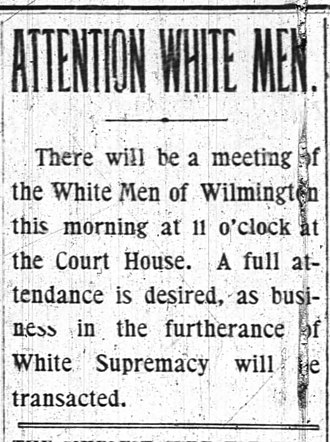
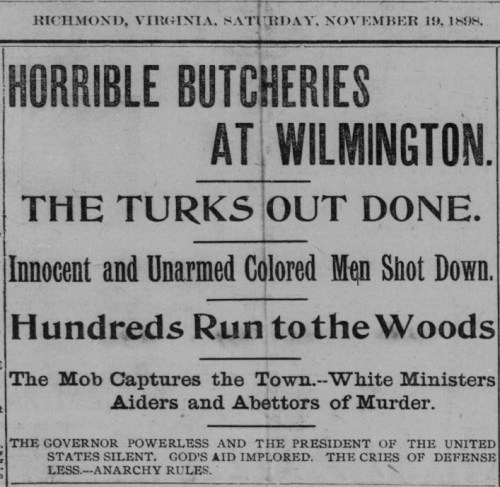
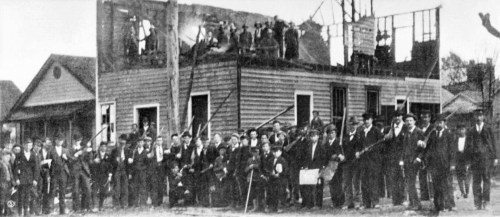
I first put these pieces together in February of this year. Why? Because I’m convinced most of us haven’t adequately studied the history of racism in the United States. Outstanding books are available for those with time and opportunity to read them.

Nonetheless, I found these news clips riveting, tragic, and sadly, an echo (in different language) of our current situation. These aren’t editorials about what happened years ago. They’re evidence documenting this tragedy as it unfolded.

If you’re not able to read books about the history of racism in this country, read these old documents and study the photo at the bottom. To learn more about the photo, check out this article about the Wilmington (North Carolina) insurrection and massacre of 1898.


© Elouise Renich Fraser, 14 June 2020
Photo and records found at Wickipedia.com

Lost

Lost–

Not simply to myself
but to others who think
they’ve found me

as though I were a box
of brown/white/red/black/yellow rice
sitting on a bottom shelf

Even writing
feels like wandering
down neglected back roads

and fake inroads
littered with poisonous comments
I’d rather not hear

Much more of this
and I’ll be certified useless–
stuck in todays’ sorrows

wondering how this came to be
and why I find myself on the
bottom shelf in the back row

As a nation we’re lost in warring madness, even though there’s been no official declaration of war.

I’m grateful for heated dialogue, courageous and persistent protests, and demands for sorely needed change. I’m also grateful for medical and support personnel as well as researchers paying attention to Covid-19 patterns and realities.

Without them, we wouldn’t have documentation about the high cost of Covid-19 to Black lives (see visual chart above). Nor would we hear about the high inhuman cost of rewarding corporations and Fat Cats on the take.

Still, we don’t yet have a clear path forward that takes these realities into account, or nation-wide strategies to create fair playing fields for all denied basic human rights and dignity. The next Presidential election feels like light years away.

I wonder how all this affects you, and your daily decisions. I’m still feeling my way along, grateful for WordPress and for you.

Thanks for visiting and reading!
Elouise

© Elouise Renich Fraser, 13 June 2020
Graphic chart of COVID-19 impact on NYC neighborhoods found at rollingstones.com

The Teachers | Mary Oliver

Mary Oliver, like the mockingbird above, wants our attention. My comments follow her poem.

The Teachers

Owl in the black morning,
mockingbird in the burning
slants of the sunny afternoon
declare so simply

to the world
everything I have tried but still
haven’t been able
to put into words,

so I do not go
far from that school
with its star-bright
or blue ceiling,

and I listen to those teachers,
and others too–
the wind in the trees
and the water waves–

for they are what lead me
from the dryness of self
where I labor
with the mind-steps of language–

lonely, as we all are
in the singular,
I listen hard
to the exuberances

of the mockingbird and the owl,
the waves and the wind.
And then, like peace after perfect speech,
such stillness.

© 2008 by Mary Oliver
Published by Beacon Press in Red Bird: Poems by Mary Oliver, pp. 27-28

Yesterday I did nothing but what I felt like doing. This wasn’t about luxuriating. It was about sanity, clarity, and an airing of my restless need to DO something about everything going wrong in this world.

The list of possibilities seems endless because realities now facing us seem endless. If we have eyes to see and ears to hear, every agony of the last centuries is now haunting us. Our day of reckoning? It remains to be seen how we’ll end up as a nation.

Nonetheless, I can’t afford to ignore the sight or exuberant sounds of mockingbird and owl, waves and wind, and stillness.

Listening to other people and to nature are learned skills. Mary Oliver’s poem suggests a connection, perhaps even a dance between listening to human voices and listening to nature. Not so we can defend ourselves, but so we, too, can be led

…from the dryness of self
where I labor
with the mind-steps of language–

lonely, as we all are
in the singular….

Thanks for visiting and reading.
Elouise 

© Elouise Renich Fraser, 11 June 2020
Singing Mockingbird found on YouTube
Recording belongs to the Cornell Lab of Ornithology

The human shadow revisited

P1060580

                            Mature Dawn Redwood at Longwood Gardens

Five years ago I posted comments on George MacDonald’s sonnet for June 9. Today I rediscovered it, right on time. It helps me think about my actions during this tumultuous uprising through which we must go together, or die. My lightly edited comments from five years ago follow.

June 9

Faith is the human shadow of thy might.
Thou art the one self-perfect life, and we
Who trust thy life, therein join on to thee,
Taking our part in self-creating light.
To trust is to step forward out of the night—
To be—to share in the outgoing Will
That lives and is, because outgoing still.

George MacDonald, Diary of an Old Soul,
© 1994 Augsburg Fortress Press

What does MacDonald’s opening line mean? “Faith is the human shadow of thy might.”

I can’t help thinking about the grand trees I saw yesterday. It was a hot, humid day begging for shade and breezes. We found it beneath huge trees reaching toward the sky. Could their welcome shade be like faith? An earthly shadow of God’s creative reach?

I imagine myself stepping out of burning sun (MacDonald’s ‘night’), into the shade. Into faith that exists only because of ‘thee’ and ‘thy might.’ I didn’t create the shade. I can’t touch it. I feel it in every part of me. It calms the boiling molecules in my body. It gives me energy to move forward and outward.

Imagine this. Perhaps the Creator’s towering tree-like presence reaches out large limbs that support a leafy umbrella offering respite and relief. I’m not the tree. Yet by standing within the tree’s shadow, I join myself to its life. To my true home. Unlike the tree, I can’t see this with my eyes, yet I know it by faith. Faith that dwells within the shadows of the Creator’s presence.

This means stepping forward “out of the night” is like stepping into the shade of a majestic tree. It’s a way of sharing in the life of the tree, of gaining strength and energy found only within its life, its ‘will,’ its outgoing nature.

The Creator’s will, like the tree, is outgoing. Reaching away from itself to create and recreate all nature including human nature. To become part of the Creator’s life is to ‘join on’ by stepping forward ‘out of the night’ (or out of the burning heat).

Only then do I exist truly and share fully as a human participant in the life of this world with all its upheavals and joys. Not because of my own great ideas, but as a participant in this strangely beautiful and demanding partnership with our Creator.

© Elouise Renich Fraser, 10 June 2015, lightly edited and reposted on 9 June 2020
Photo credit: DAFraser, 9 June 2015, Longwood Gardens

Still I Rise | Maya Angelou

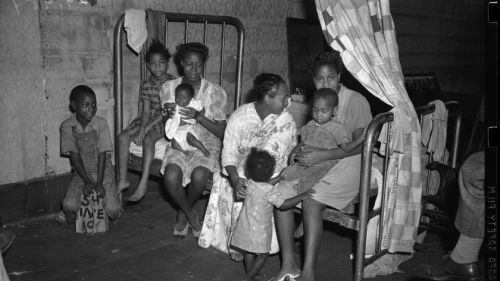
A family of African American war workers in a makeshift bedroom in Little Toyko, Los Angeles in the 1940s. (Los Angeles Daily News/UCLA Archive)

“Still I Rise” is Maya Angelou’s tribute to the courage and endurance of African American women. It’s also the title of one of her books of poetry. My brief comments follow.

Still I Rise

You may write me down in history
With your bitter, twisted lies,
You may trod me in the very dirt
But still, like dust, I’ll rise.

Does my sassiness upset you?
Why are you beset with gloom?
‘Cause I walk like I’ve got oil wells
Pumping in my living room.

Just like moons and like suns,
With the certainty of tides,
Just like hopes springing high,
Still I’ll rise.

Did you want to see me broken?
Bowed head and lowered eyes?
Shoulders falling down like teardrops,
Weakened by my soulful cries?

Does my haughtiness offend you?
Don’t you take it awful hard
‘Cause I laugh like I’ve got gold mines
Diggin’ in my own backyard.

You may shoot me with your words,
You may cut me with your eyes,
You may kill me with your hatefulness,
But still, like air, I’ll rise.

Out of the huts of history’s shame
I rise
Up from a past that’s rooted in pain
I rise
I’m a black ocean, leaping and wide,
Welling and swelling I bear in the tide.

Leaving behind nights of terror and fear
I rise
Into a daybreak that’s wondrously clear
I rise
Bringing the gifts that my ancestors gave,
I am the dream and the hope of the slave.
I rise
I rise
I rise.

Maya Angelou, poet; found in Sterling’s Poetry for Young People series, page 30.
Published in 2013 by Sterling Children’s Books, New York, an imprint of Sterling Publishing Co., Inc.
Editorial material © 2007 by Edwin Graves Wilson; Illustrations © 2007 by Jerome Lagarrigue|

Maya Angelou’s poem is worth reading out loud and slowly, using every ounce of imagination to join her. Not necessarily as a sister, but as a beginner or better yet, a follower.

I struggle over what I can and cannot do to join her in these closing days of my life. For now I’m reading poetry, watching documentaries, reading news articles and editorials, and listening online to black friends and strangers talk about what’s happening.

For centuries, racial injustice has bled into today’s mega-epidemic of prisons, soaring rates of Covid-19 deaths among African Americans, closed or understaffed medical facilities, corporate greed, random killings, modern-day enslavements, distrust, fear and weeping rage. Unaddressed, this blatant, calculated and habitual injustice also stokes our current epidemic of unleashed white supremacy.

As noted above, try reading Angelou’s poem out loud and slowly. What do you hear?

Praying for discernment, courage and peace,
Elouise

© Elouise Renich Fraser, 8 June 2020
Photo found at http://www.latimes.com