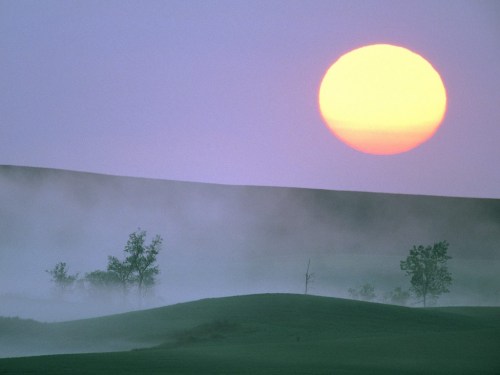
Telling the Truth

connecting the dots of my life

Tag: the human condition

What we’ve lost

The urge to write is upon me
Though ‘about what’ escapes me
Not because nothing is happening
But because my world is shrinking

Behind me an organ plays and
A choir sings about what we’ve lost
A kind of dirge marching slowly
Across pages of my weary mind

Yesterday I gave up trying to figure
It all out as though truth were a
Puzzle to solve for fun and recreation
Before blowing it to smithereens

Is this the beginning of the end?
For what am I willing to live or die?
And why am I here in the first place?
Does anyone out there know or care?

The heaviness of our post-election massacre of truth isn’t a good sign. I keep reminding myself that ‘they’ and ‘we’ are not in control. Though what we do matters, what happens next matters even more, regardless of the outcome of this political tantrum about the 2020 Election. Following the wrong leader can be deadly.

In addition, finding our way home is more difficult and not nearly as much fun as getting lost. Do we have enough shared good will or desire to find our way home, together? Perhaps we’re too busy scoring points, or too certain this attempt to keep Trump in office will fail. Maybe we’re unwilling to see what we’re doing to each other, no matter the outcome.

And here’s another reality: Disenfranchising certain voters has been happening for decades, though it’s never happened to me. Perhaps the silver lining in this cloud is that some of us will finally get it. That is, how it feels and what it means to be deemed nobody.

Happy New Year to each of you, and thank you for visiting.
Elouise

© Elouise Renich Fraser, 3 January 2021
Image found at mynorthwest.com

Life and Death | New Year’s Eve 2020

Words flow like honey
Filled with sharp barbs
Invisible and relentless

Each birth
Each birthday
Each anniversary
Each retirement whether
Planned or not
Each debilitating accident
Each political chess game
You didn’t see coming
Plus Colvid-19 and who’s
Who in the Electoral College Zoo

Grace and glory mixed with
Wormwood and gall
Invite us into the reality of death
Not once in this precarious life
But over and over one day
Following another like a bad
Or good dream depending on
How the ball bounces or
Where it lands on the roulette wheel
Or where we place our trust
As the end precedes the beginning
One day at a time inviting our
Attention not to things that
Dissipate inevitable sorrow
But to sweet gifts of life
Small and almost invisible
Accompanying us into
Each new day and
This new year

Most of my life I’ve assumed New Year Day was the beginning of another great adventure. This year I’m taking it as an invitation not to ignore my coming death. Not because I’m “old” but because I’ve never known when my last breath would leave my body.

Add to that the shape of things today. Not just Covid-19, but streaming refugees, loss of trust between the USA and former allies, the nightmare-like nature of post-Election 2020 claims, grossly inadequate attention to issues related to race, ethnicity, local economies, and growing wealth among those who need it least.

What does this mean? I’ve lived most of my adult life by daily lists. To-do lists. The kind that invite a feeling of despair because they’re never finished. Never.

During the last few weeks I’ve focused on four things that bring me joy: blogging, music, writing poetry, and walking with D. I can’t attend to all of them every day. Still, any one of them is, for me, a way of acknowledging life is short. I don’t have time to waste by avoiding them. Besides, avoiding what I most love won’t bring me joy I could be having right now.

Praying you’ll find your way into joy and alert peace this coming year. This life isn’t over until it’s over.
Elouise

© Elouise Renich Fraser, 31 December 2020
Image found at travelmanitoba.com

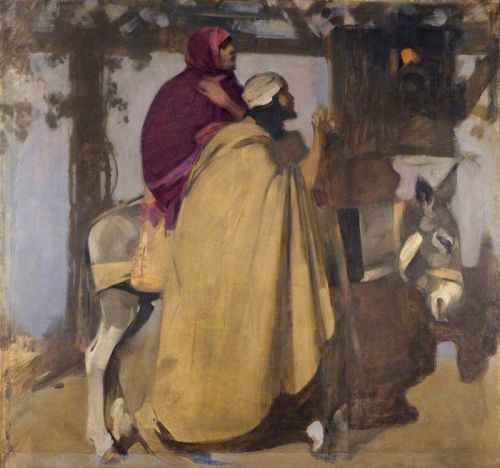
No Room at the Inn | Thomas Merton


 I know–Christmas 2022 hasn’t yet arrived.
Still, this quotation from Thomas Merton strikes a chord in me,
given the current state of our growing disunion.
~~~

Two years ago I received an email from a friend of many years. Among other things, he passed along the ‘poem’ below, even though it wasn’t written as a poem.

The excerpt is from an essay, No Room at the Inn, by Thomas Merton. The essay is included in Raids on the Unspeakable, a selection of essays Merton wrote from 1960 to 1966, during the Viet Nam War. The small collection is published in Canada by Penguin Books Canada, and in New York by New Directions Publishing Corp.

Here’s the excerpt, in poetic form.  

No Room at the Inn

Into this world, this demented inn
in which there is absolutely no room for him at all,
Christ comes uninvited.

But because he cannot be at home in it,
because he is out of place in it,
and yet he must be in it,
His place is with the others for whom
there is no room.

His place is with those who do not belong,
who are rejected by power, because
they are regarded as weak,
those who are discredited,
who are denied status of persons,
who are tortured, bombed and exterminated.

With those for whom there is no room,
Christ is present in this world.

Here’s the rub. I say I’m following Jesus. Am I ready for this? Do I really want to be known as ‘one of them’? 

Praying we’ll find strength and grace in the coming year to join those shut out from the inns of this world.
Elouise

© Elouise Renich Fraser, 27 December 2020, reposted 10 December 2022
Image found at pinterest.com

Christmas Eve 2020

Torn between competing worlds
I can’t remember when life felt
this precarious on the eve
of Your birthday celebration

Would You understand
if I told You I don’t feel like
celebrating this year?

Instead I want to be in that
stable with Mary and Joseph
Not just because it’s wonderful
But because it’s dangerous

No, I’m not looking for trouble. I’m wondering what it takes to put myself out there at this age. Can I hope for anything but being treated like a little old lady?

Not that I mind being a little old lady. In fact, WordPress makes it as easy as possible for me to speak my mind freely. So do my followers and visitors.

Nonetheless, I wonder what would happen if I said in my large family circle or in my church, straight-out, what I often say here when I’m blogging. I don’t know the answer, though I expect some might be distressed, or try to fix me. Others might pray for me, which is never a bad idea.

I’m no revolutionary. Still, sometimes the effort of putting out just one post lets me know I’ve had a relatively easy life. In addition, I wasn’t given the gift of confidence in my own voice when I was growing up.

Today the stakes are painfully high. We’re caught here together on this planet. It’s Christmas Eve, and too many of our political, social and religious leaders already know the script. The one called “How to Pretend I’m God and You’re Nobody.”

I don’t mean to sound cynical. Instead, it strikes me as miraculous that Jesus of Nazareth was born as a Nobody. The kind who kept getting in the way, until what amounted to a lynch mob tried to take him down. Yes, he died, and yes, the dance goes on.

Praying you have a thoughtful, encouraging Christmas Eve and Day.
Elouise

© Elouise Renich Fraser, 24 December 2020
Night sky image found at astronomytrek.com

What will become of us?

What will become of us?
Even the Supreme Court
Can’t fix this sickness unto death
Leaking through our doors
Streaming through our apps
Insinuating itself into every
Pore of our nation’s unchecked
Pandemic failure to thrive

Tomorrow the Electoral College
Does its business not once for all
But as an unintended trigger of
Anger, elation, false dreams and fake news
Now available 24/7 on demand
Minus warnings that lies and innuendo
Are more than dangerous to our
Collective health and welfare

This past year has been an exercise in bleakness. Which reminds me that Advent is about despair, fear, unjust rulers and religious leaders, sickness, and sorrow. In the bleak mid-winter.

When I hear people talk about “getting back to normal,” I cringe. Our track record when dealing with the aftermath of national crises, including unjust realities, isn’t great. Even the birth of Jesus of Nazareth didn’t solve everything.

We keep hearing that Covid-19 vaccines will make things better. Perhaps. Nonetheless, I’ll do what I can to support changes that matter for the good. I’ll also celebrate when we manage to get something right and just. It does happen every now and then, along with painful failures.

Between now and the end of this year, I’ll post as I’m able. Praying each of you is taking daily time to rest, meditate, and consider the impact of 2020 on your life and the lives of others.

Elouise

© Elouise Renich Fraser, 13 December 2020
Image found at christianity.com

The Life we have is very great – revisited

Here’s a second look at Emily Dickinson’s poem about Life, Infinity, and the Human Heart. A good poem for today when we’re missing family members or friends for any reason, plus Covid-19, political standoffs, hate crimes, or the harsh reality of wildfires, avalanches and hurricanes. My lightly edited comments follow.

The Life we have is very great.
The Life that we shall see
Surpasses it, we know, because
It is Infinity.
But when all Space has been beheld
And all Dominion shown
The smallest Human Heart’s extent
Reduces it to none.

c. 1870

Emily Dickinson Poems, Edited by Brenda Hillman
Shambhala Pocket Classics, Shambhala 1995

It doesn’t matter how many worlds we discover beyond this world. It doesn’t matter how far the distance is from here to there and beyond. It doesn’t even matter that the universe is still expanding.

None of this, as surpassingly great or expansive as it may be, holds a candle to the smallest of human hearts.

According to Emily, the Life we now have is ‘very great.’ The Life we’ll have beyond this Life is even greater. Yet it’s infinitesimal compared to what our hearts can see and grasp right now.

Emily describes the heart’s capacity to love Life. Especially when we can’t see those we love. She suggests that the expansiveness of one small human heart outshines infinity itself.

Yes, it’s fascinating to explore the universe, what may lie beyond it and how it’s ordered. Yet what we discover externally will never match the capacity of one small human heart to connect with another human heart.

It doesn’t matter whether that heart is what we call dead or alive, here or there, or somewhere in between. Nor do we need to understand exactly what Space encompasses, how it is governed, or where Infinity resides.

This isn’t about measuring or mapping Life beyond our present Life. Or discovering where those we love now reside.

It’s about connections. All it takes is one small human heart to leap beyond unmapped, immeasurable boundaries, expanding outward in a heartbeat to enfold the hearts of those we love. No matter where they or we may be.

© Elouise Renich Fraser, 28 May 2017, lightly edited and reposted 10 December 2020
Image taken from Hubble Spacecraft, found at nasa.gov

What next? | Dear Friends

Dear Friends,

As some of you know, I’m a survivor of childhood PTSD. My father’s behavior toward me was the most difficult part of my growing-up years. It cost time, money and effort to become the woman I am today.

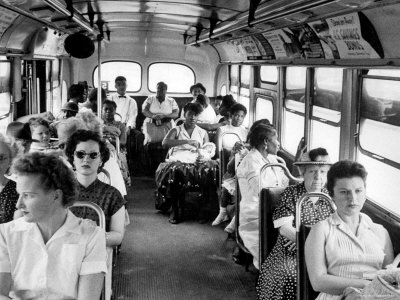
Yet I still haven’t faced what it means to be a white woman right now. Specifically, this particular white woman whose childhood set the table for racial blindness. It’s ironic. Nearly every day of my life from age 7 ½ to 14 I rode through colored town, and witnessed the realities of colored life in the Deep South.

My father’s approach to Deep South manners amounted to ‘be polite, smile a lot, and just keep going.’ Don’t ask questions, don’t debate anything, and remember you’re the eldest daughter of the white preacher who speaks from time to time at the Colored Community House.

Still, I was inquisitive. I remember asking my father more than once why things were this way. I’d lived most of my early life on the West Coast. I don’t remember seeing black people in Seattle or in Southern California.

According to my father, it all came down to the way colored people ‘like’ to live. Or what they found ‘most comfortable.’ Or how much money they made, or how they spent it. That was their choice.

Every school day during my grade school years, my father or a neighbor drove us through colored town on our way to and from school in the city. Colored town was about a quarter of a mile from our house.

Yet my father never talked with us about why colored town was there in the first place, why most of the houses needed repair, or what this meant in the larger picture of the Deep South. Perhaps he’d never looked into it.

I’ve decided I can’t avoid looking into it. Not as an academic exercise, but to face what happened before, during and after Jim Crow years, and how I’m now part of the problem.

Thanks for reading. This is a busy month for everyone, so I appreciate your visits even more than usual!

Gratefully,
Elouise

© Elouise Renich Fraser, 8 December 2020
Photo of segregated city bus in the 1950s found at aapf.org

James Baldwin | The Fire Next Time

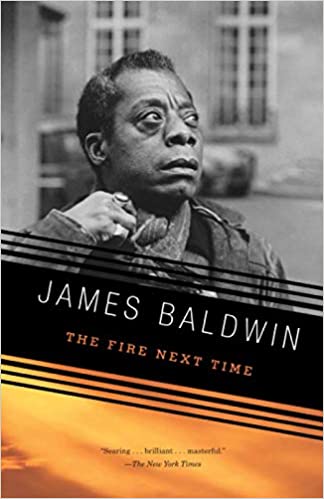
In the mid-1960s I first read James Baldwin’s The Fire Next Time, a collection of two published pieces. Each deals with how to survive as a black person in the USA. The first is a painfully realistic letter to James Baldwin’s nephew. The second describes Baldwin’s own struggle as a black Christian, beginning at age 14.

Now, at the end of 2020, I’m reading Baldwin’s small book again. Sadly, most white citizens of the USA still haven’t figured out how to do the right thing by our black citizens.

Instead, we’ve formed factions for which we ‘need’ an enemy (who isn’t necessarily our enemy). Something or someone to squabble about. A diversion from painful realities. Sadly it seems to offer a way of winning, even though we’re all losing.

Remember divide and conquer? As children, we played it all the time.

Sadly, people in power love to see us fighting each other instead of fighting against an unjust system in which some human beings continue to pay an unjust price. Given our history, it seems white citizens would rather fight each other than deal with injustice to people of color.

Early in his second essay, Down at the Cross, James Baldwin describes our perennial problem. I’ve highlighted the line that caught my attention.

There appears to be a vast amount of confusion on this point, but I do not know many Negroes who are eager to be “accepted” by white people, still less to be loved by them; they, the blacks, simply don’t wish to be beaten over the head by the whites every instant of our brief passage on this planet. White people in this country will have quite enough to do in learning how to accept and love themselves and each other, and when they have achieved this—which will not be tomorrow and may very well be never—the Negro problem will no longer exist, for it will no longer be needed.

The Fire Next Time, pp 21-22;
First published by The Dial Press, NY, 1963
Vintage International Edition first published 1993

If this is the biggest question we white citizens face, it doesn’t matter which way we voted. What matters is whether we can learn to “accept and love ourselves and each other.”

We don’t need our perennial “Negro problem” in order to feel good about ourselves. Why not? Because this never was a “Negro problem.” It’s been a White problem from the very beginning.

Highly recommended, even if you read it way back when.
Elouise

© Elouise Renich Fraser, 3 December 2020
Book cover image found at amazon.com

Farewell, November

yew branches thrash and bend
blown from every direction
the bird feeder flails

relentless nature
announces the arrival
of another day

sitting beside me
a small heater hums softly
to rain drops falling

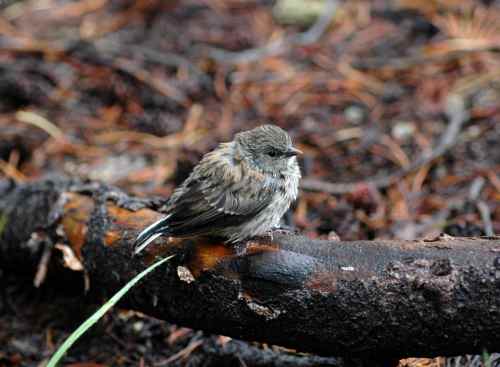
What a strange month this has been. Lots of flailing and thrashing. Too much bluster, and too little calm. Especially in our news cycles. Even though November is my birthday month, I’m happy to bid it farewell.

Do I miss the energy of 2020 Election bluster? No. True, it made for breathless news cycles. It also made for unfiltered offloading of frustration, despair, angst and anger. In the end, however, it reinforced my belief that hope doesn’t come from any one of us. It comes from the One who sees everything without blinking an eye.

So yes, there’s a method to the madness of this world. Still, I’d rather have it interpreted from above than below. Today’s unhinged weather reminds me that though I’m not in charge, I’m still alive.

Just now the thunder crashed closer to home than I like. Happy Monday!

Elouise

© Elouise Renich Fraser, 30 November 2020
Photo found at toughlittlebirds.com

Advent haiku and more

a day
unlike all others
wakes unannounced

I first posted this piece three years ago. The last three years brought major changes for all of us. With a few edits, here’s what I said then, and need to hear again today.

Writing haiku is an exercise in listening. Slowly. Without preconceptions. Without urgency. Without wondering when the alarm will go off to jolt me into action.

I readily admit that being retired is an advantage. Yet my internal life doesn’t always remember what it means to be retired. Much less where to focus long, patient listening that does more than take me in circles.

Three years ago, an on-line retreat invited me to write one haiku a day not just during Advent, but for the next six months. As a daily exercise it put the brakes on my urge to do something. It turned my attention toward nature and our Creator, and invited me to make new connections.

The haiku above suggests life is a daily gift to each of us from our Creator. A page-turner. An open, still-being-written adventure lived one day at a time. A puzzler without answers or clues at the back of the book. One of a kind.

Today, thanks to Covid-19, I’m enjoying Sabbath rest and the first day of Advent at home. I pray each of you takes time to listen with your heart and rest in the one-of-a-kind person you are.

Elouise

© Elouise Renich Fraser, 3 December 2017, reposted 29 November 2020
Photo found at pinterest.com, Sunrise in North Dakota