Telling the Truth

connecting the dots of my life

Tag: the human condition

The White Stone

To each who overcomes,
I will …give a white stone with a new name written on it,
known only to the one who receives it. (Revelation 2:17, NIV)

Imagine you’ve come to the end of your life. What are you expecting? I was brought up to expect judgment. The kind that points out how much I’ve failed, and assigns demerits for failures.

Will my failures outweigh the good? According to my childhood theology, that would be entirely in God’s hands. Woe to me if I fail to live up to expectations.

This made for a peculiarly nervous mode of life. Like nervous tics my failures sometimes seemed to have gained eternal life. Poking at me, cropping up at the most vulnerable moments, shadowing me like bad dreams. Casting a pall of loneliness around me and my closely guarded secrets.

I’ve been reading short excerpts from George MacDonald in the last few weeks. His comments about the white stone are nothing like my childhood theology.

The white stone and the new name are indeed God’s judgment. But with a difference. This is a judgment of grace. One white stone with a new name for each son and each daughter.

The stone with the new name makes visible what has already come into being. Not a hideous monster, but a breathtakingly beautiful daughter or son of the Creator. In fact, to receive the white stone with one’s own new name is the equivalent of ‘well done, good and faithful servant.’

It is only when the person becomes his or her name that God gives the stone with the name upon it. (George MacDonald: An Anthology: 365 Readings; C. S. Lewis, ed. (Harper One)

The secret name given only to me will capture perfectly what God saw in me from the moment I was created. Especially when I or others don’t or can’t see this. The name sums up the woman I will have become—through many dangers, toils and snares.

I can relax, take each day as it comes without a clear roadmap. When I get there, my Creator who kept faith with me will give me my white stone with my new secret name. One of a kind. I don’t need to keep asking “Am I there yet?” I’m already in good hands.

© Elouise Renich Fraser, 8 March 2017
Image found at ahnsahnghong.blogspot.com

Quotation  from the NIV
Response to WordPress Daily Prompt: Nervous

Chewing My Cud

~~~~~A tarine cow chewing the cud near the Habert de la Dame

Dear Friends,

Today’s Daily Prompt is ruminate.  You know—chewing the cud. Turning things over and over and over. Mashing them around. Trying to make digestible what might be indigestible. Spitting out what reminds me of liver and okra. Swallowing the rest and hoping the outcomes are good for me.

So what’s this post all about? Several things. Please note I need no sympathy. In fact, I abhor it. I’d rather have empathy or even your listening ear. You don’t have to like it, agree with it, think about it, try to solve it, or come back for more. If all you do is read with a listening ear, I’ll be deliriously grateful.

So let’s start with my health. It’s on my mind daily. Maybe that’s what happens in the golden years—things just sort of moosh together and feed on each other relentlessly.

The list gets longer: heart arrhythmia and heartbeat speed or lack thereof; non-diabetic hypoglycemia; jaw bone loss of memory and inability to function properly; kidneys showing signs of aging; on glaucoma watch with nothing to report lately; IBS ever with me and I with it; still allergic to chocolate; caffeine considered poison to my system; lactose and soy intolerant; those pesky little skin cancers that just seem to keep popping up; and whatever I forgot to mention or didn’t mention on purpose.

And yet.

I look around and am beyond grateful for this female body and the ability to care for it. I spend hours in the kitchen making sure the food train is ready to go, and cleaning up pots and pans. I have a lovely kitchen, enough food, water, cookbooks galore, and a pantry full of ingredients. Best of all, I have a kitchen dining area with a lovely view of our back yard, bird feeders, birds and bees, trees, shrubs, spring flowers, the sky, the occasional bunny rabbit, groundhogs, and did I mention squirrels or that stray cat?

Two days ago I was—and still am—sorrowful because another church friend died last week. Teared up all day. In church, out of church. Anxious about my health, given my age. Down in the dumps about the way this presidential election and outcomes have galvanized family, friends, neighbors and strangers against each other. I’m also lonely—feeling like Emily Dickinson’s poem from the inside out. Yet hungry for time alone, especially in the evening, and for music to sooth my spirit and bring on another wave of tears. Vulnerable and grateful.

And yet.

That very evening I had fallen apart. Out of control in the space of a heartbeat. Storming around the attic overwhelmed by messiness. We’re making great progress up there. Yet the messiness freaked me out. Not just my messes, but you-know-who’s messes. To say nothing about how I’ve been cleaning up (other peoples’) messes all my life and I’m sick and tired of it and I won’t take it anymore!

What’s going on? What if I tried something different next time? I don’t have answers. That’s why I’m writing about it. My way of ruminating. Out loud.

Thanks for listening, and not trying to solve my stuff. Empathy is also deeply appreciated.

Elouise

© Elouise Renich Fraser, 7 March 2017
Photo found at braemoor.co.uk

Response to WordPress Daily Prompt: Ruminate

Surviving the Con Artist

No doubt about it. We’re surrounded by con artists who seek to enhance themselves at the expense of others.

I’m not talking about the painfully transparent scenarios of TV ads. This is about individuals who amass great fortunes by way of the con. You might say they’re masters of The Deal. The one where They Always Win or think they do, and you always lose even though you may believe you’re winning.

I don’t like being caught looking the wrong way. So here’s what’s helping me right now in our new USA political scene of chaotic administration, alternative facts, confusion, smiles, surface calm and deep rage—all of which can catch us off guard.

I’m drawing on a helpful book—one of two I’ve read recently about psychopaths. The book is titled Without Conscience, by Robert D. Hare. Dr. Hare’s points are in italics. The summary is my version of his material.

  1. Know what you are dealing with. Don’t think reading a book here and there will inoculate you. No one is safe. Still, it helps to know what you’re dealing with. Don’t memorize a list of rules. Instead, understand what makes psychopaths tick, and why you are vulnerable.
  2. Try not to be influenced by “props.” This is nearly impossible, given our love affair with social media. Nonetheless, don’t watch their faces, body language, or stage sets. Look away or close your eyes. Pay attention to their words. Avoid eye contact. Don’t be mesmerized by hand motions or backdrops. Your job is to sort out fact from fiction, and discern this person’s intentions with regard to YOU. What does he or she want? Your vote? Your money? Your influence? Your cheers? You? Listen carefully. What, exactly, is he or she saying or promising?
  3. Don’t wear blinkers. Psychopaths will say and do anything to gain your trust. Beware of flattery, promises, shows of kindness or concern about you, stories about how great and smart they are and how they can make you great again! Cracks will appear in their carefully staged performance, but you have to be alert for them. They’re on a fishing expedition, figuring out what will reel you in! Are they vague? Inconsistent? Misinformed? Not answering the question someone just asked? If anything sounds wrong or too good to be true, check it out later. Even more difficult, forget about friendly social manners we USA citizens think we’re required to use. Sometimes it doesn’t pay to be friendly or compliant, no matter how you’re being treated. Don’t give yourself away.
  4. Keep your guard up in high-risk situations. That includes the context (away from home, in a bar or airport, on a cruise) and your personal vulnerability. Lonely? Single? Homesick? Married? Fed up? Weary? Depressed? Do you have money? Want or need more money? Out of work? Tired of being told what to do by people who don’t know your situation? Always looking for the next big deal? The next stray cat? Beware! You’re just what psychopaths love to find.
  5. Know yourself. Especially your weak spots. That’s what psychopaths are looking for. Their radars focus on weak spots. Know when that’s happening and don’t be a sucker to flattery or promises of a big deal. They read us like an open book. If you need help knowing yourself, ask people who know you best to help you. Consider it personal insurance against being taken for a damaging ride you will regret.

I know from bitter experience what it’s like to be conned. In today’s political world, perhaps the best we can do is to know ourselves. Thinking we’re safe in any political scenario won’t inoculate us from damage. No doubt about it!

© Elouise Renich Fraser, 2 March 2017
Response to WordPress Daily Prompt: Doubt

the wellspring

wellspring-16204276

calm steady source
releasing life from within
home of all being

***

Center of my being
My true home
Place where I am most fully alive

Not found by striving
but by letting go
of fear, apprehension, ambition

Dive in! Fall in! Sink in!
Don’t calculate the distance
Or when I might re-emerge

A small death
Repeated thousands of times
Finding my life by losing it

Thoughts generated by a favorite book on the practice of prayer, Centering Prayer and Inner Awakening, by Cynthia Bourgeault. Her approach to prayer appeals to the mystic in me while keeping my feet on solid ground and connected to Christian faith and theology. Not a small feat.

Here’s to a week of centering practices that help us rest and work while seeking peace with justice. No matter what or who waits for us around the next corner.

© Elouise Renich Fraser, 27 February 2017
Photo found at Dreamstime.com
Response to WordPress Daily Prompt: Center

Still Learning to Pray

learning-to-pray-by-talking-less

Today is a quiet day. Not because I’m sick, but because I need to take care of myself. So I’m revisiting several books on prayer. Why? Because current events in the USA tug me this way and that way. Sometimes I feel as though I’m wandering, lost in the trees. Uncertain how to pray or how that might help my focus from one day to the next.

Here’s what I’m certain of today.

  • The human confusion into which I was born multiples daily, and isn’t going away of its own accord. Ever. There are things I’d like to undo and re-do in this world and in myself. I want us to sort things out and be good neighbors. Yet I fear it isn’t going to happen, even though we’re all part of God’s good if not perfect creation, and need each other to survive.
  • Human confusion seems to have a life of its own. It feeds on itself, creating ever-more-shocking statements, behaviors, attitudes and reactions. It thrives when we’re fearful and distracted. On guard. Looking over our shoulders as we try to figure out what just happened, and miss what’s already brewing for tomorrow.
  • In my small world, confusion shows up in anguish about what I’m to do from one day to the next. I’m not utterly lost or clueless; yet I don’t feel grounded in a clear approach to what’s happening around me. I don’t have a clear goal for each day that calms my heart and helps shape my actions. I often feel uncertain and lost, especially when I start checking out tantalizing, infuriating headlines that pop up every minute of the day.

For the last few weeks I’ve been thinking about prayer. Granted, our pastor is preaching about it every Sunday, so it’s difficult not to think about it! At the same time, I wonder how I am to pray, given confusion around and within me.

I used to think once I learned to pray, I’d have it all figured out. As though it were like theology. I think about theology as dialogue with Scripture, traditional documents, other conversation partners, the newspaper and my experience as a woman. It works!

However, when I consider prayer, my major dialogue partners have been God or Scripture or what my parents or the church told me to do. The newspaper has been a secondary partner. And though I’m aware of myself as this woman (not just any woman), I haven’t figured out how that shapes my approach to prayer. Sometimes I fear there’s something wrong with me–even though I know there is not.

So I’ve decided to look into this and begin writing about it from time to time. I want to live boldly with the courage of my convictions, as this follower of Jesus Christ who is this woman living in these troubled times. Somehow, I believe my dilemma about prayer lies at the center of my anguish about who I am and how that shapes my prayers from day to day. Especially now.

© Elouise Renich Fraser, 25 February 2017
Photo found at parentingupstream.com

A personal letter

fraser_s_0238b

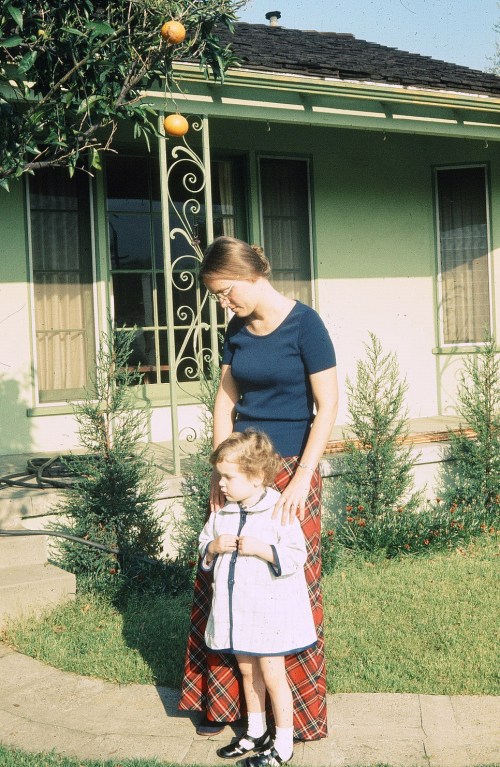
~~Mom Elouise and Daughter, 1974, Altadena, California on a Sunday morning

Dear Blogging Friends,

I tried to put together a post for Sunday morning. Alas, it went nowhere except in circles! So I’m trying something totally different this week. A personal letter about personal stuff.

Today was our adult daughter’s last full day visiting us. Tomorrow she flies back to the West Coast. I’m teary, lethargic, achy, sad, and already lonely.

I’m also feeling the certainty of death these days. Nothing in particular. Just the awareness that every time I see our daughter it might be for the last time. So what do I want to say to her before she leaves?

I lay awake a bit last night thinking about this. Whatever I say, I don’t want to pretend I’m taking life for granted. As though neither of us is going to die just yet. I also don’t want to say simply, “I love you.” Even though I will and I do!

Here’s what I want her to know.

  • I want you to know how honored I am to be your mother, and how much I admire you as a woman. You’re a fighter. A brook-no-nonsense human being. An artist in every way, especially as a musician.
  • You’re an intelligent, gifted woman who knows how to engage others, and when to disengage. An astute political observer. A woman who knows how and when to get help. A survivor of trials and tribulations. A wise observer of human nature and of yourself. A faithful ally and friend.
  • I’m grateful you’re in my life. You’re a touchstone. Sensible and funny. Kind and clear. And you’re my daughter! I still don’t understand how you became the woman you are today. I do know it was “through many dangers, toils and snares….”
  • I gave you to God decades ago, knowing I would never have the answers to all the challenges you would meet. Instead, I pray for you regularly, that God’s grace that has kept you so far will lead you home. No matter whether you go first or I do.

One more thing. I feel old age coming on. Not like a flood, but with slow certainty, accompanied by a number of health issues that challenge me. I don’t want to give up. I want to be fully alive, and alert enough to enjoy my family and friends as long as I can.

Not so many years ago I was afraid to let my heart show to my family members. I was afraid to let them know how much I’ll miss them if they die before I die. Better to stay cool and calm than show my feelings. That way maybe the pain of loss won’t be so great. But that’s another topic.

Thanks for reading and listening with your hearts.
Elouise

© Elouise Renich Fraser, 18 February 2017
Photo credit: DAFraser, 1974, Altadena, California

Awareness of pain

Awareness of pain
Life-shaping yet elusive
Lodges deep
In bones and sinews
Erupts without warning
Bleeding over pages
Of my life
Softening my heart
Longing for tenderness
Squandered in the past
Foolishly given away
To dull my pain

***

I don’t live in this awareness every day. I wouldn’t survive if I did. I’m grateful for God’s grace every day of my life. Still, moments of grief arrive, often taking me by storm. They don’t destroy me. Instead, they soften and connect me not just to my pain, but to that of others.

I used to think these waves of emotional and spiritual pain would fade. They haven’t. In fact, the more willing I am to live with grief, the more I find myself grieving and growing.

This past week I listened to Beethoven’s Sonata 8 (“Pathetique) and found myself right where this poem is. In the middle of a teary eruption. The kind that fosters life, not death, when I’m willing to live through it.

You can listen to a brilliant performance by Daniel Barenboim here.

© Elouise Renich Fraser, 11 February 2017
Response to WordPress Daily Prompt: Aware

Resistance is Never Futile

Never. What’s at stake isn’t a predetermined outcome, and death is always a possibility. Yet resistance is never futile. It’s about our character. Not simply as individuals, but as communities and nations.

I have a theological hero. He wasn’t the most well-behaved man on the face of the earth. He was human just as I am. Some of his theological ideas still irritate me. That’s an understatement.

Yet he’s a theological hero. From him I learned to listen to myself, to Christian scripture, and to what’s happening around me. With a newspaper in one hand and my Bible in the other.

Actually, it’s more than listening. I call it looking in the mirror and discovering painful reflections of myself. Too often as a collaborator, not as a member of the faithful resistance.

Karl Barth came of age as a theologian during the early years of Hitler’s reign. Though he was a citizen of Switzerland, he spent most of his professional life as a professor of theology in Germany.

Barth cut his theological teeth on Hitler’s final solution for Jews. He became one of a surprisingly small number of resisting theologians, and an influential member of the so-named ‘confessing’ churches that refused to support Hitler.

His theological work is, in part, a critique of Hitler’s brutal treatment of Jews and a vision for something different. There were several parts to Barth’s vision for humanity.

  1. First, absolute allegiance to following Jesus Christ as witnessed to in Christian scripture. Jesus of Nazareth—a practicing Jew whose total allegiance lay with Yahweh. No matter what the cost.
  2. Second, a careful reading of Hebrew and Christian scripture in which he discerned a simple theme that brought every theological idea down to earth. Hospitality toward strangers. This theme challenges all human interactions including Hitler’s treatment of Jews and the churches’ treatment of Jews and others strangers.
  3. Finally, who is this stranger? (Or, who is my neighbor?) According to Barth, the stranger is that person or group of persons you’d rather not see or meet today. Maybe he or she gives you a mortal headache. On the other hand, that person might beat you up and leave you lying on the side of the road to die. You never know. It’s easy to wish you could banish ‘these people’ who annoy, threaten or terrify you.

Hospitality toward strangers has a sweet sound about it. However, as developed by Barth, it’s not sweet and harmless. True hospitality toward strangers is a life-changer for the hostess or host, not just the stranger. It can lead to life; it can also lead to death. As it did for Jesus Christ.

We can already see the USA becoming polarized into stranger groups. It’s happening in churches, between religions, in public and private institutions, news media and families. Many groups vet members formally and informally by political or religious tests of various kinds.

It seems a good time to think about what it would take to show hospitality toward strangers today. Especially, but not only if we’re followers of Jesus Christ.

I’m not naïve. All strangers aren’t safe. Neither is every friend or family member. Wisdom and discernment are necessary. But not political or religious tests. We need each other now more than ever. No matter what the cost. It’s about the content of our character.

© Elouise Renich Fraser, 9 February 2017
Response to WordPress Daily Prompt: Criticize

The Soul selects her own Society —

house-door-1860s

I wish Emily Dickinson had left a note about this poem. It seems maddeningly ambiguous about her context and meaning. What do you think it’s about? My comments follow.

The Soul selects her own Society –
Then – shuts the Door –
To her divine Majority –
Present no more –

Unmoved – she notes the Chariots – pausing –
At her low Gate —
Unmoved – an Emperor be kneeling
Upon her Mat –

I’ve known her – from an ample nation –
Choose One –
Then – close the Valves of her attention –
Like Stone –

c. 1862

Emily Dickinson Poems, Edited by Brenda Hillman
Shambhala Pocket Classics, Shambhala 1995

Here are my thoughts as of today—informed by my experience as a woman and by social, national and international realities.

  • Is this a riddle? I don’t think so. Riddles can have more than one true answer, but only when all clues in the riddle line up with each possible solution.
  • The subject of the poem is named immediately – “the Soul.” Everything that follows describes choices of the Soul, personified as a woman.
  • The action in the poem is simple. The Soul makes her own choice about whom she will or will not receive. She then shuts the Door, cutting off access to all others and ensuring her own Majority (of one). This isn’t a decision made by consultation or by popular vote. It’s a one-way decision of the Soul.

If this is about a human being, I celebrate our ability to choose whom we will or will not allow through the Door – into our lives. That doesn’t mean each choice we make will be wise. It means the choice is ours, for good and for ill.

On the other hand, I think Emily is suggesting more than this.

Notice these words: The Soul ‘shuts the Door’ – is ‘Unmoved’ – is ‘Unmoved’ – is ‘Like Stone.’ This suggests a one-time decision such as how the Soul choses to live her life. These words might also suggest this Soul is a snob or merciless.

Yet I see no evidence of this. She doesn’t seem to come from high Society or live in a magnificent palace (note her low Gate). She simply makes her choice and doesn’t look back. Her nay is nay, and her yes is yes. No use trying to change her mind.

It’s possible the supplicants are trying to help this Soul in some way. Or perhaps use her? They may want her vote or her support. They might promise her one thing and deliver something else. Whether the Soul knows this or not, I still applaud her courage when she shuts the Door, Unmoved.

Emily’s poem challenges me to be wise and clear about opening the door of my soul. Some bargains and sure-things end up being disastrous. Not just in our private lives, but in our national and global life.

In the end it doesn’t matter whether someone thinks I’m a snob or blind to reality (which I sometimes am). My choices aren’t always wise. Still, I believe God gave me the capacity to learn wisdom and discernment, if I’m willing to practice it. This means, as Emily’s poem implies, going against popular wishes or expectations from time to time. Especially as a woman, though also as a family member, friend, neighbor and citizen.

© Elouise Renich Fraser, 4 February 2017
Image  found at remodelingnewburyport.com

Exposed

Several days ago, just for fun, I posted a small poem and a photo. I loved finding the photo prompt, making a connection right away, and then putting together a small poem about what I saw. I felt happy about it.

After I published it, I went visiting other bloggers to see what they were writing about. As it happened, several posts I read were top-notch. Way beyond my own small post that was ‘just for fun.’

Bummer! It didn’t take long. The more I read other posts, the smaller I felt. Inadequate and virtually voiceless. I even thought about taking my post down.

That evening I wrote about all this in my journal. Here’s the paragraph that best describes how I felt.

  • Right now I feel hot and bothered, a bit chagrined, small, less than an average writer, even embarrassed, as though I wasted my time with this piece of writing. Even though it gave me joy to do it! I think I’m weighing myself against other writers. They seem to have more finesse, deeper ideas, more winsome ways in their writings, more responses to what they post, better ideas and even more fun in life even if I don’t want to live their lives.

I wrote on, trying to sort this out. Near the end, I started coming to terms with myself. Here’s a key paragraph.

  • I want to let my heart speak to other hearts. Yet right now I seem to want my heart to make them happy—so they’ll come back for another happiness pill? I don’t know. We do seem to be a culture driven by expectations of happiness—meaning that somewhere out there today I’ll find something to make my day—something to make me happy—something to help me feel alive and worthwhile.

I don’t pretend to be an accurate observer of our current culture. What I say may be wrong of most people ‘out there.’ It was not, however, wrong about me on that particular day. I was driven by my need to feel happy. I was looking for “something to help me feel alive and worthwhile.” Not in someone else’s writing, but in my own. Which I did–for a very short time.

Why did my initial joy vanish so quickly? Perhaps I lost my confidence? I don’t think so….

I am, however, sure of this.

  • My experience after posting my poem exposed something in me that I don’t like. I say it often enough: Comparison is the source of all discontent. I say it because I don’t want it to be true of me. Sometimes it isn’t. But on that day, it described me with painful precision.

Thanks for listening!
Elouise

© Elouise Renich Fraser, 20 January 2017
Response to WordPress Daily Prompt:  Exposure