Telling the Truth

connecting the dots of my life

Tag: Trauma

seeping through pores
Seeping through pores
The virus takes root
Invisible at first
A sense of not being
At home or abroad
In this sea of strangers
Wandering in and out
Filled with good will
They come and  go
Dry and desolate
A thought takes root
Without reason
The only welcome visitor
Whose words unheard
Make perfect sense
In this dying hope for miracles
That never arrive on time

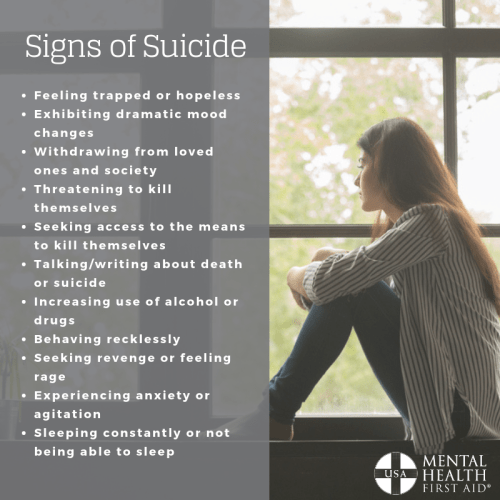
In recognition of our national upsurge in suicides attempted and/or completed, and in honor of family members and friends who ended their lives on this earth, or made the attempt and failed.

Always a thousand unanswered questions. Always a sense of ‘what could I or we have done differently?’ Always a desire to go to sleep and hope for something better when I wake up.

Multiple resources are available online. Hotlines and chat rooms are open night and day.
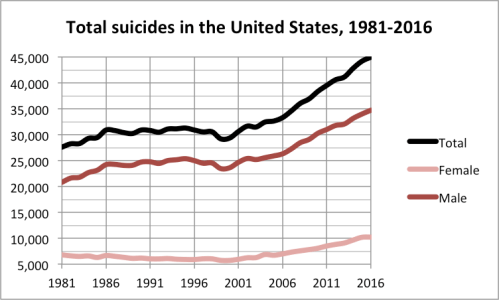
I first posted this poem with comments in June 2018. Now it’s October 2020, and the number of USA deaths by suicide is climbing. How would you respond if a family member or friend confided in you? What would you say? What would you do?

Every situation is different. However, based on experience, here’s a way to begin conversation immediately. Don’t forget to take notes, including the date and time.

  • What’s your plan?
  • How would you do that? (Describe the process and preparation as of right now.)
  • Have you talked with anyone else about this? (If so, with whom did you talk, and what did they say?)
  • Do you have the suicide hot-line number? (If not, give them the number. You can’t force them to use it.)
  • Promise you’ll call me before you carry out your plan.

We’re not trained to have these conversations. Nonetheless, it’s important to make this real and present. The worst thing would be to commiserate (I call this ‘polishing the furniture’), and then hang up because it seems your friend or family member is feeling ‘better.’ Now we have two people in denial. Hardly a good outcome.

Bottom line: An awkward one-to-one conversation is the best possible place to begin. Honor their pain. They’ve just reached out for help. Not for a feel-better conversation.

© Elouise Renich Fraser, 25 June 2018, expanded and reposted 30 October 2020
Signs of Suicide found at mentalhealthfirstaid.org
Chart found at Wikipedia.eng
To fight aloud, is very brave — | Emily Dickinson

charge_of_the_light_brigade

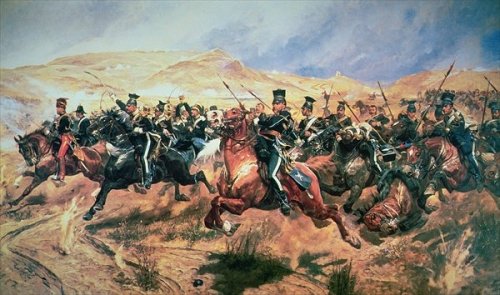
~~~Charge of the Light Brigade, painting by Richard Caton Woodville, Jr.

What does it mean to be brave? Emily Dickinson gets right to the heart of things with her focus on true heroes. My comments follow.

To fight aloud, is very brave –
But gallanter, I know
Who charge within the bosom
The Cavalry of Woe –

Who win, and nations do not see –
Who fall – and none observe –
Whose dying eyes, no Country
Regards with patriot love –

We trust, in plumed procession
For such, the Angels go –
Rank after Rank, with even feet –
And Uniforms of Snow.

c. 1859

Emily Dickinson Poems, Edited by Brenda Hillman
Shambhala Pocket Classics, Shambhala 1995

The USA is besotted with romantic notions of Bravery. Captivated by monuments to those who fell to ‘ensure our freedom.’ Memorials to those who displayed Bravery in the face of overwhelming odds.

We pause to honor those who stood or fell on our behalf. And yet….Who are the true heroes among us?

Emily’s poem is a slow, pensive hymn of remembrance for individuals who fought and fight battles, unseen and unacknowledged. Women, men, girls and boys more gallant than national heroes. In their hearts they charge daily against The Cavalry of Woe that would take them down in misery, sorrow, despair, pain, agony and defeat.

The poem, written in about 1859, brought to mind Tennyson’s “Charge of the Light Brigade,” along with paintings that memorialize tragedies.

Emily’s poem could also be a eulogy for uncounted heroes and heroines who bravely fought their internal enemies. Few, if any, know their names or the stories of their gallant deeds. Unseen and unsung, they remain hidden. Small bits of unexplored or never remembered history.

Does anyone notice or care? Emily does. She is one of these more gallant souls. Her poems remind us of her internal battles, though we don’t know what each was about.

Emily’s final stanza lifts up internal bravery for our respect, perhaps also for her personal comfort. She sees more than one Angel per warrior. Imagine it: unnumbered ranks of Angels process reverently in soft, snowy plumes. Their uniforms drop blankets of snow around and over uncounted heroes and heroines. Snowy flags of honor drape each unsung warrior who charged bravely ahead against all odds.

Angels also recognize the bravery of patriotic heroes, though not because of visible service. No one gets a pass when dealing with the internal Cavalry of Woe threatening daily to undo us.

My heart has been an unseen battlefield most of my life. It’s littered with spoils of war—war I’ve waged against my Cavalry of Woe. I fought much of it silently, assuming I was a loser. The woes weren’t strange or unusual, but common and everyday. Things like Fear of Harsh Punishment, Getting through Harsh Punishment, Perfectionism, Depression, Self-loathing, Self-doubt, Fear of Abandonment, Fear of Speaking in My Own Voice.

Whether we believe we’re gallant or not, Emily invites us to trust the cloud of Angel witnesses passing by, clothed in snow-white plumes. Reverently and respectfully they accompany us in life and in death. Honoring us as patriots who fought and still fight gallantly on behalf of our true selves.

© Elouise Renich Fraser, 28 Sept 2016, edited and reposted 8 Oct 2020
Painting by Richard Caton Woodville, Jr.,
found at en.wikipedia.org/wiki/Charge_of_the_Light_Brigade

No matter who wins the 2020 Election

Here’s a short list of things that matter to me, going into the 2020 Election.

First, a battle is on for the heart and soul of this country, no matter who wins the 2020 Election. Conflict isn’t going away. It may, in fact, get worse.

Second, those of us who’ve been raised to believe in the rule of justice, or the rightness of law and order need to think again. We can’t afford to dismiss the way our current justice and legal systems too frequently favor white (or any color) money and stature.

Third, we already have among us a great company of witnesses. They’ve lived with injustice most if not all their lives. In the unlikely case you don’t know who they are, meet your black, brown, American Indian, and immigrant neighbors. Many are skilled in the kind of spiritual discipline it takes to live in an unjust world.

Fourth, it would be foolish to ignore neighbors and strangers. Some know me better than I know myself. Still, even they can’t do for me what I must do. They might, however, stand with me in spirit, and pray for me.

As a white woman, my life has been shaped by so-called national realities, and figments of human imagination. Now I must question them. Daily. In writing if needed.

As a senior citizen, I can’t afford to tie my hopes to the outcomes of the 2020 Election. No matter who wins, we’ll have a mess to clean up, a pandemic to attend to, and divisions in this country that are eating away at our soul.

Praying we’ll get through another week, one day at a time, and that we’ll find small ways to make a difference.
Elouise

© Elouise Renich Fraser, 27 September 2020
Image found at pinterest.com

This season of lament

I’m frozen
Cut off from reality
Not sure where I am
Or where I’m going
Deep sadness wells up
Ancient dikes breach
Cracks in dishonest walls
That tried to contain a world
Held together by lies and
Decay deliberate and brutal
Now breaking through
Elephant-size breaches
Lying before me in shambles
Buried by an unrelenting
Avalanche of disinformation
Grinding us down to
Our lowest common
Denominator

The odds aren’t on our side. Especially if we rely on our limited understanding. Which is all we have on any day of the week.

There is no Top Genius of this world. No Strong Man or Strong Woman of this world who knows or understands the past, present and future with utmost clarity. All we have is what’s left of what we received the moment we were born, and what we’ve been given or taken. For good and for ill.

So here I am with you, in a season of Lament. Without a clue whether we’ll be spared the consequences of actions never taken, taken too quickly, or taken in spite.

Am I without hope? Not unless I try to carry on with life or business as usual. So yes, I’m muddling through with everyone else. Praying, and watching for moments of grace and unexpected connections. Small signs that our Creator is still at work.

Praying your day contains some of those small signs.

Elouise

© Elouise Renich Fraser, 16 September 2020
Image found at pinterest.com

a foreign land

Display at Jim Crow Museum of Memorabilia

I’m 71/2 years old. We just moved from California to a rural neighborhood 15 miles from Savannah, Georgia. It’s 1951.

Today we drove
Out of our long driveway
Into a foreign land

Don’t stare, Elouise
Those are colored people
They were born that way

Which means
Many things you can’t
Understand just yet

See their small gardens
And rows of cheery flowers
In front of their homes?

And look!
That woman just waved
At us driving by

She’s even hung out
Her handiwork
A handmade quilt

Isn’t it lovely?
I wish we had enough
Money to buy it

Adults and children smile
When we drive by
Some even wave

It’s as though they already
Knew us even though
We’ve never met

Indeed

© Elouise Renich Fraser, 15 September 2020
Photo of Jim Crow Memorabilia found at ferris.edu

the red cardinal revisited

the red cardinal
sings his bright clear spring song
perched on bare branches

When I published my first post, Dear Dad, on 27 Dec 2013, my voice was anything but bright and clear. Singing was definitely out of the question. As a survivor of childhood PTSD, I used an elaborate strategy of calculated silence and half-truth.

How much did I owe the world? How much did I owe my family? How much did I owe the church? My father was a clergyman. Revered, respected, loved and sought after by people with sorrows such as mine.

But I wasn’t one of his followers. I was his first-born of four daughters. I watched my tongue constantly. Smiled when expected. Stifled tears. Did as I was told. Set an example. And took the beatings like the contrite spirit I was not.

Breaking my silence of decades took decades. It started in my 40s, with trips to Al-Anon meetings for five years. There I learned to relax and share things I’d never told anyone. Then I worked with an intern therapist who helped me complete a genogram (family tree, with notes). Finally, in the early 1990s, I began working with a psychotherapist.

I put in hours and years of work. Did tons of homework. Cried buckets of tears. Filled unnumbered journals with dreams and personal entries.

Yet my recovery isn’t measured in months, years or numbers of pages written in journals. It’s measured in my voice. At first feeble, halting, self-conscious and terrified. Beginning with my husband and immediate family, then with my sisters and parents, slowly but surely with several trusted friends, and finally, a few years before I began blogging, with my large extended family on my father’s side.

My voice is the measure of my recovery.

Regardless of the weather, the political climate or my health, the question is the same: How free am I to tell the truth? That’s the thermometer that matters.

I’ve always cared about issues that have to do with women. I used to think getting a decent academic position would somehow ‘prove’ my worth. Or set me free. Especially if I was granted tenure.

Well, that wasn’t my riddle to solve. My riddle was my voice.

I began blogging because I knew it would challenge me to tell the truth freely, with words chosen by me, not by someone else.

So the little red cardinal outside my window caught my attention. The ground was covered with snow, and the laurel bush had been beaten down by more than one Nor’easter. Yet the little red cardinal sang his heart out. Freely. Telling his truth about life and announcing his territory and the hope of spring.

Though I’m a follower of Jesus, this doesn’t make life easier. In fact, it’s more difficult because it means both living and telling the truth. Especially when it’s most unwelcome or unexpected.

I still owe Candice thanks for this topic! Though I’ve written elsewhere about this blog, this is another way of looking at it. Equally true and challenging. Especially today.

© Elouise Renich Fraser, 17 March 2018, lightly edited and reposted 7 September 2020
Cardinal duet found on YouTube

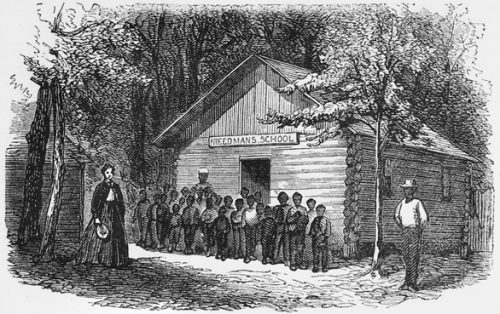
How to outlaw teaching slaves to read or write

Below is one example. Other states had similar methods. Sadly, this is only part of the unasked-for baggage our educational systems struggle with today.

A Bill to Prevent All Persons from Teaching Slaves to Read or Write,
the Use of Figures Excepted (1830)

The North Carolina General Assembly first prohibited anyone from teaching slaves to read or write in 1818, then strengthened the law in 1830 (in the bill reprinted here). The following year, another bill made it illegal for not only slaves but free people of color “to preach or exhort in public, or in any manner to officiate as a preacher or teacher in any prayer meeting or other association for worship where slaves of different families are collected together.”
__________________
Whereas the teaching of slaves to read and write has a tendency to excite dissatisfaction in their minds and to produce insurrection and rebellion to the manifest injury of the citizens of this state: Therefore

Be it enacted by the General Assembly of the State of North Carolina, and it is hereby enacted by the authority of the same, that any free person who shall hereafter teach or attempt to teach any slave within this State to read or write, the use of figures excepted, Shall be liable to indictment in any court of record in the State having jurisdiction thereof, and upon conviction shall at the discretion of the court if a white man or woman be fined not less than one hundred dollars nor more than two hundred dollars or imprisoned and if a free person of colour shall be whipped at the discretion of the court not exceeding thirty nine lashes nor less than twenty lashes.

Be it further enacted that if any slave shall hereafter teach or attempt to teach any other slave to read or write the use of figures excepted, he or she may be carried before any justice of the peace and on conviction thereof shall be sentenced to receive thirty nine lashes on his or her bare back.

Credit text: Legislative Papers, 1830–31 Session of the General Assembly.

For nearly three decades I taught and worked with seminarians in a multiracial, multinational community. Most students were able to thrive. Still, there were some I couldn’t reach. Today I wonder how this legacy of punishing black and brown students and their teachers is being passed on.

These are heavy days and heavy nights. Reaping the Whirlwind comes to mind yet again. Not because of what’s happening now, but because of what was set in motion centuries ago. I pray each of us will become part of a solution.

Elouise

© Elouise Renich Fraser, 4 September 2020
Image of NC Freedman’s School (1860s) found at ncpedia.org

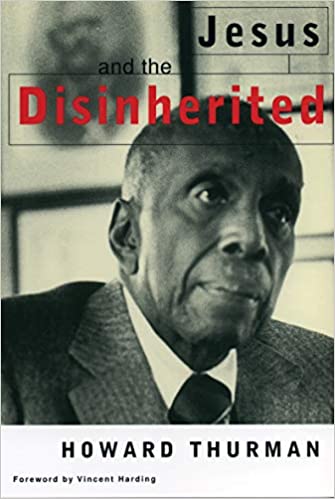
Jesus and the Disinherited | Howard Thurman

His days were nurtured in great hostilities
Focused upon his kind, the sons of Israel.
There was no moment in all his years
When he was free.

Poem fragment quoted on p. 34 of Jesus and the Disinherited. From Thurman’s privately published volume of poems, The Greatest of These, p. 3.

This summer I’ve been reading Howard Thurman’s relatively short book (less than 100 pages), Jesus and the Disinherited. It’s more relevant today than ever before. A sad commentary on our nation’s untenable situation, past and present.

Thurman’s book describes

  • What happens inside the disinherited
  • What their most difficult struggles are about, daily
  • And why Jesus (not Paul) is the person to whom they are drawn when it comes to real life as they know it.

Like the disinherited of today, Jesus faced fear, deception, hate, and the command to love one’s neighbor as oneself. This didn’t happen one challenge at a time, but every day, no matter the circumstances. In addition, Jesus was one of the disinherited. He was not a Roman citizen, or an official religious leader of Judaism.

It’s one thing to study our history as a nation (which we must), or the history of slavery in this country (which we must), or our individual backgrounds that led to the prejudices and blindness that shape our lives today. All of this is important.

Still, one thing has eluded me. I’m finding it in Howard Thurman’s book, even though he didn’t write the book for me or other white people. He’s clear about this: This book is for people who are black and disinherited, every day of their lives. What white people will do or think when it comes to the disinherited of today is up to them.

I highly recommend Thurman’s book as a way of recognizing everyday racial realities from the inside out. For me, it makes crystal clear what I’ve lived with all my life. This isn’t just about different approaches to life. It’s about the disinherited, and what it takes for them to survive in this country.

I hope you’ll consider reading it. It won’t change everything overnight. It can, however, strengthen our understanding of what our black and brown citizens and church members are up against every day of their lives. It also shows the importance of listening. Silently. Without attempts to explain or justify ourselves.

Elouise

© Elouise Renich Fraser, 27 August 2020
Photo of book cover found at amazon.com

Betrayal

This week a study guide in An American Lament made painfully clear how much I don’t remember. Thanks to Rev. Darryl Ford for pulling key data together. I’ve outlined major turning points below, with a brief comment (mine) at the end regarding churches.

April 9, 1865, Close of the Civil War. U.S. Congress takes steps to level the scales of racial injustice.
1866, Fourteenth Amendment passed – full citizenship for slaves
1869, Fifteenth Amendment passed – racial discrimination in voting banned (men only)
1870 to 1875, Reconstruction policies passed between 1870 and 1875, protecting legal rights of African Americans: voting, holding office, serving on juries, receiving equal protection; plus Federal troops ready to send South to enforce these laws and protect African Americans from harassment at voting booths by white supremacist groups

Early results encouraging, especially in southern states with larger African American populations.

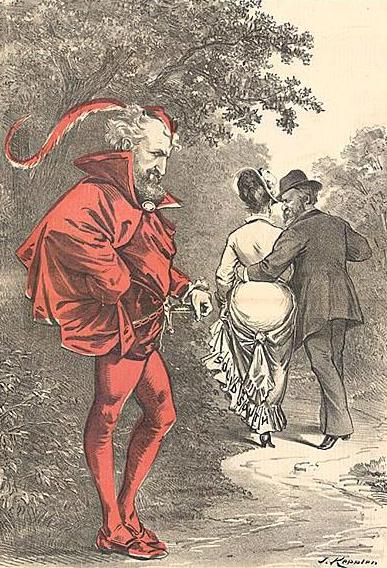
1876, Presidential election subverted. The Hayes Compromise of 1877 (informal): federal troops sent to southern states (to enforce new freedoms for African Americans) will be removed in return for electoral votes needed by Rutherford B. Hayes. See political cartoon above.

1877, Reconstruction era buried; Jim Crow era begins, putting ex-slaves at the mercy of former masters. Laws regarding equality were now seen as absurd or un-Christian.
1883, The Supreme Court agreed, and the Civil Rights Act of 1875 was deemed unconstitutional.
• No further civil rights legislation was signed until 1957.

Jim Crow era
• Discriminatory laws passed for every area of life including towns and spaces in which black people were not allowed to live.
• Segregation took over every area of life – prisons, hospitals, schools, hospitals, orphanages; textbooks used in schools; books for black students stored apart from books for white students; two Bibles in the Atlanta courts—one for black witnesses; one for white witnesses

Where were American churches? Largely silent and complicit, too often delivering sermons supporting segregation.

Where are American churches today? Too often defined by identity politics, or by the importance of being ‘good people’

Being racist isn’t only about burning crosses or participating in lynchings. It’s also about closeting oneself as an individual, reducing the problem to “bad actors” seen in the news. Or desiring political favors/power more than integrity.

By looking the other way, or offering heartfelt exhortations about being good and generous individuals, we muddy the water. We fail to look into the mirror and acknowledge that we, too, are part of what’s still wrong in the USA. Put another way, we turn this social problem into a personal issue regarding individual choices, rather than seeing it for the centuries-long systemic issue it has been from the beginning.

Thanks for visiting, reading, and doing what you can where you are.
Elouise

© Elouise Renich Fraser, 15 August 2020
Political cartoon found at en.wikipedia.org

Sursum Corda | G. A. Studdert Kennedy

What kind of day did you have so far? Mine was productive, though not the way I thought it would be. Here’s one of my favorite Studdert Kennedy poems. It seemed appropriate, given the state of things today.

*Sursum Corda

There are cowslips in the clearing,
With God’s green and gold ablaze,
And the distant hills are nearing,
Through a sun-kissed sea of haze.

There’s a lilt of silver laughter
In the brook upon its way,
With the sunbeams stumbling after
Like the children at their play.

There’s a distant cuckoo calling
To the lark up in the sky
As his song comes falling, falling
To his nest—a happy sigh.

Sursum Corda! How the song swells
From the woods that smile and nod.
Sursum Corda! Ring the bluebells
Lift ye up your hearts to God.

From The Unutterable Beauty: The Collected Poetry of G. A. Studdert Kennedy, pp. 95-96
First published by Hodder and Stoughton Limited (London, 1927)
Published in 2017 by Pendlebury Press (Manchester, U.K., August 2017)

*Sursum Corda -“Lift up your hearts.” The opening phrase of a traditional Christian liturgy dating back to the 3rd century. Normally used before celebrating the Eucharist.

Can there be beauty in a warzone? Especially with people dying all around, often in prolonged agony.

Studdert Kennedy, also known as Woodbine Willie, wrote this poem during World War I. He served as a chaplain, witnessing and participating in the laments, loneliness, pain and deaths of British soldiers. He dealt with the horror of war by writing poetry.

Many of his poems are heartbreaking. They deal with harsh realities of early 20th century warfare on the ground, and the daily struggles of human beings separated from their families. They also include some reality talk with God. This poem, like a number of others, found something to celebrate. A reason to hope, despite the daily suffering and dying that surrounded everyone.

Even though nature can’t solve all our problems, it’s there for the taking. A gift. Just look around. Lift up the eyes of your heart! In your memory, listen to the birds and admire the bluebells. They’re sending us an invitation to look and listen to the larger picture of nature, not just to our own small worlds.

Elouise

© Elouise Renich Fraser, 13 August 2020
Image of cowslips found at first-nature.com