Telling the Truth

connecting the dots of my life

Tag: Trauma

cool midsummer breeze

cool midsummer breeze
reminder of things to come
balm for my body

Out this morning for a walk with D. Taking advantage of an unexpected change in the air. Thinking about what’s going on here in the USA and abroad. Especially in churches and religious communities.

Recent revelations of clergy sex abuse of more than 1000 minors in Pennsylvania have sent our state and religious communities reeling. Not a moment too soon, yet decades too late for victims robbed of their childhood, adolescence, and sense of worth as children of God.

This time it’s about priests, bishops and the highest governing bodies of the Roman Catholic Church. It could easily have been about ordained leaders in conservative and liberal churches of all Christian denominations, including those that claim not to be denominations.

Abuse of power has no boundaries.

In the meantime, thousands upon thousands of children, young people and adults wonder when and how this madness will end. Everything in us cries out for freedom, though many of us have believed the lies of our perpetrators:

  • This is for your own good.
  • You made me do it.
  • God told me to do it.
  • I can’t help myself.
  • This will bring you closer to God.
  • No one will ever find out.
  • This is our little secret.
  • You should be ashamed of yourself.
  • I can help you with your career.
  • If you tell anyone, I’ll kill your brother.
    …..

Our lives are precious. We’re here for a purpose. What’s yours?

Today mine is to spotlight the reality of this rampant non-secret that’s eating away at families, communities, religious and secular institutions. To think these things don’t matter in public life is to live on another planet. These aren’t private matters. They are public and private relations disasters at every level.

No, I haven’t given up on following Jesus. I have, however, given up the notion that what happened to me in my youth and childhood should be over and done by now. It’s never over and done. Especially when there are millions of other victims out there. Overlooked, uncounted, discounted and left to their own devices. From the outside, some get along better than others. Yet deep inside, competing voices vie for everlasting attention.

I know, because I’m still doing battle, though not without hope. My purpose today is to tell the truth, without loss of hope and with the most powerful voice I have–my writing.

©Elouise Renich Fraser, 20 August 2018
Photo found at kalynskitchen.com
Misformed and misinformed

Misformed and misinformed
She emerges from childhood
Before its wonders take root

Sheltered from life and herself
Dim vision narrows down
Lest warm rays of truth find her
Huddled in unsafe cellars
Waiting for life to begin
Before it ends

The poem is about me and it’s not only about me.

Yesterday I listened to No Place to Run, a radio rebroadcast of an investigative report into foster care in the USA. The report focused on two young women in Texas. Their stories were eerily similar. I’ve heard similar stories about foster care here in Pennsylvania.

Each young woman (one still a child) was placed in a foster care setting. Both ended up on the streets, abandoned by systems that failed them. And both were betrayed by a political machinery determined to avoid or ignore the need to fund competent, monitored, successful foster care.

I applaud foster care parents who put their hearts and their energy into caring for foster children. I also applaud lawyers, judges and politicians determined to make a difference now, not later, with systems that work for the benefit of foster children and young people.

At the end of the day, however, I wonder whether I’m ready for the full truth about this shadow world. Especially since I’m routinely horrified at the latest revelations, already dressed up for public consumption.

©Elouise Renich Fraser, 13 August 2018
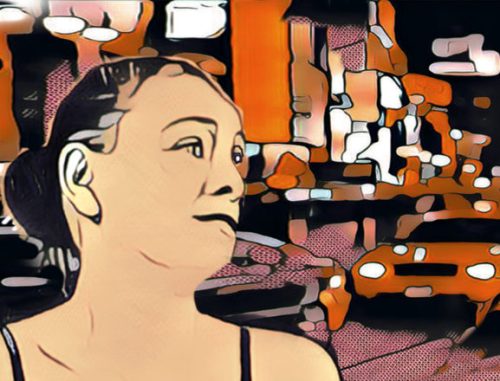
Art found at http://www.revealnews.org

Suffering

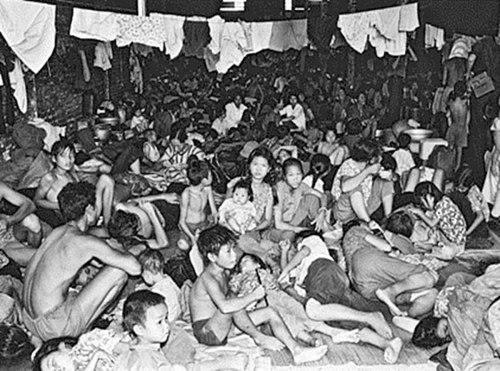
Dorothee Soelle, German poet and theologian, wrote the following poem during the Vietnam War era. The poem, titled “Travel Notes,” has seven parts. Below is the first part, followed by my comments.

Hospital in Haiphong

Doan is three years old
in his head a fragment
of that handy bomb
that leaves buildings undamaged
never puts a factory out of production
doesn’t even harm bridges

Doan is three years old
in that handy bomb
are millions of tiny fragments
just for doan
meant for his feet
designed for liver and lung

Doan is three years old
his mother is gone
the president of the united dead
sent her an invitation
to a high standard of living and a lasting peace
he sent a handy bomb

Doan can’t write yet
so I’m writing this letter
to the workers in st paul Minnesota
asking if they couldn’t make
a toy boat out of plastic
instead of bombs because
doan is only three years old

Dorothee Soelle, from Revolutionary Patience, pp 71-72
English translation published by Orbis Books 1977
First published in German by Wolfgang Fietkau Verlag, Berlin 1969 and 1974

I discovered Dorothee Soelle’s writing in the late 1970s when I was studying theology in graduate school. As one of only several well-known women theologians (also a poet), she made her mark by teaching, publishing, and practicing what she preached.

All poems in Revolutionary Patience  are about the Vietnam era. So is one of her best-known books, Suffering. It’s her cry against apathy toward sufferers, and against views of God that accept suffering as ordained by God. She discusses the nature of suffering, how to recognize it, and how to listen in person to people who suffer. The goal isn’t to fix them, but to support their empowerment as change agents.

The most crucial skill Soelle  describes is silence. Listening without an agenda. A skill anyone can use with a child or adult so traumatized that at first he or she has no words. Sometimes it takes a long time to find the words.

When I read Soelle’s writing today I think of myself and every child, teenager, woman or man marked by childhood trauma. I ask myself whether I’ve yet ‘arrived.’ Or am I stuck somewhere, still under the unseen yet keenly felt power wielded by perpetrators or by their stand-ins?

The poem above also reminds me of migrant children caught in the web of our recent national and international humanitarian disaster. They and their families are already marked for more suffering. Not because God wanted it that way, and not because they deserved it.

I wonder how much we’ve learned from the Vietnam era. Do we know how to deal with suffering that’s taken place on our own soil since the beginning of our nation? Especially suffering hidden beneath piles of bureaucratic red tape, political expediency, finger-pointing, inattention, and rewritten history.

©Elouise Renich Fraser, 8 April 2018
Photo of Vietnam Refugees at Guam found at afsa.org

seeping through pores

Seeping through pores
The virus takes root
Invisible at first
A sense of not being
At home or abroad
In this sea of strangers
Wandering in and out
Filled with good will
They come and  go
Dry and desolate
A thought takes root
Without reason
The only welcome visitor
Whose words unheard
Make perfect sense
In this dying hope for miracles
That never arrive on time

In recognition of our most recent national upsurge in suicides attempted and/or completed, and in honor of family members and friends who ended their lives on this earth, or made the attempt and failed.

Always a thousand unanswered questions. Always a sense of ‘what could I or we have done differently?’ Always a desire to go to sleep and hope for something better when I wake up.

Multiple resources are available online. Hotlines and chat rooms are open night and day. Sitting there, waiting to be used. Sometimes they are, sometimes they aren’t.

©Elouise Renich Fraser, 25 June 2018

The Memory Unit

The Memory Unit gathers –

A motley congregation
faces the long, high pulpit and
double-locked entrance.
Weary attendants gather behind
the pulpit busy with paperwork
and a phone that never rings
for these lost sheep.

Women and men in varied
stages of present non-presence
watch and wait for what will not
arrive today or tomorrow.
In various stages and styles
of dress and distress they sit
on chairs or in wheelchairs or
lie strapped on trolleys to
avoid inconvenience or upset.
Some moan or shout while others
eerily silent stare and a few
bright-faced parishioners knowingly
greet everyone and no one passing by.

Silent or babbling, singing or shouting
repetitive statements and vociferous
objections to no one and everyone
in particular the congregation of
expectant supplicants searches
not for lost sheep or a shepherd
but for themselves and worlds
they can never re-enter even if
they come through the locked door
caring for and loving them as they are
if only for this passing moment.

©Elouise Renich Fraser, 19 April 2018
Poem based on my memory of a visit several years ago to a Memory Unit in Philadelphia
Photo taken by Maja Daniels in a Memory Unit in France; found on npr.org

the red cardinal

the red cardinal
sings his bright clear spring song
perched on bare branches

When I published my first post, Dear Dad, on 27 Dec 2013, my voice was anything but bright and clear. Singing was definitely out of the question. As a survivor of childhood PTSD, I used an elaborate strategy of calculated silence and half-truth.

How much did I owe the world? How much did I owe my family? How much did I owe the church? My father was a clergyman. Revered, respected, loved and sought after by people with sorrows such as mine.

But I wasn’t one of his followers. I was the first-born of four daughters. I had to watch my tongue constantly. Smile when expected. Stifle tears. Do as I was told. Set an example. And take the beatings like the contrite spirit I was not.

Breaking my silence of decades took decades. It started when I was in my 40s, with trips to Al-Anon meetings for five years. There I learned to relax and share things I’d never told anyone. Then I worked with an intern therapist who helped me complete a genogram (family tree, with notes). Finally, in the early 1990s, I began working with a psychotherapist with whom I’m still connected.

I put in hours and years of work. Did tons of homework. Cried buckets of tears. Filled unnumbered journals with dreams and personal entries.

Yet my recovery isn’t measured in months, years or numbers of pages written in journals. It’s measured in my voice. At first feeble, halting, self-conscious and terrified. Beginning with my husband and immediate family, then with my sisters and parents, slowly but surely with several trusted friends, and finally, a few years before I began blogging, with my large extended family on my father’s side.

My voice is the measure of my recovery.

Regardless of the weather, the political climate, or my health, the question is the same: How free am I to tell the truth? That’s the thermometer that matters.

I’ve always cared about issues that have to do with women. I used to think that getting a decent academic position would somehow ‘prove’ my worth. Or set me free. Especially if I was granted tenure.

Well, that wasn’t my riddle to solve. My riddle was my voice.

I began blogging because I knew it would challenge me to tell the truth freely, with words chosen by me, not by someone else.

So the little red cardinal outside my window caught my attention. The ground was covered with snow, and the laurel bush had been beaten down by more than one Nor’easter. Yet the little red cardinal was singing his heart out. Freely. Telling his truth about life and announcing his territory and the hope of spring.

Though I’m a follower of Jesus, I don’t believe this makes my life easier. In fact, I’d suggest it makes it more difficult because it means both living and telling the truth. Especially when it’s most unwelcome or unexpected.

Many thanks to Candice for this topic! Though I’ve already written elsewhere about this blog, this is another way of looking at it. Equally true and challenging.

© Elouise Renich Fraser, 17 March 2018
Cardinal duet found on YouTube

Bankrupt

How oddly ordinary to see them there
Crammed into files and boxes
Waiting for one more
Chance to be adjudicated
To be declared bankrupt
Without assets to proceed
Or recover on their own

All that remains
Are tasteless survival rations
Props and half-baked substance
Dumped and stirred into a
Great stew and foamy ferment
Of yesterday’s failed efforts to
Make this world a better place
In which to die
Or live diminished

Starving youth and children
Keep calling back wanting only
A fair go at being somebody
Or helping some body and soul
Hurting in this world weary
Of waiting for what most certainly
Will not arrive on time

Only You and they know fully
The challenge the exasperation
The hurdles and setbacks of
Trying to make it to first base
Without being called out
Fired from the team or
Disappeared

©Elouise Renich Fraser, 14 March 2018

misaligned | Int’l Women’s Day

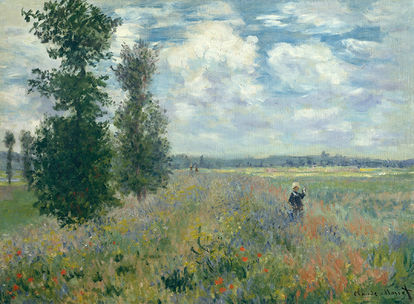
Claude Monet, Poppy Fields near Argenteuil
in the waiting room
perfectly aligned paintings
greet the misaligned

I’m back at the physical therapy center, sitting in the waiting room. Directly across from me, above a row of chairs, hang two huge paintings. Doubtless chosen for their ability to calm and reassure patients bearing all kinds of physical misalignments. Most are women.

The paintings are meticulously hung and feature lovely outdoor scenes. Expansive, bucolic and natural without being overly sentimental. Unobstrusive  gentle colors and bright sunshiny days.

Nothing to rattle our nerves or make us wonder about untold stories or what might happen next. No storms brewing in the background. No signs of aging structures or broken-down bridges. All is serene.

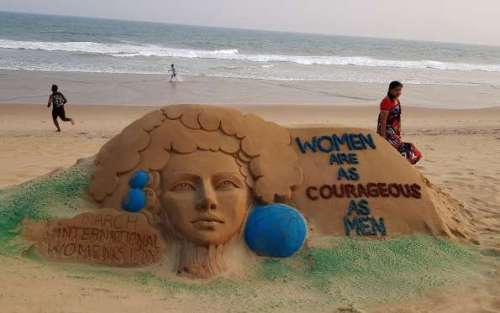
The haiku, written several weeks ago, came to mind this morning as I scrolled through photos celebrating International Women’s Day. If even a few of these photos were hung on walls in our public spaces, what would happen? Here are three that caught my eye.

Bhubaneswar, India – Sand Sculpture by Manas Sahoo
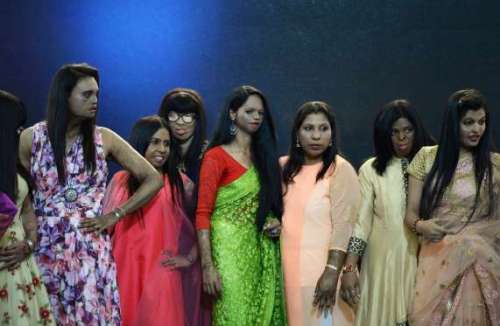
Thane, India – Fashion Show by Acid Attack Survivors

Dhaka, Bangladesh – March in support of Int’l Women’s Day 
Never underestimate the power of women. Especially when we’re in one accord on just one thing we all know we need. Equal status as human beings.

This means equal status in a society that honors each woman and girl as a full human being, regardless of color, country of origin, economic or social class, religion, or marital status. Not a fraction of a human being, but 100 percent human. Welcomed into every room in the house without having to wear masks, special clothes, smiles or makeup on our faces, or anything that signals we are less valued than men or boys.

© Elouise Renich Fraser, 8 March 2018
Monet painting found at quadrosetelas.com.br
International Women’s Day photos found at Getty Images

Haunted by unlived history, #3

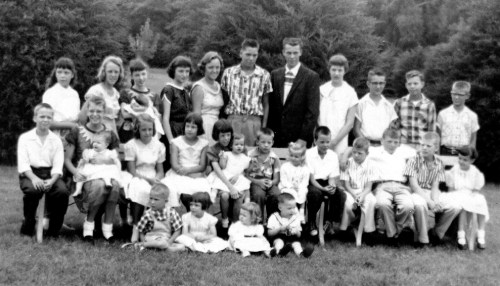
Renich Reunion in Newton, Kansas. I’m in back, just left of center. My first cousins as of July 1958 (more on the way!)

I grew up thinking love would heal everything. I also grew up believing no man in his right mind would ever love me enough to marry me.

I wasn’t a flirt or a party girl. Though I didn’t feel ugly, I didn’t consider myself pretty. I was a quiet and diligent student, a budding musician, intelligent, pleasant, and deeply ashamed.

  • Ashamed of the way my father treated me
  • Ashamed that most people didn’t seem to want me as a close friend
  • Ashamed when teams were chosen and I wasn’t anyone’s first choice. I was better than the last choice, but not by much.

I was also ashamed of our family’s social status. Yes, my father was an ordained pastor. No, he wasn’t a regular, full-time pastor. No, he didn’t have a regular, full-time income.

I sometimes thought about becoming a single missionary like some of the women missionaries I knew. That way I wouldn’t have to bother about all that social stuff. Or men.

But then there were those few boys and men who seemed to like me. Sometimes whether I liked them or not. Maybe the love thing could work for me. Maybe I didn’t have to be single all my life. But aren’t there better choices out there?

This was the beginning of my up and down history of secretly falling in and out of love with men. In no way did I want to appear needy, or look like I was chasing after them.

In the early 1990s, as part of an assignment for survivors of sexual abuse, I made a list of 30 men and boys who made an impression on me from childhood.

Then I began studying the list, looking for patterns. Of the 30 men and boys,

  • 16 were romantically attractive to me
  • 15 were men or boys I wanted to impress in some way
  • 14 were artists, poets, musicians, and/or actors
  • 13 appreciated and loved to listen to my piano playing
  • 12 pursued me (I didn’t pursue them)
  • 12 affirmed me as an individual, not as an object of their self-interest
  • 10 were ordained ministers or leaders
  • 6 were employers/supervisors
  • 6 took advantage of me
  • 4 raised fear in me
  • 4 were pursued by me
  • 4 I disliked intensely
  • 4 were ‘soul mates’
  • 3 overtly punished or humiliated me

Thinking about my relationships with these men and boys helped me make large and small changes in my relationships with men. For example,

  • I changed some unwise habits in order to maintain healthy boundaries as a professional educator and a church member.
  • I learned to recognize and honor my intuition when things didn’t feel quite right.
  • I recognized that being an agreeable, good girl woman was getting me in trouble by feeding unhealthy patterns of overwork and exhaustion. Though I made progress on this one, it wasn’t resolved until I retired in 2011.

I’ve written earlier about not having dreams for myself. Big dreams. The kind that orient life in a clear, even exciting direction. Most of my life I’ve lived by lists. Checking off long to-do lists with no big dream at the end. Just more long lists.

I want something better for myself. Today I hear my history with men fairly screaming something I couldn’t hear back then.

© Elouise Renich Fraser, 1 February 2018
Photo taken in Newton, Kansas, July 1958 – Not yet all my first cousins on my father’s side.

no poems today

no poems today –
somewhere young children
cower and weep

fear and longing
hold their collective breath
waiting the verdict

And when the verdict is in, then what?
How do bodies and souls find their way
In a world that quickly forgets
Just what the commotion was all about

Are we ready for masses of victims
Supposedly set free by newsworthy justice
Yet marked indelibly by sordid daily injustices?

And what about today’s other children
Living in bubbles of make-believe normalcy
Inhaling lies about love as an
Overnight fling or great adventure?

Every 24 hours soul-breaking rites of passage
Leave bitter spirits and aching bodies behind

Who will pick up our broken pieces
And love them back to life?

© Elouise Renich Fraser, 26 January 2018
Image found at jewishcommunitywatch.org