In Pobiddy, Georgia | Mary Oliver
by Elouise
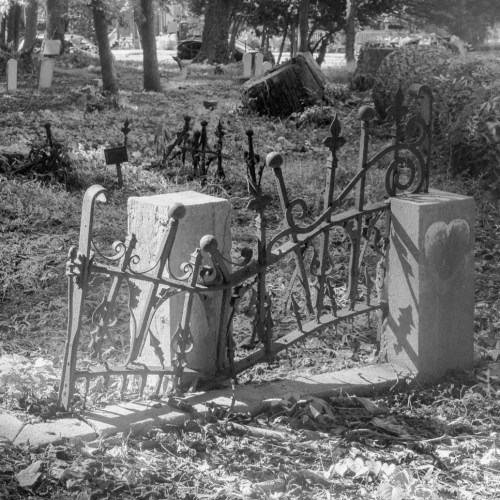
Mary Oliver’s poem describes an encounter she and her friend have with three women in a churchyard. It’s thought-provoking and challenging. Especially for Labor Day. Please note that I hear this poem as a comment on black lives and deaths, though Mary never identifies this as a black cemetery. My comments follow.
In Pobiddy, Georgia
Three women
climb from the car
in which they have driven slowly
into the churchyard.
They come toward us, to see
what we are doing.
What we are doing
is reading the strange,
wonderful names
of the dead.
One of the women
speaks to us—
after we speak to her.
She walks with us and shows us,
with a downward-thrust finger,
which of the dead
were her people.
She tells us
about two brothers, and an argument,
and a gun—she points
to one of the slabs
on which there is a name,
some scripture, a handful of red
plastic flowers. We ask her
about the other brother.
“Chain gang,” she says,
as you or I might say
“Des Moines,” or “New Haven.” And then,
“Look around all you want.”
The younger woman stands back, in the stiff weeds,
like a banked fire.
The third one—
the oldest human being we have ever seen in our lives—
suddenly drops to the dirt
and begins to cry. Clearly
she is blind, and clearly
she can’t rise, but they lift her, like a child,
and lead her away, across the graves, as though,
as old as anything could ever be, she was, finally,
perfectly finished, perfectly heartbroken, perfectly wild.Published in 2017 by Penguin Books as Devotions, The Selected Poems of Mary Oliver (pp., 265-66)
© 2017 by NW Orchard LLC
Poem selected from White Pine (published 1994)
Tomorrow we celebrate Labor Day, despite harsh realities of forced servitude in what we so proudly call the “United” States of America.
How much sorrow is hidden, planted, and left to die beneath the ground? And what catches our attention when we walk through a churchyard, reading “the strange, wonderful names of the dead?”
The last scene in this short story tells more truth than I’ve found in books written for white consumption. At the same time, I’m caught by the way Mary Oliver never dresses any of this up in fancy clothes. Especially at the end.
In the 1950s, when I was growing up in the Deep South, I passed many small graveyards populated with old, tired, sometimes broken-down grave markers and weeds. I can’t remember any of my school lessons describing or investigating the horrible reality of slavery in the USA. Yet it was in plain sight every day.
So here we are today, still at war with the fruit of our racist history, still struggling to own fully the sad reality that this still shapes each of us regardless of our color or history.
Thanks for your visit. I pray we’ll one day wake up to the often sad, human truth about our country.
Elouise♥
© Elouise Renich Fraser, 4 September 2022
Photo found at http://www.newyorker.com
 Telling the Truth
Elouise, I join you in praying that our country wakes up to the truth. Beautiful poem by Mary Oliver.
LikeLike
This is painfully real. Thank you, Elouise.
LikeLiked by 2 people
Indeed. It’s a shame we don’t talk with each other about these things — even when they’re right under our eyes, sitting next to us in church or on the subway. It’s especially strange that we don’t take seriously the dual realities of what we call ‘mixed marriages’ — with or without children.
LikeLike
Thank you, Don. I found this poem particularly moving. Especially now.
LikeLiked by 1 person
Oh Elouise, I can hear the pain in your voice.
LikeLiked by 1 person
Thank you, John. I remain horrified at the ways we find to put off, banish, or negate the truth about who we are as a nation. It’s great to talk with friends who get it. It’s also terrifying to see how many here in the USA are taking the low road or charging ahead with their poison neglect of truth.
LikeLiked by 1 person
To me the saddest part is of this “neglect of truth” is that it is not just ignoring it but actually is proactive and intentional and now often encoded in laws as we have seen in some states. Many are now not even allowed to discuss this truth, even if so inclined. It leads to cynicism and fatalism towards any possibilities of change.
LikeLiked by 1 person
Well put, Tim. Deliberate silence can be as destructive as deliberate lies shouted from the rooftop. And yes, even worse is the way “we’re not even allowed to discuss this truth, even if so inclined.” I’ve experienced this kind of silence in churches I’ve attended over the years. It seems we’re terrified of reality and would rather keep it ‘under wraps’ instead of creating safe space for tough conversations followed by tough decisions and actions.
LikeLiked by 1 person