Telling the Truth

connecting the dots of my life

The White Stone

To each who overcomes,
I will …give a white stone with a new name written on it,
known only to the one who receives it. (Revelation 2:17, NIV)

Imagine you’ve come to the end of your life. What are you expecting? I was brought up to expect judgment. The kind that points out how much I’ve failed, and assigns demerits for failures.

Will my failures outweigh the good? According to my childhood theology, that would be entirely in God’s hands. Woe to me if I fail to live up to expectations.

This made for a peculiarly nervous mode of life. Like nervous tics my failures sometimes seemed to have gained eternal life. Poking at me, cropping up at the most vulnerable moments, shadowing me like bad dreams. Casting a pall of loneliness around me and my closely guarded secrets.

I’ve been reading short excerpts from George MacDonald in the last few weeks. His comments about the white stone are nothing like my childhood theology.

The white stone and the new name are indeed God’s judgment. But with a difference. This is a judgment of grace. One white stone with a new name for each son and each daughter.

The stone with the new name makes visible what has already come into being. Not a hideous monster, but a breathtakingly beautiful daughter or son of the Creator. In fact, to receive the white stone with one’s own new name is the equivalent of ‘well done, good and faithful servant.’

It is only when the person becomes his or her name that God gives the stone with the name upon it. (George MacDonald: An Anthology: 365 Readings; C. S. Lewis, ed. (Harper One)

The secret name given only to me will capture perfectly what God saw in me from the moment I was created. Especially when I or others don’t or can’t see this. The name sums up the woman I will have become—through many dangers, toils and snares.

I can relax, take each day as it comes without a clear roadmap. When I get there, my Creator who kept faith with me will give me my white stone with my new secret name. One of a kind. I don’t need to keep asking “Am I there yet?” I’m already in good hands.

© Elouise Renich Fraser, 8 March 2017
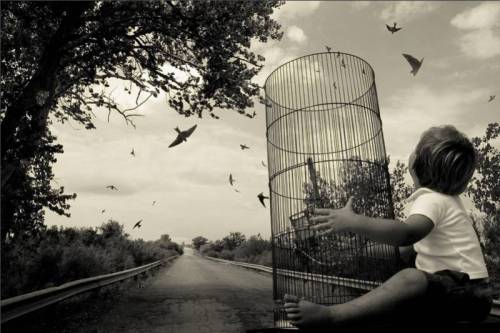
Image found at ahnsahnghong.blogspot.com

Quotation  from the NIV
Response to WordPress Daily Prompt: Nervous

Chewing My Cud

~~~~~A tarine cow chewing the cud near the Habert de la Dame

Dear Friends,

Today’s Daily Prompt is ruminate.  You know—chewing the cud. Turning things over and over and over. Mashing them around. Trying to make digestible what might be indigestible. Spitting out what reminds me of liver and okra. Swallowing the rest and hoping the outcomes are good for me.

So what’s this post all about? Several things. Please note I need no sympathy. In fact, I abhor it. I’d rather have empathy or even your listening ear. You don’t have to like it, agree with it, think about it, try to solve it, or come back for more. If all you do is read with a listening ear, I’ll be deliriously grateful.

So let’s start with my health. It’s on my mind daily. Maybe that’s what happens in the golden years—things just sort of moosh together and feed on each other relentlessly.

The list gets longer: heart arrhythmia and heartbeat speed or lack thereof; non-diabetic hypoglycemia; jaw bone loss of memory and inability to function properly; kidneys showing signs of aging; on glaucoma watch with nothing to report lately; IBS ever with me and I with it; still allergic to chocolate; caffeine considered poison to my system; lactose and soy intolerant; those pesky little skin cancers that just seem to keep popping up; and whatever I forgot to mention or didn’t mention on purpose.

And yet.

I look around and am beyond grateful for this female body and the ability to care for it. I spend hours in the kitchen making sure the food train is ready to go, and cleaning up pots and pans. I have a lovely kitchen, enough food, water, cookbooks galore, and a pantry full of ingredients. Best of all, I have a kitchen dining area with a lovely view of our back yard, bird feeders, birds and bees, trees, shrubs, spring flowers, the sky, the occasional bunny rabbit, groundhogs, and did I mention squirrels or that stray cat?

Two days ago I was—and still am—sorrowful because another church friend died last week. Teared up all day. In church, out of church. Anxious about my health, given my age. Down in the dumps about the way this presidential election and outcomes have galvanized family, friends, neighbors and strangers against each other. I’m also lonely—feeling like Emily Dickinson’s poem from the inside out. Yet hungry for time alone, especially in the evening, and for music to sooth my spirit and bring on another wave of tears. Vulnerable and grateful.

And yet.

That very evening I had fallen apart. Out of control in the space of a heartbeat. Storming around the attic overwhelmed by messiness. We’re making great progress up there. Yet the messiness freaked me out. Not just my messes, but you-know-who’s messes. To say nothing about how I’ve been cleaning up (other peoples’) messes all my life and I’m sick and tired of it and I won’t take it anymore!

What’s going on? What if I tried something different next time? I don’t have answers. That’s why I’m writing about it. My way of ruminating. Out loud.

Thanks for listening, and not trying to solve my stuff. Empathy is also deeply appreciated.

Elouise

© Elouise Renich Fraser, 7 March 2017
Photo found at braemoor.co.uk

Response to WordPress Daily Prompt: Ruminate

between worlds

dreams-angela-bacon-kidwell

drifting away
her mind hovers
between worlds
a spectator unwilling
she rests on her bed
captive to images
of a dying day

a silent cacophony of
bizarre semi-reality
emerges into
semi-conscious
scenarios never
seen again

precursors of sleep
they swarm
in disarray
bits and pieces
of the day
descending
into unconscious
oblivion

***

© Elouise Renich Fraser, 6 March 2017
Photo found at raisa-b-h.blogspot.com

Response to WordPress Daily Prompt: Swarm

It might be lonelier

emily-bp-blogspot-com-blue-peninsula

I see myself in this poem. And my mother. And other women I’ve known who seem to wear a mantel of sorrow, even when they’re happy. My comments follow.

It might be lonelier
Without the Loneliness –
I’m so accustomed to my Fate –
Perhaps the Other – Peace –

Would interrupt the Dark –
And crowd the little Room –
Too scant – by Cubits – to contain
The Sacrament – of Him –

I am not used to Hope –
It might intrude upon –
Its sweet parade – blaspheme the place –
Ordained to Suffering –

It might be easier
To fail – with Land in Sight –
Than gain – My Blue Peninsula –
To perish – of Delight –

c. 1862

Emily Dickinson Poems, Edited by Brenda Hillman
Shambhala Pocket Classics, Shambhala 1995

Emily already knows Loneliness and perhaps wants something else. Yet she fears that giving it up will lead to even greater Loneliness. Her life might not have enough room for Peace, Hope or Delight—in addition to Loneliness.

Change of that magnitude would make too much noise, demand too much space. Intrude upon the Lonely, Dark existence she experiences in her crowded little Room. Or worse, she might lose the little everyday happiness and security she already has in her crowded little Room. I take this to be her life, a life of creative solitude and family duties.

In addition, Emily says her little Room might be too crowded for Him. Who is He? Perhaps a man or someone else who wants to be in her life? Or perhaps the One who offers her the Sacrament of Peace and Hope, with or without anyone else in her life? I don’t know.

It seems a sense of Fate hangs heavy over Emily’s life, taking up almost all the room or energy she has for human emotions of Delight. Yes, she may welcome relief from time to time, but the cost of giving up her Ordination to Suffering seems too heavy to bear.

Emily hasn’t renounced happiness. It still manages to creep in. Yet giving herself completely to Delight might annihilate her. She wouldn’t be able to count on predictability or control. Perhaps she wouldn’t be able to write as much. Perhaps she wouldn’t be safe from betrayal or disappointment. Her worst fears might be realized.

In the end, Emily would rather drown with land in sight, than arrive only to “perish – of Delight.”

This poem may not be gender-specific, yet in my experience a similar debate rages inside many women. Especially when the heavy hand of authority keeps reminding them of their Fate. That to which they were Ordained–duties and distractions that don’t allow space or time to exercise personal gifts and welcome Delight into their lives.

This is Women’s History Month. I celebrate women the world over who had a late start or haven’t yet found Delight, Hope and Peace in this world. If women seem complicated and unpredictable, maybe that’s because we’ve lived multiple lives for too long. Masking and denying our true selves to survive. Creatively. The way Emily survived.

I celebrate Emily Dickinson’s creativity. Her poetry speaks to me about courage and commitment to truth. Best of all, her enigmatic voice lives on, suggesting a different, slanted way to view the natural world and the dynamics of our inner and outer lives.

© Elouise Renich Fraser, 5 March 2017
Photo found at bloggingdickinson.blogspot.com

God rolls the dice

wu-spring-in-linz-austria-haggiaustria-on-28-feb-2017

God rolls the dice
with each new birth
A gamble taken
in good faith

If you cherish this little one
might not my beloved earth
be visited come spring
with lavender from sea to sea?

A roll of the dice and
the Master’s plan
Lift up your eyes
and feast on beauty

Persistent repetitive
tenacious beauty
bursting with fragile joy
upon giving birth

***

I know. Sadly, not all the little ones make it, and not all little ones are conceived in good faith. Yet God keeps faith with us each spring, in each season of life. Always giving us another opportunity to nurture the ground, the good earth, the vulnerable child who may become a link in this fragile chain we call life.

Which brings three questions to mind. Am I willing to bet on God? And beyond that, do I realize God is betting on me? Not on me alone, yet on me as one part of the whole. Finally, do I know how to nurture the vulnerable child in you or in me? Food for thought.

© Elouise Renich Fraser, 4 March 2017
Photo found at the Weather Underground App
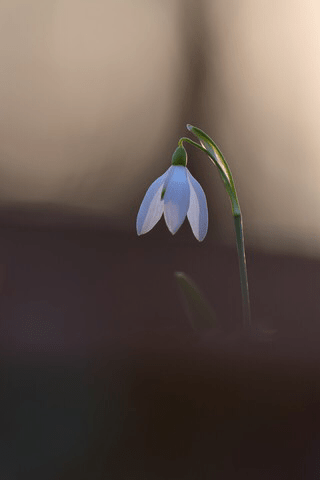
Spring crocus in Linz, Austria taken by haggiaustria, 28 Feb 2017

Response to WordPress Daily Prompt: Parlay

Surviving the Con Artist

No doubt about it. We’re surrounded by con artists who seek to enhance themselves at the expense of others.

I’m not talking about the painfully transparent scenarios of TV ads. This is about individuals who amass great fortunes by way of the con. You might say they’re masters of The Deal. The one where They Always Win or think they do, and you always lose even though you may believe you’re winning.

I don’t like being caught looking the wrong way. So here’s what’s helping me right now in our new USA political scene of chaotic administration, alternative facts, confusion, smiles, surface calm and deep rage—all of which can catch us off guard.

I’m drawing on a helpful book—one of two I’ve read recently about psychopaths. The book is titled Without Conscience, by Robert D. Hare. Dr. Hare’s points are in italics. The summary is my version of his material.

  1. Know what you are dealing with. Don’t think reading a book here and there will inoculate you. No one is safe. Still, it helps to know what you’re dealing with. Don’t memorize a list of rules. Instead, understand what makes psychopaths tick, and why you are vulnerable.
  2. Try not to be influenced by “props.” This is nearly impossible, given our love affair with social media. Nonetheless, don’t watch their faces, body language, or stage sets. Look away or close your eyes. Pay attention to their words. Avoid eye contact. Don’t be mesmerized by hand motions or backdrops. Your job is to sort out fact from fiction, and discern this person’s intentions with regard to YOU. What does he or she want? Your vote? Your money? Your influence? Your cheers? You? Listen carefully. What, exactly, is he or she saying or promising?
  3. Don’t wear blinkers. Psychopaths will say and do anything to gain your trust. Beware of flattery, promises, shows of kindness or concern about you, stories about how great and smart they are and how they can make you great again! Cracks will appear in their carefully staged performance, but you have to be alert for them. They’re on a fishing expedition, figuring out what will reel you in! Are they vague? Inconsistent? Misinformed? Not answering the question someone just asked? If anything sounds wrong or too good to be true, check it out later. Even more difficult, forget about friendly social manners we USA citizens think we’re required to use. Sometimes it doesn’t pay to be friendly or compliant, no matter how you’re being treated. Don’t give yourself away.
  4. Keep your guard up in high-risk situations. That includes the context (away from home, in a bar or airport, on a cruise) and your personal vulnerability. Lonely? Single? Homesick? Married? Fed up? Weary? Depressed? Do you have money? Want or need more money? Out of work? Tired of being told what to do by people who don’t know your situation? Always looking for the next big deal? The next stray cat? Beware! You’re just what psychopaths love to find.
  5. Know yourself. Especially your weak spots. That’s what psychopaths are looking for. Their radars focus on weak spots. Know when that’s happening and don’t be a sucker to flattery or promises of a big deal. They read us like an open book. If you need help knowing yourself, ask people who know you best to help you. Consider it personal insurance against being taken for a damaging ride you will regret.

I know from bitter experience what it’s like to be conned. In today’s political world, perhaps the best we can do is to know ourselves. Thinking we’re safe in any political scenario won’t inoculate us from damage. No doubt about it!

© Elouise Renich Fraser, 2 March 2017
Response to WordPress Daily Prompt: Doubt

Hesitating

her eyes
scan
each faded
page

past
and future
clash
reluctant

time
runs out
wistful
she sighs

remembers
what
she had
forgotten

sees more
than
decades
before

maybe….
what if….
must I
now?

shadows
creep
toward
sunset

closing
each book
not ordained
to stay

she turns it
sideways
spine up
pages down

***

During the last several weeks, D and I (more D than I) have been weeding our home library yet again. Only this time it’s different. We’re retired. In our 70s. Not going back there again.

Our collection, well over 9,000 (yes, D keeps a record!), has been our 3rd ‘child’ since we married each other and our book collections in 1965. It grew exponentially with each new degree and each new teaching and administrative opportunity.

The most important item in any house we’ve purchased has been wall space. We’ve had bookshelves on every floor and in most rooms. Since 1983, when we moved to the Philadelphia area, we’ve put rows of them on our home-made shelves up and down our full length finished attic. Our decorating scheme has been simple: Books!

Not just professional and academic books, but collections for children, adult novels, biographies, poetry, mystery series, science fiction, philosophy, art history, music books, travel books, encyclopedias, foreign language books, world religion books, Calvin and Hobbes cartoons and Winnie the Pooh!

Big sigh. Letting go is, for me, rather emotional. These are my friends! My companions on a long journey! Just looking through them reminds me of the many wonderful women and men I’ve met along my journey—as classmates, as professors, as students and as colleagues.

Letting go has taken decades—first hundreds of books, then our first 1000, and now I can’t even count. Yes, we’re keeping some—can’t go cold turkey on everything. Have we read all of them? No. But I can say with certainty we’ve used or read most of them over our combined academic years. We’re book-worms from the inside out.

So here’s a fond farewell to the latest haul—now over 100 boxed books stacked neatly in our garage waiting for pickup by a book service that sends books like ours to majority world theological schools.

Here’s an impromptu proverb for today: She who hesitates today will regret it tomorrow (when she has to go through the same old books again)!

Yours in sickness, in health and in between!
Elouise

© Elouise Renich Fraser, 1 March 2017
Response to WordPress Daily Prompt: Hesitate

Kinderdijk | Viking Cruise

p1140497

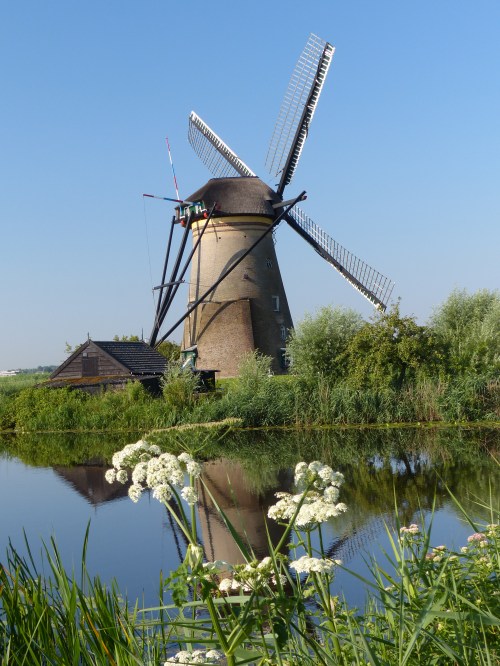
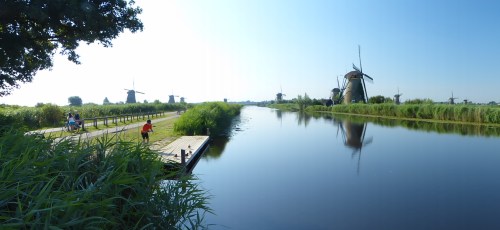
What’s missing from this picture? Wind! Not a breath of it while we were there. Still, the windmills were spectacular.

We sailed all night from Amsterdam, and arrived midmorning at Kinderdijk, a UNESCO World Heritage site. It was constructed as an outdoor museum, with examples of old windmills. Though they aren’t now used to drain water from low-lying land, they are functional. Citizens apply to live in them, with or without children. It’s considered an honor, and requires daily attention to maintenance and to changing winds to keep super-heavy windmill blades in motion.

p1140521

Kinderdijk means “children’s dike.” According to legend, it’s all about a cat, a cradle, and a baby who survived a storm thanks to a dike and a cat’s faithful instincts! The site includes a system of 19 windmills and was built around 1740. This is the largest concentration of windmills in the Netherlands today.

It’s 1421. A humongous storm and flood have subsided. Only one polder in the area isn’t flooded. A polder is a piece of low-lying land reclaimed from the river or sea via pumping the water up, out beyond dikes.

A rescuer goes out, walking along the dike to see what might be salvaged. There floating on the water is a wooden cradle! As it gets closer, he sees a cat in the cradle jumping back and forth, keeping it afloat and dry. Then, when it’s closer to the dike, he sees a baby sleeping in the cradle. A survivor, thanks to kitty’s great balancing act!

This story is celebrated in a folktale, “The Cat and the Cradle.” The cradle below commemorates kitty and baby’s successful cruise.

p1140524

So how about a look at one windmill that allows us to get up close and personal?
Like most windmills on this site, it’s a grondzeiler, or  ‘ground sail windmill,’
so called because the sails almost touch the ground as they turn.

 First, a view from the outside, looking up.
Can’t help noticing how huge these things are
and how much human-power it takes to move the sails
when the wind changes direction.
p1140508

Now for the interior of this ‘house.’
Don’t touch anything! Keep moving single file,
keep your head down, and be sure your walky-talky is turned on!

First, the main room. This is it, for all practical purposes.
Tiny, cramped and functional,
with touches of charm here and there.

p1140509

 I was told the short ‘double’ bed is also the lavatory.
Chamber pot conveniently located at the foot of the bed.
Out of sight.
p1140510

p1140513

p1140514

On our way out, we pass by some of the internal workings,
and get a welcome glimpse out the back window.

p1140511

p1140512

One more look up from the back of the windmill —

p1140515
And a quick look at what it takes to drain the polder today.

p1140482

Stay tuned for more!

© Elouise Renich Fraser, 28 February 2017
Photo credit: DAFraser, July 2016, Kinderdijk, The Netherlands

the wellspring

wellspring-16204276

calm steady source
releasing life from within
home of all being

***

Center of my being
My true home
Place where I am most fully alive

Not found by striving
but by letting go
of fear, apprehension, ambition

Dive in! Fall in! Sink in!
Don’t calculate the distance
Or when I might re-emerge

A small death
Repeated thousands of times
Finding my life by losing it

Thoughts generated by a favorite book on the practice of prayer, Centering Prayer and Inner Awakening, by Cynthia Bourgeault. Her approach to prayer appeals to the mystic in me while keeping my feet on solid ground and connected to Christian faith and theology. Not a small feat.

Here’s to a week of centering practices that help us rest and work while seeking peace with justice. No matter what or who waits for us around the next corner.

© Elouise Renich Fraser, 27 February 2017
Photo found at Dreamstime.com
Response to WordPress Daily Prompt: Center

Still Learning to Pray

learning-to-pray-by-talking-less

Today is a quiet day. Not because I’m sick, but because I need to take care of myself. So I’m revisiting several books on prayer. Why? Because current events in the USA tug me this way and that way. Sometimes I feel as though I’m wandering, lost in the trees. Uncertain how to pray or how that might help my focus from one day to the next.

Here’s what I’m certain of today.

  • The human confusion into which I was born multiples daily, and isn’t going away of its own accord. Ever. There are things I’d like to undo and re-do in this world and in myself. I want us to sort things out and be good neighbors. Yet I fear it isn’t going to happen, even though we’re all part of God’s good if not perfect creation, and need each other to survive.
  • Human confusion seems to have a life of its own. It feeds on itself, creating ever-more-shocking statements, behaviors, attitudes and reactions. It thrives when we’re fearful and distracted. On guard. Looking over our shoulders as we try to figure out what just happened, and miss what’s already brewing for tomorrow.
  • In my small world, confusion shows up in anguish about what I’m to do from one day to the next. I’m not utterly lost or clueless; yet I don’t feel grounded in a clear approach to what’s happening around me. I don’t have a clear goal for each day that calms my heart and helps shape my actions. I often feel uncertain and lost, especially when I start checking out tantalizing, infuriating headlines that pop up every minute of the day.

For the last few weeks I’ve been thinking about prayer. Granted, our pastor is preaching about it every Sunday, so it’s difficult not to think about it! At the same time, I wonder how I am to pray, given confusion around and within me.

I used to think once I learned to pray, I’d have it all figured out. As though it were like theology. I think about theology as dialogue with Scripture, traditional documents, other conversation partners, the newspaper and my experience as a woman. It works!

However, when I consider prayer, my major dialogue partners have been God or Scripture or what my parents or the church told me to do. The newspaper has been a secondary partner. And though I’m aware of myself as this woman (not just any woman), I haven’t figured out how that shapes my approach to prayer. Sometimes I fear there’s something wrong with me–even though I know there is not.

So I’ve decided to look into this and begin writing about it from time to time. I want to live boldly with the courage of my convictions, as this follower of Jesus Christ who is this woman living in these troubled times. Somehow, I believe my dilemma about prayer lies at the center of my anguish about who I am and how that shapes my prayers from day to day. Especially now.

© Elouise Renich Fraser, 25 February 2017
Photo found at parentingupstream.com