Telling the Truth

connecting the dots of my life

Category: Death and Dying

To fight aloud, is very brave —

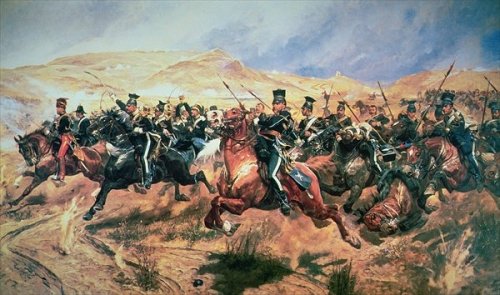
charge_of_the_light_brigade

~~~Charge of the Light Brigade, painting by Richard Caton Woodville, Jr.

What does it mean to be brave? Emily Dickinson gets right to the heart of things by showing me a different picture of bravery. One with which I can relate, if I’m willing to re-imagine my life. My comments follow her moving poem.

To fight aloud, is very brave –
But gallanter, I know
Who charge within the bosom
The Cavalry of Woe – Read the rest of this entry »

We grow accustomed to the Dark —

dusk-croatia-public-park-footage-framepool-com

For several weeks I’ve been drawn to Emily Dickinson’s poem below. I wonder where it might find you today. My comments and personal reflection follow the poem. Read the rest of this entry »

Death

Elephant in the room cartoon

The elephant in the room.
What I don’t want to talk about.
Especially with people I love.

Mortality sounds better.
Not so stark and final.
Wiggle room between now and then. Read the rest of this entry »

Why It’s Good Friday

prodigal return

Today is Maundy Thursday. You’ll read this on Good Friday. I’ve been thinking this week about Jesus’ relationship with God as he drew closer to death.

Jesus laid aside many things during his brief time on this earth. Read the rest of this entry »

Who is my neighbor? | today’s headlines

Seen in this morning’s headlines: “Kenyan Muslims shield Christians in Mandera bus attack.” How so? By refusing to be divided into two groups—Muslim and Christian.

The article was sobering and uplifting. It also left me wondering this: Read the rest of this entry »

“Yestereve, Death came. . .”

With others, my mind and heart have been caught up in recent events that involved unscheduled, sudden death for many human beings. I’ve been thinking about this post and decided to feature it today–for all of us mortals who can be certain of one thing: Death is our common lot. Are we ready? Is God ready? Am I?

Elouise's avatarTelling the Truth

This week I’ve been thinking about death, including my own.  My mother and one of my three sisters, Diane, died in February.  Mom died in 1999 from complications following a stroke.  Diane died in 2006 after living with ALS for ten years.  Both were polio survivors of a 1949 polio epidemic.  Their death anniversaries are within a few days of each other.

When George MacDonald wrote the two sonnet-prayers below, he had death on his mind.  His coming death–whenever that might be.  He had already lost four of his eleven children to death.  My comments are at the end.

January 27 and 28

Yestereve, Death came, and knocked at my thin door.
I from my window looked: the thing I saw,
The shape uncouth, I had not seen before.
I was disturbed—with fear, in sooth, not awe;
Whereof ashamed, I instantly did rouse
My will to seek thee–only to fear the more:
Alas!  I could not find thee…

View original post 296 more words

Three Days, Three Quotes Challenge | Day 3

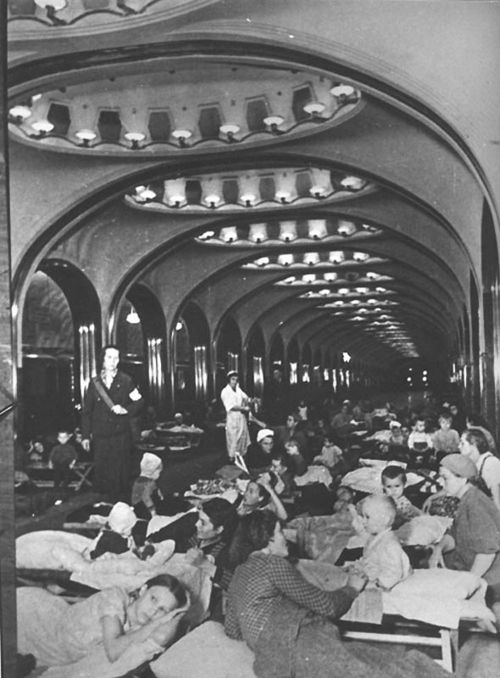
Russian women and children in undergrnd bomb shelter, 1942

Russian women and children in underground bomb shelter, 1942

Women will always fear war more than men because they are mothers.
A woman will always have a baby, her own or her children’s in her arms.
She will always be tormented by fear for her children,
the fear that one day she might be a witness to their own deaths.
Natalya Baranskaya, Russian Writer

It’s easy to think that in the USA we don’t have a long history of overt warfare. We do, however, have a history of covert warfare that is traumatic for those living with it daily on the streets, at home, in prisons, or in places of employment.

I recently began  following Fiction & Development, a blog that uses fictional literary works to discover and highlight international development issues. I’ve linked to their recent review of selected literary works about women and children during times of war.

The reviewer points out that protection of women and children has often been used as a propaganda tool to persuade citizens to support war efforts. To this I would add, to persuade citizens to vote for this or that politician. Look at the box of quotes (not fictional) at the end of the review to see how world leaders have done this in recent years.

What woman or child doesn’t want safety? How does one vote against propaganda that assumes wartime creates lack of safety for women and children, or that going to war will make things safer for ‘our’ women and children? Put another way, how does one vote for the reality that all women and children are vulnerable at any time, and that the rhetoric of war denies this truth?

* * *

Thanks to my blogging friend Herminia for inviting me to take part in this challenge! If you don’t know her already, check out her blog. Herminia is a go-getter. She doesn’t waste time or words. Every post is short and to the point.

Here are the rules for this challenge:

  1. Post one quote a day for 3 days (your quote or someone else’s)
  2. Thank and create a link to the blogger who nominated you
  3. Nominate 3 other bloggers (per post) to take part in the challenge

Here are my last three nominees:

  1. You! Are you still sitting on the fence, wavering? Just do it!
  2. Mum C Writes
  3. Verseherder

No Rush and No Obligation ~ You don’t have to report in to anyone!

© Elouise Renich Fraser, 29 Sept 2015
Photo credit: Arkady Shaikhet, 1942, found at pinterest.com

Mom and Arnica Ointment | Memories

ArnicaFlowerExtractfromVideo

~~~Arnica Flowers and Healing Oil

Touching Mom was never easy for me. That included everything from an arm around her shoulder to a kiss on her cheek. Hold hands? Forget it. The ache for physical contact was there, but the reality—or even imagining the reality—was an immediate turnoff. Read the rest of this entry »

Dear Readers | A Family Death

Easter Lilies

Dear Readers,
We’ve had a death in my family–Sister #2’s husband. The sister with whom we had a double wedding nearly 50 years ago. I’ll be checking in from time to time, but don’t know when I’ll resume regular postings. Probably not for several days.

If you haven’t already, Read the rest of this entry »

“Yestereve, Death came. . .”

This week I’ve been thinking about death, including my own.  My mother and one of my three sisters, Diane, died in February.  Mom died in 1999 from complications following a stroke.  Diane died in 2006 after living with ALS for ten years.  Both were polio survivors of a 1949 polio epidemic.  Their death anniversaries are within a few days of each other.

When George MacDonald wrote the two sonnet-prayers below, he had death on his mind.  His coming death–whenever that might be.  He had already lost four of his eleven children to death.  My comments are at the end.

January 27 and 28

Yestereve, Death came, and knocked at my thin door.
I from my window looked: the thing I saw,
The shape uncouth, I had not seen before.
I was disturbed—with fear, in sooth, not awe;
Whereof ashamed, I instantly did rouse
My will to seek thee–only to fear the more:
Alas!  I could not find thee in the house.

I was like Peter when he began to sink.
To thee a new prayer therefore I have got—
That, when Death comes in earnest to my door,
Thou wouldst thyself go, when the latch doth clink,
And lead Death to my room, up to my cot;
Then hold thy child’s hand, hold and leave him not,
Till Death has done with him for evermore.

George MacDonald, Diary of an Old Soul,
© 1994 Augsburg Fortress Press

The first stanza has a slightly nightmarish quality.  MacDonald addresses God.  He describes what happened the night before, how he responded, and how distressed he became when he couldn’t find God in his house.  Perhaps his ‘house’ refers to himself?  In any case, MacDonald names his greatest fear:  that God won’t be present at his death.  Perhaps God abandoned him or forgot him?  Or decided not to come?  He doesn’t say.

In the second sonnet he’s thinking about Jesus’ disciple Peter and his bold decision to walk on water—before beginning to sink.  MacDonald decides to pray a new prayer, and wants to be certain God hears it.  His voice is now direct, bold and concrete.  He knows exactly what he wants God to do!  In fact, it seems that in the act of praying his new prayer he finds his voice, his identity and his courage to name and face the enemy.

I’m struck by how conversational MacDonald’s prayers are.  They’re sometimes childlike, despite his great learning and vast vocabulary.   Almost effortlessly, he weaves formal and informal prayer into his daily thought-life.  Finally, I love his ‘new prayer.’  I can imagine praying it, or something like it, for myself.  I was going to say “praying it someday,” but that might be foolish.  Like MacDonald, I know death is coming but I don’t know when.

© Elouise Renich Fraser, 9 February 2015