Telling the Truth

connecting the dots of my life

Category: Devotional Writing

Grey Evening Sky

gray_evening_skies_evenling_nite_red_clouds_sky_hd-wallpaper-1599016

It’s already early evening, and it seems I haven’t accomplished much of anything today. In fact, I seem to have gone backwards when it comes to getting things done. For example, I started writing a post for tomorrow and then abandoned it. Now the day is almost over and I’m not sure what it was all about. My comments follow Amy’s poem.

Grey Evening Sky

Thy day is almost done;
How few the victories won;
How slow thy crawl, thou who didst hope to fly!
Thou who has often told
Of shining, heavenly gold,
How grey thine evening sky!
Why art thou thus, merely a cumberer?
Was ever broken vessel emptier?

Be still, mine enemy;
I hear another word:
“Make melody
With music of the heart
Unto thy Lord.”

Amy Carmichael, Mountain Breezes: The Collected Poems of Amy Carmichael, p. 329;
© 1999, The Dohnavur Fellowship, published by Christian Literature Crusade.
First published in Fragments That Remain (compiled by Bee Trehane) 1987

This poem hits close to home. I know about my internal voice that comes out of the woodwork to judge me harshly, putting me down. It seems Amy also knows a thing or two about this. In the opening stanza of the poem she seems to be taunting herself. She seems to believe she’s useless. Or worse, a cumberer.

Here’s my version of what her internal voice says:

  • You’re nothing but a pile of stinking you-know-what, smack in the middle of the path.
  • Can’t you see you’re an annoying hindrance to people who are going places and doing things that are really important?
  • You’re a burden! Definitely more trouble than you’re worth.
  • Just look at you! You’re supposed to be part of God’s great plan to bring beautiful blessings to all these people around you, and you’re totally empty. As empty and useless as a broken flower vase.
  • In fact, you’re good for nothing but to be thrown out!

Whose voice is this? It seems to be the enemy’s voice. It’s clearly enemy-like. Yet in fact, it’s most likely Amy’s assessment of herself and her day.

I think her use of “thy” and “thou” means she’s talking to and about herself. Perhaps as though she were judging her day instead of leaving that to God? In any case, her assessment is anything but positive. Whatever this day was supposed to be about, she has made a royal mess of it.

Thankfully, her internal voice gets interrupted: “Be still, mine enemy.” In its place, Amy hears a gracious, inviting word that offers another way to end the day. Sing! Make melody!

Early last week I was at loose ends. I felt like a cumberer, a burden to myself and to everyone else around me. Drifting along, not knowing what to do with myself. On a slow ride down the hill to despair.

My internal voice got going. Since I was alone in the house, I began singing one of my favorite hymns out loud. In short order, tears followed.

My heart started melting. I thought about family members and friends who’ve been faithful to me over the years. Not in spite of, but along with seeing the chips and cracks in me. Not as God sees them, but the way we see and know each other as God’s human creatures. Making our way as best we can, forgiving and being patient with one another, making music of the heart together.

Music isn’t a magic cure. The grey evening sky, whether caused by me or not, still descends from time to time.

I’m grateful for Amy Carmichael’s self-reflective poetry. It helps me put some of this into words that heal and give me hope. It also helps me connect with God who gives me one day at a time, no matter how I feel about myself.

© Elouise Renich Fraser, 6 June 2015
Image from hdwallpapers.cat

Why am I here?

This tantalizing question arose yet again yesterday. Things felt murky, though it was clear ‘something needs to be done.’ But what’s my role? Why am I here? What am I supposed to do now? Or not do? I’m not saying I had all the answers. I didn’t. Read the rest of this entry »

Lord, I am weary of the way

This poem is for anyone who, like Amy Carmichael, finds life changed in a heartbeat. Anytime. Anywhere. My comments follow.

A Burdened Awakening

My thoughts had said:
Lord, I am weary of the way;
I am afraid to face another day—
Frustrated, limited,
Guarded, Confined wherever I would go
By close-set “cannots,” That like hedge grow
About me now. And then our dear Lord said,
“I am about thy bed.”

Amy Carmichael, Mountain Breezes: The Collected Poems of Amy Carmichael, p. 329;
© 1999, The Dohnavur Fellowship, published by Christian Literature Crusade. First published in Though the Mountains Shake, 1943

* * * * *

Amy Carmichael was 76 years old when this poem was published. For more than 10 years before that, she had been confined to her room. She suffered from many ailments including such things as acute neuritis in one arm and arthritis in her back. Possibly because of an accident in 1931.

That year, Amy’s never-stop, never-say-no, never-give-up life came abruptly to an end. She spent almost all the next 20 years confined to her room before she died in 1951. Pain was her constant companion.

Suddenly she was dependent on others, not in charge anymore. Every day and night she dealt with physical, emotional and spiritual demons. She worked hard to maintain faith and her naturally cheerful spirit.

This isn’t just old age. This is old age magnified by unexpected tragedy.

I resist the thought that in old age I could be confined like this. I’ve defined my life chiefly in terms of productivity. I’m making a contribution to humanity. I’m not sitting around expecting others to wait on me. I get up and walk at will.

Then I read Amy’s poem. From the opening line, it seems the following words represent what she would like to say to God about her situation. This includes her anguish about the ever-growing list of things she cannot, must not do.

Her thoughts are interrupted by the voice of her “dear Lord” who says simply, “I am about thy bed.” That’s all. Just five words. No explanations, apologies or attempts to make her feel better.

It seems the Lord knows exactly what to do and say. Perhaps because he’s been there, cut off from every avenue of escape and facing an unknown future. And so he offers to Amy what he can: his presence and his compassion.

I can’t help thinking about military personnel, refugees, trafficked persons, victims of earthquakes, bombs, avalanches, abuse, accidents, sudden death and disabilities of all kinds. Lives traumatized, changed in an instant no matter who they are or how they’ve lived their lives. Being human means being vulnerable.

Amy’s poem is a gift for anyone whose life has been turned upside down. Amy wasn’t alone. Neither are we. I’m counting on it, one moment at a time.

“I am about thy bed.”

© Elouise Renich Fraser, 23 May 2015

MacDonald’s Demons

Life is dangerous. So is writing. The danger isn’t simply out there, but in here. Inside of me. Read the rest of this entry »

the mother’s hand

This sonnet captured my heart last Friday. In my comments I’m imagining what George MacDonald might  have heard and seen in his mind’s eye as he wrote. Read the rest of this entry »

Dear Readers | Spring Update

068Outdoor Display, Longwood Gardens

Thanks to each of you for showing up and reading! When I began blogging I knew what I wanted to write about, but I didn’t know what would happen next. Now I know, nearly 380 posts and just over 27,000 views later.

Here’s how I picture it: Read the rest of this entry »

My Irrelevant Self

Who doesn’t want to be relevant? Better, am I willing to be irrelevant? Unconnected, extraneous, off-topic, useless? Henri Nouwen sees a connection between the search for relevancy, and burnout. Read the rest of this entry »

The Little Things

IMG_6393

Sometimes I make things way too complicated. Too big. Too immense. Way beyond my reach.

It’s one thing to have dreams. Read the rest of this entry »

by the feet

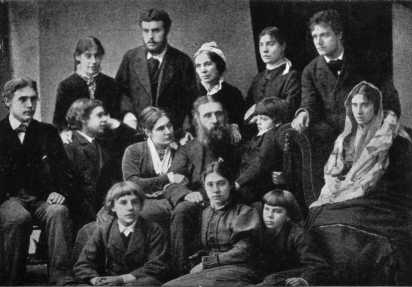
George and Louisa MacDonald with their 11 children
plus eldest daughter Mary’s fiancé

Maybe it’s my age. Or the ever-present reality of death in our media-saturated world. I’m grateful for these words from George MacDonald. Good Friday invites me to consider death with my eyes wide open.

March 21 and 22

O Lord, when I do think of my departed,
I think of thee who art the death of parting;
Of him who crying Father breathed his last,
Then radiant from the sepulchre upstarted.—
Even then, I think, thy hands and feet kept smarting:
With us the bitterness of death is past,
But by the feet he still doth hold us fast.

Therefore our hands thy feet do hold as fast.
We pray not to be spared the sorest pang,
But only—be thou with us to the last.
Let not our heart be troubled at the clang
Of hammer and nails, nor dread the spear’s keen fang,
Nor the ghast sickening that comes of pain,
Nor yet the last clutch of the banished brain.

George MacDonald, Diary of an Old Soul,
© 1994 Augsburg Fortress Press

Here, as in an earlier entry, MacDonald thinks about the four children he has lost to death. He longs to be with them. No one where they are now can possibly love them as he does.

Yet as great as his fatherly love is, he would “die of grief to love you only so.” That is, from afar. From this side of death.

He notes that his Lord is “the death of parting.” This gives him hope; the distance between him and his children will end someday.

He imagines that the resurrection, as wonderful as it was, still left Jesus with pain in his hands and feet. The bitterness of death was removed, yet “by the feet he still doth hold us fast”—with his “smarting” hands. Death isn’t the last word; nonetheless, it’s painful. It leaves scars, and empty seats around the table. The deathly silence of missing voices.

Because of this, MacDonald vows to hold Jesus’ “smarting” feet just as tightly as Jesus holds him. As though glued to each other. Inseparable. It’s the only way he can imagine making the journey from this world to the place where his children have gone.

And there’s one more challenge. No matter how much he tries, he can’t hold fast to Jesus’ scarred feet all by himself. His holding on depends on the strong, scarred hands of Jesus holding him. Lest he stray from the path.

Jesus has been through his death. Four of MacDonald’s eleven children have been through theirs. Now it’s MacDonald’s turn, and he knows he won’t make it unless Jesus holds his feet “to the last.”

“But by the feet he still doth hold us fast.”

© Elouise Renich Fraser, 3 April 2015, Good Friday
Edited on Good Friday, 30 March 2018
Photo found at georgemacdonald.info

Shadow and coolness

Monday of Holy Week. Here’s a poem I first discovered in a small Dohnavur songbook, Wings, published by Dohnavur Fellowship for its members. It’s from Amy Carmichael. Mom had this songbook in her music collection. I can’t help connecting these words with Holy Week. Read the rest of this entry »