Telling the Truth

connecting the dots of my life

Category: Emily Dickinson

The Soul selects her own Society —
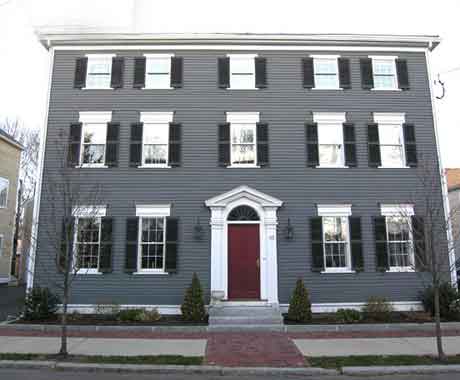
house-door-1860s

I wish Emily Dickinson had left a note about this poem. It seems maddeningly ambiguous about her context and meaning. What do you think it’s about? My comments follow.

The Soul selects her own Society –
Then – shuts the Door –
To her divine Majority –
Present no more –

Unmoved – she notes the Chariots – pausing –
At her low Gate —
Unmoved – an Emperor be kneeling
Upon her Mat –

I’ve known her – from an ample nation –
Choose One –
Then – close the Valves of her attention –
Like Stone –

c. 1862

Emily Dickinson Poems, Edited by Brenda Hillman
Shambhala Pocket Classics, Shambhala 1995

Here are my thoughts as of today—informed by my experience as a woman and by social, national and international realities.

  • Is this a riddle? I don’t think so. Riddles can have more than one true answer, but only when all clues in the riddle line up with each possible solution.
  • The subject of the poem is named immediately – “the Soul.” Everything that follows describes choices of the Soul, personified as a woman.
  • The action in the poem is simple. The Soul makes her own choice about whom she will or will not receive. She then shuts the Door, cutting off access to all others and ensuring her own Majority (of one). This isn’t a decision made by consultation or by popular vote. It’s a one-way decision of the Soul.

If this is about a human being, I celebrate our ability to choose whom we will or will not allow through the Door – into our lives. That doesn’t mean each choice we make will be wise. It means the choice is ours, for good and for ill.

On the other hand, I think Emily is suggesting more than this.

Notice these words: The Soul ‘shuts the Door’ – is ‘Unmoved’ – is ‘Unmoved’ – is ‘Like Stone.’ This suggests a one-time decision such as how the Soul choses to live her life. These words might also suggest this Soul is a snob or merciless.

Yet I see no evidence of this. She doesn’t seem to come from high Society or live in a magnificent palace (note her low Gate). She simply makes her choice and doesn’t look back. Her nay is nay, and her yes is yes. No use trying to change her mind.

It’s possible the supplicants are trying to help this Soul in some way. Or perhaps use her? They may want her vote or her support. They might promise her one thing and deliver something else. Whether the Soul knows this or not, I still applaud her courage when she shuts the Door, Unmoved.

Emily’s poem challenges me to be wise and clear about opening the door of my soul. Some bargains and sure-things end up being disastrous. Not just in our private lives, but in our national and global life.

In the end it doesn’t matter whether someone thinks I’m a snob or blind to reality (which I sometimes am). My choices aren’t always wise. Still, I believe God gave me the capacity to learn wisdom and discernment, if I’m willing to practice it. This means, as Emily’s poem implies, going against popular wishes or expectations from time to time. Especially as a woman, though also as a family member, friend, neighbor and citizen.

© Elouise Renich Fraser, 4 February 2017
Image  found at remodelingnewburyport.com

She sweeps with many-colored Brooms —

sunset-jm_1_creek

Here’s a charming poem from Emily Dickinson. It suits my mood for something that turns my eyes toward the heavens. Something spectacular that hints of glory and power beyond our human capacities. My personal response follows.

She sweeps with many-colored Brooms –
And leaves the Shreds behind –
Oh Housewife in the Evening West –
Come back, and dust the Pond!

You dropped a Purple Ravelling in –
You dropped an Amber thread –
And now you’ve littered all the East
With Duds of Emerald!

And still, she plies her spotted Brooms,
And still the Aprons fly,
Till Brooms fade softly into stars –
And then I come away –

c. 1861

Emily Dickinson Poems, Edited by Brenda Hillman
Shambhala Pocket Classics, Shambhala 1995

I first found this poem in my Emily Dickinson collection for young people. However, it’s also in my adult collection. So taking the role of an adult child, several possible responses come to mind.

  • If this Housewife is trying to clean things up, she isn’t very efficient. Just look at all the bits and pieces she’s dropping and leaving behind! Doesn’t she know how to sweep anything right? Look at that! She just left dust all over the Pond!
  • Whatever’s going on up there, it doesn’t have any rhyme or reason. The longer she sweeps, the more littered it gets. First this bit left behind, then that. All swept helter skelter across the face of the heavens. Maybe she doesn’t have good eyesight.
  • Also, why waste so many Aprons and colored Brooms? One of each would be more than enough. She isn’t very cost conscious, is she? All that effort and investment for just a few minutes of who knows what. A flash in the sky. That’s all.
  • Now look at that! It’s already getting dark out here. I don’t think she knows what she’s doing. This isn’t going to amount to a hill of beans in the morning. In fact, all her hard work will be for nothing in just a few seconds. Why bother?

Of course all that is nonsense. Emily isn’t writing about a sloppy housewife. She’s describing a majestic display in the heavens that just keeps traveling around the earth each minute of every sunset.

Even more amazing, the beauty being swept across the evening sky comes from the remains of the day. The ‘Duds.’ The ragged old clothes that are tired and worn out. Not sure they’ll live to see the next day. Coming near the end of their life, almost but not quite disappearing into darkness.

Such a spectacular, even wasteful show of beauty. Doesn’t this Housewife understand what’s going on down here? How dare She waste time with the dust and duds of this earth in a show of supposed glory? Doesn’t She know what really matters and will make a concrete difference?

I love the extravagance of this Housewifely Creator. Day in and day out. One magical sunrise and sunset after another. Especially sunsets that transform bits and pieces of throw-away detritus and fragile whisps of clouds, making them a Prelude to the starry night. All for our delight, awe and encouragement. We are not left to our own devices.

Psalm 8:3-4
When I consider your heavens, the work of your fingers,
the moon and the stars, which you have set in place,
what are human beings that you are mindful of them,
mere mortals, that you care for them?

© Elouise Renich Fraser, 28 January 2017
Image found at nikonusa.com

I had been hungry, all the Years —

outside-looking-in

How hungry are you? What does it mean to be hungry? Emily Dickinson’s reflections give me pause. My comments follow.

I had been hungry, all the Years –
My Noon had Come – to dine –
I trembling drew the Table near –
And touched the Curious Wine –

‘Twas this on Tables I had seen –
When turning, hungry, Home
I looked in Windows, for the Wealth
I could not hope – for Mine –

I did not know the ample Bread –
‘Twas so unlike the Crumb
The Birds and I, had often shared
In Nature’s – Dining Room –

The Plenty hurt me – ‘twas so new –
Myself felt ill – and odd –
As Berry – of a Mountain Bush –
Transplanted – to the Road –

Nor was I hungry – so I found
That Hunger – was a way
Of Persons outside Windows –
The Entering – takes away –

c. 1862

Emily Dickinson Poems, Edited by Brenda Hillman
Shambhala Pocket Classics, Shambhala 1995

In the 1950s, we drove the same route every day on our way to grade school in Savannah, Georgia. Over the years, two large housing developments began going up just outside the city limits. Young couples with growing families Read the rest of this entry »

“Hope” is the thing with feathers —

emily-dickinson-hope-is-the-thing-with-feathers-pinterest

Emily’s poem for today is a gem. A gift for anyone who feels distressed about the state of this world or what lies ahead in 2017. My comments follow.

“Hope” is the thing with feathers –
That perches in the soul –
And sings the tune without the words –
And never stops – at all –

And sweetest – in the Gale – is heard –
And sore must be the storm –
That could abash the little Bird
That kept so many warm –

I’ve heard it in the chillest land –
And on the strangest Sea –
Yet, never, in Extremity,
It asked a crumb – of Me.

c. 1861

Emily Dickinson Poems, Edited by Brenda Hillman
Shambhala Pocket Classics, Shambhala 1995

I hear Emily saying something like this.

  • I can’t manufacture Hope on my own or even with my friends. Sometimes people exhort me to have hope. I can’t. It’s already there. Like a little bird perched in my soul. Singing its heart out nonstop, without words or a sheet of music in front of it. Am I listening?
  • Hope isn’t linked to the time of day or night. Or to the weather and what the outlook is for tomorrow. It’s there regardless of circumstances, singing its ‘tune without the words.’ Sweet, strong, welcome, heartwarming and life affirming.
  • It seems nothing can shame or humiliate this little thing with feathers. It doesn’t shut up and it doesn’t go slinking off in defeat or humiliation. It sings out with sweet clarity, especially when things look most hopeless.
  • Hope keeps our spirits alive, ‘warm’ even in the ‘chillest land.’ It doesn’t offer us a plan of action or a map that will get us through hard times. Neither does it pretend times aren’t hard. Instead, it accompanies us through the hard times, lifting its voice in a way that lifts our spirits.
  • Best of all, Hope is a gift. It doesn’t ask anything of us, even when things get really rough. Not a crumb, not a dime. In fact, should we decide things are hopeless, I think Emily’s little Bird would just keep singing its heart out on our behalf. It doesn’t even demand that we listen.

One more thought. Whatever Hope is, it isn’t denial. In fact, I think Emily’s poem doesn’t work if Hope is supposed to erase or numb reality. Nor is Hope a crutch to get us from here to there with empty smiles pasted on our faces.

I believe Hope can open our eyes to see possibilities precisely where and when we least expect them. Often with people we least expected to meet or invite into our lives. Little Birds have exceptional eyes, not just exceptional songs.

My prayer today is that we’ll listen to Hope and be alert for unexpected possibilities, especially in what seem to be gale-force winds already on the rise.

© Elouise Renich Fraser, 7 January 2017
Image found at pinterest.com

I Years had been from Home

dickinsonhomestead_oct2004

~~Dickinson Homestead, Amherst, Massachusetts

In this narrative poem, Emily Dickinson seems to have a real destination in mind. Yet she focuses almost entirely on her internal fears and consternation. What’s going on? My comments follow.

I Years had been from Home
And now before the Door
I dared not enter, lest a Face
I never saw before

Stare stolid into mine
And ask my Business there –
“My Business but a Life I left
Was such remaining there?”

I leaned upon the Awe –
I lingered with Before –
The Second like an Ocean rolled
And broke against my ear –

I laughed a crumbling Laugh
That I could fear a Door
Who Consternation compassed
And never winced before.

I fitted to the Latch
My Hand, with trembling care
Lest back the awful Door should spring
And leave me in the Floor –

Then moved my Fingers off
As cautiously as Glass
And held my ears, and like a Thief
Fled gasping from the House –

c. 1872
from an 1862 version

Emily Dickinson Poems, Edited by Brenda Hillman
Shambhala Pocket Classics, Shambhala 1995

Emily doesn’t tell us precisely why she’s going Home. She’s been away for Years, and seems to have left something there–“a Life I left.” What might that mean? Perhaps she means she’s moved on and doesn’t want to become entangled in her old life. Or maybe she’s looking for something missing. I don’t know. She doesn’t get that far.

Instead, she describes the gripping, painful internal storm that erupts as she approaches the front door, prepared to ask her leading question. It’s as though she suddenly realizes the importance of this event—what it might cost her. Perhaps this wasn’t such a good idea.

Emily’s poem reminded me of an experience I had several years ago. Though the circumstances differ, the experience raised similar feelings in me.

I was in Savannah for Dad’s memorial service. That afternoon a number of family members drove out of the city to my favorite childhood home, the scene of happy and unhappy memories. The old colonial-style house looked out over a tide-water river that still beckons to me.

Hoping for a glimpse inside the house, a few of my younger relatives went up to knock on the door and ring the bell. My heart froze with a feeling I can’t even name. What would I say if someone came to the door? I felt fear, confusion and consternation.

No one came to the door. I breathed a sigh of relief, yet still felt strange until we got in our cars and drove away. Though I loved seeing the river and the outside yard, I had no desire to meet the new owners or see the inside of this house. It contained too many convoluted memories and secrets.

Emily begins by calling her destination Home. By the time we get to the end of the poem, this Home has become a House. No longer the place it was, and not a place she needs to revisit.

The ending might sound comical if it weren’t for the magnitude of her fear. Fear, it seems, that she or her life  might get high jacked in the process. And so she flees like a thief.

I’m left wondering whether something was stolen from Emily in that House she first called Home. Or perhaps she left that life behind and doesn’t want to lose the life she now has. Either way, I applaud her courage.

© Elouise Renich Fraser, 2 January 2017
Photo of Dickinson Homestead found at wickipedia.org

Happy Birthday, Emily Dickinson!

emily-dickinson-stars

Yes, it’s Emily’s 154th birthday anniversary today! I’d hoped the Google Gang would mark the day with one of their short and fancy celebration videos for all us Googlers. Too bad. They missed their chance.

I barely know Emily. Read the rest of this entry »

I like to see it lap the Miles —

emily-dickinson-book-cover

How’s your imagination? Here’s a riddle from Emily Dickinson. Can you guess the answer?   Read the rest of this entry »

To fill a Gap —

Here a short poem from Emily Dickinson. Appropriate, I think, for the second Sunday in Advent. My personal response follows.

To fill a Gap
Insert the Thing that caused it –
Block it up
With Other – and ‘twill yawn the more –
You cannot solder an Abyss
With Air.

c. 1862

Emily Dickinson Poems, Edited by Brenda Hillman
Shambhala Pocket Classics, Shambhala 1995

Irreplaceable loss. The Gap can’t be disguised, no matter how hard you try. Denial magnifies gaping emptiness, draws attention to it. The missing Thing is one of a kind, Irreplaceable.

Emily’s poem reminds me of my vain attempts to ‘make it better.’ Or worse, Read the rest of this entry »

They shut me up in Prose —

bird-flying-free

In this somewhat grimly humorous poem, Emily compares her childhood as a ‘little Girl’ with the way ‘They’ treat her as an adult. My comments follow.

They shut me up in Prose –
As when a little Girl
They put me in the Closet –
Because they liked me “still’ –

Still! Could themselves have peeped –
And seen my Brain – go round –
They might as wise have lodged a Bird
For Treason – in the Pound –

Himself has but to will
And easy as a Star
Abolish his Captivity –
And Laugh – No more have I –

c. 1862

Emily Dickinson Poems, Edited by Brenda Hillman
Shambhala Pocket Classics, Shambhala 1995

What a great word — ‘still.’ Read the rest of this entry »

I’m ceded — I’ve stopped being Theirs | Emily Dickinson

harvest-moon-sept-2016

I’m drawn to this poem from Emily Dickinson for two reasons. First, I sometimes call myself Queen Elouise. Second, it captures the difference between belonging to Them and belonging to Grace. In my view, it describes what we need today in this world of stunning beauty, visible misery, and stunning injustice. My comments follow.

I’m ceded – I’ve stopped being Theirs –
The name They dropped upon my face
With water, in the country church
Is finished using, now,
And They can put it with my Dolls,
My childhood, and the string of spools,
I’ve finished threading – too –

Baptized, before, without the choice,
But this time, consciously, of Grace –
Unto supremest name –
Called to my Full – The Crescent dropped –
Existence’s whole Arc, filled up,
With one small Diadem.

My second Rank – too small the first –
Crowned – Crowing – on my Father’s breast –
A half unconscious Queen –
But this time – Adequate – Erect,
With Will to choose, or to reject,
And I choose, just a Crown –

c. 1862

Emily Dickinson Poems, Edited by Brenda Hillman
Shambhala Pocket Classics, Shambhala 1995

Emily’s poem reminds me of the biblical exhortation to put away childish things. Here, Emily is ready to put away her childhood name—the name They chose and dropped on her face at her infant baptism.

In fact, They can put that name (Princess?) in the attic trunk along with childhood toys and activities she no longer needs. Perhaps they served her well, but they have no place in her new, freely chosen baptism into the fullness of her personhood.

And so Emily announces her conscious Declaration of Independence. Her rebaptism is possible because of Grace, not because of someone else’s past decision for her, or their approval of her decision now. This choice is hers alone, made possible by Grace! Not forced, not from shame or blame, and not as a power move.

This independence won’t come without clarity of speech and action. Even more difficult, since it’s driven by Grace this means clarity driven by the Grace of truth, not by anger or a desire for revenge or retribution.

I respect you, and I am not your possession. I’m not interested in childish approaches to life. The name you gave me no longer fits. I don’t want or need your affirmation. I have a new, fuller Calling. I’m not the silver sliver of a Crescent moon. I’m a full-orbed Harvest Moon, signified by this ‘one small Diadem’ I now wear.

I’ve outgrown my childish identity. Back then I was at best a half conscious Queen. Today I’ve come of age. No more baby crown, and no more cute crowing or baby talk. I am Adequate and Erect. I don’t want or need the kingdom, fancy parades, or pandering obeisance. I’m content with a simple Crown and telling the truth in my own voice, as I see it.

Need I say Queen Elouise again? Now, more than ever, I long to be

…Adequate – Erect –
With Will to choose or to reject,
And I choose, just a Crown –

© Elouise Renich Fraser, 15 November 2016, lightly edited and reposted 18 June 2021
Photo of Harvest Moon by Robin Osbon found at almanac.com