Telling the Truth

connecting the dots of my life

Category: Mary Oliver

Hum, Hum | Mary Oliver
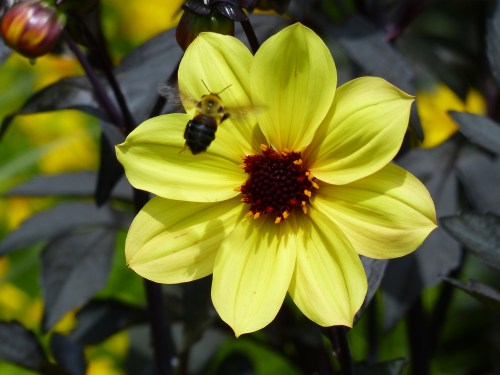
Mary Oliver’s poem is as personal as it is blunt. I haven’t been able to get it out of my mind. My comments follow.

Hum, Hum

1.

One summer afternoon I heard
a looming, mysterious hum
high in the air; then came something

like a small planet flying past—
something

not at all interested in me but on its own
way somewhere, all anointed with excitement:
bees, swarming,

not to be held back.

Nothing could hold them back.

2.

Gannets diving,
Black snake wrapped in a tree, our eyes
meeting.

The grass singing
as it sipped up the summer rain.
The owl in the darkness, that good darkness
under the stars.

The child that was myself, that kept running away
to the also running creek,
to colt’s foot and trilliums,
to the effortless prattle of the birds.

3. Said the Mother

You are going to grow up
and in order for that to happen
I am going to have to grow old
and then I will die, and the blame
will be yours.

4. Of the Father

He wanted a body
so he took mine.
Some wounds never vanish.

Yet little by little
I learned to love my life.

Though sometimes I had to run hard—
Especially from melancholy—
not to be held back.

5.

I think there ought to be
a little music here;
hum, hum.

6.

The resurrection of the morning.
The mystery of the night.
The hummingbird’s wings.
The excitement of thunder.
The rainbow in the waterfall.
Wild mustard, that rough blaze of the fields.

The mockingbird, replaying the songs of his
neighbors.
The bluebird with its unambitious warble

simple yet sufficient.

The shining fish. The beak of the crow.
The new colt who came to me and leaned
against the fence
that I might put my hands upon his warm body
and know no fear.

Also the words of poets
a hundred or hundreds of years dead—
their words that would not be held back.

7.

Oh the house of denial has thick walls
and very small windows
and whoever lives there, little by little,
will turn to stone.

In those years I did everything I could do
and I did it in the dark—
I mean, without understanding.

I ran away.
I ran away again.
Then, again, I ran away.

They were awfully little, those bees,
and maybe frightened,
yet unstoppably they flew on, somewhere,
to live their life.

Hum, hum, hum.

Mary Oliver, A Thousand Mornings, pp. 39-43
© 2012 by NW Orchard, LLC
First published by Penguin Press 2012

I’ve been reading this poem for weeks. I’m not one for walking in the woods or lying in meadows. I am, however, keenly aware that I am not the woman my father intended me to be.

My first attempt to leave home took the form of marriage. Thankfully, I married a man able to stay with me even when life seemed not worth living. It took effort, multiple mistakes, tears that would sink a ship, anger and humiliation before I made a break from my childhood and teenage lives. Both were driven by my father’s insistence that I keep his rules without fail.

Making this break entailed years of personal work. The kind that climbs mountains and walks through forests of more-of-the-same, though with different people and in highly different settings than my home life. Put bluntly, I didn’t know what had been ‘stolen’ from me, or how to retrieve and own it.

In my world of academia, there weren’t any bees humming to encourage me. I did, however, discover excellent friends who stood with me, plus an exceptionally wise psychotherapist.

NEVER think that what you struggle with is ‘small’ or ‘nothing’ to worry about. And NEVER believe that you can get through the struggle without difficult changes in your life.

Thanks for visiting, reading, and daring to be true to the wonderful person you were created to be.

Elouise

© Elouise Renich Fraser, 19 June 2023
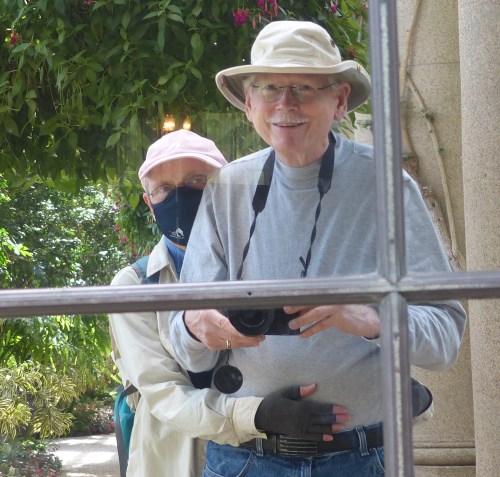
Photo taken by DAFraser in Longwood Garden Meadow, June 2019

Today | Mary Oliver

Here’s a seemingly simple poem from Mary Oliver. Words are easy; actions are difficult. Which is why I’m sharing it with you today. Not because I think you need to hear this poem, but because I need to hear and live in it more than once in a blue moon. My comments follow.

Today I’m flying low and I’m
not saying a word.
I’m letting all the voodoos of ambition sleep.

The world goes on as it must,
the bees in the garden rumbling a little,
the fish leaping, the gnats getting eaten.
And so forth.

But I’m taking the day off.
Quiet as a feather.
I hardly move though really I’m traveling
a terrific distance.

Stillness. One of the doors
into the temple.

From A Thousand Mornings, Poems by Mary Oliver,  p. 23
Published by Penguin Books 2013
© 2012 by NW Orchard LLC

Dear Mary,

I wonder. Do I have voodoos of ambition these days?  More likely, I’m stalked by voodoos of things I must do whether they seem ‘ambitious’ or not. Think of long lists of things to do. Today, not tomorrow!

So what are you inviting me to give up just for today?

To be honest, I wouldn’t mind being a bee in the garden—provided there’s plenty of sweet stuff to go around. Then there are those fish jumping up out of the water, daring me to come and play with them. Though I’m not sure who wants to compete for gnats anyway.

Okay. I think I get it. It seems you want me to stop ticking off my long list of things I must do so that I can be a productive member of the human race. Though I’m not at all sure what the human race is about.

So yes, I’m going nowhere today. You won’t even know I’m here. Besides, given your lovely poem, I’m not at all sure I’ll ever understand the ‘terrific distance’ this stillness will give me.

I just know that today it’s time to rest, relax, and enjoy letting my ‘voodoos of ambition sleep.’

Gratefully,
Elouise

© Elouise Renich Fraser, 24 May 2023
Photo taken by DAFraser in June 2019, Longwood Gardens Meadow

A Pretty Song | Mary Oliver

Photo taken by DAF on our 56th wedding anniversary, 2021

Here’s yet another wise poem from Mary Oliver. This one hits close to home. My comments follow.

A Pretty Song

From the complications of loving you
I think there is no end or return.
No answer, no coming out of it.

Which is the only way to love, isn’t it?
This isn’t a playground, this is
earth, our heaven, for a while.

Therefore I have given precedence
to all my sudden, sullen, dark moods
that hold you in the center of my world.

And I say to my body: grow thinner still.
And I say to my fingers, type me a pretty song.
And I say to my heart: rave on.

© 2006 by Mary Oliver
Published by Beacon Press in Thirst, p. 22

To love a partner until death do us part is costly. Partly because there’s no getting away from what happens along the way from here to there. No easy exits. Just one unexpected complication after another with which partners must deal. Even when they decide to go their so-called ‘separate’ ways.

And yet, given the sudden twists and turns of life, what rises to the top is indisputable. Especially as the end of life creeps closer every day.

This morning D is having some not-so-wonderful tests to find out what’s going on in his heart. Not the heart that loves me, but the heart that will one day stop beating no matter how much he loves me or I love him.

Mary Oliver’s poem above is about the loss of her life partner, what it’s like to go on living without her, and what it takes get through the ups and downs of grief. Not a pretty picture, but an invitation to another way of loving.

Praying your day is filled with opportunities to let your partner and/or best friends know how much you love them. Now, instead of later.

Thank you for stopping by. On the whole, I think I’m becoming less distressed by the ups and downs of life. Then again….
Elouise

©Elouise Renich Fraser, 4 May 2023
Photo taken by DAFraser at Longwood Gardens, 2021

In Our Woods, Sometimes A Rare Music | Mary Oliver

Here’s another lovely poem by Mary Oliver. It caught my eye and my spirit this morning. My comments follow.

Every spring
I hear the thrush singing
in the glowing woods
he is only passing through.
His voice is deep,
then he lifts it until it seems
to fall from the sky.
I am thrilled.

I am grateful.

Then, by the end of morning,
he’s gone, nothing but silence
out of the tree
where he rested for a night.
And this I find acceptable.
Not enough is a poor life.
But too much is, well, too much.
Imagine Verdi or Mahler
every day, all day.
It would exhaust anyone.

From A Thousand Mornings, Poems by Mary Oliver
Published by Penguin Books 2013
© 2012 by NW Orchard LLC

This morning I woke up to a songbird greeting the day. I also woke up to promises of rain and more frigid weather. Most importantly, I woke up. Alive and grateful for sleep, on the other side of last week’s highlight—getting a new pacemaker–Lucy II!

Mary Oliver’s poem reminds me that I don’t need an entire day of bird song, or even sunshine. Just being alive and able to hear one songbird is quite wonderful.

Last week I had Lucy (my pacemaker) upgraded to Lucy II. The hospital experience was distinctly less than I remembered. Imagine waking at 5am and getting to the hospital by 6:30am. We made it! That meant I would be home just after lunchtime. Except I wasn’t. Thanks to scheduling issues, I lay there all prepped, stomach empty since midnight, waiting with everyone else for the anesthesiologist to arrive. As it turned out, the fault wasn’t hers.

On the bright side, I haven’t been in such a lively, entertaining place since Covid lockdowns began. The entire surgery team was just there across the way, talking, laughing, obviously enjoying themselves while they too waited for the magic moment.

It came about 3 hours later. I’m glad to say I was out of it in a jiffy, had a good long nap before I woke up, and have been dealing with post-op instructions for nearly a week. I’m weary, prone to sleep anytime of the day or night, grateful for D and for Smudge, and slowly regaining my bearings.

As Mary Oliver points out, I don’t need a concert. I just need a bird song in the morning, a place to lie down and sleep as needed, a cat who loves to sleep with me, and D who makes a wonderful home nurse.

Thanks for stopping by.
Elouise

© Elouise Renich Fraser, 28 February 2023
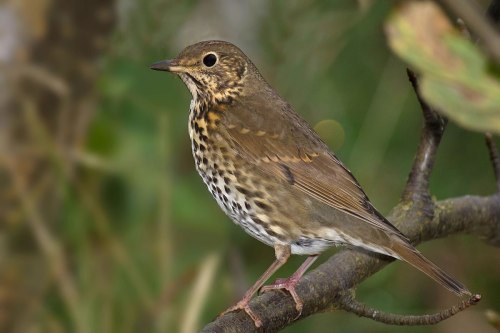
Photo of wood thrush; found at Wikipedia.

Green, Green is My Sister’s House | Mary Oliver

Mary Oliver’s poem has been on my mind for over a week. The photo above was taken in the front yard of our first home in Southern Georgia, near Savannah. That’s my small, petite sister next to me. Just hanging there, swinging back and forth, was exhilarating! Sister #3 was still a baby. Sister #4 hadn’t yet arrived. My brief comments follow.

Green, Green is My Sister’s House

Don’t you dare climb that tree
or even try, they said, or you will be
sent away to the hospital of the
very foolish, if not the other one.
And I suppose, considering my age,
it was fair advice.

But the tree is a sister to me, she
lives alone in a green cottage
high in the air and I know what
would happen, she’d clap her green hands,
she’d shake her green hair, she’d
welcome me. Truly

I try to be good but sometimes
a person just has to break out and
act like the wild and springy thing
one used to be. It’s impossible not
to remember wild and want it back. So

if someday you can’t find me you might
look into that tree or—of course
it’s possible—under it.

Mary Oliver, from A Thousand Mornings
Published in 2013 by Penguin Books, p. 49
© 2012 by NW Orchard LL.C.

I love this poem. Not because I want to climb the tree in the front yard of my childhood home, but because it understands and honors the agony of aging. It remembers how things used to be. The good, the bad, the ugly, and those unrepeatable moments of sheer joy. The dear old tree understands there’s nothing left but to lie down under the lovely tree I used to climb. Or beneath it, in the good earth.

Perhaps this is no more than a romantic twist about my aging heart. The heart that wants it all back again. Not just in fading moments or vague memories, but in reality. Like a beautiful statue that captures  the glory, agony, and excitement of life with trees. Special trees. Those that remember us and welcome us home. Wild or weary. It doesn’t matter.

Praying this finds you thriving in your own way, making progress at your own pace, and learning to trust your Higher Power to carry you when you can’t walk so quickly anymore.
Elouise

© Elouise Renich Fraser, 3 February 2023
Photo taken by my father in the early 1950s. The house looks out on the Vernon River. We’re hanging from an old mimosa tree.

Hurricane | Mary Oliver

Mary Oliver’s hurricane has been on my mind for the last few weeks. There’s so much we can’t predict or count on these days. Not only in nature, but in human experience and global disasters. It doesn’t matter how centered we may be, or how ‘safe’ we think we are. My comments follow.

Hurricane

It didn’t behave
like anything you had
ever imagined. The wind
tore at the trees, the rain
fell for days slant and hard.
The back of the hand
to everything. I watched
the trees bow and their leaves fall
and crawl back into the earth.
As though, that was that.
This was one hurricane
I lived through, the other one
was of a different sort, and
lasted longer. Then
I felt my own leaves giving up and
falling. The back of the hand to
everything
. But listen now to what happened
to the actual trees;
toward the end of that summer they
pushed new leaves from their stubbed limbs.
It was the wrong season, yes,
but they couldn’t stop. They
looked like telephone poles and didn’t
care. And after the leaves came
blossoms. For some things
there are no wrong seasons.
Which is what I dream of for me.

Mary Oliver, from A Thousand Mornings
Published in 2013 by Penguin Books, pp. 21-22
© 2012 by NW Orchard LL.C.

I’m making it up, one day at a time. I never thought I would be faced with so many decisions. Some feasible; a precious few doable. The trees showed Mary the way. Don’t let the goblins scare you. And don’t give up.

Forget about right and wrong seasons of life. Grab what’s available now, and love with all your heart. Forget what others think. They don’t own your body or your soul. This too is a gift from above. Especially when things are bleak.

My health has an unpredictable mind of its own these days. Still, I want nothing more than the opportunity to be my real self before I die, regardless of impossibly “correct” rules or regulations. No fear. No anger toward myself or others. Just the right season to blossom before the next right season arrives.

Thank you for visiting and reading. I pray all is well with each of you, no matter what the weather.
Elouise

© Elouise Renich Fraser, 23 January 2023
Photo found at pixabay.com.

Mary Oliver | Three Poems for 2023

How are we doing today? Not just as individuals, but as citizens in a world screaming with pain. Mary Oliver’s three short poems below, one after another, ask us to turn our attention inward. Whether we like it or not, we’re in this together. My brief comments follow.

The Morning Paper

Read one newspaper daily (the morning edition
is the best
for by evening you know that you at least
have lived through another day)
and let the disasters, the unbelievable
yet approved decisions,
soak in.

I don’t need to name the countries,
ours among them.

What keeps us from falling down, our faces
to the ground, ashamed, ashamed?

~~~

The Poet Compares Human Nature
To The Ocean From Which We Came

The sea can do craziness, it can do smooth,
it can lie down like silk breathing
or toss havoc shoreward; it can give

gifts or withhold all; it can rise, ebb, froth
like an incoming frenzy of fountains, or it can
sweet-talk entirely. As I can too,

and so, no doubt, can you, and you.

~~~

On Traveling To Beautiful Places 

Every day I’m still looking for God
and I’m still finding him everywhere,
in the dust, in the flowerbeds.
Certainly in the oceans,
in the islands that lay in the distance
continents of ice, countries of sand
each with its own set of creatures
and God, by whatever name.
How perfect to be aboard a ship with
maybe a hundred years still in my pocket.
But it’s late, for all of us,
and in truth the only ship there is
is the ship we are all on
burning the world as we go.

~~~

Published by Penguin Books in A Thousand Mornings/Mary Oliver, pp. 65-69
Copyright © 2012 by NW Orchard LL.C

I love poems about beauty and truth. I’m not sure, however, how to mix beauty and truth when we seem to be falling apart. Ignoring what can’t be ignored. Making ‘exceptions’ for those who seem to hold the most power of any kind.

Mary Oliver invites and even dares us to see the world as it is. Not the world as we wish it were, or the world we think we can ignore. She also invites us to repent. To turn around. To see and live whatever truth we can with at least one other person. One day, one problem, one fleeting moment at a time, regardless of what others may think about us.

Praying we’ll find renewed life with each other in the coming year, regardless of our country, religion, politics, gender, or age. And . . . I wish each of you a truly happy new year in which you find courage you never thought possible.
Elouise

© Elouise Renich Fraser, 30 December 2022
Photo found at phys.org/news/2022-23

Don’t Hesitate | Mary Oliver

I feel a tug of anguish these days. It’s in the air. It’s in my body. It’s in the newspapers. It’s in deluges of unsolicited email from candidates frantically running for office. On some days I just want to crawl back in bed and do absolutely nothing but hibernate.

On the other hand, I’ve been reading this short poem by Mary Oliver. Given our national and international anguish, plus my current health issues, I can’t say it’s easy to follow her wisdom. Still, I’m doomed if I curl up and shrink to nothingness.

Here’s the poem. I hope you find it as compelling as I do.

Don’t Hesitate

If you suddenly and unexpectedly feel joy,
don’t hesitate. Give in to it. There are plenty
of lives and whole towns destroyed or about
to be. We are not wise, and not very often
kind. And much can never be redeemed.
Still, life has some possibility left. Perhaps this
is its way of fighting back, that sometimes
something happens better than all the riches
or power in the world. It could be anything,
but very likely you notice it in the instant
when love begins. Anyway, that’s often the
case. Anyway, whatever it is, don’t be afraid
of its plenty. Joy is not made to be a crumb.

Thank you from my heart for your visits. I’ve been overwhelmed by how many visitors I’ve been getting in the last several weeks. Especially given my inability to post or visit as often as I would like. Which, of course, has been part of my anguish.

Writing is one of the most challenging and joyful things I do. Sort of like playing the piano or watching birds flocking and fighting around the bird feeders each morning.

Praying we all find space for joy (or even more joy!) in our lives today.

Elouise

© Elouise Renich Fraser, 20 October 2022
Photo of Smudge birdwatching taken by me in September 2022

The Arrowhead | Mary Oliver

My home is full of relics. Bits and pieces I’ve gathered over the years. Memories, yes. But is it more? Mary Oliver invites me to think about this. My comments follow.

The Arrowhead

The arrowhead,
which I found beside the river,
was glittering and pointed.
I picked it up, and said,
“Now, it’s mine.”
I thought of showing it to friends.
I thought of putting it—such an imposing trinket—
in a little box, on my desk.
Halfway home, past the cut fields,
the old ghost
stood under the hickories.
“I would rather drink the wind,” he said,
“I would rather eat mud and die
than steal as you still steal,
than lie as you still lie.”

Mary Oliver, from Why I Wake Early, 2004, p. 185
© 2017 by NW Orchard LLC
Published by Penguin Books, 2020

Was this a waking dream? The last four lines of the poem gave me a jolt. The unexpected jolt I always have when Mary Oliver’s lovely poetic words suddenly rip the cover from our complacency. The topic of this poem is stealing. It seems our nation might be addicted to stealing.

However, this is about more than our nation.

It’s tempting to think of Mary Oliver as a nature lover who sees beauty in everything. But truth be told, many of her lovely poems are salted with barbed wire. Her words dare us (and herself) to ignore what’s right in front of us.

These are hard times. Some might say we’re headed toward doomsday. However, this poem isn’t about doomsday. It’s about what many, if not all of us, do daily and without forethought.

Could it be that we’ve forgotten what our own special versions of stealing and lying look like? Especially when it involves highly prized possessions or status.

I recall occasions when my words or ideas were stolen and passed off as someone else’s. Of course, there were also times when my words or ideas were scoffed at. However, most painful was hearing someone else use my words or ideas and pass them off as their own inventions.

The older I get, the more I recognize my desire to ‘discover’ or pretend to own what doesn’t belong to me. Words, ideas, and even arrowheads that catch my eye.

Will we ever learn to live with integrity? As citizens, and as a nation? Or have we so muddied the waters that we don’t know where to begin telling the truth. Not just about ourselves, but about our nation.

Praying for honesty, integrity, patience, and determination to honor truth. Especially when it costs.

Thanks for stopping by today,
Elouise

© Elouise Renich Fraser, 30 September 2022
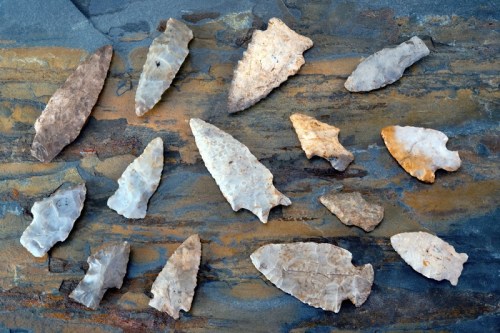
Photo found at rockseeker.com

In Pobiddy, Georgia | Mary Oliver

Mary Oliver’s poem describes an encounter she and her friend have with three women in a churchyard. It’s thought-provoking and challenging. Especially for Labor Day. Please note that I hear this poem as a comment on black lives and deaths, though Mary never identifies this as a black cemetery. My comments follow.

In Pobiddy, Georgia

Three women
climb from the car
in which they have driven slowly
into the churchyard.
They come toward us, to see
what we are doing.
What we are doing
is reading the strange,
wonderful names
of the dead.
One of the women
speaks to us—
after we speak to her.
She walks with us and shows us,
with a downward-thrust finger,
which of the dead
were her people.
She tells us
about two brothers, and an argument,
and a gun—she points
to one of the slabs
on which there is a name,
some scripture, a handful of red
plastic flowers. We ask her
about the other brother.
“Chain gang,” she says,
as you or I might say
“Des Moines,” or “New Haven.” And then,
“Look around all you want.”
The younger woman stands back, in the stiff weeds,
like a banked fire.
The third one—
the oldest human being we have ever seen in our lives—
suddenly drops to the dirt
and begins to cry. Clearly
she is blind, and clearly
she can’t rise, but they lift her, like a child,
and lead her away, across the graves, as though,
as old as anything could ever be, she was, finally,
perfectly finished, perfectly heartbroken, perfectly wild.

Published in 2017 by Penguin Books as Devotions, The Selected Poems of Mary Oliver (pp., 265-66)
© 2017 by NW Orchard LLC
Poem selected from White Pine (published 1994)

Tomorrow we celebrate Labor Day, despite harsh realities of forced servitude in what we so proudly call the “United” States of America.

How much sorrow is hidden, planted, and left to die beneath the ground? And what catches our attention when we walk through a churchyard, reading “the strange, wonderful names of the dead?”

The last scene in this short story tells more truth than I’ve found in books written for white consumption. At the same time, I’m caught by the way Mary Oliver never dresses any of this up in fancy clothes. Especially at the end.

In the 1950s, when I was growing up in the Deep South, I passed many small graveyards populated with old, tired, sometimes broken-down grave markers and weeds. I can’t remember any of my school lessons describing or investigating the horrible reality of slavery in the USA. Yet it was in plain sight every day.

So here we are today, still at war with the fruit of our racist history, still struggling to own fully the sad reality that this still shapes each of us regardless of our color or history.

Thanks for your visit. I pray we’ll one day wake up to the often sad, human truth about our country.
Elouise

© Elouise Renich Fraser, 4 September 2022
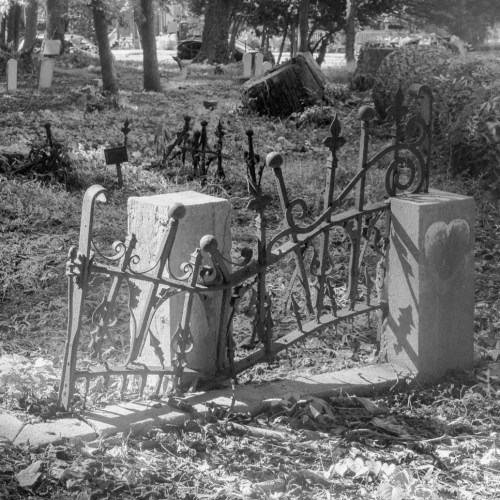
Photo found at http://www.newyorker.com