Telling the Truth

connecting the dots of my life

Category: Mary Oliver

giddy about the sun

I’m giddy about the sun
This strange and brilliant visitor
From another planet

Sitting at the kitchen table
My mind races through the house
Flinging windows and shades open

Shouts of happy recognition
Rise in gratitude for this visitor
Inviting me outside to play

I know warm weather will come—likely bringing unwelcome ultra-warm weather. But so what? Today I want to feel the warmth of the sun on my face, and witness the first bits of spring breaking through slushy mud and still-frozen ground.

This morning’s mail brought a new volume of Mary Oliver’s poems. D is making a multi-bean soup in the slow cooker. Smudge is asleep on our bed, comforted by my pajamas. What more could I ask for?

© Elouise Renich Fraser, 26 February 2019
Photo found at kinooze.com

Evensong

My feet ache
relieved and resting
The humidifier hums
in the background
Soft cotton
envelopes each leg

Pajamas are my
evening friend
holding me close

Wrapped in
my mother’s shawl
breath comes
and goes easy

The old house creaks
beneath D’s feet

Whatever today
was about slips
away with each
exhaled breath
cleansing this
body I call home
sweet home

Today I went to see my Lucy Pacemaker heart doctor. As expected, my irregular heartbeat is growing with each passing year. I don’t like it. I am, however, grateful for each day and night I’m given.

While sitting in the doctor’s office I reviewed my recent journal entries. Then I read and reread a chapter from Upstream, a collection of Mary Oliver’s essays and poems. She describes how she moved beyond difficult situations of her childhood. Her solution was twofold: immersion in the natural world, and in the world of literature. As she describes it, these were “the gates through which I vanished from a difficult place” (p. 14).

So here I am, near the end of my life, finding myself living more and more in the worlds of music and writing. My own and that of others. My pared-down yet equally exciting (to me) version of upstream living. Leaving behind, yet drawing on the unsolvable puzzle of my childhood almost without noticing it.

I wrote the poem above just before Christmas. There’s something magical about capturing in words the simple wonders of my life. I might enjoy wandering in a forest somewhere. However, I choose to stay close to home. Close to D and Smudge. Close to the bone. Close to this last fling. Close to my journal and my heart.

Thanks for reading and listening.

Elouise

© Elouise Renich Fraser, 7 February 2019
Photo of Milky Way Night Sky found on pixabay

A broken heart

Days pass swiftly.
Time seems to be speeding by.

Yesterday I read another chapter from Mary Oliver’s Upstream,
and felt small and late in coming to this place.
Not by informed choice, but from neglect,
and ignorance about this world.

Held back. Stunted. Fenced in.

Living at best a half-life of external demands, distractions,
and danger looming around every corner.

Unsafe. Captive to other’s ideas, attitudes and power.

Now near the end, it seems
I lived a half-life that wasn’t entirely mine.

On quiet days I long for another opportunity to live
and taste life on my terms, from the inside out,
not as a timid onlooker into the lives of others.

Am I ungrateful?
Or just sad….even brokenhearted.

Perhaps a broken heart is a beginning, not the end.
That, and playing the piano as though
for the very first time.

© Elouise Renich Fraser, 4 February 2019
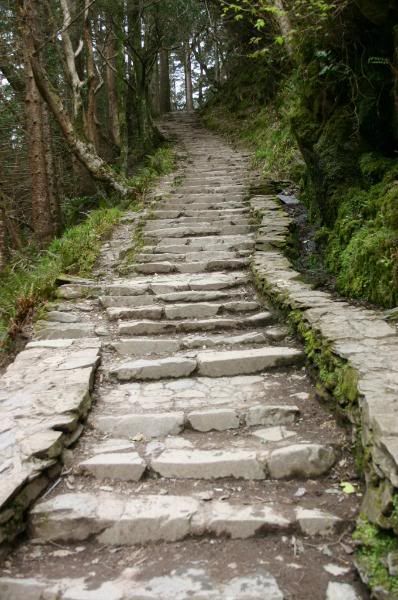
Photo of path in Ireland found on pinterest.com

Why Mary Oliver’s words matter

A few years ago a friend introduced me to Mary Oliver via one of her books of poetry, Thirst. Spare on words and extravagantly beautiful, her forty-three poems grabbed my heart and my imagination. The collection focuses on her grief after the death of her longtime partner, and her struggle to find words that capture the reality of her faith.

Mary Oliver challenges me in ways similar to Emily Dickinson, with one exception. Oliver’s poetry, also heavy with meaning, is remarkably and painfully direct. In each poem she invites me to enlarge the way I see, experience and respond to what seems everyday and ordinary.

Since her death on January 17, scores of visitors have visited this site looking for posts about Mary Oliver. At the top of the list: It doesn’t have to be the blue iris, a poem about prayer.

In the last week I’ve read and listened to multiple tributes to Mary Oliver. Her poetry is stunning; her challenge to us as human beings is direct and piercing: Wake up, Observe, Report. Not simply about nature, but about this world and its creatures as part of God’s great poem. A reality we ignore to our great loss.

Here’s one of Mary Oliver’s shorter poems. I love the way it makes simple what isn’t always easy.

Musical Notation: 2

Everything is His.
The door, the door jamb.
The wood stacked near the door.
The leaves blown upon the path
that leads to the door.
The trees that are dropping their leaves
the wind that is tripping them this way and that way,
the clouds that are high above them,
the stars that are sleeping now beyond the clouds

and, simply said, all the rest.

When I open the door I am so sure so sure
all this will be there, and it is.
I look around.
I fill my arms with the firewood.
I turn and enter His house, and close His door.

Mary Oliver, from poems in Thirst, p. 38; published by Beacon Press (2006)

© Elouise Renich Fraser, 24 January 2019

the long walk home

I wonder—
Do breathless trees
dusky skies
and lengthening shadows
remember what they see
beneath fading twilight
swathed in heavy garments
unsure of her destination

Is this a woman? I think so. She seems to be taking the long walk home. Which may or may not be that dark cottage hovering in the background, watching as she makes her way.

Is she alone? I think not. The trees, skies and passing shadows reveal more than what’s happening on the ground or in the background. If this world is God’s poem (thank you, Mary Oliver), we have reason to hope. Not because of the play of light in the trees, on the ground or in the background, but because of the Light that shines even in our darkest hours.

Sometimes, perhaps always, we must leave home to find our true home. Or better, to be found by God’s everyday angels in this world that belongs not to us, but to God.

©Elouise Renich Fraser, 14 November 2017
Autumn Landscape at Dusk, 1885, by Vincent van Gogh found at Wikiart.com
Daily Prompt: Dubious

It doesn’t have to be the blue iris

It’s the end of a busy week, and we’re hoping to visit Longwood Gardens tomorrow (yay!). One thing that helped me stay focused this week was Mary Oliver’s poem below. My comments follow.

Praying

It doesn’t have to be
the blue iris, it could be
weeds in a vacant lot, or a few
small stones; just
pay attention, then patch

a few words together and don’t try
to make them elaborate, this isn’t
a contest but the doorway

into thanks, and a silence in which
another voice may speak.

Mary Oliver, Thirst, Beacon Press 2006

Mary Oliver invites me to attend to small things right before my eyes, often at my feet. Pay attention. So much attention that I can’t stop thinking about it/them.

One small thing caught my attention this past week. At first I didn’t see any connections. Or hear any voices speaking into my silence. Yet I couldn’t stop thinking about it.

‘It’ is a small, striped-tail chipmunk (ground squirrel) that regularly sits on a cement block wall just along the edge of our backyard driveway. He or she? I don’t know. I do know it’s often sitting or lying on that wall in just the same spot. And has been since the wall was completed several years ago.

Sometimes it runs down the wall and jumps into our pile of yard trimmings, looking for food. When the weather is chilly, it stretches out on top of its favorite cement block and soaks in the sun. Other times it sits there alert, watching for possible intruders.

I think it has a nest inside one of the cement blocks—on the unfinished back side of the wall. Sometimes when I walk by on the way to the garage it quickly races into one of the cement blocks.

Several kinds of hawks frequent our area. I’ve watched them swoop down into our back yard to surprise a large gray squirrel, a slow sparrow or a dove. I’ve also heard our small chipmunk squawking out the alarm, joined by other small backyard creatures. Sometimes the hawks have their way.

We live in unsettled times. It takes determination to focus on simple things that inhabit our lives. Especially when there are hawks out there with their beady eyes scanning the ground for juicy tidbits.

Mary Oliver’s poem invites me to pay attention to the chipmunk. To hear our Creator’s voice speaking through the simple things of life. Not giving up, but staying alert, living each day simply and fully. Which can be a way of saying thank you. Without fancy gestures or heavy words laden with heavy thoughts. This isn’t a contest.

© Elouise Renich Fraser, 27 October 2017
Photo found at Pinterest

Caught in a near nightmare

This morning I woke up feeling strangely empty. And weeping. Partly because of a near-nightmare and partly because we’re living, it seems, in a near-nightmare.

In the dream, I’m alone in a small room, just getting ready to exit. I’ve decided this small room isn’t going to work for me. Suddenly a man I don’t know and have never seen before walks into the room. He isn’t impressive in stature or looks, yet I know in my gut that he’s potentially bad news. He immediately flops down on the single bed near the door.

As I walk toward the door to exit, he reaches out and grabs my hand. His face clouds over with contempt and a sneer. I know I’m done for if I don’t take charge. I feel small and defenseless. Caught in a nightmare not of my making. I feel his grip tightening on my hand.

I wake up not knowing what to say or do next.

The man’s eyes, the sneer on his face, and the totally invasive nature of his presence and behavior communicated his firm belief that I was totally irrelevant. In his eyes my life mattered not a whit.

It’s sometimes difficult these days, especially since I’m on the older end of the age spectrum, to maintain a sense of relevance. But this was bigger than that. It was about the invader’s power and willingness to exercise it no matter who I might have been. Though I’ll admit it didn’t help to be female.

This tired old world is in a season of growing visible and present chaos. The kind this world has seen before, though not with so many growing warehouses of nuclear arms and an over-supply of trigger-happy leaders ready to prove their supposed virility. Ordinary people seem to have become irrelevant. Except as props on a political stage.

I don’t fixate on this every day. Nonetheless, it’s always in the air begging for my addictive attention. If I remain fixated, I’m a goner, dead or alive.

Instead of playing along with the ‘dream’ man’s agenda for me, I relax, ignore his eyes and disgusting speech, and pray out loud and in a strong voice these challenging words from Mary Oliver’s poem, “Six Recognitions of the Lord.”

Oh feed me this day, Holy Spirit, with
The fragrance of the fields and the
Freshness of the oceans which you have
Made, and help me to hear and to hold
In all dearness those exacting and wonderful
Words of our Lord Christ Jesus, saying:
Follow me.

Mary Oliver, Thirst, stanza 5 from “Six Recognitions of the Lord”
Beacon Press 2006

Which is my prayer for all of you as well. No matter what comes next.

© Elouise Renich Fraser, 23 September 2017
Image found at givaudan.com

Daily Prompt: Irrelevant

Emily Dickinson meets Mary Oliver

Last year a friend gave me a volume of poems by Mary Oliver. It’s safe to say I’m as mesmerized by Mary’s poetry as I am by Emily’s. Both are keen observers of nature, both external nature and human nature.

Which brings me to the reason for this post.

For the last few weeks I’ve been tantalized by a small poem of Emily’s. Cryptic as always, but not totally mysterious. Even so, I’ve wondered what to say about it. Then a few weeks ago I was reading Mary’s poems and was caught by a stanza in one of her longer poems.

First, Emily Dickinson’s poem:

To see the Summer Sky
Is Poetry, though never in a Book it lie –
True Poems flee –

c. 1879

Emily Dickinson Poems, Edited by Brenda Hillman
Shambhala Pocket Classics, Shambhala 1995

Now the third stanza of Mary Oliver’s poem:

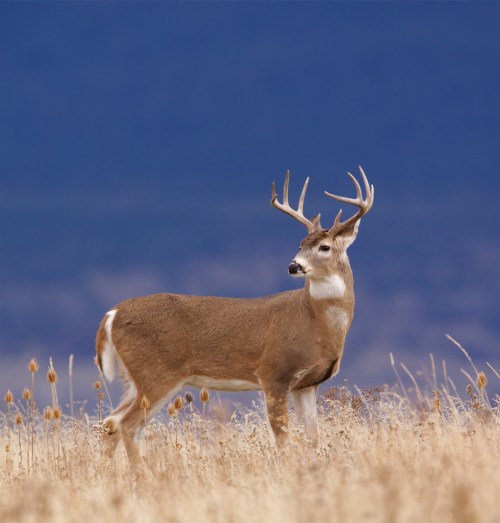
The deer came into the field.
I saw her peaceful face and heard the shuffle of her breath.
She was sweetened by merriment and not afraid,
but bold to say
whose field she was crossing: spoke the tap of her foot:
“It is God’s, and mine.”

But only that she was born into the poem that God made, and
called the world.

Mary Oliver, Thirst, stanza 3 from “More Beautiful than the Honey Locust Tree Are the Words of the Lord,” Beacon Press 2006

Mary’s words helped me think about Emily’s poem. So here’s what I’m suggesting as one way to interpret them together.

  • No mortal words of poetry will ever do justice to this world, God’s poem. Nor do we understand ourselves unless we give up all efforts to capture in our words the reality of what God created and invited us to inhabit as caretakers. We can look and point; we cannot replicate.
  • Furthermore, no poetic words of ours will ever improve upon God’s great poem. Still, as humans we’re at our best when we reflect in our lives the grandeur of  creation.
  • Surely the summer sky, the deer, and all parts of God’s creation are dignified not because of what each does, understands or even writes in flowing poetry. Rather, we owe our dignity to being part of “the poem that God made, and called the world.”

Have a wonderful Sabbath rest.
Elouise 

© Elouise Renich Fraser, 26 August 2017
Image found at smartpress.com

Response to WordPress Daily Prompt: Dignify

Something about prayer….

My history with prayer is all over the map. I’ve probably heard more prayers than I’ve heard sermons. Too many to count. On the other hand, I’ve always struggled with prayer. Here are two posts talking about my childhood struggles with prayer: here and here.

Last year a friend gave me a slim volume of poems by Mary Oliver, a winner of the National Book Award and the Pulitzer Prize for poetry. The volume I’m reading is Thirst.

What caught my eye this week was the first stanza of a longer poem titled “Six Recognitions of the Lord.” I’m still taking in the first stanza.

I know a lot of fancy words.
I tear them from my heart and my tongue.
Then I pray.

When I read these simple words, I feel lighter. I grew up hearing and trying to replicate, in my way, prayers that would be polite and proper. Yes, I spoke from my heart no matter when I prayed. Yet I also felt unbearably self-conscious about my prayers, especially about the words I used.

It didn’t matter whether I was praying privately or publicly, I feared my words wouldn’t live up to what God expected to hear from me. Or that they would be used by others to judge my spiritual formation.

Looking back, I know my family upbringing contributed to some of this. Whether by design or not, my prayers to God felt like baring my soul to whomever was listening. I feared someone was grading, judging or scrutinizing me. Would I pass the test?

Mary Oliver’s words are to the point and liberating. They’re also primarily about personal prayer, not public prayer. Though they may apply there as well.

The best analogy I can think of would be a child talking to a trusted parent or caregiver. Freely, without shame or hiding. With no need to impress anyone. Not calculating or careful about choice of words or what the other person might think about what I’m saying.

God just wants me to show up, talk and listen. Listen and talk. Using my own words. No matter how I feel today about God or myself.

First, Mary Oliver invites me to tear all fancy words from my heart and my tongue.

Praying your Sabbath is filled with childlike joy and delight.

Elouise 

© Elouise Renich Fraser, 15 July 2017
Artwork found on Google at http://www.royaldoors.net