Telling the Truth

connecting the dots of my life

Category: Spiritual Formation

How loud the storm sounds | Emily Brontë
For weeks, this short poem by Emily Brontë has haunted me. With a small handful of simple words Emily evokes feelings of grief and shock that come from unexpected death. My comments follow.

How loud the storm sounds round the Hall!
From arch to arch from door to door
Pillar and roof and granite wall
Rock like a cradle in its roar

That Elm tree by the haunted well
Greets no returning summer skies
Down with a rush the giant fell
And stretched athwart the path it lies

Hardly had passed the funeral train
So long delayed by wind and snow
And how they’ll reach the house again
Tomorrow’s dawn perhaps will show

From selected poems of Emily Brontë
Published in Everyman’s Library by Alfred A. Knopf, 1996

Perhaps it seems strange to talk about unexpected death, especially during a powerful storm that shakes foundations and roars as it gathers speed.

Yet of all the things that might have fallen, it was “That Elm tree by the haunted well.” A giant. A fixture in the landscape.

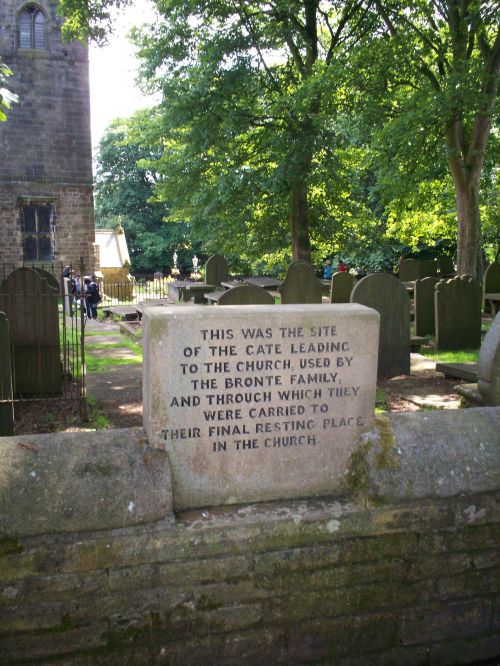
In addition, it fell across not just any path, but the path between house and Hall. That would be the Brontë house (church parsonage), and the church Hall where father Brontë served as a parson.

The house stands at the opposite end of a path leading to the church Hall. Besides getting to the church for services, it was also the pathway down which deceased members of the Brontë family were carried to be laid to rest in the family vault.

Emily refers to a funeral, already delayed by wind and snow. It’s finally taking place in the church Hall. Whose funeral? Emily doesn’t say.

Suddenly a furious storm erupts, and “That Elm tree by the haunted well” comes crashing down across the path. It seems the only solution is to stay in the church Hall until tomorrow. Perhaps by then we’ll be able to find a way back to the house.

So what does this poem suggest? Perhaps the giant Elm’s sudden death refers to a person whose life touches everyone. This could be a family member, such as Emily’s mother, or one of Emily’s siblings. We might also ask whether it’s possible to return the house as it was.

The poem describes the way we often experience death. It leaves us feeling lost and uncertain. Without a compass, or a clear map for how we’ll proceed from here.

The poem also invites us to consider each day precious. The end often comes without warning. Especially to those we most love and depend upon. Or to ourselves.

© Elouise Renich Fraser, 12 March 2019
Photo found at pinterest.com 

Sometimes my voice falters

Sometimes my voice falters
Falling ten stories down
Into a desert of silence

My rattled soul teeters
On the edge of despair
Searching for a small grain
I might rightly call my own
Though nothing was ever
Mine to begin with

Still….
In the hot wind
Of my empty mind
I hear my heart
Beating
Yearning for yesterday

© Elouise Renich Fraser, 11 March 2019
Photo of desert drought landscape found at pixabay.com

Woman Work | Maya Angelou

In honor of women everywhere who, against all odds, hold life together one day at a time. In this poem, Maya Angelou speaks for women everywhere – country, town, city, suburbs. My brief comments follow.

I’ve got the children to tend
The clothes to mend
The floor to mop
The food to shop
Then the chicken to fry
The baby to dry
I got company to feed
The garden to weed
I’ve got the shirts to press
The tots to dress
The cane to be cut
I gotta clean up this hut
Then see about the sick
And the cotton to pick.

Shine on me, sunshine
Rain on me, rain
Fall softly, dewdrops
And cool my brow again.

Storm, blow me from here
With your fiercest wind
Let me float across the sky
Till I can rest again.

Fall gently, snowflakes
Cover me with white
Cold icy kisses and
Let me rest tonight.
Sun, rain, curving sky

Mountain, oceans, leaf and stone
Star shine, moon glow
Your’re all that I can call my own.

I’ve got to open the shop
Harvest the crop
Clean out the pool
Visit the jail
Get to the school
Teach all the classes
Pick up the mail
Raise food for the masses
I’ve got children to tend
The clothes to mend
I got to
I got to
I got to

Maya Angelou, in Poetry for Young People, p. 19
Published by Sterling Children’s Books in 2013

I resonate with Maya Angelou’s emphasis on the role of nature. Not simply as the truly beautiful and awe-inspiring reality it is, but as solace. A power that takes us out of ourselves. Or better, helps us find our true selves. Not as any human being, but as the one-of-a-kind person each of us was created to be.

True, nature sometimes wreaks horrific havoc. Yet not even Angelou’s “fiercest wind” meets the standard for tornado or tsunami status. Rather, she sees changes of weather as invitations to reconnect with nature. Not to slack off, but to rest in the only thing she can “call my own.”

Finally, did you notice how the poem loops back to the top near the very end?

If you’d like to know more about how we’ve failed worldwide to account for women’s unpaid work, check out this June 2018 article.

© Elouise Renich Fraser, 8 March 2019
Photo found at newsdeeply.com in an article on women’s unpaid work

unmapped adventure

Restless uncertainties clamor
Living reminders of death
And the loneliness of aging
I stare out the window
Looking for a sign, a thought
That points the way ahead
Through shapeless days
Living within boundaries shifting
From one day to the next

Thou shalt not taunts me
Thou shalt snaps at my heels
Dares me to veer from this
Strange path to everything
And to nothing at all—
Dreams wander without clear
Themes or destinations
Days come and go
Like all the others

One day up
The next day down
The cup is full
The cup is empty
The magic recipe eludes me
Leaving nothing
But the raw gift of life—
Becoming myself
In this unmapped adventure

© Elouise Renich Fraser, 7 March 2019
Image found at pinterest.com

Nibbling at edges

Nibbling at edges
A dropped heartbeat
Here . . . . . now there
Random holes of silence
Never to be filled
Gone forever
Eluding my grasp
Silently stealing life
That once seemed
Steady and sure

Several days ago I decided to wear my heart monitor. I was curious. How often and how long are these episodes of atrial fibrillation? Lucy Pacemaker takes care of the slow beats. I don’t even know when she’s doing it because I’m usually asleep.

So what’s up with those fast-beating AFib episodes? Sometimes I can tell when my heart misses beats, but not usually. Often I feel weak, especially in my legs and when I reach to get something from a high shelf. My energy level plummets, and I feel off-balance.

For three days I wore my heart monitor from the time I got up until I went to bed. Nothing. Just wonderfully steady, strong beats. I’m not sure what I was expecting, but I was thrilled and full of energy.

Yesterday morning things went haywire. I saw it on my heart monitor, and felt it in my body. Weak and discouraged doesn’t begin to describe the feeling.

After some tears of frustration, I decided my heart could use some comfort. I also pared down my schedule to three things: make (and enjoy!) a simple lentil soup, play the piano, and exercise indoors.

After half an hour on my semi-recumbent bike, plus walking around the house while listening to the radio, it happened. My heart suddenly settled down, more than 8 hours after the fibrillation began.

Yesterday evening I jotted down the poem at the top. An acknowledgment that I’m dying in more ways than one—and that there’s life in me, though it’s not what I expected.

As for you, dear Reader, here’s a Reader-friendly article about AFib, and how to tell, without a monitor, whether your heartbeats are steady: Stanford University Scope Blog.

© Elouise Renich Fraser, 6 March 2019
Image found at Stanford University’s Scope Blog

heaviness of years past

It’s Monday morning
I’m still trying to
Find myself

Not lost
Perhaps misplaced
Somewhere back there?

Yesterday in church
I wept for the heaviness
Of years past

Wounds and scars
From a thousand misfired
Bullets

Invisible reminders
Deep within of tales not told
Or understood

The most difficult thing I’ve done as a follower of Jesus is to step out of my hiding places. Not primarily to face my friends or foes, but to face myself. In my family of origin, hiding was the best way I could cope and survive as a child and teenager.

As a young adult and later as a professional, I carried a weight of fear in my guts. Fear that some grand tribunal would subpoena me to testify against myself.

Sadly, I thought this process would be about my small and large transgressions, as determined by their eyes. In my worst fears, I would be shamed and punished before an audience of my peers plus strangers. They would make an example of me, much as my father tried to make an example of me as the eldest of four daughters.

Instead, as a 40-something, I found myself in Al-Anon groups of women and men struggling as I was. Listening to them helped me listen to my story. Maybe I didn’t need to fear some unknown grand tribunal.

These new friends didn’t absolve me, and they didn’t try to fix me. Instead, they listened, and showed me how they worked on their own wounds and scars. By honoring themselves, they honored me.

So there I was in church yesterday, weeping. Realizing that no matter what I do, I will be welcomed with open arms when I die.

Where will I go? I don’t know. Nonetheless, I believe I will be in the presence of The Only One who understands me fully and loves me from the inside out. I’ll also be free of wounds and scars. Free to be the beautiful woman I am.

© Elouise Renich Fraser, 4 March 2019
Photo found at fromthegrapevine.com, Flowers on a tombstone, Czech Republic

Looking for friends

During the last several weeks I’ve been restless and lonely. I’m sleeping better and feeling more energetic than I have in the last four years. The weather, on the other hand, has been wildly unpredictable, requiring more in-house activity than usual. Still….

Retirement is heaven on earth. Right? Wrong.

My body has changed and my age keeps creeping ever higher. Even if I wanted to, I couldn’t return to academic life with its regular access to interesting students and colleagues. My retirement playground sometimes feels like punishing confinement.

As a child and teenager, I felt left out and lonely most of the time. Not invited to parties, not allowed to go to movies, and not allowed many close friends. Not that there was a long line knocking on my door.

I thought I was over those childhood feelings. Yet they came crashing in on me this past week. Triggered by more than one conversation about a wonderful dinner party or get-together I knew I couldn’t attend even if I wanted to.

The truth is, I don’t want and can’t survive a busy social life. Neither do I want to become someone’s project. I want women friends. A few interesting, trustworthy women. Not for a fabulous dinner out, a trip to the latest show, or even to reminisce about old times.

I’m past the years of being a hostess. I’m beyond cleaning up for company, or trying to transform myself into the social butterfly I’ve never been. I’m also beyond being part of a church visitation team.

This is about connecting in person over a cup of tea or glass of water, going for a walk or not. It’s about regular face to face time with women who might also feel left out, forgotten, or simply in need of female company.

And no, I don’t expect you, my readers, to solve this for me. Though perhaps some of you have felt this way from time to time?

Thanks for taking time to listen.

Elouise

© Elouise Renich Fraser, 2 March 2019
Photo found at nationalpost.com

One inch short of war

Howling winds
Rattle doors and windows

Random bursts
Of unseemly fury
Hurled through air
Turn lashing trees
To toppled dreams
Caught off guard
By one lone ranger
Unleashing havoc
One inch short of war

Pointing out the faults of others, especially those of POTUS, is dangerous business. Some say we should cut him a break. After all, doesn’t our own uncontrolled behavior make us as guilty as the next party?

Perhaps it does. Nonetheless, national leaders are held to higher standards because of the number of people who depend daily on their decisions and actions. Especially, but not only in situations of national emergency. A wall on our southern border is not cause to declare a national emergency. Hurricane Maria was. A test of our readiness to do the right thing. Together.

So yes, POTUS is rightly held to higher standards. And yes, my ability to see fault-lines in POTUS likely means I’m all too familiar with this set of behaviors. In myself and in others.

It brings to mind my history with self-confident men and women who believed themselves ordained by God to keep me in line. In my place. Voiceless and without power. One inch short of being used and abused in a subterranean war fueled by abuse of power.

© Elouise Renich Fraser, 25 February 2019
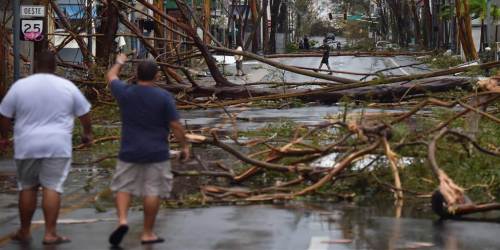
Photo of Hurricane Maria damage in San Juan, Puerto Rico; found at nbcnews.com

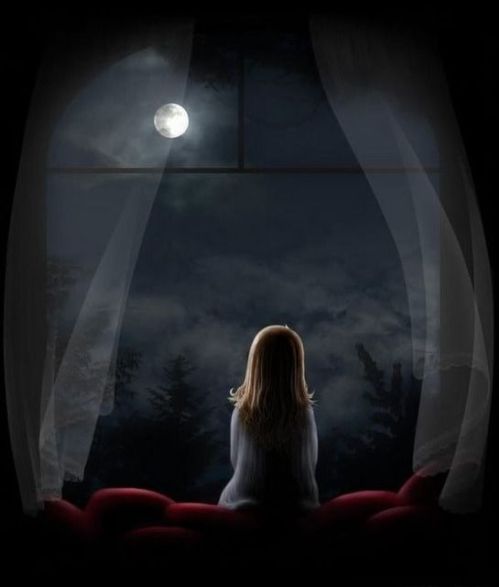
The coming storm

Silent as snow
Trees stand motionless
At attention
Scarcely breathing
Gray chill air
Of the coming storm

These days it’s difficult to read or listen to the news without descending one step deeper into the eye of a coming storm.

Nature’s weather events regularly point to the chaos and destruction of large, uncontrollable storms. Especially those that enter lashing out in one direction, and exit lashing out in another direction.

As it happens, today we’re in the leading edge of a large weather event coming at us from the south and west. The signs are all there, just outside my kitchen window and on countless weather updates .

So what’s it all about?

I can’t help thinking about  our nation. Especially the rapid deterioration of discipline, trust and good will we witness daily, beginning at the top and flowing out and down. As a young nation among older nations, we don’t seem ready to weather future storms that grow larger and more inevitable each day.

When I looked out my kitchen window this morning, I saw the trees. They were standing at attention, calm, silent, waiting to see what this storm will bring. For some it may spell disaster. For others, it will blow over and life will go on as usual.

Right now snow plows are going up and down the road outside our house. The snow is beautiful and heavy with moisture. Sleet and freezing rain will come later.

In the end, what I saw outside my kitchen window challenged me to be what I’ve often longed to be — a poem lovely as a tree. Vulnerable, strong, graceful, able to weather storms, and willing to die. No matter what happens next for me or our nation, and no matter who happens to be in the White House.

© Elouise Renich Fraser, 20 February 2019
Photo found at elizabethatkinson.com

On listening to my father

My father’s shame, like mine, went back to his childhood. He endured family hardships as one child of many. These included things like carrying lard sandwiches to school and being ashamed to let classmates see him eating them; wearing winter ‘shoes’ made from pieces of old rubber and ropes; and living in fear of being shamed and beaten by his father.

Childhood shame became envy. One opportunity after another slipped through his fingers. He was a proud man, filled with deep-seated resentments. Then there were dreams he couldn’t give up even though they weren’t going to happen. On top of this, the older I became, the more difficult it was for him to celebrate my accomplishments.

In this slightly revised poem I’m inviting him to join me. I first wrote it about a poor woman in a portrait. I recognized myself in her. I know what it’s like to live with shame that feeds envy. I can’t change what happened between my father and me; I can, however, change the way my heart sees him today. I can also listen to him now in ways he couldn’t listen to me. Perhaps I might even weep with him.

Suffering from Obsessive Envy

I know this proud man
The look in his eyes
The slightly raised brow
The unsmiling mouth.

Heavy with envy,
His eyes keep sharp watch
Marking my own good fortune
As were it his loss.

Am I not entitled?
Do I not slave harder?
How dare she be happy
At my poor expense.

Dear father, I know you.
You cower in my heart;
Your anger, your silence,
Your pride, your fierce want.

Look at me if you dare
Look me straight in the eye
Describe your resentments,
The dreams you saw die.

Weep long if you must
For the life you have led;
Sit here on this bench
Let me wipe your tears dry.

© Elouise Renich Fraser, 17 February 2019