Telling the Truth

connecting the dots of my life

Category: Writing

Fear has no wings

I was born into a Christian sub-culture driven by fear. Fear of the world, and fear of God whose all-seeing eye follows us day and night.

This was both comforting and terrifying. The world ‘out there’ was harsh and unforgiving. A dangerous place for little girls and big girls. I needed a Guardian.

Yet God’s all-seeing eye was taking notes. Was I being naughty or nice? Was I pleasing God or making God sad, angry or disgusted?

It was super-important to be productive as well as untouched and untainted by ‘the world.’ Evil lurked around every corner. Fear was the best preventive medicine I could take.

Fear helped me keep rules. Fear helped me develop keen eyes for what would please people in authority over me. Fear surreptitiously kept my hand to the grindstone. I wanted to be ready for the day when God would judge me for what I had done and not done.

I grew up without wings. Instead, I developed a remarkable talent for trying harder and jumping higher. Failure or even the whiff of failure was devastating.

Now, many failures later, I’ve begun developing tiny wings. Baby wings. The kind I trimmed back most of my life, trying to stay in the nest and out of trouble.

Being born plopped me into an aching world fraught with pain and anguish, troubles upon troubles. It’s impossible to stay out of trouble if I’m alive and breathing. Whether it’s my fault or not isn’t the issue.

Today I accept trouble in my life. Not because it’s good, but because it helps me develop baby wings. It helps me look up and around, gaining a glimpse of where I might fly next. I don’t want to waste more time trying to jump higher.

Here’s a favorite quote from Simone Weil’s Waiting for God. The highlighting is mine.

There are those people who try to elevate their souls
like someone who continually jumps from a standing position
in the hope that forcing oneself to jump all day—and higher every day—
they would no longer fall back down, but rise to heaven.
Thus occupied, they no longer look to heaven.

We cannot even take one step toward heaven.
The vertical direction is forbidden to us.
But if we look to heaven long-term,
God descends and lifts us up.
God lifts us up easily.

As Aeschylus says,
‘That which is divine is without effort.’
There is an ease in salvation more difficult for us than all efforts.

In one of Grimm’s accounts, there is a competition of strength
between a giant and a little tailor.
The giant throws a stone so high that it takes a very long time
before falling back down.
The little tailor throws a bird that never comes back down.
That which does not have wings always comes back down in the end.


© Elouise Renich Fraser, 29 April 2017

Photo of baby golden-eye ducks found at urbanpeek.com

thick roots revisited

P1040831

thick roots tangled knots
barely hanging onto bank
drink deep waters

This haiku was my third post to this blog, published on 3 January 2014. It still haunts me, though not in the same way.

I first saw these roots when D and I were walking with our daughter and her husband through Hoyt Arboretum in Portland, Oregon. I couldn’t tear my eyes away. The tangled roots were beautiful and foreboding.

A bit like blogging, which I’ve experienced as a formidable venture into unknown territory. Like being born and surviving. Sometimes against all odds.

Writing lets my exposed roots show, often whether I realize they’re showing or not. Writing also stakes my claim to a tiny, precarious plot of land that sits open, vulnerable and visible to passersby.

I’ve traveled a long way since my early posts, yet my roots are still my roots. Bare, and barely hanging onto precious ground that’s stronger, deeper, and more nourishing than I could have imagined.

Deep waters aren’t visible, and they don’t untangle all the knots in my life. Sometimes I wonder whether they’re drying up.

Yet even in dire circumstances, I discover more than enough to get me through each day. Sometimes with tears of sorrow and disbelief. More often with joy and sheer gratitude for the privilege of being human. Able to thrive in the forest next to redwood giants, with miniscule ferns growing around and from my feet.

© Elouise Renich Fraser, 26 April 2017
Photo credit: DAFraser, October 2012, Hoyt Arboretum, Portland, Oregon
Response to WordPress Daily Prompt: Roots

Sabbath for My Body


Dear Friends,

It’s been a while since I wrote about Sabbath Rest. I’m learning the hard way that this isn’t just one day a week. It all began a year ago, in April 2016, and now includes a new health challenge I found out about this month.

On April 6, 2016, I received my spectacular pacemaker, Lucy. She’s now one year old, and has demonstrably changed my life for the better. Lucy is my upbeat (!) silent, invisible champion. She’s on call 24/7, making sure my heart rate doesn’t wander below 60 beats a minute. No more fainting spells.

Then, on April 21, 2016, my first day out alone with Lucy, I tripped on uneven pavement and fractured my jaw. Full stop.

Things will never be the same in my mouth. Wired jaws, lessons in how to use my Vitamix, pain and agony, sheer exhaustion as night became day and day became night. No description can capture it. I thought it would never end.

It’s still difficult to form some words. Still, most of the pain is gone and I’ve regained significant lateral movement in my lower jaw, though my bite will never be the same.

My broken jaw pushed me over the cliff into adrenal fatigue. Thanks to my integrative doctor, I now have a regular pattern each day and night. That means I have energy most mornings, and am ready to sleep most nights. No more erratic nighttime insomnia, or falling asleep in the middle of eating during the day.

Regular rest stops are my new normal. This means putting my feet up, taking short naps, and meditating as needed during each day. I want to stay grounded in what really matters.

Then about 2 weeks ago my doctor confirmed a new challenge: Chronic Kidney Disease, Stage 3a of 5 stages. This came with little warning; my emotions have been all over the map. I’ve had several tests this past week to measure the extent of the damage.

Just for today I want you to know what’s happening. I’ve talked about end of life matters several times this year. The Shape of Forgiveness series was one such issue. So is this.

Are end of life issues my present calling in life? I don’t know. I do know that today, tomorrow and thereafter every part of me is invited into Sabbath Rest. Even though it may not always feel restful or inviting.

Praying you’ll find rest for yourselves each day of this coming week, beginning now. Blessings of inner peace in these troubled times.
Elouise

© Elouise Renich Fraser, 22 April 2017
Photo found at kellyjohnsongracenotes.com

Monday Morning Jolt

Fair warning, my friends. I’m writing this primarily for myself. I woke up this morning feeling gray, drippy and overcast. Just like the weather. Miserable.

Were there reasons? There always are, aren’t there? Still, if I don’t put one foot in front of the other, this day will take longer to traverse than it otherwise would.

On my way down to make my morning smoothie, I picked up a small book I read when I was in graduate school. Less than 100 pages. Written in honor of one of the most beloved preachers of the Nazi era, Christoph Blumhardt. Speaking on behalf of those begging for a cup of cold water, he wrote the following:

We must not be silent. The social struggle of millions in our time is not a coincidence….The ferment in the nations, the agitation of the poor, the crying out for the right to live—a crying, given into the mouths of even the most miserable of [us], which can no longer be silenced—these are signs of our Lord Jesus Christ…They do not know that it is Jesus who wants it.” (Action in Waiting, p. 8)

Yet Blumhardt didn’t pour his entire life’s energy into political life. He saw that neither political nor church movements for social justice could deliver a final solution to the world’s agony. Instead, we long for human fellowship that both waits for and experiences the fulfilment of that for which we are created. Not simply in our places of worship, but in everyday life.

Was Blumhardt a dreamer? I don’t think so. I believe he saw within the misery of his world the seeds of something greater. Yet not so overwhelming that we can ignore right now the work to which we’re called daily. Especially in the midst of political, national, social, religious and economic warfare in which some are winners at great cost to everyone else.

Even so, he argued we’re not called simply to work for social justice. We’re called to delight in the beauty of each day:

The earth is so beautiful, the earth is so lovely and full of joy, every little midge rejoices, every tree rejoices; all things are arranged delightfully and beautifully by God so that we too can live and move among them in joy and graciousness…. (Action in Waiting, p. 25)

Finally, just as all nature is ordered toward its Creator, so too are we:

God has already put into us what God is and what God wanted to put into us so that we should become God’s image. (Action in Waiting, p. 27)

I’m not an outlier, and neither are you. We’re already in the vision held close in our Creator’s great heart. My work is to move in the right direction, do what I’m called to do, trust, fear not, and keep my eyes on the goal.

© Elouise Renich Fraser, 17 April 2017
Photo found at pixabay.com, Golden Regulus

All quotes from Karl Barth, Action in Waiting, Plough Publishing House, 1969
Response to WordPress Daily Prompt: Jolt

breathless

breathless
city of the dead
greets Eastern sun

*

It’s Holy Week
a period of self-reflection and waiting
not for death, but for life
rising out of improbable circumstances
from unexpected sources.
Small and large gifts of grace that never die,
all appearances to the contrary.

***

This haunting photo reminded me of Cairo’s City of the Dead. The warmth of the rising sun falls daily on its streets and small memorial houses to the dead, many without roofs. Open to the sky above. Breathless.

© Elouise Renich Fraser, 12 April 2017
Photo from Pixabay.com

The Shape of Forgiveness | Part 4 of 4

“We do our forgiving alone inside our hearts and minds; what happens to the people we forgive depends on them.”
“Forgiving happens in three stages: We rediscover the humanity of the person who wronged us, we surrender our right to get even, and we wish that person well.”
Lewis Smedes in The Art of Forgiving (Moorings 1996)

I’ve never found public or required displays of forgiveness helpful. I’m relieved that Lewis Smedes makes this a personal issue. Neither my father’s presence nor his acceptance of my forgiveness is necessary.

And so, given Smedes’ three stages above and the work I’ve already done, including naming what my father did and why it’s blameworthy, I’ve already forgiven my father.

  • What I discovered about Dad’s humanity was heartbreaking; he and I were more similar than I like to admit. I feel compassion for him every time I think about his life—not just as a child, but also as an adult struggling with his own trauma. He, too, was a survivor of childhood abuse. Sadly, he never sought healing.
  • Sometimes I made small, symbolic attempts to get even with Dad. These included behaviors that helped me feel ‘better’ or ‘safer’ around him, even though I didn’t. I maintained my distance physically and emotionally while seeming not to be distancing him. I thought I was inflicting small punishments on him, getting even for his punishments of me. I was not. Today I have no desire to get even with him.
  • Finally, though Dad died several years ago, I still wish him well. How so? I don’t know what life is like after death. I do, however, know that if our Creator offers ways to grow into life after death, I wish my father well. Especially as the daughter who is most like he was.

From the cross, Jesus prayed “Father, forgive them, for they know not what they do.”

He didn’t forgive his tormentors directly. He left that up to God. Instead, I see throughout the gospel narratives that Jesus understands the humanity of every person with whom he deals.

I also notice Jesus’ refusal to try to get even with those who opposed him. He spoke hard truth, sometimes with anger. Yet he didn’t grasp at his right to get even. Not in life or in death.

Finally, Jesus wept and prayed over Jerusalem, despite what he suffered from the hands of those in power who thought they knew better. They beat him, mocked him, paraded him in public as an ‘example,’ and hung him up to die. Still, he wishes them well.

Though Jesus doesn’t forgive his tormentors directly, he prays for them from the cross: “Father, forgive them, for they know not what they do.” This is the prayer I pray for my father.

I’m not responsible for offering him forgiveness. That’s God’s business. I am, however, responsible for the three steps at the top of this post if I mean business about forgiving him.

I’ve forgiven my Dad. Nonetheless, I can’t say this is a done deal. Forgiveness isn’t an event. It’s a process with a beginning and openness to whatever comes next. Childhood trauma has a way of bringing things to the surface when the learner is ready for more healing.

God forgives each of us daily. This is an act of stunning creation, not just for us individually, but for the families and communities in which we live. I want to be part of this ongoing spirit of forgiveness because I want to be part of God’s creative act, not part of the destructive problem.

And so I remain open to forgiving my Dad as often as needed.

© Elouise Renich Fraser, 8 April 2017

The Shape of Healing

Describing the unspeakable
Welcoming the unbearable
Embracing the unimaginable

These phrases came to mind this morning when I saw the Daily Prompt. They capture what recovery looks like for me, an adult survivor of childhood trauma within my family.

No erasing the past, no magic pills, no overnight miracles, no shortcuts and no looking back. Sometimes I think I’m finally ready to be born. Or maybe it happened somewhere back there on the road to recovery, and I’m now an adolescent?

Today I’m working on the last piece of my series on The Shape of Forgiveness. I can scarcely believe I’ve lived to see this day. Much less write about it.

This week I’ve recalled seemingly random circumstances in the last 30 years of my life. I’m stunned by the way pieces came together. People, programs, books, articles, blog posts, conversations, life circumstances and more. They reinforced each other and kept me, inch by inch, moving in a direction, one trembling step of faith at a time.

Am I there yet? It doesn’t matter. Though the process is demanding, the payoff makes it all worthwhile. I’d rather write and rewrite my Grown Up Girl Rules than keep Daddy’s Good Girl Rules any day.

I think about you out there, on the other side of whatever I’ve posted. You’ve been my public audience at each step. The twists and turns of life will continue, as will my healing. Today I celebrate where I am right now. And you, my dear readers.

Have a lovely Sabbath!
Elouise

© Elouise Renich Fraser, 8 April 2017
Response to WordPress Daily Prompt: Heal

The Shape of Forgiveness | Part 3

“Forgiving does not remove our scars any more than a funeral takes away all of our grief.”
“We cannot forgive a wrong unless we first blame the person who wronged us.”
Lewis Smedes, in The Art of Forgiving, Moorings 1996

Denial. I lived with it daily. Not simply denial about my father, but about precisely what he had done to me. In a dark room in my mind I still, in knee-jerk fashion, hadn’t given up bearing ‘my’ share of responsibility for the nature of our relationship.

I experienced it as unrelenting warfare. Yet if you’d asked me about this even three years ago, I would have protected my father by denying the truth. All it took was an add-on phrase or two like these:

  • I wasn’t always an easy child.
  • Sometimes I deserved what I got.
  • Sometimes I asked for it by being stubborn.
  • I know I’m not entirely guilt-free.

All intended to soften the truth and point away from my father as the responsible adult party. If I didn’t, I feared no one would listen to me. I had to remind them that I know I’m not perfect, either.

One of the most difficult exercises of my adult life was to blame my father. Not generally, but specifically, and in writing. With clear reasons, and naming the reality for what it was. I worked on this during the summer of 2014, using Lewis Smedes’ book, The Art of Forgiving, as a guide to rethinking my relationship to Daddy (the term my father required us to use when addressing him).

According to Smedes, I couldn’t forgive unless I first blamed my father for what he had done–concretely, specifically, and with reasons that held water. I had never blamed him in that way. I’d spent all my life trying to share the blame. That had to go.

Forgiveness has a shape. It isn’t a feel-good exercise driven by required words or even attitudes of reconciliation. Nor is it intended to deflect my attention from the Big Stuff truth. What happened to me changed my life in negative ways that are not outweighed by any positives I might name as ‘balancing’ factors.

What, then, do I mean when I say, ‘I blame Daddy’? My denial was so deep that it took several weeks to clarify this. Here it is in short form. You can read more here and here.

I blame you, Daddy, for

  • Willfully, intentionally and without coercion from anyone, using your power in ways that abused my body, my spirit, my mind, my emotions, my developing sexuality, and my overall identity/sense of self
  • Abusing your power as my father, as an adult male, and as an ordained clergyman
  • Not knowing or loving me as I was and am, beginning from early childhood and continuing throughout my adult years
  • Creating an atmosphere of intimidation at home, not an atmosphere of safety

Thanks for listening!

To be continued (one more post) . . . .

© Elouise Renich Fraser, 6 April 2017
Daily Prompt: Denial

The Shape of Forgiveness | Part 2

“Forgiving is a journey; the deeper the wound, the longer the journey”
“We do not forgive because we are supposed to; we forgive when we are ready to be healed.”
Lewis Smedes, in The Art of Forgiving: When You Need to Forgive and Don’t Know How, published by Moorings, 1996

When I was a child, my father required me to beg forgiveness from him and from God. Most often after a beating, or as the so-called resolution of a sisterly argument about an alleged offence. This was often tricky, because I knew the facts as presented weren’t quite all the facts.

I’m grateful forgiveness isn’t a required event. Especially forgiveness of my father.

I didn’t know it then, but my process of forgiveness began the day I confronted my now-deceased parents about being shamed, humiliated and silenced. The process isn’t yet completed, but I’ve made unexpected, life-giving progress.

The meeting I set up with my parents took place the eve of my 50th birthday in 1993, more than 23 years ago. During the meeting I asked for my father’s apology, with no expectation that he would apologize. My husband, my sister Diane, my mother, and a trusted pastor witnessed the conversation between my father and me. It lasted for 1 ½ hours.

My father refused to apologize for anything. He wasn’t interested in revisiting what happened between the two of us or between him and my sisters. He’d already done all his business with God, privately. Nothing I said or did would change his mind.

I was on my own, without my father’s blessing. Disappointed but not surprised. Still determined to work on my healing.

We say punishment should fit the crime. Even so, I believe forgiveness must fit each situation, especially those with life-changing consequences. This isn’t about mistakes or forgetfulness. It’s about the Big Stuff we wish had never happened to us.

Forgiving my father has been a long, sometimes painful process. I’m not yet there. Still, looking back, I see several areas of progress. Sometimes with lightening-speed insight; most of the time with determination, grit and courage to take the next painful look at him and at myself.

Since that historic meeting in 1993, I’ve made progress in at least the following areas.

  • Acceptance of the life-changing enormity of what his behavior meant for me then and now
  • Interest in my father’s life story
  • Appreciation for his wounds, including his determination not to ask for help
  • Awareness of his deeply rooted shame
  • Compassion for him as another human being

I was surprised at how much more comfortable I became around my father, even though his opinions about me never changed. I enjoyed being in interview mode, though I didn’t always like what I heard. I was also comfortable being in the compassion mode. Especially because he carried many griefs, sorrows and disappointments similar to mine.

Nonetheless, I knew this change for the better wasn’t yet forgiveness, much less reconciliation. It was more like a cessation of warfare and a sometimes uneasy truce. I still had work to do.

To be continued….

© Elouise Renich Fraser, 5 April 2017

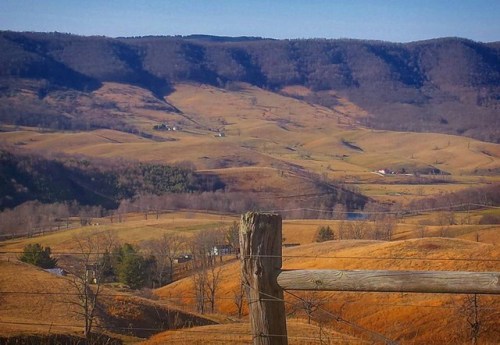
family secrets

scattered farmhouses
grace idyllic surroundings —
guard family secrets

***

I can’t see the secrets; they’re underground. Have you ever watched Midsomer Murders? Very instructive. When open spaces are being closely guarded against land developers, the reason sometimes has to do with buried family secrets. Usually in the form of skeletons.

I don’t know if any secrets lie beneath the hills in this gorgeous Virginia valley. Yet the photo struck me as evocative. What happened in the past, matters. Even though we may take the secrets to our graves. Or create lovely graves for ugly secrets.

© Elouise Renich Fraser, 3 April 2017
Photo by marciadc70, found at Weather Underground Photos
Response to WordPress Daily Prompt: Prudent