
Telling the Truth

connecting the dots of my life

Tag: Abuse of Power

Our original sin

I wonder…
Does each nation
Each country
Have an original sin
The seed of its
Particular ignominy
Running through veins
Shot full of raging
Hormones escalating
Into tragedies
Of historic proportions
Played out in
Unnumbered permutations
Of seduction and flattery
Designed to deceive
And subdue?

It isn’t just the daily revelation of predatory behavior by public figures and officials. It’s the reality that various permutations of predatory behavior undergird the earliest foundations of our nation.

I’d describe it this way: The subduing and disappearing of some in order to pursue the welfare of a select group that viewed and still view themselves as more entitled than others.

Layer upon layer. Decade after decade. And now we’ve come to this juncture in our history without a clear understanding of how we got here, and how many were and still are subdued and disappeared. Buried beneath mountains of inspiring proclamations, and promises not kept.

So what am I doing about it? Besides writing, I’m reading. Today I’m focused on books that invite me to open my mind and my heart. Not simply to what happened when our country was founded, but what’s still happening today. Unrecorded, unexamined, and unacknowledged.

My newest book is Sing, Unburied, Sing, written by Jesmyn Ward. I’m also reading Maya Angelou’s I Know Why the Caged Bird Sings. One painful chapter at a time.

© Elouise Renich Fraser, 29 November 2017
Photo of Great Dismal Swamp found at smithsonianmag.com
The swamp, located in Virginia and North Carolina, once served as a refuge for Native Americans and fugitive slaves.
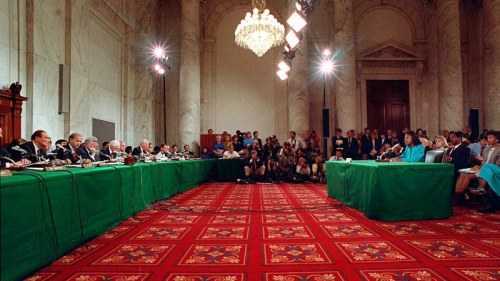

Thank you, Anita Hill

In October 1991 I listened to your courageous testimony about Clarence Thomas. Your words took me back to my first boss. It was 1960. I’d just graduated from high school and was now a clerk in a bankruptcy court. We called the boss ‘Judge,’ though he was actually a referee in bankruptcy. He’d held this governmental appointment for years. He was about 60 years old; I was 16.

By 1991 I’d told only my husband the truth about my first boss. From the beginning, the Judge was on a mission to take me down a notch or two by way of sexual innuendo and outright inappropriate behavior toward me. He knew I was under-age, that my father was an ordained minister, and that I was a Christian. He said he was a Christian, too, and reminded me from time to time of his church membership.

I didn’t know what hit me. I got through three summers plus one full year, thanks to the friendship of other women working in the office, and the kindness of a few male attorneys who knew the Judge and witnessed some of his behavior toward me.

Back then the term ‘sexual harassment’ hadn’t been invented, or connected to Abuse of Power as an issue in the workplace. In addition, my childhood home where I still lived didn’t offer a safe place to talk about anything related to sex.

Flash forward to October 1991, and your testimony before the Senate Committee. I owe you a huge debt of gratitude for at least two things.

  • First, your personal account was the first I’d ever heard from a professional woman talking about repeated sexual innuendo and inappropriate behavior in the work place.
  • Second, your courage gave me courage to begin talking about this without fear or shame.

I’m sad this happened to you. I’m sad things happened to me. I’m sad things like this still happen every day to others.

Am I angry? Yes, I am. Angry that even in today’s reports from powerful women about powerful men, we’re still using the language of “if this is true.” Which conveniently overlooks the power imbalance that was in place when the alleged behavior happened. To say nothing of optics and the appearance of evil that seems now to be embraced, not avoided. Embraced, and laughed at in a zillion cartoonish ways.

We are not the world’s latest sleazy entertainment opportunity. We are women with every right to stand up and tell the truth about what happened and didn’t happen to us. And why it must stop now if we’re ever to be Great. Not again, but for the first time ever.

May God grant us serenity to accept what we cannot change, courage to change the things we can, and wisdom to know the difference.

Thank you for showing me how this is done. Not just then, but throughout your professional career.

Respectfully,
Elouise Renich Fraser

For a 2016 PBS News Hour video discussion between Gwen Ifill and Anita Hill, click here. It’s outstanding.

©Elouise Renich Fraser, 13 November 2017
Photo found at gq.com

I was just a beginner…

I was just a beginner when it happened. In a supposedly safe place. I had a title and stature within an academic community.

From my childhood I’d experienced worse. Regularly. In ways that raised deep shame and self-blame in me. Bad girl.

But this was different. I was an adult. A colleague among adults who were followers of Jesus Christ.

It happened in a crowded hallway between classes. Without a whisper of warning. Just walking to my next class, in conversation with an adult man.

He wasn’t a stranger and he wasn’t my father. He professed to be a supporter of women’s full humanity, and our right to fair and equal access to theological education as students and as professors.

Perhaps he wasn’t thinking? I could give a thousand questions you might have asked me. None would have erased the sudden chill and shame of feeling an uninvited hand patting me on my butt.

I switched my briefcase to my right hand, moved over slightly and kept walking through the hallway as though nothing had happened. Indeed, it never happened again. I maintained my distance, without giving up my friendly demeanor.

My friend touched my body in a way I wouldn’t dream of touching his. It wasn’t a hand on my arm, but my butt. I believed that any attempt to draw attention to this would have made things worse. I felt trapped.

Don’t get me wrong. This is not my big #MeToo story. I’ve already told that in earlier posts—not just about the Shopkeeper, but about my father’s attempts to subdue me, and my first employer’s determination to humiliate me as a young woman just out of high school.

So why tell it? After all, it happened in the blink of an eye.

I’m telling it because we need to attend to the daily impertinences and seemingly small ways in which women, girls, boys and men who aren’t considered manly are reminded of their place and who has power over them.

I’m also telling it because there are millions of everyday people aching to let someone know what happened or is now happening to them. Are we able and willing to listen from our hearts? Without offering solutions or trying to re-write the stories we hear?

Sometimes silence and listening without judgment are the best gifts we give each other. In fact, to listen well is to follow well. The way I imagine Jesus Christ following us and being there when we’re ready for help.

Surely goodness and mercy shall follow me all the days of my life…. (from Psalm 23)

I’m grateful for the women, men, young people and even children who have listened to my story, and shared with me their own experiences. In some ways, this is the table God has set before me in the presence of my enemies—who are more like I am than I could ever guess.

Praying you have a wonderful Sabbath rest.
Elouise 

©Elouise Renich Fraser, 11 November 2017
Photo found at theanvilnewsletter.blogspot.com
Daily Prompt:Neophyte

Our National Nightmare

Burning with contempt
We peer into the mirror
of our discontent
strutting proudly
through our dens
down hallways
of our disbelieving minds

Deliriously happy
to be Great Again
Or
Deliriously happy
we are Not Like That

There, but for the grace of God, go I?
Really, my heart?

This moment is full of danger and opportunity. The opportunity to work on our national homework—long overdue.

Perhaps it’s too late for some. It’s never too late for our surviving children and the surviving children of this world.

Is this a nightmare from which we’ll one day wake? Or is it the nightmare that will take all of us down—together yet divided.

Every time national events cause deep revulsion or fear in me, I know it’s time to take stock. What is this national nightmare trying to say to me right now?

It doesn’t matter which issue we’re dealing with. White supremacy, human trafficking, pornography, sexual abuse and predators, political gridlock, opioid epidemic, mass killings, racial profiling, homegrown terrorism, corporate greed, broken promises, or a hundred other issues. Plus a steady dose of twitter-like hyper-inattention.

It’s all part of our National Nightmare, not new, yet starkly in focus and fed by Mr. Trump’s persona and ubiquitous presence in our media.

No one can deal with everything. So I’ve chosen a few things to explore between now and Christmas. Things with which I’ve had close encounters of the uncomfortable sort, each of which boils down to one very large issue: Abuse of Power.

Thanks for reading, and thanks for caring and doing what you can to level the imbalance of power around you. Right in your own backyard.

© Elouise Renich Fraser, 10 November 2017
Daily Prompt: Strut

No, I will not give up!

The mood in our country is ever more divisive, thanks to the old divide and conquer strategy. It seems Mr. Trump is a mastermind at this. Not just at getting us to quarrel with each other, but at maintaining his position as the Man in Charge, trickling glory down or withholding it, at his time and in his way.

My readings in the Psalms this past week were encouraging, yet troubling. They were all about what happens to the wicked. In particular, those whose god has become great wealth, who take delight in the adulation of adoring publics, and who seem to believe God is made in their image and thus on their side.

Mr. Trump, already a follower and lover of great wealth, displays leadership traits that are confusing at best, willfully destructive at worst.

Most troubling is his habit of changing the subject strategically so that it’s not about him, but about someone else or somewhere else or the flag or patriotism or immigrants. It seems his happy moments are fleeting. Never enough to fill the deep hole in his heart.

I serve but one God. Is it possible to do this without confessing my personal failings? Of course not. Nonetheless, I don’t buy the argument that everyone has their weak spots or failings. As though we should give others a free pass, particularly our leaders.

Hebrew and Christian Scriptures have somber warnings to religious and political leaders about the way they govern. This includes strategies such as pitting the strong against the weak, rich against poor, social class against social class, women against men, immigrants against residents. The possibilities are endless.

The strategy of muddying and distorting reality keeps us riled up and at each other’s throats. So distracted that we cannot effectively call out leaders for failure to lead on behalf of everyone. We’re too busy jumping on the us-versus-them bandwagon.

I don’t know how to engage mammoth power. Or perhaps I don’t appreciate the power I do have. Which would be my one brief life, a pen and my prayers.

This feels like less than two small loaves and a small fish. Barely enough for me; not nearly enough for those who gather each day wanting to hear truth and hope. Especially in times of political, social and geographic upheaval.

Being a faithful Christian citizen has rarely felt so heavy. The bottom line is simple: Whom do I serve? And am I ready to do this at any cost? My spirit is willing; my flesh is weak. Which is why I depend on others like you, regardless of your political or religious persuasion.

As a follower of Jesus, I’m in this for the long haul. Today I’m grateful for the company of others learning to live each day without giving up the fight for justice, or hope for today and tomorrow.

© Elouise Renich Fraser, 14 October 2017
Image found at flicker.com/photos/nicola
Daily Prompt: Succumb

In the finest tradition

In the finest tradition
of street money politics
abuse of power flourishes.

Daily
Weekly
Monthly
Before our eyes
In and out of headlines
Behind closed doors
Projected in a heartbeat
Tweets and twitters
An ever-present reminder
Of the cost to those
Who just say No
Or fail to do obeisance

A legacy
not easily
bankrupted
feeds from one
generation
to the next
exploiting
fear gone viral.

© Elouise Renich Fraser, 25 July 2017
Response to WordPress Daily Prompt: Traditional

What’s for dinner?

Edible. Such a lovely word. Especially for hungry people, and especially if it’s offered as a banquet served on silver platters, with drum rolls and fine patriotic music in the background.

So what’s for dinner? Why are you so secretive about what’s on the menu? You say it’s going to be Beautiful, even Great! Much better for my health than the food I’ve been eating all these years.

Am I to believe you and your not-so-carefully scripted words, or my own well-honed gut instincts?

Do you have a complete list of ingredients? A nutritional profile for the long-term edibility of this fine feast you’re serving up? My gut won’t tolerate just anything, you know.

Poison in any form is inedible. Especially when cooked up in a private club-like kitchen with chefs and assistants who look strangely like each other, smile a lot, and keep saying what a Beautiful Thing this feast is going to be. Just what I need to Make My Health Great Again!

Really? Why is my stomach already churning? And what’s that stench in the air? Don’t you smell it? I haven’t even taken the first bite, and I’m already looking for the closest bathroom!

Are you going to force-feed me? Did your parents force-feed you? Do you force-feed your children? Your grandchildren? Your nephews and your nieces? Why aren’t there any exit signs in this  room?

Is it really too much to hold out for edible food? As I see it, a dry crust of bread shared with peace of mind would be better than this banquet of trouble.

With thanks to Proverbs 17:1 (Good News Translation)

Better to eat a dry crust of bread with peace of mind
than have a banquet in a house full of trouble.

© Elouise Renich Fraser, 18 July 2017
Image found at pinterest.com
Response to WordPress Daily Prompt: Edible

The Shape of Forgiveness | Part 3

“Forgiving does not remove our scars any more than a funeral takes away all of our grief.”
“We cannot forgive a wrong unless we first blame the person who wronged us.”
Lewis Smedes, in The Art of Forgiving, Moorings 1996

Denial. I lived with it daily. Not simply denial about my father, but about precisely what he had done to me. In a dark room in my mind I still, in knee-jerk fashion, hadn’t given up bearing ‘my’ share of responsibility for the nature of our relationship.

I experienced it as unrelenting warfare. Yet if you’d asked me about this even three years ago, I would have protected my father by denying the truth. All it took was an add-on phrase or two like these:

  • I wasn’t always an easy child.
  • Sometimes I deserved what I got.
  • Sometimes I asked for it by being stubborn.
  • I know I’m not entirely guilt-free.

All intended to soften the truth and point away from my father as the responsible adult party. If I didn’t, I feared no one would listen to me. I had to remind them that I know I’m not perfect, either.

One of the most difficult exercises of my adult life was to blame my father. Not generally, but specifically, and in writing. With clear reasons, and naming the reality for what it was. I worked on this during the summer of 2014, using Lewis Smedes’ book, The Art of Forgiving, as a guide to rethinking my relationship to Daddy (the term my father required us to use when addressing him).

According to Smedes, I couldn’t forgive unless I first blamed my father for what he had done–concretely, specifically, and with reasons that held water. I had never blamed him in that way. I’d spent all my life trying to share the blame. That had to go.

Forgiveness has a shape. It isn’t a feel-good exercise driven by required words or even attitudes of reconciliation. Nor is it intended to deflect my attention from the Big Stuff truth. What happened to me changed my life in negative ways that are not outweighed by any positives I might name as ‘balancing’ factors.

What, then, do I mean when I say, ‘I blame Daddy’? My denial was so deep that it took several weeks to clarify this. Here it is in short form. You can read more here and here.

I blame you, Daddy, for

  • Willfully, intentionally and without coercion from anyone, using your power in ways that abused my body, my spirit, my mind, my emotions, my developing sexuality, and my overall identity/sense of self
  • Abusing your power as my father, as an adult male, and as an ordained clergyman
  • Not knowing or loving me as I was and am, beginning from early childhood and continuing throughout my adult years
  • Creating an atmosphere of intimidation at home, not an atmosphere of safety

Thanks for listening!

To be continued (one more post) . . . .

© Elouise Renich Fraser, 6 April 2017
Daily Prompt: Denial

Defending My Space

I’m about eight years old. I’m sitting at the dinner table, just around the corner from my father. The table is set, the food is spread before us, and we’re all in our seats waiting to begin. We haven’t yet asked the blessing. I’m playing with my dinner fork, just to the left of my plate. I’ve moved it a few inches away from my plate.

My father’s voice interrupts me. “Elouise, put the fork back where it belongs.”

I move it to the right, in the direction of my plate. “Elouise, put the fork back where it belongs.”

I move it slightly closer. My father’s voice remains firm and controlled. “Elouise, put the fork back where it belongs.”

By now my sisters are watching to see what will become of me. My mother is silent. This has become an event. Slowly I raise my hand to my fork and move it ever so slightly closer to my plate.

My father persists. So do I. Many repetitions later he’s satisfied; the fork has been returned to its proper place.

He proceeds with the blessing. He doesn’t know what I know: the fork is ever so slightly to the left of its proper place.

My father’s mission as a parent was to train us to keep the rules. My mission as his child was to break and keep the rules simultaneously.

Back then, perseverance meant getting through another day, using whatever survival skills lay close at hand.

If my father was persistent, I would be more persistent. If outward rebellions were too costly, I would invent creatively invisible yet superbly effective inward rebellions. If I was ordered to sit down and stop talking, I could continue standing and talking on the inside for as long as it took to comfort myself.

Indeed, this was the better way. In the private spaces of my mind no one could put me down, refuse to listen to me or try to break my will. In a family system intent on turning out obedient daughters, I survived by being secretly disobedient.

This memory from the 1950s, published nearly 20 years ago, is as vivid today as it was then.

The territory I defended was interior. I applaud the little girl who figured out how to do this. Nonetheless, my efforts were costly. They required constant vigilance, no matter where I was.

Abuse of power destroys safe space. It expects and demands behaviors, words, looks on faces, subtle and open signs of unquestioning and subservient submission.

What does it take to create and maintain safe space? Not just in our marriages and families, but in neighborhoods, nations, churches and schools? And how does my personal history connect with the racial history of the USA?

© Elouise Renich Fraser, 29 March 2017
Photo of 1938 family dinner found at bbc.com
Story excerpted from my book, Confessions of a Beginning Theologian (InterVarsity Press 1998)
Response to WordPress Daily Prompt: Territory

Pillage: I loathe this word

I loathe this word I don’t want to say
Nothing about it attracts me
Or suggests anything to say about it
Much less use it in a sentence 

My abhorrence lies in its power
To bring images to mind —
Images that compound this world’s evil
Leaving no peace for victims 

Yet one image alone gives me hope
It’s stronger than these robbers —
The image of Jesus Christ
Whose birth we just recognized 

I imagine JC—not the Superstar
And not Jesus meek and mild
Rather, JC storming the bastions of hell
Within and without 

Cleaning out the stench of our stables
Knocking relentlessly on our doors
Anointing our scars and wounds
With oil of healing and compassion 

JC turns pillaging on its head
Inside out and upside down
Not with the flick of a magic wand
But in his life of full allegiance
To the One who sent him to our aid —
Victims and perpetrators alike

How can we not welcome his appearance?

© Elouise Renich Fraser, 28 December 2016
Response to WordPress Daily Prompt: Pillage