Telling the Truth

connecting the dots of my life

Tag: Christian Faith

How are you doing today?

Our pastor asked this at the beginning of today’s online sermon. It caught me by surprise. It’s also better than a thousand other things we might talk about. So I’m going to begin, and invite you to respond about yourself.

On a scale of 1 to 10, with 10 being Great, I’m scoring about 6 or 7 on most days. Why?

~Sometimes winter weather is harsh, meaning no outdoor walk with D
~My health, which requires constant attention 24/7
~The sudden unraveling last March of regular social life (Covid-19)
~Reverberations from chaos recently unleashed on Capitol Hill
~No in-person visits with family members or friends
~Grief that comes with acknowledging I won’t be here forever, which will come sooner, not later

Grief, disappointment, sadness, weariness, uncertainty, loneliness, heartache, fear. I could pretend they don’t bother me. But that wouldn’t be telling the truth.

Thankfully, things like the following bring me joy or gratitude.

~Having enough food (most of it prepared by me)
~Walking outside with David when the weather is decent
~Seeing neighbors and chatting a bit on the street
~Phone calls and email from family members and friends
~Playing with Smudge or holding him on my lap while he sleeps
~Watching birds on our backyard feeders
~Reading a good book and playing the piano
~Listening to music any time of day

Still, good times won’t cancel out down times. Nor do they answer all my questions about life and the world as we know it today. Each day is different. Making plans is difficult. At the same time, Christian faith gives me a foundation I sorely need every day. Scripture, music, devotional reading and journaling.

What about you? How are you getting through this long passage of time, including loss of people you know and love?

Elouise

© Elouise Renich Fraser, 24 January 2021
Image found at makeameme.org
The nature of our souls

Slow motion rollout
of a white horror show

Surreal white choices
(one would be too many)
to humor or ignore POTUS

A white-washed sense
of entitlement plus

White-washed decisions
to treat white-washed intruders
with white-kid gloves

Meanwhile, white POTUS cowers in the White House

Congressional Building guards caught
off-guard without a plan of attack
to restrain white-washed white folk

no game plan
no war-like riot gear
no immediate shooting
from the hip

just bald-faced white anger
sending a white message to
the world from white intruders
and white ‘defenders’ alike

Beyond this patch-up of verses, I don’t have a quick solution to our deadly, death-dealing disease that keeps strangers at a distance.

The challenge to President-Elect Joe Biden and to us as a nation is clear. It isn’t how did this happen, as though a better plan would have held back this surge. It’s about why this happened, and what we can learn from our own responses to it.

Yes, Mr. Trump incited this riot. On the other hand, it couldn’t have happened  without the collusion of white America.

Distancing ourselves from our own national mess, ignoring it, or gasping in horror and then looking the other way isn’t an option. Especially for those who claim to follow Jesus of Nazareth. This isn’t about politics. It’s about the nature of our souls, measured by our willingness to begin at the very beginning. As strangers in need of each other.

Elouise

© Elouise Renich Fraser, 8 January 2021
Image found at patheos.com

Yesterday’s sorrows

A chain of prayer
Rises in midnight hours
As restless sleepers
Wake to the sound
Of yesterday’s sorrows
Rising to the surface

Perhaps one’s own trials
Or a loved one’s emergency
Or dense silence inviting
A song or a prayer to
Fill the empty void of night
Broken only by the wind

Since the beginning of Covid-19 social distancing, I sometimes find night silence distressing.

It happened again last night. Not just because of what’s going on out there, but also what’s rising to the surface in me. Sadness, sorrow, and trepidation. Names of family members who tested positive for Covid-19, now in quarantine because of contact with someone else. An urgent request for prayer from a former colleague. Or even a welcome email from a former student now living in another country, without many options.

One of the gifts of this painfully long social distancing has been a measure of quiet in the house. At night, however, silence weighs heavily when I want to get back to sleep. Hopefully unheard by D, I sometimes begin singing (very softly) favorite hymns as they pop into my mind. Not just one verse, but as many as I can recall. Think of an extended lullaby.

Other times I go down my mental list of friends and family members having more challenges than usual just now. Then I whisper (often with tears) my gratitude for D, for Smudge, for our neighbors, and for opportunities to support local and worldwide relief efforts.

Somewhere in the middle of all that it usually happens. I drift off to sleep. If I don’t, I go to my office, close the door, open my journal, and write my heart out. Thankfully, this last resort is rare. Still, it works like a charm. The tears flow freely, and then I’m back to bed and sleep.

I pray each of you finds ways to sleep well, and exercise your faith and gratitude during these strange months of Covid-19 et al, already extending into another year. Happy Wednesday!
Elouise

© Elouise Renich Fraser, 6 January 2021
Image found at pinterest.com

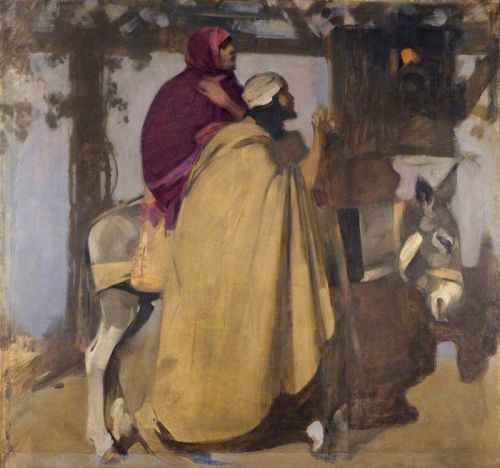
No Room at the Inn | Thomas Merton


 I know–Christmas 2022 hasn’t yet arrived.
Still, this quotation from Thomas Merton strikes a chord in me,
given the current state of our growing disunion.
~~~

Two years ago I received an email from a friend of many years. Among other things, he passed along the ‘poem’ below, even though it wasn’t written as a poem.

The excerpt is from an essay, No Room at the Inn, by Thomas Merton. The essay is included in Raids on the Unspeakable, a selection of essays Merton wrote from 1960 to 1966, during the Viet Nam War. The small collection is published in Canada by Penguin Books Canada, and in New York by New Directions Publishing Corp.

Here’s the excerpt, in poetic form.  

No Room at the Inn

Into this world, this demented inn
in which there is absolutely no room for him at all,
Christ comes uninvited.

But because he cannot be at home in it,
because he is out of place in it,
and yet he must be in it,
His place is with the others for whom
there is no room.

His place is with those who do not belong,
who are rejected by power, because
they are regarded as weak,
those who are discredited,
who are denied status of persons,
who are tortured, bombed and exterminated.

With those for whom there is no room,
Christ is present in this world.

Here’s the rub. I say I’m following Jesus. Am I ready for this? Do I really want to be known as ‘one of them’? 

Praying we’ll find strength and grace in the coming year to join those shut out from the inns of this world.
Elouise

© Elouise Renich Fraser, 27 December 2020, reposted 10 December 2022
Image found at pinterest.com

Christmas Eve 2020

Torn between competing worlds
I can’t remember when life felt
this precarious on the eve
of Your birthday celebration

Would You understand
if I told You I don’t feel like
celebrating this year?

Instead I want to be in that
stable with Mary and Joseph
Not just because it’s wonderful
But because it’s dangerous

No, I’m not looking for trouble. I’m wondering what it takes to put myself out there at this age. Can I hope for anything but being treated like a little old lady?

Not that I mind being a little old lady. In fact, WordPress makes it as easy as possible for me to speak my mind freely. So do my followers and visitors.

Nonetheless, I wonder what would happen if I said in my large family circle or in my church, straight-out, what I often say here when I’m blogging. I don’t know the answer, though I expect some might be distressed, or try to fix me. Others might pray for me, which is never a bad idea.

I’m no revolutionary. Still, sometimes the effort of putting out just one post lets me know I’ve had a relatively easy life. In addition, I wasn’t given the gift of confidence in my own voice when I was growing up.

Today the stakes are painfully high. We’re caught here together on this planet. It’s Christmas Eve, and too many of our political, social and religious leaders already know the script. The one called “How to Pretend I’m God and You’re Nobody.”

I don’t mean to sound cynical. Instead, it strikes me as miraculous that Jesus of Nazareth was born as a Nobody. The kind who kept getting in the way, until what amounted to a lynch mob tried to take him down. Yes, he died, and yes, the dance goes on.

Praying you have a thoughtful, encouraging Christmas Eve and Day.
Elouise

© Elouise Renich Fraser, 24 December 2020
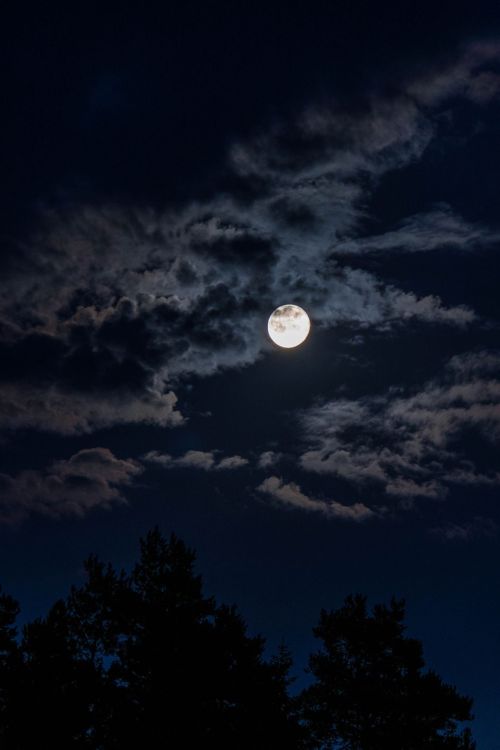
Night sky image found at astronomytrek.com

What will become of us?

What will become of us?
Even the Supreme Court
Can’t fix this sickness unto death
Leaking through our doors
Streaming through our apps
Insinuating itself into every
Pore of our nation’s unchecked
Pandemic failure to thrive

Tomorrow the Electoral College
Does its business not once for all
But as an unintended trigger of
Anger, elation, false dreams and fake news
Now available 24/7 on demand
Minus warnings that lies and innuendo
Are more than dangerous to our
Collective health and welfare

This past year has been an exercise in bleakness. Which reminds me that Advent is about despair, fear, unjust rulers and religious leaders, sickness, and sorrow. In the bleak mid-winter.

When I hear people talk about “getting back to normal,” I cringe. Our track record when dealing with the aftermath of national crises, including unjust realities, isn’t great. Even the birth of Jesus of Nazareth didn’t solve everything.

We keep hearing that Covid-19 vaccines will make things better. Perhaps. Nonetheless, I’ll do what I can to support changes that matter for the good. I’ll also celebrate when we manage to get something right and just. It does happen every now and then, along with painful failures.

Between now and the end of this year, I’ll post as I’m able. Praying each of you is taking daily time to rest, meditate, and consider the impact of 2020 on your life and the lives of others.

Elouise

© Elouise Renich Fraser, 13 December 2020
Image found at christianity.com

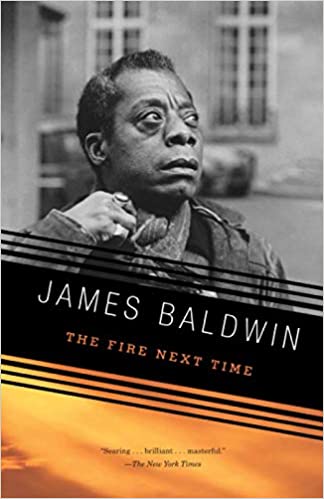
James Baldwin | The Fire Next Time

In the mid-1960s I first read James Baldwin’s The Fire Next Time, a collection of two published pieces. Each deals with how to survive as a black person in the USA. The first is a painfully realistic letter to James Baldwin’s nephew. The second describes Baldwin’s own struggle as a black Christian, beginning at age 14.

Now, at the end of 2020, I’m reading Baldwin’s small book again. Sadly, most white citizens of the USA still haven’t figured out how to do the right thing by our black citizens.

Instead, we’ve formed factions for which we ‘need’ an enemy (who isn’t necessarily our enemy). Something or someone to squabble about. A diversion from painful realities. Sadly it seems to offer a way of winning, even though we’re all losing.

Remember divide and conquer? As children, we played it all the time.

Sadly, people in power love to see us fighting each other instead of fighting against an unjust system in which some human beings continue to pay an unjust price. Given our history, it seems white citizens would rather fight each other than deal with injustice to people of color.

Early in his second essay, Down at the Cross, James Baldwin describes our perennial problem. I’ve highlighted the line that caught my attention.

There appears to be a vast amount of confusion on this point, but I do not know many Negroes who are eager to be “accepted” by white people, still less to be loved by them; they, the blacks, simply don’t wish to be beaten over the head by the whites every instant of our brief passage on this planet. White people in this country will have quite enough to do in learning how to accept and love themselves and each other, and when they have achieved this—which will not be tomorrow and may very well be never—the Negro problem will no longer exist, for it will no longer be needed.

The Fire Next Time, pp 21-22;
First published by The Dial Press, NY, 1963
Vintage International Edition first published 1993

If this is the biggest question we white citizens face, it doesn’t matter which way we voted. What matters is whether we can learn to “accept and love ourselves and each other.”

We don’t need our perennial “Negro problem” in order to feel good about ourselves. Why not? Because this never was a “Negro problem.” It’s been a White problem from the very beginning.

Highly recommended, even if you read it way back when.
Elouise

© Elouise Renich Fraser, 3 December 2020
Book cover image found at amazon.com

Advent haiku and more

a day
unlike all others
wakes unannounced

I first posted this piece three years ago. The last three years brought major changes for all of us. With a few edits, here’s what I said then, and need to hear again today.

Writing haiku is an exercise in listening. Slowly. Without preconceptions. Without urgency. Without wondering when the alarm will go off to jolt me into action.

I readily admit that being retired is an advantage. Yet my internal life doesn’t always remember what it means to be retired. Much less where to focus long, patient listening that does more than take me in circles.

Three years ago, an on-line retreat invited me to write one haiku a day not just during Advent, but for the next six months. As a daily exercise it put the brakes on my urge to do something. It turned my attention toward nature and our Creator, and invited me to make new connections.

The haiku above suggests life is a daily gift to each of us from our Creator. A page-turner. An open, still-being-written adventure lived one day at a time. A puzzler without answers or clues at the back of the book. One of a kind.

Today, thanks to Covid-19, I’m enjoying Sabbath rest and the first day of Advent at home. I pray each of you takes time to listen with your heart and rest in the one-of-a-kind person you are.

Elouise

© Elouise Renich Fraser, 3 December 2017, reposted 29 November 2020
Photo found at pinterest.com, Sunrise in North Dakota

The Cross and the Lynching Tree

breathless morning sky
fiery orange shades of red
light pierces darkness

Often we live and die in self-imposed darkness. Not the dark of night, but the darkness of our understanding, our motives and our ignorance.

For several weeks I’ve been reading James Cones’ latest book, The Cross and the Lynching Tree. It’s a tough read. Cone challenges my white understanding of the role too many Christian churches and politicians have played in the history of lynching.

When I grew up, Jesus’ death was all about appeasing God’s anger for our sin. Dying as an innocent on an ordinary criminal’s cross was payment for our sin. Yes, we deserve to die, but Jesus died for all of us, so that God’s anger toward us wouldn’t be our undoing.

If, however, Jesus’ death was a lynching, what does that mean for Christianity in the USA?

According to our history of lynching, white Christians have managed to do to black women, men, children and unborn babies what Roman and Jewish leaders did to Jesus of Nazareth. Yes, it was death on a Roman cross/tree. Yes, it was death on a White cross/tree.

Now, in our supposedly more enlightened age, we think we’re beyond lynching. After all, Jim Crow style lynching is illegal.

Is it? Really? Look around. We’ve developed neat, more anonymous ways of doing the deed. Out of sight and out of mind, except for the occasional uproar over what’s been happening for decades.

White fear and a deeply ingrained false sense of superiority lie at the heart of our White problem. It isn’t about God’s anger at sin, so-called “Christian” values, or even our own wellbeing.

Each morning, like clockwork, we’re invited to let light pierce the darkness of our understanding. It doesn’t take much light. Just a candle here and there in a window will do. That, plus time to appreciate the light we’re offered each day, and a trustworthy guide to prick our consciences and challenge our sight.

Thanks for listening.
Elouise

© Elouise Renich Fraser, 23 November 2020
Photo found at unsplash.com

When the Roses Speak, I Pay Attention | Mary Oliver

Here’s my pick for today: a lovely poem from Mary Oliver about life and death. Why today? Because it’s my 77th birthday! See my comments below.

When the Roses Speak, I Pay Attention

“As long as we are able to
be extravagant we will be
hugely and damply
extravagant. Then we will drop
foil by foil to the ground. This
is our unalterable task, and we do it
joyfully.”

And they went on, “Listen,
the heart-shackles are not, as you think,
death, illness, pain,
unrequited hope, not loneliness, but

lassitude, rue, vainglory, fear, anxiety,
selfishness.”

Their fragrance all the while rising
from their blind bodies, making me
spin with joy.

© 2006 by Mary Oliver, found on p. 9 of Thirst 
Published by Beacon Press 2006

Rue: regret
Lassitude: fatigue, weariness, apathy
Vainglory: excessive vanity, inordinate self-esteem

I know it isn’t spring or summer, but neither do the roses. They do their thing, then disappear until it’s time to start all over.

Death is making the rounds these days. Not just death that follows old age, but death from Covid-19, suicide, broken hearts, incurable illnesses, street fights, unleashed hatred or anger, and more. Still, death isn’t our worst enemy.

We’re not on earth to live forever. We’re here to discover and fulfill our earthly purpose as human beings. Welcoming the stranger, accepting our own strangeness, giving and receiving help, taking our personal histories seriously.

In some ways, the roses have it easier. It isn’t easy to be human. We need each other if we’re going to thrive.

Still, like roses, we’re meant to be extravagant. Giving, giving, and giving again. Not obsessively or compulsively, or because we feel guilty, or for personal gain. But as an overflow of beauty and grace.

Think about it! Fragrant roses, baby birds, clouds, sunrise and sunset, fields of tulips, new-fallen snow, and gnarled old tree trunks soaring toward the sky. All this and more with thanks to our Creator.

Elouise

© Elouise Renich Fraser, 20 November 2020
Photo found at etsy.com