Telling the Truth

connecting the dots of my life

Tag: Healing

Let Justice Roll Down Like Waters
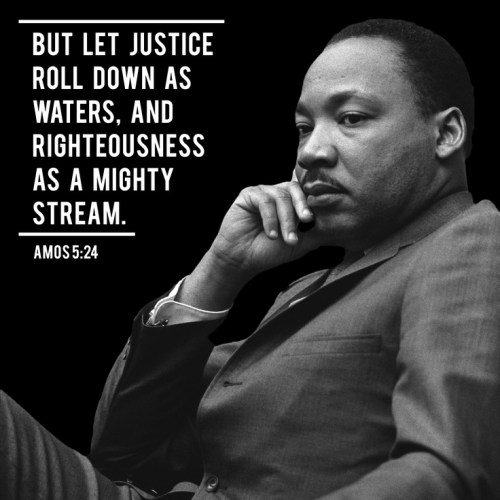
Justice doesn’t trickle down, any more than wealth at the top trickles down. Yet church-related efforts at justice sometimes seem to try trickling down. Through the cracks and around the edges.

Why? Because this is a politically-charged issue. The stakes are high, and it seems injustice is winning. Black Lives Matter and Covid-19 have together exposed our glaring weaknesses as a nation. Especially when it comes to race.

This past week I began a 40-day “journey through America’s history of slavery, segregation, and racism.” It’s titled “An American Lament.”  You can take a look or download it here. It was originally an exercise for Lent.

No one ever taught me to lament. Especially about my personal history with slavery, segregation, and racism.

I’ve always thought of myself as a seriously ‘with-it’ woman. In seminary, in the 1970s, I studied both sexism and racism. At university, in the 1980s, I focused my dissertation research on women’s issues. I mistakenly thought that by understanding feminism, I had an advantage when it came to understanding racism.

However, the very first day of this 40-day exercise, I listened online to a riveting, challenging address about racism and Christian churches in the USA. It was recorded in 2018, the year of mid-term elections. The full title is “Let Justice Roll Down Like Waters: Racism and our Need for Repentance.”

I highly recommend Rev. David Platt’s address for pastors, church leaders, church members, and anyone who cares about racism in the USA.

As for the rest of life these days, I’m walking every chance I get (way too hot on many days), listening to birds, helping stomp out lantern flies, talking with neighbors (outside and with a mask, of course), and learning more than I wanted to know about my history with racism.

Cheers to each of you for making it through another week!
Elouise

© Elouise Renich Fraser, 1 August 2020
Quote and image found at blockislandtimes.com

What we need to stop doing

This morning I read a hilarious and sobering opinion piece from Damon Young in the NYTimes. It’s titled “Yeah, Let’s Not Talk About Race.” Damon Young offers a strangely funny lament (my choice of words, not his) about what happens when he’s out on his evening walk around the neighborhood.

If you can access this piece, here’s the link. 

Here’s why his piece struck a chord with me. It’s a cry for honesty and for justice. In a nutshell, he’s tired of being expected to listen to uninvited comments from white people who aren’t willing to pay for his time or do their own homework. Especially when he’s out walking at the end of the day.

No, he isn’t mean. He’s just suggesting we might want to back off. Put another way, he’s letting us know we can’t atone for our sins of commission or omission by talking with him. Nor can we receive absolution from him. It doesn’t matter how much we care about him and other black and brown people. Or how eager we are for him to answer our questions for free. Not that he’s looking for our money. He isn’t.

You might say this behavior toward him is the price of being a celebrity. I don’t think so.

Furthermore, we don’t have time to try atoning for our white color by interrupting persons of other colors just to signal  or prove to ourselves (?) that we’re one of the good guys or gals. Or that now we’ve got it, when we don’t.

Seriously, the problem of presumed or arrogated white superiority has been our problem since the founding of this nation. It’s high time we white citizens began addressing it with each other.

I’m not saying a conversation with a black or brown friend or colleague is out of bounds. Still, I want to know I’m having the conversation because I’m a learner, and my friend of any color isn’t afraid to tell me the truth about myself as a white woman.

Happy reading and talking about things that matter!

Elouise

© Elouise Renich Fraser, 11 July 2020
Image found at NYTimes.com

What ‘human rights’ don’t look like

Recently a friend sent me the following list. I haven’t been able to get it off my mind. It was compiled by Dr. Valerie Bryant, a Black therapist in Brooklyn, NY. In the list she names black citizens threatened or killed in recent years while engaging in the behaviors she names.

Think of Dr. Bryant’s list as a roll call clarifying the difference between living black or brown, and living white in the USA. It’s also an invitation to reflection about ourselves, and the meaning of human rights.

…As a white person when you go out in the street, you don’t have to think twice of being murdered by a police officer or citizen acting like a police officer.

Or as a white person,

I can go birding (#ChristianCooper).
I can go jogging (#AmaudArbery).
I can relax in the comfort of my own home (#BothemSean and
#AtatianaJefferson).
I can ask for help after being in a car crash (#JonathanFerrell and
#RenishaMcBride).
I can have a cellphone (#StephonClark).
I can leave a party to get to safety (#JordanEdwards).
I can play loud music (#JordanDavis).
I can sell CD’s (#AltonSterling).
I can sleep (#AiyanaJones)
I can walk from the corner store (#MikeBrown).
I can play cops and robbers (#TamirRice).
I can go to church (#Charleston9).
I can walk home with Skittles (#TrayvonMartin).
I can hold a hair brush while leaving my own bachelor party (#SeanBell).
I can party on New Years (#OscarGrant).
I can get a normal traffic ticket (#SandraBland).
I can lawfully carry a weapon (#PhilandoCastile).
I can break down on a public road with car problems (#CoreyJones).
I can shop at Walmart (#JohnCrawford) .
I can have a disabled vehicle (#TerrenceCrutcher).
I can read a book in my own car (#KeithScott).
I can be a 10yr old walking with our grandfather (#CliffordGlover).
I can decorate for a party (#ClaudeReese).
I can ask a cop a question (#RandyEvans).
I can cash a check in peace (#YvonneSmallwood).
I can take out my wallet (#AmadouDiallo).
I can run (#WalterScott).
I can breathe (#EricGarner).
I can live (#FreddieGray).
I can be arrested without the fear of being murdered. (#GeorgeFloyd)

***These are NOT human rights if only white people have them.*

With compassionate rage
Valerie Bryant, PhD
Fort Greene Bklyn 11205

How would my world change if I woke up with different colored skin than I now have? Can I remember how I was taught to think or talk about skin color?

© Elouise Renich Fraser, 21 June 2020
Image found at stlpublicradio.com

A Prized Possession

A prized possession sits in front of me. It’s small, worn and faded. I found it years ago, when I was working at the seminary. It was sitting on a give-away table.

I’ve always had a weak spot for books, especially when they’re free. So I picked it up and couldn’t put it down—a small hymnal, pocket-book size.

The stamp on the inside cover says “Property of Trinity Church, Vineland, N.J.” Title: The Hymnal of the Protestant Episcopal Church in the United States of America 1940.

My relationship with this little book has been sporadic, though with a theme. It keeps me centered and focused when I’m going through tough times. I first appreciated it fully after I broke my jaw in April 2016. When I couldn’t find words or sleep, it offered something to calm my heart.

Now, in April 2020, I’m using it regularly. My life and death aren’t unfolding as anticipated. The hymn I read and sang today is spot on. It doesn’t offer a quick fix. It offers a joyful, realistic description for any day of the year—especially now.

Even if you aren’t overtly religious, these words might be for you, too. The sun doesn’t rise and set on orders from any human being. I find that immensely reassuring in these troubled times.

Christ, whose glory fills the skies,
Christ, the true, the only Light,
Sun of Righteousness, arise!
Triumph o’er the shades of night:
Day-spring from on high, be near;
Daystar, in my heart appear.

Dark and cheerless is the morn
Unaccompanied by thee;
Joyless is the day’s return,
‘Till thy mercy’s beams I see;
Till they inward light impart,
Glad my eyes, and warm my heart.

Visit then this soul of mine!
Pierce the gloom of sin and grief!
Fill me, radiancy divine;
Scatter all my unbelief;
More and more thyself display
Shining to the perfect day. Amen.

Words by Charles Wesley, 1740
© 1940, 1943 by The Church Pension Fund
Published in The Hymnal of the Protestant Episcopal Church in the United States of America – 1940

Praying we’ll all make time to breathe deeply today, and be grateful.
Elouise

© Elouise Renich Fraser, 21 April 2020
Photo of sunrise in Acadia National Park, Maine, found at pinterest.com

Heavy | Mary Oliver

Here’s a lovely, if difficult poem from Mary Oliver. It’s about death. It’s also about learning to be a survivor. I’m posting the poem as a tribute to Diane (Sister #3), born on this day, Easter Sunday 1949 (leap year). Diane died in February 2006 after living more than ten years with ALS. My comments follow.

Heavy

That time
I thought I could not
go any closer to grief
without dying

I went closer,
and I did not die.
Surely God
had His hand in this,

as well as friends.
Still, I was bent,
and my laughter,
as the poet said,

was nowhere to be found.
Then said my friend Daniel
(brave even among lions),
“It’s not the weight you carry

but how you carry it—
books, bricks, grief—
it’s all in the way
you embrace it, balance it, carry it

when you cannot, and would not,
put it down.”
So I went practicing.
Have you noticed?

Have you heard
the laughter
that comes, now and again,
out of my startled mouth?

How I linger to admire, admire, admire
The things of this world
That are kind, and maybe

also troubled—
roses in the wind,
the sea geese on the steep waves,
a love
to which there is no reply?

© 2006 by Mary Oliver
Thirst, pp.53-54
Published by Beacon Press

Dying isn’t for the weak; neither is surviving. Not as victims of cruel fate or the current pandemic.

In the end, we often don’t have any choice but to live with what we’ve been given. True, we might prefer to die. But Mary challenges us to welcome grief and the opportunity to let it shape our lives for the better, without destroying them.

I also hear Mary inviting us to give ourselves time. Enough time to be surprised at ourselves when laughter and joy sneak in unannounced.

In her case, Mary unexpectedly discovers herself seeing nature differently. Not just as shows of beauty, but as survivors. Like us, the roses and sea geese also live out their love of life in the midst of harsh winds or steep waves.

What could be more invitational and healing that that? Not as a pill we take, but a possibility we choose to embrace.

Elouise

© Elouise Renich Fraser, 17 April 2020
Roses in the Wind painted by Anne Costello
Found at saatchiart.com

Unwelcome truth

Sometimes truth
drops bursting
through dark layers
deep beneath
my sea of normal

What is this and
why now and am I
all washed up
flailing uselessly
in this murky sludge?

Tentacles reach out
pulling in strained
nets of strangers and
enemies I’ve never
Seen or met before

Looking around
I take stock of
unwelcome truth
long gone underground
waiting to be acknowledged

I want to rant and rave about something. Or swim in an ocean of poetic images. But the ‘something’ that keeps haunting me is Trance.

Why? Because it’s complex at every level. A reality that both attracts and puts me off.

But Trance won’t be kept waiting. What self-evident truths already swim beneath the surface of my everyday life, unacknowledged?

This might be a slow process. Nonetheless, I’d rather be a turtle making it across the road than a squirrel, possum, or crow caught in the headlights. Though there is something to be said for flaming out.

Thanks for visiting and reading!
Elouise 

© Elouise Renich Fraser, 12 March 2020
Photo found at shutterstock.com

I believe in god | Dorothee Soelle

Here’s one of the most compelling personal credos (statements of belief) I’ve ever read. Soelle wrote it after World War II and during the Vietnamese War. Even if you’re not an outwardly religious person, I hope you’ll give it a read. It’s down to earth and challenging no matter what your beliefs might be.

Credo

I believe in god
who did not create an immutable world
a thing incapable of change
who does not govern according to eternal laws
that remain inviolate
or according to a natural order
of rich and poor
of the expert and the ignorant
of rulers and subjects
I believe in god
who willed conflict in life
and wanted us to change the status quo
through our work
through our politics

I believe in jesus christ
who was right when he
like each of us
just another individual who couldn’t beat city hall
worked to change the status quo
and was destroyed
looking at him I see
how our intelligence is crippled
our imagination stifled
our efforts wasted
because we do not live as he did
every day I am afraid
that he died in vain
because he is buried in our churches
because we have betrayed his revolution
in our obedience to authority
and our fear of it
I believe in jesus christ
who rises again and again in our lives
so that we will be free
from prejudice and arrogance
from fear and hate
and carry on his revolution
and make way for his kingdom

I believe in the spirit
that jesus brought into the world
in the brotherhood of all nations
I believe it is up to us
what our earth becomes
a vale of tears starvation and tyranny
or a city of god
I believe in a just peace
that can be achieved
in the possibility of a meaningful life
for all people
I believe this world of god’s
has a future
amen

Dorothee Soelle, Revolutionary Patience, pp 22-23, 3rd printing May 1984
English translation © 1977 by Orbis Books
Published by Orbis Books, Maryknoll, NY

Wishing each of you a thoughtful, challenging day.

© Elouise Renich Fraser, 22 February 2020
Image found at cia.gov

The distance between then and now

The distance between then and now
Boils down quickly to a handful of
Opportunities lost in translation

Heavy baggage dumped in swamps
Still unopened and never claimed

On-demand smiles of yesterday hidden
Beneath faces lined with sadness and grief

Moments of vulnerability unexplored
In favor of stiff upper lips and privacy

The openness of childhood and youth
Shut down in favor of family reputation

Yet miles of heart-stopping space open
Like the Grand Canyon between us and
old photos tugging at our lonely hearts

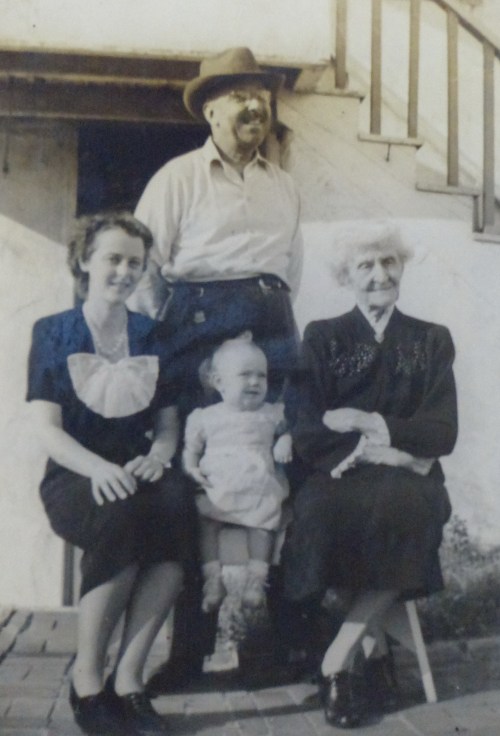
I feel sad and happy every time I look at this old photo. I’m sitting on the bench surrounded by my mother, her father, and her father’s mother. Four generations. The poem reflects how difficult I find it to become a human being. Especially when working on family-related issues.

Becoming human may be our greatest achievement. Not wealth or happiness or helping people all over the world, but the ability to become who we are from the inside out. Sort of like the velveteen rabbit, so that by the time we leave this world, we’ve become Real human beings.

Here’s to heaps of practice and a few great breakthroughs every now and then!

The photo at the top was taken by my father in 1944. We’re in California, visiting with my Grandpa Gury and my very proper Great Grandmother Gury (an immigrant from France). I’m sitting in the middle; my beautiful mother is on my right.

Elouise

© Elouise Renich Fraser, 20 February 2020
Photo taken by my father, JERenich in 1944, California

At loose ends with myself

I posted this poem with brief comments a few days after mid-term elections in November 2018. Now there’s another election coming up in November, with large stakes for all of us. My biggest challenge today is to stay on target. Not just with my health and well-being, but the reality of our current state of our disunion. I want to ignore it, and cannot. My poem and earlier comments follow.

At loose ends with myself
Wandering up and down
The stairs of my distraction
Overturning this and that
Within my overactive mind
A clock ticks relentlessly
Counting down the corridors
Of tasks undone and words
Never recorded yet dissipating
Into a gray atmosphere silent
And secretive not yet menacing
Though the thought occurs
to me that I am being unraveled
strand by limp strand falling
to the floor of unknown reality

Unraveled. A word rich with possibilities. Terrifying and welcome all at the same time. Loss of control. Change of direction. Once-blind eyes coming out of misty half-truth and patched-together personas. Fragility unbound and hanging out there. Human. Vulnerable. Out of control in the best possible way.

All this and more went through my mind today. It isn’t just about getting older. It’s about getting real. Becoming a real rabbit, a real human being, a real baby. Not just a make-believe look-alike.

Here’s to more loose ends of the fruitful kind. Those that lead to something greater than you or I could ever become on our own.
Elouise

© Elouise Renich Fraser, 7 November 2018, reposted 12 February 2020
Image of unraveling butterfly found at movestrongkbs.com

A Visitor | Mary Oliver

This haunting poem by Mary Oliver comes from a 1986 collection called Dream Work. My comments follow.

A Visitor

My father, for example,
who was young once
and blue-eyed,
returns
on the darkest of nights
to the porch and knocks
wildly at the door,
and if I answer
I must be prepared
for his waxy face,
for his lower lip
swollen with bitterness.
And so, for a long time,
I did not answer,
but slept fitfully
between his hours of rapping.
But finally there came the night
when I rose out of my sheets
and stumbled down the hall.
The door fell open

and I knew I was saved
and could bear him,
pathetic and hollow,
with even the least of his dreams
frozen inside him,
and the meanness gone.
And I greeted him and asked him
into the house,
and lit the lamp,
and looked into his blank eyes
in which at last
I saw what a child must love,
I saw what love might have done
had we loved in time.

c. 1992, Mary Oliver
New and Selected Poems, Volume One, pp. 116-117
Published by Beacon Press

Mary Oliver left home early in life to get away from an abusive situation. Now, years later, wild knocking in the dark of night reminds her of what she ran away from. If she opens the door, she must confront the man she remembers having a “waxy face” and “a lower lip swollen with bitterness.”

She ignores the pounding on the door. The knocking persists at all hours of the night. And so she “stumbles down the hall,” and the door “falls open.”

In an instant, Mary Oliver knows she has nothing to fear. In fact, it seems she’s surprised to discover her father is “pathetic and hollow.” Even his smallest dreams have frozen, and his meanness has vanished.

She greets him, invites him to come into her house, lights a lamp, looks into his “blank eyes” and sees what was needed when she was a child, plus what might have been “had we loved in time.”

The poem isn’t about Mary Oliver’s father; it’s about Mary. In the end, It affirms her decision to leave home, and acknowledges the high cost she and her father paid. With grief, and without apology.

© Elouise Renich Fraser, 12 February 2020
Book cover image found at amazon.com