Telling the Truth

connecting the dots of my life

Tag: Health and Wellbeing

What will become of us?

What will become of us?

Even the Supreme Court
Can’t fix this sickness unto death
Leaking through our doors
Streaming through our apps
Insinuating itself into every
Pore of our nation’s unchecked
Pandemic failure to thrive

Tomorrow the Electoral College
Does its business not once for all
But as an unintended trigger of
Anger, elation, false dreams and fake news
Now available 24/7 on demand
Minus warnings that lies and innuendo
Are more than dangerous to our
Collective health and welfare

This past year has been an exercise in bleakness. Which reminds me that Advent is about despair, fear, unjust rulers and religious leaders, sickness, and sorrow. In the bleak mid-winter.

When I hear people talk about “getting back to normal,” I cringe. Our track record when dealing with the aftermath of national crises, including unjust realities, isn’t great. Even the birth of Jesus of Nazareth didn’t solve everything.

We keep hearing that Covid-19 vaccines will make things better. Perhaps. Nonetheless, I’ll do what I can to support changes that matter for the good. I’ll also celebrate when we manage to get something right and just. It does happen every now and then, along with painful failures.

Between now and the end of this year, I’ll post as I’m able. Praying each of you is taking daily time to rest, meditate, and consider the impact of 2020 on your life and the lives of others.

Elouise

© Elouise Renich Fraser, 13 December 2020
Image found at christianity.com
What next? | Dear Friends

Dear Friends,

As some of you know, I’m a survivor of childhood PTSD. My father’s behavior toward me was the most difficult part of my growing-up years. It cost time, money and effort to become the woman I am today.

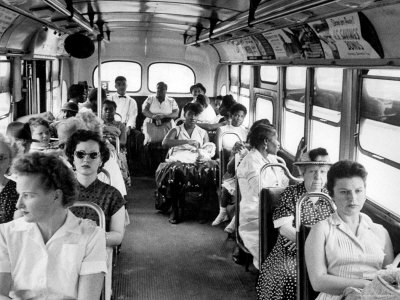
Yet I still haven’t faced what it means to be a white woman right now. Specifically, this particular white woman whose childhood set the table for racial blindness. It’s ironic. Nearly every day of my life from age 7 ½ to 14 I rode through colored town, and witnessed the realities of colored life in the Deep South.

My father’s approach to Deep South manners amounted to ‘be polite, smile a lot, and just keep going.’ Don’t ask questions, don’t debate anything, and remember you’re the eldest daughter of the white preacher who speaks from time to time at the Colored Community House.

Still, I was inquisitive. I remember asking my father more than once why things were this way. I’d lived most of my early life on the West Coast. I don’t remember seeing black people in Seattle or in Southern California.

According to my father, it all came down to the way colored people ‘like’ to live. Or what they found ‘most comfortable.’ Or how much money they made, or how they spent it. That was their choice.

Every school day during my grade school years, my father or a neighbor drove us through colored town on our way to and from school in the city. Colored town was about a quarter of a mile from our house.

Yet my father never talked with us about why colored town was there in the first place, why most of the houses needed repair, or what this meant in the larger picture of the Deep South. Perhaps he’d never looked into it.

I’ve decided I can’t avoid looking into it. Not as an academic exercise, but to face what happened before, during and after Jim Crow years, and how I’m now part of the problem.

Thanks for reading. This is a busy month for everyone, so I appreciate your visits even more than usual!

Gratefully,
Elouise

© Elouise Renich Fraser, 8 December 2020
Photo of segregated city bus in the 1950s found at aapf.org

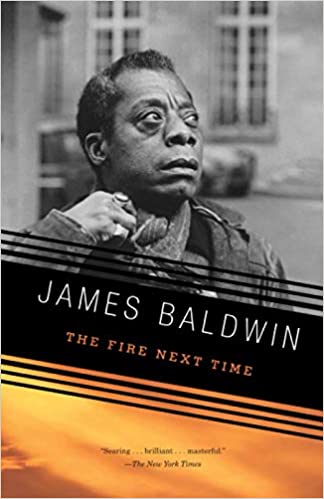
James Baldwin | The Fire Next Time

In the mid-1960s I first read James Baldwin’s The Fire Next Time, a collection of two published pieces. Each deals with how to survive as a black person in the USA. The first is a painfully realistic letter to James Baldwin’s nephew. The second describes Baldwin’s own struggle as a black Christian, beginning at age 14.

Now, at the end of 2020, I’m reading Baldwin’s small book again. Sadly, most white citizens of the USA still haven’t figured out how to do the right thing by our black citizens.

Instead, we’ve formed factions for which we ‘need’ an enemy (who isn’t necessarily our enemy). Something or someone to squabble about. A diversion from painful realities. Sadly it seems to offer a way of winning, even though we’re all losing.

Remember divide and conquer? As children, we played it all the time.

Sadly, people in power love to see us fighting each other instead of fighting against an unjust system in which some human beings continue to pay an unjust price. Given our history, it seems white citizens would rather fight each other than deal with injustice to people of color.

Early in his second essay, Down at the Cross, James Baldwin describes our perennial problem. I’ve highlighted the line that caught my attention.

There appears to be a vast amount of confusion on this point, but I do not know many Negroes who are eager to be “accepted” by white people, still less to be loved by them; they, the blacks, simply don’t wish to be beaten over the head by the whites every instant of our brief passage on this planet. White people in this country will have quite enough to do in learning how to accept and love themselves and each other, and when they have achieved this—which will not be tomorrow and may very well be never—the Negro problem will no longer exist, for it will no longer be needed.

The Fire Next Time, pp 21-22;
First published by The Dial Press, NY, 1963
Vintage International Edition first published 1993

If this is the biggest question we white citizens face, it doesn’t matter which way we voted. What matters is whether we can learn to “accept and love ourselves and each other.”

We don’t need our perennial “Negro problem” in order to feel good about ourselves. Why not? Because this never was a “Negro problem.” It’s been a White problem from the very beginning.

Highly recommended, even if you read it way back when.
Elouise

© Elouise Renich Fraser, 3 December 2020
Book cover image found at amazon.com

Farewell, November

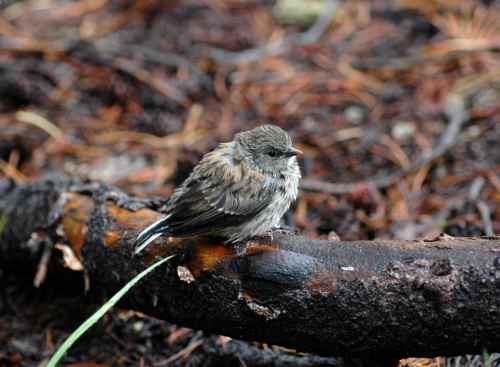
yew branches thrash and bend
blown from every direction
the bird feeder flails

relentless nature
announces the arrival
of another day

sitting beside me
a small heater hums softly
to rain drops falling

What a strange month this has been. Lots of flailing and thrashing. Too much bluster, and too little calm. Especially in our news cycles. Even though November is my birthday month, I’m happy to bid it farewell.

Do I miss the energy of 2020 Election bluster? No. True, it made for breathless news cycles. It also made for unfiltered offloading of frustration, despair, angst and anger. In the end, however, it reinforced my belief that hope doesn’t come from any one of us. It comes from the One who sees everything without blinking an eye.

So yes, there’s a method to the madness of this world. Still, I’d rather have it interpreted from above than below. Today’s unhinged weather reminds me that though I’m not in charge, I’m still alive.

Just now the thunder crashed closer to home than I like. Happy Monday!

Elouise

© Elouise Renich Fraser, 30 November 2020
Photo found at toughlittlebirds.com

Token presence and absent voices

Token presence rarely hides
absent voices in weighty matters
of life and death

Games rigged from the start
of nothing new are as deadly
as no token at all

Yet who am I to question
privileged presence in
the land of the free and the brave?

Yes, I’m a white woman.

And yet…I know the haunting feeling of being chosen at least partly because we ‘need’ a woman (of any color) in order to validate our committee, our faculty, our administration. Just think of how this will impact our promotional material! All for the price of less than a white male.

Potential money makers. That’s what women were and too often still are. A way of showing the world our school, our company, our church is doing the right thing. Put another way, you can trust us with your daughters of any color.

I don’t mean to sound cynical. I mean to be clear. Especially now, in this transition from Trump to Biden. Tokenism still happens every day at every level of hiring and top-level appointments. Especially here in the USA, land of the “free” and home of the “brave.”

We live with the sad and sorry outcomes of decisions made and unmade in light of political, personal, and financial considerations. It isn’t just the White House. It’s also businesses, local churches, hospitals, educational institutions, community leaders, and who gets to drive the garbage truck and who doesn’t.

After all, we don’t like it when things get overly-complicated or contentious. Especially in our own small worlds. I’m praying our new administration won’t fear complex, contentious discussion that broadens our small worlds, and brings us closer to other worlds.

Elouise

© Elouise Renich Fraser, 28 November 2020
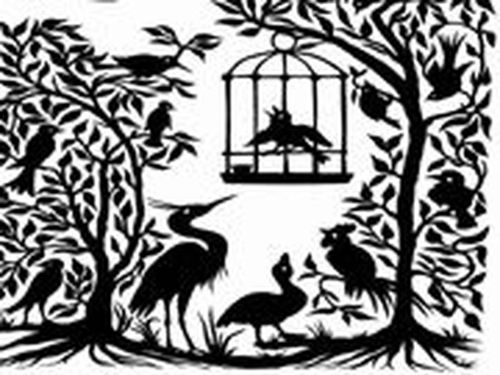
Image found at medium.com

Caged Bird | Maya Angelou

From the introduction: “…This poem deserves to be read slowly and carefully. In what it implies about the difference between the caged bird and a free bird, it becomes one of Angelou’s most complex and most important poems.” My comments follow.

Caged Bird

A free bird leaps
on the back of the wind
and floats downstream
till the current ends
and dips his wing
in the orange sun rays
and dares to claim the sky.

But a bird that stalks
down his narrow cage
can seldom see through
his bars of rage
his wings are clipped and
his feet are tied
so he opens his throat to sing.

The caged bird sings
with a fearful trill
of things unknown
but longed for still
and his tune is heard
on the distant hill
for the caged bird
sings of freedom.

The free bird thinks of another breeze
and the trade winds soft through the sighing trees
and the fat worms waiting on a dawn-bright lawn
and he names the sky his own.

But a caged bird stands on the grave of dreams
his shadow shouts on a nightmare scream
his wings are clipped and his feet are tied
so he opens his throat to sing.

The caged bird sings
with a fearful trill
of things unknown
but longed for still
and his tune is heard
on the distant hill
for the caged bird
sings of freedom.

© 1995 by Maya Angelou
Published by Sterling Children’s Books in 2013
Maya Angelou, Poetry for Young People, p. 34

Tomorrow we celebrate Thanksgiving, a national holiday. It encourages us to eat a lot of food, connect with our families, and think highly of our nation. This includes being grateful for the peaceful Pilgrims, the nice Indians who shared the first feast, and freedom ringing from every mountainside.

Yet what about the slave trade that began in this part of the world in the 1500s? What about seen and unseen iron bars, clipped wings and tied feet?

I’ve always felt reluctant about Thanksgiving. It comes close to my birthday. Sometimes the two got lumped together, with my birthday losing out to the Thanksgiving feast. Still, there was good food on the table, and my father’s prayers always spoke highly of our wonderful country and its many freedoms.

I love this nation. Yet I don’t know what to do with myself as an ‘uncaged bird.’

I’ve always felt socially awkward, not fully at ease in large groups or crowds. Perhaps my feelings aren’t off-tune, given our largely unknown, unowned and unexamined history. To say nothing of caged birds still singing of freedom they don’t have.

Elouise

© Elouise Renich Fraser, 25 November 2020
Image found at KLTV.com

The Cross and the Lynching Tree

breathless morning sky
fiery orange shades of red
light pierces darkness

Often we live and die in self-imposed darkness. Not the dark of night, but the darkness of our understanding, our motives and our ignorance.

For several weeks I’ve been reading James Cones’ latest book, The Cross and the Lynching Tree. It’s a tough read. Cone challenges my white understanding of the role too many Christian churches and politicians have played in the history of lynching.

When I grew up, Jesus’ death was all about appeasing God’s anger for our sin. Dying as an innocent on an ordinary criminal’s cross was payment for our sin. Yes, we deserve to die, but Jesus died for all of us, so that God’s anger toward us wouldn’t be our undoing.

If, however, Jesus’ death was a lynching, what does that mean for Christianity in the USA?

According to our history of lynching, white Christians have managed to do to black women, men, children and unborn babies what Roman and Jewish leaders did to Jesus of Nazareth. Yes, it was death on a Roman cross/tree. Yes, it was death on a White cross/tree.

Now, in our supposedly more enlightened age, we think we’re beyond lynching. After all, Jim Crow style lynching is illegal.

Is it? Really? Look around. We’ve developed neat, more anonymous ways of doing the deed. Out of sight and out of mind, except for the occasional uproar over what’s been happening for decades.

White fear and a deeply ingrained false sense of superiority lie at the heart of our White problem. It isn’t about God’s anger at sin, so-called “Christian” values, or even our own wellbeing.

Each morning, like clockwork, we’re invited to let light pierce the darkness of our understanding. It doesn’t take much light. Just a candle here and there in a window will do. That, plus time to appreciate the light we’re offered each day, and a trustworthy guide to prick our consciences and challenge our sight.

Thanks for listening.
Elouise

© Elouise Renich Fraser, 23 November 2020
Photo found at unsplash.com

When the Roses Speak, I Pay Attention | Mary Oliver

Here’s my pick for today: a lovely poem from Mary Oliver about life and death. Why today? Because it’s my 77th birthday! See my comments below.

When the Roses Speak, I Pay Attention

“As long as we are able to
be extravagant we will be
hugely and damply
extravagant. Then we will drop
foil by foil to the ground. This
is our unalterable task, and we do it
joyfully.”

And they went on, “Listen,
the heart-shackles are not, as you think,
death, illness, pain,
unrequited hope, not loneliness, but

lassitude, rue, vainglory, fear, anxiety,
selfishness.”

Their fragrance all the while rising
from their blind bodies, making me
spin with joy.

© 2006 by Mary Oliver, found on p. 9 of Thirst 
Published by Beacon Press 2006

Rue: regret
Lassitude: fatigue, weariness, apathy
Vainglory: excessive vanity, inordinate self-esteem

I know it isn’t spring or summer, but neither do the roses. They do their thing, then disappear until it’s time to start all over.

Death is making the rounds these days. Not just death that follows old age, but death from Covid-19, suicide, broken hearts, incurable illnesses, street fights, unleashed hatred or anger, and more. Still, death isn’t our worst enemy.

We’re not on earth to live forever. We’re here to discover and fulfill our earthly purpose as human beings. Welcoming the stranger, accepting our own strangeness, giving and receiving help, taking our personal histories seriously.

In some ways, the roses have it easier. It isn’t easy to be human. We need each other if we’re going to thrive.

Still, like roses, we’re meant to be extravagant. Giving, giving, and giving again. Not obsessively or compulsively, or because we feel guilty, or for personal gain. But as an overflow of beauty and grace.

Think about it! Fragrant roses, baby birds, clouds, sunrise and sunset, fields of tulips, new-fallen snow, and gnarled old tree trunks soaring toward the sky. All this and more with thanks to our Creator.

Elouise

© Elouise Renich Fraser, 20 November 2020
Photo found at etsy.com

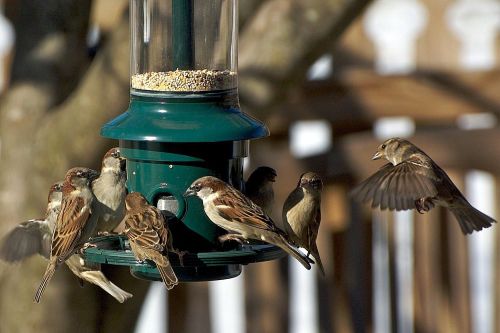
squabbling sparrows

outside my window
squabbling sparrows fight for food –
silence reigns within

Onlooker. That’s what I am these days. Not when it comes to local stuff, but the other stuff. Frankly, I’d rather be a sparrow right now than a politician or public official.

Whatever this year has been on the outside, I’m grateful for time to examine my life as a white woman. All without the expectations or interruptions of ‘normal’ daily life.

Put another way, I don’t want to be out there squabbling over the 2020 Election, or suddenly find myself without a job or a sensible plan for the future.

Being a senior citizen has its drawbacks. For one, we don’t get much overt respect, especially in our modern-day young and (especially) white culture. When respect happens, it tastes really good. So far, D and I have been able to navigate this bizarre Covid-19 world. It helps that we’re both introverts with tons of books, and the desire to read and write.

Back to the standoff  and squabbling that’s playing out before our eyes. It’s deadly. No good will come of it. I’m praying justice will be done when Mr. Trump is no longer POTUS, and he can no longer evade courts of law. Still, the behavior of his extremely disaffected followers isn’t a promising sign.

While watching the sparrows squabble with each other, I heard and saw a large blue jay squawk its worst as it landed on the bird feeder and sent all the sparrows fleeing. Everything wasn’t great before the male jay arrived, but at least there was food on the table. And no big bullies in sight.

Elouise

© Elouise Renich Fraser, 19 November 2020
Photo found at thespruce.com

empty wasp nest

swaying in chill breeze
an empty wasp nest hangs
ready for nesting birds

D took this photo in September 2020. So now you must imagine the tall shrub leafless. Also imagine the virtually but not totally wild possibility that birds might make a nest in one of these.

We almost took the wasp nest down this fall. Then I found out Paper Wasps don’t return to their meticulously crafted nests. If this nest remains intact through the winter (it probably won’t), could it become a welcome bird house next Spring? Probably not, but I can dream.

The now empty nest hangs just outside my office window. When I first saw it, I freaked out. At the very least, it was an eyesore. At worst, these diligent wasps might attack me the next time I step onto the front porch!

When I’m out walking with D, we see these nests in tall trees around our neighborhood, always from a distance. Right now I could open my office window and tap this one, now abandoned, with a yard-long ruler.

You may well be wondering….

Is this a diversion from the news of the day? Probably. But I’m enjoying it immensely. Think about it! There may be more hope for the future hanging outside my office window, than there is inside the White House today.

Hoping your Wednesday is relatively peaceful, all things considered.
Elouise

© Elouise Renich Fraser, 18 November 2020
Photo taken in September 2020 by DAFraser