Telling the Truth

connecting the dots of my life

Tag: Interpretation of Poetry

I had been hungry, all the Years —

outside-looking-in

How hungry are you? What does it mean to be hungry? Emily Dickinson’s reflections give me pause. My comments follow.

I had been hungry, all the Years –
My Noon had Come – to dine –
I trembling drew the Table near –
And touched the Curious Wine –

‘Twas this on Tables I had seen –
When turning, hungry, Home
I looked in Windows, for the Wealth
I could not hope – for Mine –

I did not know the ample Bread –
‘Twas so unlike the Crumb
The Birds and I, had often shared
In Nature’s – Dining Room –

The Plenty hurt me – ‘twas so new –
Myself felt ill – and odd –
As Berry – of a Mountain Bush –
Transplanted – to the Road –

Nor was I hungry – so I found
That Hunger – was a way
Of Persons outside Windows –
The Entering – takes away –

c. 1862

Emily Dickinson Poems, Edited by Brenda Hillman
Shambhala Pocket Classics, Shambhala 1995

In the 1950s, we drove the same route every day on our way to grade school in Savannah, Georgia. Over the years, two large housing developments began going up just outside the city limits. Young couples with growing families Read the rest of this entry »

“Hope” is the thing with feathers —

emily-dickinson-hope-is-the-thing-with-feathers-pinterest

Emily’s poem for today is a gem. A gift for anyone who feels distressed about the state of this world or what lies ahead in 2017. My comments follow.

“Hope” is the thing with feathers –
That perches in the soul –
And sings the tune without the words –
And never stops – at all –

And sweetest – in the Gale – is heard –
And sore must be the storm –
That could abash the little Bird
That kept so many warm –

I’ve heard it in the chillest land –
And on the strangest Sea –
Yet, never, in Extremity,
It asked a crumb – of Me.

c. 1861

Emily Dickinson Poems, Edited by Brenda Hillman
Shambhala Pocket Classics, Shambhala 1995

I hear Emily saying something like this.

  • I can’t manufacture Hope on my own or even with my friends. Sometimes people exhort me to have hope. I can’t. It’s already there. Like a little bird perched in my soul. Singing its heart out nonstop, without words or a sheet of music in front of it. Am I listening?
  • Hope isn’t linked to the time of day or night. Or to the weather and what the outlook is for tomorrow. It’s there regardless of circumstances, singing its ‘tune without the words.’ Sweet, strong, welcome, heartwarming and life affirming.
  • It seems nothing can shame or humiliate this little thing with feathers. It doesn’t shut up and it doesn’t go slinking off in defeat or humiliation. It sings out with sweet clarity, especially when things look most hopeless.
  • Hope keeps our spirits alive, ‘warm’ even in the ‘chillest land.’ It doesn’t offer us a plan of action or a map that will get us through hard times. Neither does it pretend times aren’t hard. Instead, it accompanies us through the hard times, lifting its voice in a way that lifts our spirits.
  • Best of all, Hope is a gift. It doesn’t ask anything of us, even when things get really rough. Not a crumb, not a dime. In fact, should we decide things are hopeless, I think Emily’s little Bird would just keep singing its heart out on our behalf. It doesn’t even demand that we listen.

One more thought. Whatever Hope is, it isn’t denial. In fact, I think Emily’s poem doesn’t work if Hope is supposed to erase or numb reality. Nor is Hope a crutch to get us from here to there with empty smiles pasted on our faces.

I believe Hope can open our eyes to see possibilities precisely where and when we least expect them. Often with people we least expected to meet or invite into our lives. Little Birds have exceptional eyes, not just exceptional songs.

My prayer today is that we’ll listen to Hope and be alert for unexpected possibilities, especially in what seem to be gale-force winds already on the rise.

© Elouise Renich Fraser, 7 January 2017
Image found at pinterest.com

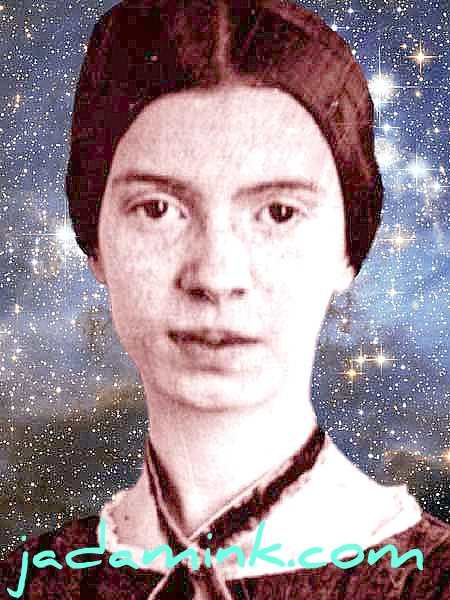
Happy Birthday, Emily Dickinson!

emily-dickinson-stars

Yes, it’s Emily’s 154th birthday anniversary today! I’d hoped the Google Gang would mark the day with one of their short and fancy celebration videos for all us Googlers. Too bad. They missed their chance.

I barely know Emily. Read the rest of this entry »

I like to see it lap the Miles —

emily-dickinson-book-cover

How’s your imagination? Here’s a riddle from Emily Dickinson. Can you guess the answer?   Read the rest of this entry »

They shut me up in Prose —

bird-flying-free

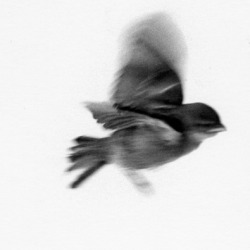
In this somewhat grimly humorous poem, Emily compares her childhood as a ‘little Girl’ with the way ‘They’ treat her as an adult. My comments follow.

They shut me up in Prose –
As when a little Girl
They put me in the Closet –
Because they liked me “still’ –

Still! Could themselves have peeped –
And seen my Brain – go round –
They might as wise have lodged a Bird
For Treason – in the Pound –

Himself has but to will
And easy as a Star
Abolish his Captivity –
And Laugh – No more have I –

c. 1862

Emily Dickinson Poems, Edited by Brenda Hillman
Shambhala Pocket Classics, Shambhala 1995

What a great word — ‘still.’ Read the rest of this entry »

I’m ceded — I’ve stopped being Theirs | Emily Dickinson

harvest-moon-sept-2016

I’m drawn to this poem from Emily Dickinson for two reasons. First, I sometimes call myself Queen Elouise. Second, it captures the difference between belonging to Them and belonging to Grace. In my view, it describes what we need today in this world of stunning beauty, visible misery, and stunning injustice. My comments follow.

I’m ceded – I’ve stopped being Theirs –
The name They dropped upon my face
With water, in the country church
Is finished using, now,
And They can put it with my Dolls,
My childhood, and the string of spools,
I’ve finished threading – too –

Baptized, before, without the choice,
But this time, consciously, of Grace –
Unto supremest name –
Called to my Full – The Crescent dropped –
Existence’s whole Arc, filled up,
With one small Diadem.

My second Rank – too small the first –
Crowned – Crowing – on my Father’s breast –
A half unconscious Queen –
But this time – Adequate – Erect,
With Will to choose, or to reject,
And I choose, just a Crown –

c. 1862

Emily Dickinson Poems, Edited by Brenda Hillman
Shambhala Pocket Classics, Shambhala 1995

Emily’s poem reminds me of the biblical exhortation to put away childish things. Here, Emily is ready to put away her childhood name—the name They chose and dropped on her face at her infant baptism.

In fact, They can put that name (Princess?) in the attic trunk along with childhood toys and activities she no longer needs. Perhaps they served her well, but they have no place in her new, freely chosen baptism into the fullness of her personhood.

And so Emily announces her conscious Declaration of Independence. Her rebaptism is possible because of Grace, not because of someone else’s past decision for her, or their approval of her decision now. This choice is hers alone, made possible by Grace! Not forced, not from shame or blame, and not as a power move.

This independence won’t come without clarity of speech and action. Even more difficult, since it’s driven by Grace this means clarity driven by the Grace of truth, not by anger or a desire for revenge or retribution.

I respect you, and I am not your possession. I’m not interested in childish approaches to life. The name you gave me no longer fits. I don’t want or need your affirmation. I have a new, fuller Calling. I’m not the silver sliver of a Crescent moon. I’m a full-orbed Harvest Moon, signified by this ‘one small Diadem’ I now wear.

I’ve outgrown my childish identity. Back then I was at best a half conscious Queen. Today I’ve come of age. No more baby crown, and no more cute crowing or baby talk. I am Adequate and Erect. I don’t want or need the kingdom, fancy parades, or pandering obeisance. I’m content with a simple Crown and telling the truth in my own voice, as I see it.

Need I say Queen Elouise again? Now, more than ever, I long to be

…Adequate – Erect –
With Will to choose or to reject,
And I choose, just a Crown –

© Elouise Renich Fraser, 15 November 2016, lightly edited and reposted 18 June 2021
Photo of Harvest Moon by Robin Osbon found at almanac.com

The Star’s whole Secret —

Stars over Lake Irene, Rocky Mountain National Park, Erik Stensland Photo

For over a month I’ve been going back to this poem from Emily Dickinson, trying to figure it out. Sometimes I think I get it. Other times I feel like giving up. My comments follow.

The Outer – from the Inner
Derives its Magnitude –
‘Tis Duke, or Dwarf, according
As is the Central Mood –

The fine – unvarying Axis
That regulates the Wheel –
Though Spokes – spin – more conspicuous
And fling a dust – the while.

The Inner – paints the Outer –
The Brush without the Hand –
Its Picture publishes – precise –
As is the inner Brand –

On fine – Arterial Canvas –
A Cheek – perchance a Brow –
The Star’s whole Secret – in the Lake –
Eyes were not meant to know.

c. 1862

Emily Dickinson Poems, Edited by Brenda Hillman
Shambhala Pocket Classics, Shambhala 1995

The first few times I read this poem I wanted it to say something like this: Read the rest of this entry »

I died for Beauty —

emily-i-died-for-beauty

This poem from Emily Dickinson gnaws at me. Is it a poem of despair or encouragement? And whose voices are these, anyway? My comments follow.

I died for Beauty – but was scarce
Adjusted in the Tomb
When One who died for Truth, was lain
In an adjoining Room –

He questioned softly, “Why I failed”?
“For Beauty”, I replied –
“And I – for Truth – Themselves are One –
“We brethren, are”, He said –

And so, as Kinsmen, met a Night –
We talked between the Rooms –
Until the Moss had reached our lips –
And covered up – our names –

c. 1862

Emily Dickinson Poems, Edited by Brenda Hillman
Shambhala Pocket Classics, Shambhala 1995

“I died for Beauty….” Was this a literal death? No. It seems more like a dream. Emily is dead. Yet she doesn’t dwell on Death. Instead, she begins with that for which she died. Beauty.

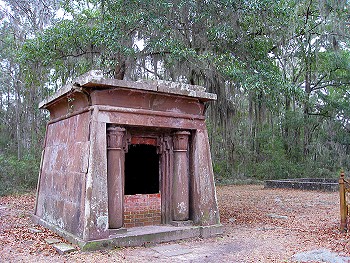
Emily is in the Tomb. She didn’t get here on her own. Others laid her here. Adjustments have just been made (theirs of her body? hers to her new reality?), when she notices she has company.

Next to her, in the adjoining Room, she has a new neighbor. She recognizes “the One who died for Truth.” She knows he already died for Truth. How long ago was that? Is she surprised to find this One laid to rest in the Room next to hers? We don’t know.

The One who died for Truth initiates conversation with her. Not in a grand, authoritative voice, but softly. He wants to know why she failed. She says it was for Beauty.

He immediately acknowledges he failed for Truth, and declares the two are One—Beauty and Truth. Which makes them kin, brother and sister. Not enemies or strangers.

What does it mean to fail? Emily’s response seems to rule out her physical health failing and leading to death.

Perhaps this means failure after a long, valiant battle. Hers on behalf of Beauty; his on behalf of Truth. Not necessarily the end of the battle, but the end of what Emily and the One could do in their lifetimes.

Then again, I wonder whether these dead were silenced by the opposition because they didn’t like what they heard and saw in Emily and the One. At the least, perhaps they died of heartbreak or despair due to apathy about Beauty and Truth.

Perhaps. Yet here’s how I imagine it.

  • Emily failed because she was overcome by the power of Truth in Beauty. Truth found in natural Beauty, in all creation and all creatures great and small. Especially in those deemed small and less than great or good.
  • The One who already died failed because he was overcome by the power of Beauty in Truth. Beauty that dignifies all creation and all creatures great and small, reminding him of the One who created this world. Especially those deemed small and less than great or good.

Truth and Beauty are One. They aren’t many, and they aren’t at odds with each other. In fact, together they are so powerful that they can’t be silenced, even in these newly occupied Tombs.

And so the quiet, unrecorded conversation between Beauty and Truth goes on until the moss creeps up over the occupants’ Lips and, in a surprise ending, covers up their names, not just their Lips. A sign, perhaps, that Beauty and Truth have a mysterious life of their own.

© Elouise Renich Fraser, 15 October 2016
Photo found at poetrygrrrl.com