Telling the Truth

connecting the dots of my life

Tag: Memories

For Horace O. Russell
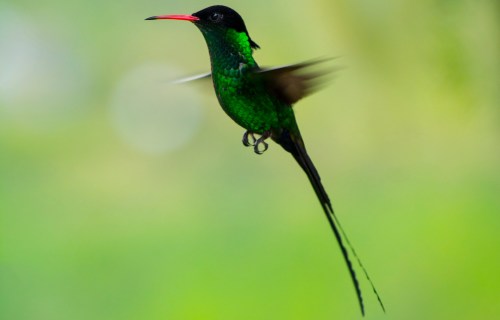
National Bird of Jamaica – the ‘Doctor Bird’ found only in Jamaica

Grief arrived last night
on the other end of a phone call
from a dear friend

Grief not just for us and the family
but for the world our friend knew and loved
from the bottom of his generous heart

Colleague, Brother, Church Historian
Master of all things Jamaican
Wise and Eternally Optimistic

I hang up the phone
and weep for us and for this world
made better by your faithful presence

It’s impossible to capture in words the worldwide reach of our colleague’s life.

Horace O. Russell served the seminary as Dean of the Chapel, and Professor of Historical Theology. I worked with him as a teaching colleague and as an administrator. He was also the retired Senior Pastor of Saints Memorial Baptist Church in the Greater Philadelphia area.

Dr. Russell was Jamaican by birth, and world citizen by choice. He and his gifted British wife made their mark not just on the seminary, but on the church worldwide. Thankfully, his wife and another family member were with him when he left this world.

Today I’ve been thinking about Dr. Russell’s generous, optimistic support for me, and about the senior seminar we co-led more than once.

During these seminars, Dr. Russell sometimes shared case histories he’d written about his pastoral work in Jamaica. They sometimes made life in these United States seem a bit dull.

The actual outcome of each case wasn’t revealed until each student worked with it and shared what she or he would do next, and why. Never a dull moment, and always plenty of surprises at the end. His ability to enlarge our vision was one of his many gifts to the seminary.

Fortunately or unfortunately, Dr. Russell carried a small camera at all times (so it seemed to me). Usually he didn’t wait for people to pose. Informal was the way to go. No matter what we looked like in the photos, he was generous with prints of these historical records. Here’s where we were on this date; this is what we were doing; and this is what we looked like.

Today I’ve been going through my collection of his photos, torn between gratitude and grief. Grateful to know his suffering has ended, and that he was not and is not now alone.

Elouise

© Elouise Renich Fraser, 6 April 2021
Photo of Jamaica’s national bird found at jamaicanconsulate.rs

Easter Lilies and Justice

Easter Lilies

This story still makes me teary. As a nation, we haven’t figured out how to ensure justice for today’s children. Easter offers an opportunity to ponder this tragedy and ask ourselves what we’re doing on behalf of our children. All of them. Diane is Sister #3 in our family. She was born on Easter Sunday in 1949, and died of ALS in February 2006.

Dear Diane,

Easter Sunday always reminds me of you. Not just because you were born on Easter Sunday in 1949, but because the Easter lilies at church always take me back to your funeral service and heaps of Easter lilies around the casket at the front of the church.

Today was no different. I walked in, saw the Easter lilies and tulips, and dissolved into tears as we sang the first hymn. It all came flooding back, along with a story Dad told me when he was in hospice care.

The story was about you and his flower garden in our back yard. Maybe you remember it. That was when we lived on the river. The flower garden had tons of flowers, including Easter lilies and Dianthus, all planted by Dad. He used to say the Dianthus were there because they reminded him of you.

Dianthus

One day Dad noticed that some of his special Easter lilies were missing from his flower garden. When he went back into the house he found them–in flower vases and glass jars here and there!

It didn’t take long to find out you had done this dastardly deed. He said you listened quietly without tears. Then as you turned to walk away you asked, “Where are the flowers for the children?” Cut him to the quick, he said. And I have to admit, he had tears in his eyes as he told the story.

Do you remember that square patch of flowers near the rear of the back yard? It wasn’t very large. Maybe 5 feet wide. It had posts with twine supports for some of the flowers. Most were bright zinnias.

Dad told me, with tears in his eyes, that he planted that flower garden just for the children. We could pick them anytime, as many as we wished. All because you had the guts to ask the most important question of all. “Where are the flowers for the children?”

Today I wonder the same thing. Sadly, we’ve gone downhill when it comes to things for the children. Flowers for the children tend to show up after children or teenagers are killed with guns. Survivors are asking all of us so-called grownups, “Where are the safe places for the children?”

That’s another subject, except for this: It takes guts to stand up and fight for the rights of children and young people. I’m rooting for the children and young people.

Love and hugs, plus Happy Easter and Happy April Birthday—not that you’re counting anymore!
Elouise

©Elouise Renich Fraser, 1 April 2018, adapted from an earlier post, reposted 2 April 2021
Photo credit: wallpapersup.net (Easter Lilies); robsplants.com (Dianthus)

What we don’t have

In the opening pages of his Journal of an Ordinary Grief, Mahmoud Darwish writes these haunting words:

What are you doing, father?

I’m searching for my heart, which fell away that night.

Do you think you’ll find it here?

Where else am I going to find it? I bend to the ground and pick it up piece by piece just as the women of the fellahin pick up olives in October, one olive at a time.

But you’re picking up pebbles!

Doing that is a good exercise for memory and perception. Who knows? Maybe these pebbles are petrified pieces of my heart. And even if they’re not, I would still have gotten used to the effort of searching on my own for something that made me feel lost when it was lost. The mere act of searching is proof that I refuse to get lost in my loss. The other side of this effort is the proof that I am in fact lost as long as I have not found what I have lost.

Mahmoud Darwish, Journal of an Ordinary Grief, pp 3-4. Translated from Arabic, with a foreword by Ibrahim Muhawi. Archipelago Books, English translation published in 2010; first published in Beirut in 1973.

When I read these words I can’t help thinking about our national crisis. Not Covid-19, or even political wars waging night and day in cities and towns everywhere.

Our most pressing crisis is our identity. Who are we as a nation?

Mahmoud Darwish’s father struggles with an “ordinary grief.” Ordinary because the grief never goes away. It’s the grief of a Palestinian whose heart has been broken. The grief of an old man without a country. Grief that won’t let go of memories because they’re the last link to what once home. The place where hearts were nourished and cherished. Memories now represented by pebbles. Bits and pieces of stone standing in for what was lost.

The USA is no paradise. Those brought here or captured against their will have already attested to this.

They and their descendants are still looking for something. Dare we join them in their search? Stone by stone, bullet by bullet, bone by bone. Small connections to the past, and reminders of what they and we still don’t have: liberty and justice for all.

© Elouise Renich Fraser, 3 March 2021
Painting of old man found at lettalkknowledge.wordpress.com

I want to go back

They say memories are
what really matter
But I want to go back

to classrooms shaped by
women and men from afar
Places I’ve never visited

How narrow we’ve become today
in our virtually segregated schools and
neighborhoods overflowing

with unfamiliar cuisines or clothes
and customs that give us away as strangers
not friends or even neighbors

Years of serving seminarians in
multinational multiethnic classrooms
turned my small world upside down

You helped make me the woman
I now am sitting here at home
wishing for just one more class

So you can show up and teach me
What I need to know today
Before it’s too late to dream

I’m feeling a bit nostalgic these days. Also heavy-hearted about what we’re becoming as a nation. It seems curiosity about the world and about people who don’t look, act or vote the way we do isn’t as interesting as it used to be. In fact, it seems easier to ignore each other. Look the other way.

When I was still teaching at seminary, diversity made everything more exciting. Granted, it wasn’t always easy for any of us.

Nonetheless, it opened up opportunities to re-examine our assumptions and broaden our knowledge. Not just about the subject matter, but about the way we dealt with each other.

Are we losing touch with our humanity? Is that possible?

I don’t want to be a robot, or a puppet on strings controlled by other human beings. Or by the ups and downs of the stock market, or the latest headlines in scandal magazines.  Nor do I want to be locked into my own small world because of fear or unexamined assumptions.

This morning I received my second Covid-19 shot. The room was filled with people who didn’t look or act like me. I wonder. Would they be interested in an informal discussion group? There’s so much I wish I understood better…..

Elouise

© Elouise Renich Fraser, 1 March 2021
Image found at ceu.edu

The Life we have is very great – revisited

Here’s a second look at Emily Dickinson’s poem about Life, Infinity, and the Human Heart. A good poem for today when we’re missing family members or friends for any reason, plus Covid-19, political standoffs, hate crimes, or the harsh reality of wildfires, avalanches and hurricanes. My lightly edited comments follow.

The Life we have is very great.
The Life that we shall see
Surpasses it, we know, because
It is Infinity.
But when all Space has been beheld
And all Dominion shown
The smallest Human Heart’s extent
Reduces it to none.

c. 1870

Emily Dickinson Poems, Edited by Brenda Hillman
Shambhala Pocket Classics, Shambhala 1995

It doesn’t matter how many worlds we discover beyond this world. It doesn’t matter how far the distance is from here to there and beyond. It doesn’t even matter that the universe is still expanding.

None of this, as surpassingly great or expansive as it may be, holds a candle to the smallest of human hearts.

According to Emily, the Life we now have is ‘very great.’ The Life we’ll have beyond this Life is even greater. Yet it’s infinitesimal compared to what our hearts can see and grasp right now.

Emily describes the heart’s capacity to love Life. Especially when we can’t see those we love. She suggests that the expansiveness of one small human heart outshines infinity itself.

Yes, it’s fascinating to explore the universe, what may lie beyond it and how it’s ordered. Yet what we discover externally will never match the capacity of one small human heart to connect with another human heart.

It doesn’t matter whether that heart is what we call dead or alive, here or there, or somewhere in between. Nor do we need to understand exactly what Space encompasses, how it is governed, or where Infinity resides.

This isn’t about measuring or mapping Life beyond our present Life. Or discovering where those we love now reside.

It’s about connections. All it takes is one small human heart to leap beyond unmapped, immeasurable boundaries, expanding outward in a heartbeat to enfold the hearts of those we love. No matter where they or we may be.

© Elouise Renich Fraser, 28 May 2017, lightly edited and reposted 10 December 2020
Image taken from Hubble Spacecraft, found at nasa.gov

What next? | Dear Friends

Dear Friends,

As some of you know, I’m a survivor of childhood PTSD. My father’s behavior toward me was the most difficult part of my growing-up years. It cost time, money and effort to become the woman I am today.

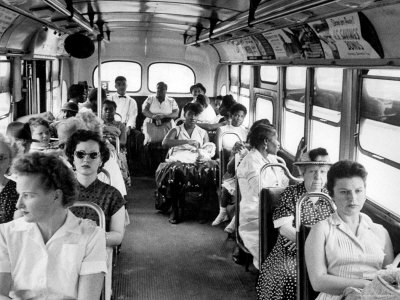
Yet I still haven’t faced what it means to be a white woman right now. Specifically, this particular white woman whose childhood set the table for racial blindness. It’s ironic. Nearly every day of my life from age 7 ½ to 14 I rode through colored town, and witnessed the realities of colored life in the Deep South.

My father’s approach to Deep South manners amounted to ‘be polite, smile a lot, and just keep going.’ Don’t ask questions, don’t debate anything, and remember you’re the eldest daughter of the white preacher who speaks from time to time at the Colored Community House.

Still, I was inquisitive. I remember asking my father more than once why things were this way. I’d lived most of my early life on the West Coast. I don’t remember seeing black people in Seattle or in Southern California.

According to my father, it all came down to the way colored people ‘like’ to live. Or what they found ‘most comfortable.’ Or how much money they made, or how they spent it. That was their choice.

Every school day during my grade school years, my father or a neighbor drove us through colored town on our way to and from school in the city. Colored town was about a quarter of a mile from our house.

Yet my father never talked with us about why colored town was there in the first place, why most of the houses needed repair, or what this meant in the larger picture of the Deep South. Perhaps he’d never looked into it.

I’ve decided I can’t avoid looking into it. Not as an academic exercise, but to face what happened before, during and after Jim Crow years, and how I’m now part of the problem.

Thanks for reading. This is a busy month for everyone, so I appreciate your visits even more than usual!

Gratefully,
Elouise

© Elouise Renich Fraser, 8 December 2020
Photo of segregated city bus in the 1950s found at aapf.org

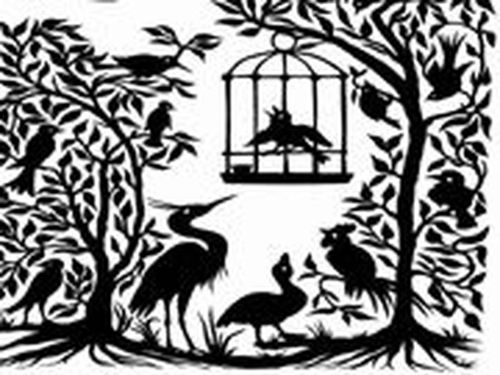
Caged Bird | Maya Angelou

From the introduction: “…This poem deserves to be read slowly and carefully. In what it implies about the difference between the caged bird and a free bird, it becomes one of Angelou’s most complex and most important poems.” My comments follow.

Caged Bird

A free bird leaps
on the back of the wind
and floats downstream
till the current ends
and dips his wing
in the orange sun rays
and dares to claim the sky.

But a bird that stalks
down his narrow cage
can seldom see through
his bars of rage
his wings are clipped and
his feet are tied
so he opens his throat to sing.

The caged bird sings
with a fearful trill
of things unknown
but longed for still
and his tune is heard
on the distant hill
for the caged bird
sings of freedom.

The free bird thinks of another breeze
and the trade winds soft through the sighing trees
and the fat worms waiting on a dawn-bright lawn
and he names the sky his own.

But a caged bird stands on the grave of dreams
his shadow shouts on a nightmare scream
his wings are clipped and his feet are tied
so he opens his throat to sing.

The caged bird sings
with a fearful trill
of things unknown
but longed for still
and his tune is heard
on the distant hill
for the caged bird
sings of freedom.

© 1995 by Maya Angelou
Published by Sterling Children’s Books in 2013
Maya Angelou, Poetry for Young People, p. 34

Tomorrow we celebrate Thanksgiving, a national holiday. It encourages us to eat a lot of food, connect with our families, and think highly of our nation. This includes being grateful for the peaceful Pilgrims, the nice Indians who shared the first feast, and freedom ringing from every mountainside.

Yet what about the slave trade that began in this part of the world in the 1500s? What about seen and unseen iron bars, clipped wings and tied feet?

I’ve always felt reluctant about Thanksgiving. It comes close to my birthday. Sometimes the two got lumped together, with my birthday losing out to the Thanksgiving feast. Still, there was good food on the table, and my father’s prayers always spoke highly of our wonderful country and its many freedoms.

I love this nation. Yet I don’t know what to do with myself as an ‘uncaged bird.’

I’ve always felt socially awkward, not fully at ease in large groups or crowds. Perhaps my feelings aren’t off-tune, given our largely unknown, unowned and unexamined history. To say nothing of caged birds still singing of freedom they don’t have.

Elouise

© Elouise Renich Fraser, 25 November 2020
Image found at KLTV.com

Beginning from scratch

Beginning from scratch
A thousand times over
The pioneering woman
Keeps her head low
Her determination high
Her feelings under control

How strange they said
When they saw
And took her seriously
Or not as it pleased them
In the moment
That always belonged to them

Changes unfold so quickly
Her memory can’t keep up
With constant expectations
That she’ll have all things under control
And can start or stop on a dime
Without missing a beat

‘Our little angel’ they call her
Responsible and diligent
If a little obsessed with things
Others think inconsequential
Until they wake up one day
To truth they can’t believe

I’ve been thinking about the trajectory of my life. In particular, how difficult it was back in the 1960s and 70s to be a woman in a so-called ‘man’s world.’

It required a kind of focus I don’t remember having. Still, I see it when I read my old class notes, papers and exams from that era. It seems there wasn’t much room for being average.

Virtually every woman admitted to college, university or seminary was considered somewhat strange. Why would we do this? Why take the risk of failing, especially if we’re married?

It’s simple. Women often have more to gain than to lose, no matter how things turn out. There will always be failures and successes. However, in my lifetime there haven’t been many opportunities for women to stand up and be taken seriously in a world dominated by men.

Whether we succeed by their terms or not isn’t the question. The real question is what have we learned about ourselves and others along the way? And what will we do when, in our later years, we must begin yet again from scratch?

Hoping you’re feeling stretched and pulled toward things that matter in the long view, no matter what the short view looks like today.

Thanks for stopping by!
Elouise

© Elouise Renich Fraser, 24 September 2020
Nora Ephron quote found at momspark.net

Are you a pioneer?

Starting from scratch
And working her butt off
Dreaming of something
From ashes or nothing at all
She listens and suggests

From behind
From the back row
Occasionally from the podium
Often without a map
Or a mentor

Doing what needs to be done
Bringing people together
Focusing on the end game
Encouraging without pretending
All is well when it is not

Searching endlessly
For ways around roadblocks
Listening calmly to contrarians
Then opting for creativity
Rather than neat outlines

Taking risks small and large
Living with consequences
Finding a way forward
Through next steps
All this and more

Who is this woman?
Do I recognize her?
Try looking in the mirror.

Several days ago a friend of many years challenged me to do two things.

  • First, read a letter I received in the 1960s. It was from Erwin N. Griswold, former Dean of Harvard Law School. He left to serve as Solicitor General of the USA under President Lyndon Johnson. Mr. Griswold sent the letter on the occasion of my retiring as a secretary in the Dean’s Office. He couldn’t be there for the party. I still weep when I read it. You can read it here.
  • Second, make a list of all the ways I’ve been a pioneer. I was flabbergasted. I’ve sometimes thought of myself as ‘the first’ this or that. I’ve never thought of myself as a pioneer. Yet, as my friend pointed out, I’ve been in a wilderness often, which is precisely where the food is.

Yesterday I spent all morning working on the meaning of ‘pioneer’ and making a list. Four things are clear to me today.

  1. I was and still am a pioneer. Not just in my family, but in churches, in classrooms, in positions of leadership, and in my volunteer work with Dawn’s Place.
  2. Ever since I was born I’ve gone against the flow, internally if not externally.
  3. A recent serendipitous encounter with a Black woman in Georgia is important, not just ‘happenstance.’
  4. This is what I’m to focus on in this last part of my life. Not being a pioneer, but doing what I can to support the next generation of pioneers.

How do you think about yourself? Are you a pioneer? The short clip at the top is outstanding. Especially if you aren’t sure what a pioneer looks like.

Happy Tuesday, and a huge Thank You for visiting and reading.
Elouise

© Elouise Renich Fraser, 22 September 2020
Video found on YouTube

a foreign land

Display at Jim Crow Museum of Memorabilia

I’m 71/2 years old. We just moved from California to a rural neighborhood 15 miles from Savannah, Georgia. It’s 1951.

Today we drove
Out of our long driveway
Into a foreign land

Don’t stare, Elouise
Those are colored people
They were born that way

Which means
Many things you can’t
Understand just yet

See their small gardens
And rows of cheery flowers
In front of their homes?

And look!
That woman just waved
At us driving by

She’s even hung out
Her handiwork
A handmade quilt

Isn’t it lovely?
I wish we had enough
Money to buy it

Adults and children smile
When we drive by
Some even wave

It’s as though they already
Knew us even though
We’ve never met

Indeed

© Elouise Renich Fraser, 15 September 2020
Photo of Jim Crow Memorabilia found at ferris.edu