I like to see it lap the Miles —

How’s your imagination? Here’s a riddle from Emily Dickinson. Can you guess the answer? Read the rest of this entry »
How’s your imagination? Here’s a riddle from Emily Dickinson. Can you guess the answer? Read the rest of this entry »

Here a short poem from Emily Dickinson. Appropriate, I think, for the second Sunday in Advent. My personal response follows.
To fill a Gap
Insert the Thing that caused it –
Block it up
With Other – and ‘twill yawn the more –
You cannot solder an Abyss
With Air.c. 1862
Emily Dickinson Poems, Edited by Brenda Hillman
Shambhala Pocket Classics, Shambhala 1995
Irreplaceable loss. The Gap can’t be disguised, no matter how hard you try. Denial magnifies gaping emptiness, draws attention to it. The missing Thing is one of a kind, Irreplaceable.
Emily’s poem reminds me of my vain attempts to ‘make it better.’ Or worse, Read the rest of this entry »
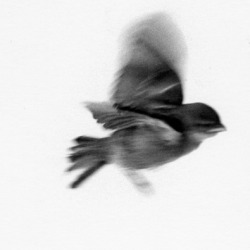
In this somewhat grimly humorous poem, Emily compares her childhood as a ‘little Girl’ with the way ‘They’ treat her as an adult. My comments follow.
They shut me up in Prose –
As when a little Girl
They put me in the Closet –
Because they liked me “still’ –Still! Could themselves have peeped –
And seen my Brain – go round –
They might as wise have lodged a Bird
For Treason – in the Pound –Himself has but to will
And easy as a Star
Abolish his Captivity –
And Laugh – No more have I –c. 1862
Emily Dickinson Poems, Edited by Brenda Hillman
Shambhala Pocket Classics, Shambhala 1995
What a great word — ‘still.’ Read the rest of this entry »

Here’s a timely poem from Emily Dickinson. She captures what it’s like to be at loose ends. Unable to think straight, sort out feelings, or fit oneself into the new reality. My personal comments follow.
I felt a Cleaving in my Mind –
As if my Brain had split –
I tried to match it – Seam by Seam –
But could not make them fit.The thought behind, I strove to join
Unto the thought before –
But Sequence raveled out of Sound
Like Balls – upon a Floor.c. 1864
Emily Dickinson Poems, Edited by Brenda Hillman
Shambhala Pocket Classics, Shambhala 1995
Things undone aren’t easily put back together. Especially when accompanied by Read the rest of this entry »

Stars over Lake Irene, Rocky Mountain National Park, Erik Stensland Photo
For over a month I’ve been going back to this poem from Emily Dickinson, trying to figure it out. Sometimes I think I get it. Other times I feel like giving up. My comments follow.
The Outer – from the Inner
Derives its Magnitude –
‘Tis Duke, or Dwarf, according
As is the Central Mood –The fine – unvarying Axis
That regulates the Wheel –
Though Spokes – spin – more conspicuous
And fling a dust – the while.The Inner – paints the Outer –
The Brush without the Hand –
Its Picture publishes – precise –
As is the inner Brand –On fine – Arterial Canvas –
A Cheek – perchance a Brow –
The Star’s whole Secret – in the Lake –
Eyes were not meant to know.c. 1862
Emily Dickinson Poems, Edited by Brenda Hillman
Shambhala Pocket Classics, Shambhala 1995
The first few times I read this poem I wanted it to say something like this: Read the rest of this entry »
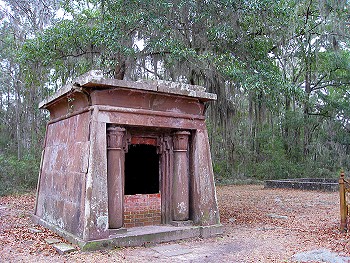
This poem from Emily Dickinson gnaws at me. Is it a poem of despair or encouragement? And whose voices are these, anyway? My comments follow.
I died for Beauty – but was scarce
Adjusted in the Tomb
When One who died for Truth, was lain
In an adjoining Room –He questioned softly, “Why I failed”?
“For Beauty”, I replied –
“And I – for Truth – Themselves are One –
“We brethren, are”, He said –And so, as Kinsmen, met a Night –
We talked between the Rooms –
Until the Moss had reached our lips –
And covered up – our names –c. 1862
Emily Dickinson Poems, Edited by Brenda Hillman
Shambhala Pocket Classics, Shambhala 1995
“I died for Beauty….” Was this a literal death? No. It seems more like a dream. Emily is dead. Yet she doesn’t dwell on Death. Instead, she begins with that for which she died. Beauty.
Emily is in the Tomb. She didn’t get here on her own. Others laid her here. Adjustments have just been made (theirs of her body? hers to her new reality?), when she notices she has company.
Next to her, in the adjoining Room, she has a new neighbor. She recognizes “the One who died for Truth.” She knows he already died for Truth. How long ago was that? Is she surprised to find this One laid to rest in the Room next to hers? We don’t know.
The One who died for Truth initiates conversation with her. Not in a grand, authoritative voice, but softly. He wants to know why she failed. She says it was for Beauty.
He immediately acknowledges he failed for Truth, and declares the two are One—Beauty and Truth. Which makes them kin, brother and sister. Not enemies or strangers.
What does it mean to fail? Emily’s response seems to rule out her physical health failing and leading to death.
Perhaps this means failure after a long, valiant battle. Hers on behalf of Beauty; his on behalf of Truth. Not necessarily the end of the battle, but the end of what Emily and the One could do in their lifetimes.
Then again, I wonder whether these dead were silenced by the opposition because they didn’t like what they heard and saw in Emily and the One. At the least, perhaps they died of heartbreak or despair due to apathy about Beauty and Truth.
Perhaps. Yet here’s how I imagine it.
Truth and Beauty are One. They aren’t many, and they aren’t at odds with each other. In fact, together they are so powerful that they can’t be silenced, even in these newly occupied Tombs.
And so the quiet, unrecorded conversation between Beauty and Truth goes on until the moss creeps up over the occupants’ Lips and, in a surprise ending, covers up their names, not just their Lips. A sign, perhaps, that Beauty and Truth have a mysterious life of their own.
© Elouise Renich Fraser, 15 October 2016
Photo found at poetrygrrrl.com
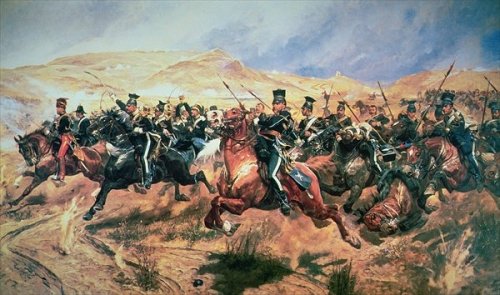
~~~Charge of the Light Brigade, painting by Richard Caton Woodville, Jr.
What does it mean to be brave? Emily Dickinson gets right to the heart of things by showing me a different picture of bravery. One with which I can relate, if I’m willing to re-imagine my life. My comments follow her moving poem.
To fight aloud, is very brave –
But gallanter, I know
Who charge within the bosom
The Cavalry of Woe – Read the rest of this entry »

For several weeks I’ve been drawn to Emily Dickinson’s poem below. I wonder where it might find you today. My comments and personal reflection follow the poem. Read the rest of this entry »
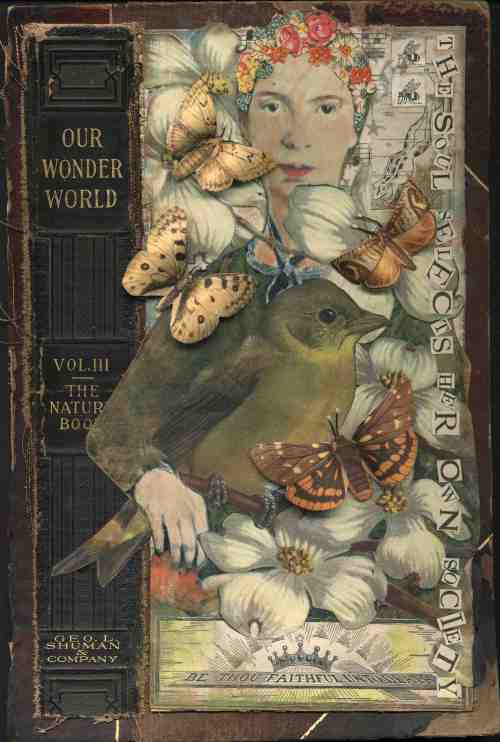
Here’s another gem from Emily Dickinson, along with my personal response below.
Much Madness is divinest Sense –
To a discerning Eye –
Much Sense – the starkest Madness –
‘Tis the Majority
In this, as All, prevail –
Assent – and you are sane –
Demur – you’re straightway dangerous –
And handled with a Chain –c. 1862
Emily Dickinson Poems, Edited by Brenda Hillman
Shambhala Pocket Classics, Shambhala 1995
Dear Emily,
Please forgive me for barging in. You don’t know me and I don’t know you personally. Still, your poetry challenges me to think deeply. This one, in particular, brings me comfort Read the rest of this entry »

Am I lost? Wandering? Emily Dickinson’s poem has been on my mind for the last two months. Here it is, with my interpretive comments.
Faith – is the Pierless Bridge
Supporting what We see
Unto the Scene that We do not –
Too slender for the eyeIt bears the Soul as bold
As it were rocked in Steel
With Arms of Steel at either side –
It joins – behind the VeilTo what, could We presume
The Bridge would cease to be
To Our far, vacillating Feet
A first Necessity.c. 1864
Emily Dickinson Poems, Edited by Brenda Hillman
Shambhala Pocket Classics, Shambhala 1995
I remember a song we used to sing in church, always with gusto and certainty. It was about impossibilities. With confident voices, we sang about faith laughing at impossibilities and crying out (on faith’s behalf), ‘It shall be done!’ No shrinking violets need apply.
Emily’s poem seems on the far side of that song. Is it? I don’t think so. Both are about faith. Yet Emily’s rendition comes closer to my lived experience.
Emily paints a moving picture of an impossible Pierless Bridge stretching out, with no horizon in sight but the sky and water. It doesn’t seem to have visible supports or buttresses. Instead, it seems to stretch out not in front of me, but with me, step by step, as I make my pierless way across the water.
Here faith is like the invisible thread in The Princess and the Goblin. It supports my way across the water toward an invisible goal. My feet vacillate, uncertain where to go. I’m far out from the shore, maybe not far to go. But I don’t know how much farther, or what I’ll find when I reach the goal.
Boldness and courage seem paramount. Closing my eyes, I feel my way along. Not with my hands, but through the bare soles of my feet connecting with what must surely be a mammoth construction of steel, boulders and cement. How could there not be a pier?
I open my eyes, hoping for a glimpse of the goal, but see nothing ahead and nothing behind. Even more distressing, what’s supporting me is no larger and no more visible than one slender, fragile thread of a spider web.
Closing my eyes, I grope along, too far out to turn back. I don’t feel bold or courageous. The way is precarious. I’m full of questions and more than a bit of doubt.
I don’t have a map or a friendly GPS system to let me know when to leave one foot behind and shift my weight onto the other foot. I just know I’m being drawn and supported by something or someone greater than myself.
Perhaps this journey is about strengthening my vacillating faith. Then again, the point may not be my faith, whether weak or bold. In fact, I can’t believe that by the time I’ve arrived at the goal, my faith will be strong.
It seems this journey isn’t all about me.
Before my faith and before my birth there was something else. I imagine the Source of my life greeting me from within the Veil to which Faith leads me. Here is the One who birthed me. The One who boldly and courageously watches for me from the other side of my human life, spinning out as needed a fragile yet steel-buttressed thread of Faith—my Creator’s Faith in me. Faith that leads me home, just as I am and yet will be.
© Elouise Renich Fraser, 24 June 2016
Image found at pinterest.com
 Telling the Truth