Telling the Truth

connecting the dots of my life

Tag: Relationships

Our original sin yet again

I wonder…
Does each nation
Each country
Have an original sin
The seed of its
Particular ignominy
Running through veins
Shot full of raging
Hormones escalating
Into tragedies
Of historic proportions
Played out in
Unnumbered permutations
Of seduction and flattery
Designed to deceive
And subdue?

It isn’t just the daily revelation of predatory behavior by public figures and officials. It’s the reality that various permutations of predatory behavior undergird the earliest foundations of our nation.

I’d describe it this way: The subduing and disappearing of some in order to pursue the welfare of a select group that viewed and still view themselves as more entitled than others.

Layer upon layer. Decade after decade. And now we’ve come to this juncture in our history without a clear understanding of how we got here, and how many were and still are subdued and disappeared. Buried beneath mountains of inspiring proclamations, and promises not kept.

I first wrote this in November 2017. Here we are, well over three years later. Damage to our nation has sky-rocketed, and disparities have intensified. This time aided and abetted by many white churches looking for an earthly savior who will do their bidding.

No matter who is in the White House, we can’t expect miracles. This long-term unfinished business still haunts us singly and together. Especially in our churches and in our neighborhoods. Are we up to the task?
Elouise

© Elouise Renich Fraser, 29 November 2017; updated and reposted 23 February 2021
Photo of Great Dismal Swamp found at smithsonianmag.com
The swamp, located in Virginia and North Carolina, once served as a refuge for Native Americans and fugitive slaves.

Life shrinks daily | Lent 2021

Is it not enough
That I have survived?
That You have never
Turned away from me?

Life shrinks daily
A wrenching letting go
Of many things

Masks and pandemic protocols
Shroud me in a deathlike dream
From which I cannot wake
Before the next stanza
Takes me down

The sun is out today, though the air is still below freezing. White mounds of snow look like small mountain tops invading the back yard. The birds are basking in chilly sun, taking their turns at the birdfeeder.

I sit in my kitchen, an onlooker to life, wondering how and when things went sour.

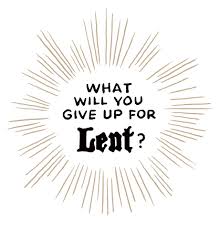
Then again, this is the first Sunday in Lent. My heart tells me it’s time review what I’m giving up yet again for Lent. No, it hasn’t gotten any easier to say this prayer. Especially the last line.

I let go my desire for security and survival.
I let go my desire for esteem and affection.
I let go my desire for power and control.
I let go my desire to change the situation.

Quoted by Cynthia Bourgeault in Centering Prayer and Inner Awakening, p. 147 (Cowley Publications 2004)

I wonder what Jesus of Nazareth felt and thought as he approached his coming death?

Praying for an accepting heart and a grateful spirit.
Elouise

© Elouise Renich Fraser, 21 February 2021
Image found on Facebook via Google search

Coming up for air


Coming up for air
Weary mind and body
Conspire

Catching me off guard
They try changing the subject
Of my latest thought

Which to be sure
I cannot remember in full
Now lost in my dreams

Clouds outside hang heavy
With bits of sleet and weary snow
Frozen and mushy

Like my brain melting
And freezing again drifting
on Shumann’s Träumerei

I’m a bit weary and giddy today. Last night we sent off the (hopefully) last version of my small book of poetry: Without a Flight Plan.

Do I need to publish a book? No. Do I want to? Yes, even though I’ve already said I’m not going to write another book.

So…What happened? 2020 happened. Covid-19. Trump. Black Lives Matter. Social Distancing. And a whole lot more. In addition, my dearly beloved husband suggested last November that I put together a book of my poetry for family members. He also offered to get it ready for printing.

My first response? No way! However, on second thought, last year was one of the most bizarre years of my life. So I decided to let some of last year’s poems speak for themselves (without commentary), along with some favorite Longwood Gardens photos taken by D.

So yes, I’m weary of proofreading. However, I’m excited about having a book this close to becoming real. Especially at this time in my life.

Thanks for stopping by today.
Elouise

© Elouise Renich Fraser, 19 February 2021
Thanks to YouTube for the video at the top.

Sometimes I want to give up

I want to turn into a bird and
join the community at the birdfeeder
A sometimes raucous group and yet
they manage to fly in and out
without mayhem or madness
taking them down bird by bird

This little poem was in the middle of a long list of things bothering me yesterday.  They included personal health issues, life with our dear cat Smudge who vomits every now and then, the mess that passes as my desk, and our national mayhem and madness.

Early yesterday morning I was watching birds at the feeders outside our kitchen window. Even though it was freezing cold with ice and snow on the ground, I suddenly got all teary. I wanted to be a bird! Free to come and go without fear.

Thankfully, a telephone conversation with a longtime friend helped get me back on track.

There’s a reason I felt like packing it in. The real problem isn’t what’s out there, or even my health challenges. It’s my voice. My writing voice. Put simply: Writing on WordPress is about as safe as it can get. Visitors don’t have to agree with me, and I have the privilege of speaking my mind.

For several years I’ve wondered about publishing some of my writing, and have said No. I’ve already published as an academic; I don’t need to publish anything else.

And yet…I wrote my two published books while I was a professor and my father was still alive. I hedged my language, thinking he might read them. They included memories about my childhood, but not about the way things really were for me at home.

Blogging gave me an opportunity to describe my childhood and youth, come to terms with them, and move on as a writer. So here I am today wondering why, with a manuscript nearly ready to publish, I’m nervous and even fearful.

Yet the truth is simple: Though I don’t write to please or appease my father, I still have a whisper of fear in me. This may sound crazy. Still, I need to do this for myself, my mother and sisters, our children and grandchildren, and women and men who have encouraged me as the writer I now am.

More later about the book. Right now I’m back to proofreading.

Happy Friday, and a prayer that we’ll find our way through these troubled days.
Elouise

© Elouise Renich Fraser, 12 February 2021
Photo found at news.wisc.edu

Disputed and Forbidden Words

“Boundaries”—
Demolished by DT & Friends

“Truth”—
It’s all relevant, right?

“Justice”–
Just for me and mine and those who support me

“Facts”—
What I wanted to see or think I saw, or what I wrote/read on Twitter

“Incitement to Riot”—
Who, me?

We’ve arrived at DT’s second Impeachment Trial
However, it isn’t only about DT
But about every Senator casting a vote
And, most importantly, about us

How did we arrive at this moment?
It isn’t as though we couldn’t see it coming
What sickness unto death infects our nation?

Denial comes to mind

We’ve become experts at our own forms of group denial.
We go along to get along. We feel helpless.
We look the other way. We roll our eyes.
We entertain gossip instead of hanging up the phone,
turning off the TV, or leaving the room.
Or we try to explain away what just happened
as though it weren’t important.

I’m as impacted by all this as the next person. Writing about it isn’t the same as taking a stand. Though I’ll admit it helps me focus.

Bottom line: We need more than Covid-19 vaccinations. I pray there’s still time to begin telling our national truth and seeking national justice for those we’ve harmed, ignored, or belittled. Plus those to whom we’ve cozied up because they had power we thought we needed or deserved.

Elouise

© Elouise Renich Fraser, 8 February 2021
Photo found at ft.com

Eulogy for Sister #3 – revisited

Diane, Sister #3, is on my mind today. Diane died from ALS in February 2006. Her death was a mixed blessing. A release from imprisonment in her physical body, and a reminder that the ‘good’ life is about more than being free of catastrophic illness. Including Covid-19.

Houston, Texas – 17 February  2006

Diane directed that my remarks today be “personal, with no preachy tones.”  As I thought about what to say, I came up with only one topic that guarantees I’m being personal—that I’m not avoiding the subject Diane knows none of us can avoid when we talk about her.

Remembering Diane’s Body

Diane had a human body—loved by God
A female body:
—The body of God’s beloved daughter child
—Known to Jesus Christ as a sister for whom he died
—A female temple of God’s Holy Spirit on this earth

A one-of-a-kind body:
—Created and sustained by God
—Loved and nurtured by God’s ministering servants here on earth:
——Her husband, two sons and one daughter
——Her large, extended biological family
——Her church family
——Her nursing family
——Even the family collection of dogs

Diane’s life was shaped by bodily infirmity.
—She would hate that I just used that word!

Diane refused to think, act or behave as a person identified by an “infirmity.”
Yet the truth is simple:
—Diane’s life was shaped by loss in her left arm due to polio.

From a parental point of view, Diane’s weak arm was cause for protective measures.

From Diane’s point if view it was cause for excelling in whatever she supposedly couldn’t or shouldn’t do.

Not only would she do all these things,
She would do most of them better than any of us, things like
—Riding a bike, swimming and playing basketball
—Sewing dresses and suits
——not hankies and curtains, but fancy dresses, and suits with tailored blazers
—Then there was photography, not with small, lightweight equipment,
——b
ut with the best possible equipment and attachments she could afford and lug around!

Diane developed an uncanny knack for figuring out how to carry out activities like these without compromising quality or expertise in the slightest.

She also developed an uncanny knack for taking advantage of our parents’ desire to protect her.

Only as an adult did she confess that her habit of disappearing from the house to do yard work (and not housework) was not motivated chiefly by her pure desire to help Daddy.  Rather, she knew neither Daddy nor Mother would send or call her back inside the house for the latest instruction or practice in vacuuming, dishwashing, dish-drying, table setting, ironing or putting clothes away.

To us, Diane’s body was both normal and different—though it all felt pretty normal most of the time.  Certainly not life-threatening.

Then each of us, her three sisters, got a telephone call from Diane in January 1996.
Diane had ALS.  She was direct and clear:
—There is no cure.
—The disease is terminal.
—I’m going to need help.  Lots of help.

Diane’s left arm shaped her as a child, as a young person and as an adult.
Now Diane’s entire body began shaping her and her family,
beginning most painfully with her husband, two sons and daughter,
and reaching out to all of us gathered here today.

For the last 10 years I’ve flown down to Houston about 4 times a year to visit Diane.  But not just to visit her.  I’ve come to witness a journey—Diane’s very personal journey with ALS.  A journey that relentlessly put Diane’s physical body at the center of attention.

As young girls we weren’t encouraged to pay much attention to our bodies. 
Bodies were a necessary but usually uncomfortable necessity—especially female bodies.  Now, with ALS, Diane was consumed by what was and was not happening in her body.

She suffered losses beyond comprehension—most in fairly rapid succession over a period of years, starting with physical losses such as mobility, ability to care for her own personal needs, eating and swallowing, ability to speak on her own, and breathing. 

She also suffered loss of her position here at the church:
—Loss of her dream of being ordained
—Loss of work and personal relationships as her body more and more seemed to intrude as a difficulty or a problem to be solved
—Loss of time for herself or her family and friends, as personal care began gobbling up hours out of each day
—Loss of privacy:  total and absolute, with only one exception—the thoughts in her mind, which included her life with God
—Loss of little things such as swatting at a mosquito feasting on her neck (as she put it); scratching where it itches; singing in church; being in the middle of the action and making wisecracks

More painfully, she suffered loss of other things such as giving her children a hug, or embracing her husband face to face.  As a female she suffered what most women dread—loss of control over personal presentation of herself:  hairstyle, makeup, body language.  She became the subject of stares and quickly averted eyes.

Diane’s body seemed to be calling the shots.

True to who she already was, however, Diane kept showing up—fully with and in her body marked more and more by ALS.  It was as though she were saying

  • I’m still here—in my body
  • I’m still Diane—in this body
  • I am not whatever you think a terminally ill person should be
  • I am not predictable
  • I am not a saint
  • I’m still Diane!
  • I’m still here and I’m still fully engaged in living–living with ALS
  • I will be who I am—angry, frustrated, filled with anxiety, filled with human longings and everyday needs; direct and clear without being mean
  • I’m dying
  • We need to talk
  • Now

As always, nothing was too sacred for a good healthy laugh.  Especially about her body with its unpredictable body parts, behaviors and small crises:  facial movements, biting her own lip, laughing uncontrollably, head falling over from time to time, drooling from time to time.

Diane continued to be who she already was:
—Determined to speak for herself in her own words, not yours or mine
—Determined to be heard and heeded

She was still directive—now in ways that boggled the mind:
—To-do and Do-not-do lists for family, nurses, friends and strangers
—Rules for how Mom is to be driven in her new van and who gets to say when the rules are being broken (Mom, of course).
—She was still a masterful strategic planner—only now she had to figure out how to get you to do what she could no longer do, but somehow knew must be done.

As always, Diane wasn’t about to fade into the woodwork.  She kept showing up in the flesh—in her ALS-shaped flesh:  at church, in shopping malls, at weddings for her daughter and one of her sons, and even—one month ago, believe it or not, to inspect her daughter, son-in-law and granddaughter’s new home.

Diane remained insistent that she be given choices, and that her choice was the final choice:
—Clothes and accessories for church
—Medical options
—What to keep and what to discard from the kitchen cupboards
—Which movie to watch
—And how this service today would be shaped,
——including the names of all active male pallbearers
——and the names of all 25 honorary female pallbearers!

Diane made her concrete mark in, with and through her concrete, ALS-shaped body.
To deny she was among us in the flesh would be to deny her existence.

To some extent, each of us gathered here to honor and grieve her passing has been a witness.  So many of you are so full of memories.  I can’t speak for you and I won’t get preachy, but I will be confessional:

  • I’m listening, God, for what my relationship to Diane means for the rest of my life in this world you love so much.  Amen.

Eulogy delivered 17 February 2006, © Elouise Renich Fraser, 17 February 2006
Blog post © Elouise Renich Fraser, 15 April 2014

Trapped in an iceberg

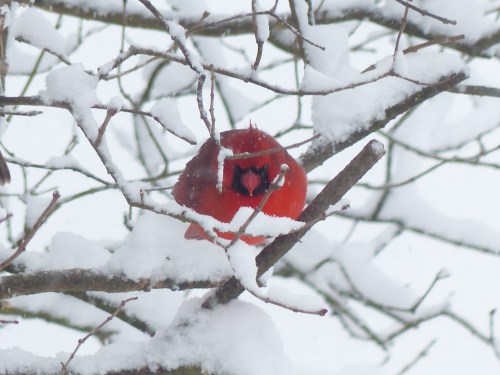
Male Cardinal hunkering down after last night’s snow storm

Trapped in an iceberg
Called social distancing
Just when we need
Each other more than ever

Rankles my soul while
Day and night I ponder
My options for becoming
A real human woman

I exist on the internet
I exist in my email
I exist at great distances
On a phone or through a window

Grateful, Angry, Grieving,
Lethargic, Energetic,
Engaged, Disengaged,
Where and Who am I?

The mantra goes through
My weary brain daily
‘We’re all in this together’
Though I know we are not

Like an unexpected tsunami
The pandemic exposes us
In vivid colors and attitudes
Mirrors of our own making

It’s been nearly a year since we embarked on an experiment for which we still have no map. I’m grateful to be alive. I’m grateful I can read, write, enjoy Smudge, watch birds in our back yard, and walk with D in the neighborhood.

Nonetheless, none of that takes the place of regular interaction with regular human beings who don’t live in my house. It doesn’t matter who they are, or whether I like them a lot or a little. There’s something life-giving in these encounters that’s irreplaceable. Even for introverts.

Imagine that we find a cure, or the perfect vaccination for Covid-19. We’ll still need each other. Not to go back to our old ways, but to get on with the tough work of becoming a nation in which black lives matter as much as white lives. And those without great financial riches matter as much as those with giant incomes.

If that’s too far a reach, how about learning again to be neighbors? Or how to welcome strangers into our lives?

Elouise

© Elouise Renich Fraser, 2 February 2021
Photo taken by DAFraser, 2 February 2021

Psalm 1 | Zephania Kameeta

Bishop Zephania Kameeta wrote this version of Psalm 1 during Namibia’s struggle for human rights. Born in 1945, Bishop Kameeta’s life work has revolved around the fight to end apartheid in Namibia.

It seems we here in the USA are still trapped in our own USA-style apartheid system, with no end in sight.

Psalm 1 introduces the entire collection of 150 Hebrew Psalms. It describes two ways we can live. The way of wisdom, or the way of folly. Which will we individually, and as a nation, choose to take? Here’s how Reverend Kameeta saw these two ways or paths of life playing out in Namibia.

Psalm 1

Happy are those who reject the evil advice of tyrants,
who do not follow the example of sell-outs
and are not resigned to live as slaves.

Instead they find joy to be in God’s commission
for the liberation of the oppressed,
and they work day and night without rest.

They are like trees that grow beside a stream,
that bear fruit at the right time,
and whose leaves do not dry up.
They succeed in everything they do.

But the traitors of the liberation cause are not
like this;
they are like straw that the wind blows away.
Puppets in the hands of the oppressors
will be condemned by God.
They will have no share in the blessings of the Lord.

Those in God’s service for the liberation of the downtrodden
are guided and protected by God.
But those who are instruments in the hands of the oppressors
are on the way to their doom.

Psalm 1 interpreted by Zephania Kameeta
Published in Why O Lord? Psalms and sermons from Namibia, p. 24
No. 28 in The Risk Book Series, pub. by World Council Publications
In collaboration with the Lutheran World Federation of Churches
© 1986 World Council of Churches, Geneva, Switzerland

Psalm 1 offers us two choices. God’s way of wisdom and truth, or the oppressor’s way of folly. Each Psalm is about one or both of these ways. Over and over, they show us what it looks like to take one way or the other.

I’m caught by the third line: “Happy are those who…are not resigned to live as slaves.” Though I’ve never been called a slave, I know how easy it is to hunker down and make myself small or silent, when I should be speaking up or raising a ruckus. No matter what color my skin is.

Then again, if I’m living as a slave to the evil advice of tyrants, perhaps I need to listen more and make less ruckus.

Elouise

© Elouise Renich Fraser, 31 January 2021
Photo of Bishop Zephania Kameeta found on Facebook

Why this sudden lethargy?

Why this sudden lethargy
Unable to read today
A book that kept me awake
Yesterday riveted and alert

There is no cure it seems
For this childhood dis-ease
Struggling to be heard
Above distracting noise

That never ends beneath
The skins of white women
Caught looking back on life
Far from home and short on rest

Where did this come from? It feels like a bad dream or even a nightmare. Trapped in a situation not of my making, without survival skills, and unable to find or make my way home. Yes, it could be about Covid-19 or the state of our disunion. But it’s deeper than that.

Most of my early life was about mastering behaviors and attitudes that would insure my silence, cooperation, and ‘purity.’ The goal was put before me every day of my life. I was to be the opposite of cheeky females who dared speak and act for themselves or registered outrage at outrageous acts of neglect and violence toward themselves and others.

How many white women born in the USA look back and wonder, What was it all about? And have I yet found my way home to the voice and work I was meant to have from the beginning?

I’m not despondent. I’m angry. I don’t always know what to do with this anger of not being prepared for whatever ‘the real world’ was and still is. So I write.

And then I get on with the life I now have, for which I’m grateful.

Thanks for listening.
Elouise

© Elouise Renich Fraser, 30 January 2021
Image found at medium.com

How are you doing today?

Our pastor asked this at the beginning of today’s online sermon. It caught me by surprise. It’s also better than a thousand other things we might talk about. So I’m going to begin, and invite you to respond about yourself.

On a scale of 1 to 10, with 10 being Great, I’m scoring about 6 or 7 on most days. Why?

~Sometimes winter weather is harsh, meaning no outdoor walk with D
~My health, which requires constant attention 24/7
~The sudden unraveling last March of regular social life (Covid-19)
~Reverberations from chaos recently unleashed on Capitol Hill
~No in-person visits with family members or friends
~Grief that comes with acknowledging I won’t be here forever, which will come sooner, not later

Grief, disappointment, sadness, weariness, uncertainty, loneliness, heartache, fear. I could pretend they don’t bother me. But that wouldn’t be telling the truth.

Thankfully, things like the following bring me joy or gratitude.

~Having enough food (most of it prepared by me)
~Walking outside with David when the weather is decent
~Seeing neighbors and chatting a bit on the street
~Phone calls and email from family members and friends
~Playing with Smudge or holding him on my lap while he sleeps
~Watching birds on our backyard feeders
~Reading a good book and playing the piano
~Listening to music any time of day

Still, good times won’t cancel out down times. Nor do they answer all my questions about life and the world as we know it today. Each day is different. Making plans is difficult. At the same time, Christian faith gives me a foundation I sorely need every day. Scripture, music, devotional reading and journaling.

What about you? How are you getting through this long passage of time, including loss of people you know and love?

Elouise

© Elouise Renich Fraser, 24 January 2021
Image found at makeameme.org