Telling the Truth

connecting the dots of my life

Tag: Relationships

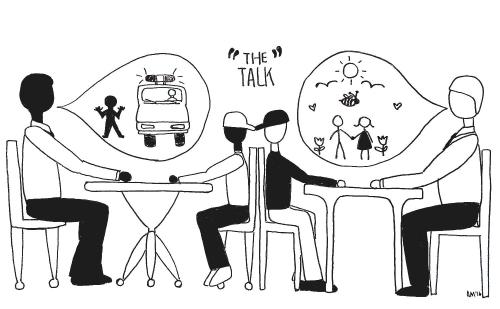
What ‘human rights’ don’t look like

Recently a friend sent me the following list. I haven’t been able to get it off my mind. It was compiled by Dr. Valerie Bryant, a Black therapist in Brooklyn, NY. In the list she names black citizens threatened or killed in recent years while engaging in the behaviors she names.

Think of Dr. Bryant’s list as a roll call clarifying the difference between living black or brown, and living white in the USA. It’s also an invitation to reflection about ourselves, and the meaning of human rights.

…As a white person when you go out in the street, you don’t have to think twice of being murdered by a police officer or citizen acting like a police officer.

Or as a white person,

I can go birding (#ChristianCooper).
I can go jogging (#AmaudArbery).
I can relax in the comfort of my own home (#BothemSean and
#AtatianaJefferson).
I can ask for help after being in a car crash (#JonathanFerrell and
#RenishaMcBride).
I can have a cellphone (#StephonClark).
I can leave a party to get to safety (#JordanEdwards).
I can play loud music (#JordanDavis).
I can sell CD’s (#AltonSterling).
I can sleep (#AiyanaJones)
I can walk from the corner store (#MikeBrown).
I can play cops and robbers (#TamirRice).
I can go to church (#Charleston9).
I can walk home with Skittles (#TrayvonMartin).
I can hold a hair brush while leaving my own bachelor party (#SeanBell).
I can party on New Years (#OscarGrant).
I can get a normal traffic ticket (#SandraBland).
I can lawfully carry a weapon (#PhilandoCastile).
I can break down on a public road with car problems (#CoreyJones).
I can shop at Walmart (#JohnCrawford) .
I can have a disabled vehicle (#TerrenceCrutcher).
I can read a book in my own car (#KeithScott).
I can be a 10yr old walking with our grandfather (#CliffordGlover).
I can decorate for a party (#ClaudeReese).
I can ask a cop a question (#RandyEvans).
I can cash a check in peace (#YvonneSmallwood).
I can take out my wallet (#AmadouDiallo).
I can run (#WalterScott).
I can breathe (#EricGarner).
I can live (#FreddieGray).
I can be arrested without the fear of being murdered. (#GeorgeFloyd)

***These are NOT human rights if only white people have them.*

With compassionate rage
Valerie Bryant, PhD
Fort Greene Bklyn 11205

How would my world change if I woke up with different colored skin than I now have? Can I remember how I was taught to think or talk about skin color?

© Elouise Renich Fraser, 21 June 2020
Image found at stlpublicradio.com

Just for today

Finally
After months of fighting
acceptance

Comes knowledge
That this is the way things are
and didn’t have to be

Plus willingness
to accept limitations
and whatever today offers

Ready
To give and receive small gifts
No matter the outcome

Refusing
To look the other way
While lifting my voice in prayer

Content
With what I can do this day
Unlike any other

Several times in the last few weeks I’ve heard friends and strangers talking about prayer. In particular, how we pray right now, given the current situation in the White House, in governing and non-governing bodies, and in our neighborhoods.

It’s time for lament. The kind that looks into the reality around us without trying to go back to the way things were. Lament that acknowledges our personal grief, anger, rage, and our betrayal by POTUS and others more concerned with glory than with grace. Lament that implores our Creator to have mercy on us, no matter the cost.

I’m in lament mode. I’m also beginning to understand how to get up in the morning and let the day be what it is. An opportunity to be invested in something larger than myself, without getting sidetracked by the mucky morass that wants to capture and kill my energy.

Praying you’re finding your way in this day unlike any other.
Elouise

© Elouise Renich Fraser, 19 June 2020
Photo found at m.economictimes.com

It’s been an age

Tree

This is one of my favorite poems, at least as true today as it was when I posted it in November 2014. Today has been filled with a mixture of happiness and contentment, along with a lurking feeling that we’re all at sea, and the ship of state is stressed.

How do you see yourself and others today? I hope you’ll give yourself a great big smile before the day is done. Then give away at least one more smile. All we can count on is the present.

It’s been an age since I first met you—
You there, looking back at me
Three score years plus eleven to be exact
You haven’t changed a bit, they say
You and I know better
Sometimes I can’t believe it’s you
I hardly know you
Could we start over do you think?
Would it be as much fun?

I don’t know.
Was it fun for you?
Are you as puzzled as I am?
I seem to have more questions than answers today
Where and when did we find each other?
We seem to get along
But then we always did even when we didn’t
So who am I to say?

All I know is looking back at me
Wondering where the time has flown
And who this beautiful woman is
Smiling at me through the mirror

* * *

© Elouise Renich Fraser, 20 November 2014, reposted 18 June 2020
Photo Credit:  DAFraser, December 2012
Hoyt Arboretum, Portland, Oregon

I just struck gold!

Who was Amelia Boynton Robinson, and who is that young man sitting next to her? And do you know who’s in the photo on the right? Or what year it was? To find out more, check it out right here. It’s the second entry from the top. You can read more about Amelia Boynton Robinson’s life right here.

For the last few weeks I’ve been searching for gold, interpreted by me as

  • easy to read/watch
  • lively and informative
  • brief, riveting commentary with real photos of real people
  • a semi-crash course only better
  • attention to women as well as men
  • inspiring without glib promises
  • tuned into today’s challenges
  • excellent communicator

It’s impossible to take in everything all at once. So I’m now following Chris Preitauer’s blog.

Beginning at age 7 I grew up, went to college and had my first ‘adult’ job in the Deeply Segregated South. I saw and heard a lot. Sadly, I didn’t formally or informally hear much about Black Lives. Nor was I encouraged to get curious about why. In the 1950s and 60s, Black citizens were treated differently than White citizens. Not just in the Deep South, but in the not so Deep North.

So yes, I’ve found gold! Someone from my era (sort of) who became involved.

I hope you’ll look at a few of his pieces. They’re to the point, challenging, and inspiring without pretending our current challenges will be easily resolved.

Thanks again for visiting, reading, and leaving your footprint!
Elouise

© Elouise Renich Fraser, 17 June 2020
Photos found at ChrisPreitauer.com

Still I Rise | Maya Angelou

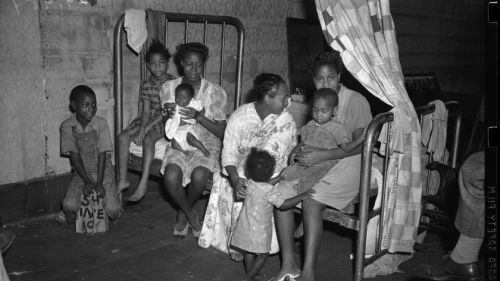
A family of African American war workers in a makeshift bedroom in Little Toyko, Los Angeles in the 1940s. (Los Angeles Daily News/UCLA Archive)

“Still I Rise” is Maya Angelou’s tribute to the courage and endurance of African American women. It’s also the title of one of her books of poetry. My brief comments follow.

Still I Rise

You may write me down in history
With your bitter, twisted lies,
You may trod me in the very dirt
But still, like dust, I’ll rise.

Does my sassiness upset you?
Why are you beset with gloom?
‘Cause I walk like I’ve got oil wells
Pumping in my living room.

Just like moons and like suns,
With the certainty of tides,
Just like hopes springing high,
Still I’ll rise.

Did you want to see me broken?
Bowed head and lowered eyes?
Shoulders falling down like teardrops,
Weakened by my soulful cries?

Does my haughtiness offend you?
Don’t you take it awful hard
‘Cause I laugh like I’ve got gold mines
Diggin’ in my own backyard.

You may shoot me with your words,
You may cut me with your eyes,
You may kill me with your hatefulness,
But still, like air, I’ll rise.

Out of the huts of history’s shame
I rise
Up from a past that’s rooted in pain
I rise
I’m a black ocean, leaping and wide,
Welling and swelling I bear in the tide.

Leaving behind nights of terror and fear
I rise
Into a daybreak that’s wondrously clear
I rise
Bringing the gifts that my ancestors gave,
I am the dream and the hope of the slave.
I rise
I rise
I rise.

Maya Angelou, poet; found in Sterling’s Poetry for Young People series, page 30.
Published in 2013 by Sterling Children’s Books, New York, an imprint of Sterling Publishing Co., Inc.
Editorial material © 2007 by Edwin Graves Wilson; Illustrations © 2007 by Jerome Lagarrigue|

Maya Angelou’s poem is worth reading out loud and slowly, using every ounce of imagination to join her. Not necessarily as a sister, but as a beginner or better yet, a follower.

I struggle over what I can and cannot do to join her in these closing days of my life. For now I’m reading poetry, watching documentaries, reading news articles and editorials, and listening online to black friends and strangers talk about what’s happening.

For centuries, racial injustice has bled into today’s mega-epidemic of prisons, soaring rates of Covid-19 deaths among African Americans, closed or understaffed medical facilities, corporate greed, random killings, modern-day enslavements, distrust, fear and weeping rage. Unaddressed, this blatant, calculated and habitual injustice also stokes our current epidemic of unleashed white supremacy.

As noted above, try reading Angelou’s poem out loud and slowly. What do you hear?

Praying for discernment, courage and peace,
Elouise

© Elouise Renich Fraser, 8 June 2020
Photo found at http://www.latimes.com

What’s going on? | Update and freebies

Onlookers raise their fists following a memorial service for George Floyd in Minneapolis, Thursday, June 4, 2020. Floyd, an African-American man, died in Minneapolis police custody. (Victor J. Blue/The New York Times)

Unless we face reality as a nation, and maintain momentum, we’re in trouble. No matter who the next President is.

Covid-19 has disproportionately impacted people of color, the sad and sorry outcome of our history with Black Americans. Despite this, Mr. Trump and some of his followers seem content with the way things are. He has politicized the killing of George Floyd by, for example, invoking different standards for his militaristic ‘peace-keepers,’ and those seeking change for all of us.

Change won’t be easy. Yet it could be productive if we face reality and maintain momentum. I’m heartened by news reports about state officials outlawing tactics used by officers and others to subdue (kill) Black men and women.

Last Wednesday, in the midst of all this, our electricity went off. D and I were watching a riveting documentary called “I Am Not Your Negro.” It’s about James Baldwin. We finished it today, after the electricity came on. It’s powerful, brutually honest, and puts the burden of proof on us as citizens. Especially on white people like me.

Today I found a site that offers a number of documentaries and movies FREE for this month. They’re about the way we’ve treated Black Americans in this country. “I Am Not Your Negro” is offered to a selected number of cities. However, “Just Mercy” is available for anyone, along with “Selma.” Click here to find out more.

Finally, last Wednesday afternoon, the tri-state area experienced sudden, intense downdrafts and storms that ripped through cities and communities. Our county was hard hit, with huge trees blown over, power lines down, and a number of deaths.

No electricity, no internet access, no telephone, no TV. It’s good to be back!

Elouise

© Elouise Renich Fraser, 6 June 2020
Photo found at chicagotribune.com

Where Do We Go From Here: Chaos or Community?

Covid-19 has been disproportionately deadly to populations already struggling to survive. Especially, but not only, Black Americans. The blatant killing of yet another Black citizen is pushing us to the brink of chaos.

I’ve spent the last few days listening to and reading responses to our current situation. Today I’m passing along a few notes, and the link above to Pastor Charles Montgomery’s excellent discussion this morning. It’s well worth watching.

Pastor Montgomery begins with Reverend Dr. Martin Luther King Jr.’s question: Where do we go from here: chaos or community? (The title of his last book before his assassination in 1968)

If we want to understand what’s happening today, Pastor Montgomery suggests we begin with three reasons for our current chaos.

  • polarization caused by fear
  • politics fueled by anger (and  driven by fear)
  • radicalization inflamed by injustice, real or perceived

These three tensions are pulling at the fabric of our nation. Trying to tear us apart.

What’s the alternative? Choosing not to live in fear, but to love God and one another.

This echoes the question Jesus asked one of the religious elite, and then answered with a story-question, Who is my neighbor? (Luke 10:25-37). The unexpected answer: The Samaritan who dared to stop and become the neighbor of a Jewish man beaten up, left to die on the side of a road, and bypassed by the religious elite. Go thou, says Jesus, and do likewise.

The Samaritan got involved. Not out of sympathy, but moved by empathy. He understood what it was like to be ignored, belittled, or even left dying on the side of the road.

Furthermore, he didn’t waste any time. He used what he had at hand, and did what he could until this man was healed.

If I want to be like the Samaritan, Rev. Montgomery suggests I ask myself questions like these:

  • What captures my attention when I see someone different who’s in trouble? What’s the first thought that goes through my mind?
  • Who are my friends? Not just at church, but in my neighborhood, on Facebook or WordPress.
  • With whom do I talk? What do I read? (Or do I cocoon myself in a ‘safe’ small world?)

Distance is a barrier to peace. Empathy comes close to pain without minimizing, ignoring, dismissing, or questioning the other person’s character. It remains present, asks questions, offers support, prays, dresses wounds, uses what it has at hand.

Empathy doesn’t try to fix the situation. Take charge. Pontificate. Or ignore.

Please pray for us, and for millions of others in similar situations.
Elouise

© Elouise Renich Fraser, 2 June 2020
Video posted on Facebook.com

Acid | Mary Oliver

When I first read this poem, I shuddered. I didn’t like it. Then I discovered “Of the Empire,” which seems cut from similar cloth. My comments follow.

Acid

In Jakarta,
among the venders
of flowers and soft drinks,
I saw a child
with a hideous mouth,
begging,
and I knew the wound was made
for a way to stay alive.
What I gave him
wouldn’t keep a dog alive.
What he gave me
from the brown coin
of his sweating face
was a look of cunning.
I carry it
like a bead of acid
to remember how,
once in a while,
you can creep out of your own life
and become someone else—
an explosion
in that nest of wires
we call the imagination.
I will never see him
again, I suppose.
But what of this rag,
this shadow
flung like a boy’s body
into the walls
of my mind, bleeding
their sour taste—
insult and anger,
the great movers?

© 1992 by Mary Oliver
Found in New and Selected Poems, Volume One, pp. 130-131
Published by Beacon Press

I don’t think Mary’s intent was for us to like this poem. Instead, she describes an incident in Jakarta, and what happened to and within her. It’s so disturbing that she can’t forget it. As she puts it, she carries this image “like a bead of acid” so real that for a moment she’s able to become this child.

Mary puts her own experience in Jakarta out there like a mirror, and invites us to ponder her closing question. What am I going to do with this “shadow” flung into the walls of my mind? This image that bleeds  a “sour taste—insult and anger, the great movers.”

It doesn’t matter how I feel about the person in front of me. What matters is the blatantly visible truth, and how I choose to respond to it.

None of us can change the world single-handedly. Perhaps we could begin by noticing encounters that distress us, and go from there.

We don’t have to go abroad to understand this poem. It’s alive and well right now. The perfect storm is upon us here in the USA. Covid-19 plus yet another brutal murder of a black man.

Am I prepared to take this storm seriously? Or am I going to keep trying to get back to business as usual, distract myself to death, or worse–give up all hope of something better?

© Elouise Renich Fraser, 31 May 2020
Flower Market in Jakarta found at TripAdvisor.com

How are you?


Photo taken on our last visit to Longwood Gardens, October 2019

It’s been so long
Since I laid eyes on you
Or heard the sound of
Your voice or felt the warmth
Of your body unfiltered
Through electronic wavelengths
From other planets
Unreachable if not lost
In some black hole

How are you? I
Can’t help asking everyone
In particular plus anyone
Caught in webs of good
And evil intentions
Now unraveling and
Morphing into something
Worse than promises
Of our certain liberation

And how am I?
I was never one to enjoy
Unproven fictions now seeping
Through locked doors
Demanding allegiance whether
Justified or not as promising
Moments shatter into shards
Of competing universes
Threatening to undo us

Just in case: Three questions for me, should I be called to serve on a jury anytime soon:

Do I wear a facemask in public?
Yes. I value my life and yours.

Am I prepared to die?
I’d like to think I am, but I’m not sure.

Does the current situation give me hope?
No. My hope does not rest on the current situation.

Not-so-random thoughts passing through my mind these days. I pray each of you is grounded in what matters most these days. And don’t forget to enjoy nature’s bounty!

Elouise

© Elouise Renich Fraser, 18 May 2020
Photo taken by DAFraser on October 2019, Longwood Gardens