Telling the Truth

connecting the dots of my life

Tag: Relationships

Voices long silent

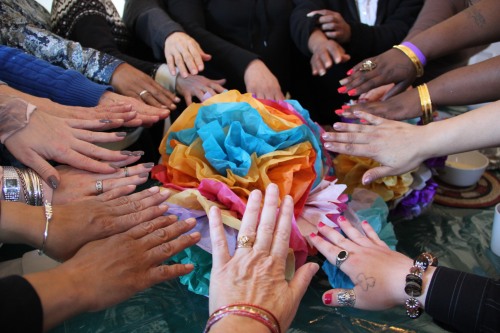
Dawn's Place circle of friends making paper flowers february 2014

Voices long silent
Spill over each other
Dying to be heard

Sisters on a mission
To recover lost youth
Find each other instead

Secrets never shared
Comfort never given
Tears never cried
Sink into the ground
Of love-starved hearts

How many of us are there? Blood relatives or total strangers, it doesn’t matter. The more I read and hear about the untold lives of women, the more horrified I am at the way we’ve been silenced. I also wonder how long we’ve taken it out on each other?

Starving for sisterly conversation. That’s how I grew up. Silence was enforced and reinforced a thousand ways. Not just at home but in church, in school and in every social or public setting of my life. Even, strangely, in settings that seemed to be made up of women only.

As a child and teenager I was surrounded by a seen and unseen assemblage of rules, shaming rituals and periodic public displays of what happens to strong women. Especially women who speak their minds and make trouble for the rest of us.

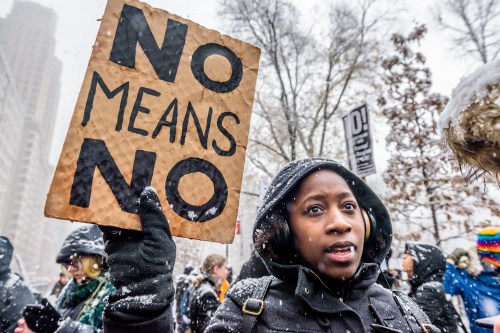
Fast forward, and it feels too familiar. Not so much from the bottom up as from the top down. It doesn’t take many men and like-minded women to turn the tide. Especially when women can easily be publicly shamed, if not ruined, in this age of social media.

Many, if not most of us are starving for love. Not for glory or fame, but for safety, acceptance and affection. We’re dying for a listening ear. At least one other woman who will confirm our experience. Laugh and weep with us. Comfort and support us. Especially now, when female life around the world is still fragile, no matter how many grand laws are on the books. Including right here at home in these United States of America.

I know. There are all kinds of barriers and circumstances that seem to discourage this. Yet a smile and a warm hello might be that last drop that turns the tide for another woman. I’d even suggest it’s a way of knocking on a door. Especially in a country gone sour on social niceties.

With hope and persistence,
Elouise

©Elouise Renich Fraser, 8 June 2018
Photo: Women at Dawn’s Place, a therapeutic residential program for women

Out of control

Four nights in a row. Out of control, nightmarish dreams that brought me to a full stop for a few days. I was in my dreams, but not in the driver’s seat. I wasn’t even in the vehicles. I was an onlooker, watching things go downhill with each increasingly dangerous iteration of the same scenario.

I don’t like starting over. I like getting into a groove and then letting things go ahead ‘as normal.’ Yet it seems nothing is normal anymore. Especially when it comes to my body.

A quick inventory:

Energy:
Back up to about 75%, after plummeting two years ago.

Sleep:
Definitely improved in the last three months so that I’m getting at least 7 hours of sleep each night without an unsightly number of bathroom visits. I know that’s not polite to talk about, but let’s just be real for a minute or two, OK?

Eating:
So healthy it makes me sick to think about it. Also the cause for most of my time management issues. Lots of cutting and chopping for those super-healthy smoothies, and constant vigilance about having the right stuff on hand. And then there’s that huge cleanup afterwards while I watch D make a sandwich, chomp a raw carrot, enjoy one small chocolate square, and be done with it.

Exercise:
Getting at least 2 miles of walking in a day, often more; burning well over 1300 calories a day; getting at least 30 minutes of ‘active’ walking a day. No complaints, except when it rains and I’m confined to indoor stairs and my small semi-recumbent bike.

Social Life:
It does happen sometimes. Yesterday we had another lively afternoon tea with our neighbors. Late last week I saw my nearly 85-year old friend Rita when we were out for a walk. And I go to church every Sunday where I’m known for standing around talking with my friends until I get run out. I’m not an extrovert, but I do love being with people, and miss the easy flow of socializing with friends and former colleagues.

Sometimes I feel sorry for myself. Sometimes I feel at peace. Yet most of the time I feel driven by whatever the next thing is. This includes time to rest each day—off my feet, relaxed, usually listening to music or taking a little snooze.

I want to experience peace more often, and not feel so driven by whatever the next thing is on my list. Or all those things that ‘should’ be on my list but aren’t.

I also want to keep an open mind about my lists. Most items are non-negotiable. I can rearrange some. Yet by the end of the day, I want to embody the spirit of this small prayer even though I don’t always succeed. I’m especially challenged by the last item.

I let go my desire for security and survival.
I let go my desire for esteem and affection.
I let go my desire for power and control.
I let go my desire to change the situation.

Quoted by Cynthia Bourgeault in Centering Prayer and Inner Awakening, p. 147 (Cowley Publications 2004)

Right now it happens to be lunchtime, so I’ll happily retire to the kitchen….

©Elouise Renich Fraser, 31 May 2018
Photo found at wisegeek.com

The High Cost of Living in the USA | Part 2

The high cost of living in the USA has fallen on African Americans from the very beginning of this nation. The goal has been and, it seems, still is to keep them in their places and optimize the gains of those in power. Including the power of those of us who think we have no power.

The high cost didn’t go down when slavery was outlawed. We simply notched it up with lynching, and then discovered mass incarceration. Some argue that mass incarceration is simply the latest way to get cheap labor and ‘disappear’ Black Americans without getting into legal trouble.

Are we the land of the free and the home of the brave? Yes and no. Yes if you’re able to reach and maintain inner freedom and courage in the face of overwhelmingly negative odds. Perhaps we’ve looked to the wrong heroes to show us what true freedom and bravery looks like.

I remember more than one of my younger African American male seminarians telling me he didn’t think he’d live to be an adult. Besides a history of slavery, lynching and entrenched racism, there’s random gun violence every day, entrenched poverty, and limited options regardless of ability. Add to this the availability of drugs and alcohol, and the mistake of being in public space if you’re Black.

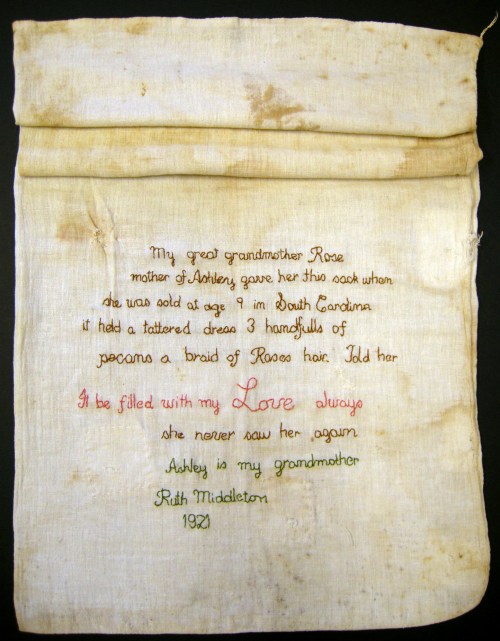
Last month a new Memorial to Peace and Justice opened. It’s dedicated to making visible our history of slavery, lynching and now mass incarceration. I want to visit this new Memorial before I die. Why? Because it’s past time to look at this part of my heritage as a white female.

In summer 1950, my family moved from California to rural Savannah, Georgia, just a short walk from what we called ‘colored town.’ I wasn’t aware of animosity between races. I was, however, painfully aware of economic disparities on display every day. Not just in our rural community, but in the city.

I now know from reading about the new memorial, and from this interactive map, that the state of Georgia is #2 in the list of states with the highest lynching record between 1882 and 1930. In fact, from 1877 to 1950, Georgia lynched 586 black men, women and children. Do you know how many were lynched in your state?

I’m told I enjoy white privilege. It’s true. When I get up in the morning I don’t have to worry about thousands of things including being seen in public as a white woman. I would suggest that this ‘privilege’ is better defined as white ignorance. I’ve learned, simply by breathing the air around me, how to be blind and unresponsive to what’s right before my eyes every day of my life.

So where do I go with this? Though data is important, I don’t think the solution lies in miles and miles of data. Instead, I’m rooting for the poets, the songwriters, the storytellers, and the truth tellers. Including truth-tellers like those who dreamed about and planned this new National Memorial.

©Elouise Renich Fraser, 23 May 2018
Photo found at Wickipedia; y Shameran81 – Courtesy Middleton Place, CC BY-SA 4.0, https://commons.wikimedia.org/w/index.php?curid=55786120

The High Cost of Living in the USA | Part 1

From my journal, written 17 December 2017. Lightly edited for clarity.

I’m stunned at how angry I am. Here we are in 2017 and some men and women are still trying to minimize what’s happening in the shadows. They want to change the conversation to the poor men who are being humiliated. I’m fiercely angry. This surprises me, since I thought I’d dealt with this and found a way to connect it with my life as it is now. So that my voice is in charge.

Suddenly ‘their’ voices seem to be in charge. The voices of men who violated other human beings and try to dismiss it all as lies or misunderstandings and get on with their lives. Victims be damned. In fact, let’s sue them! For defamation of character! Lies and half-truths.

I saw this behavior when I confronted my father about his abuse of my body and spirit. In his eyes, I was clearly The Problem. Today I hear almost ritual trashing of women and men who were violated in any number of ways. Forced against their will to do obeisance to a perpetrator. And then paying for it with their silence if not their future careers.

I feel the energy draining away even as I type this. What’s so horrendous is the cost of even beginning to connect with this national tragedy. As great as slavery, in my opinion. Though not the same as slavery. Both realities treat women and some men as another class of beings brought into the world to do someone else’s bidding and keep their mouths shut. What were they thinking???

Christian leaders, politicians of all parties, business leaders, prominent actors and producers, everyday fathers and uncles and grandfathers and brothers and cousins. How can such a degrading reality live for so many generations?

I don’t have the energy for this. Still, I’m horrified at the extent to which some are going to avoid, deny, make light of or even ‘kill’ truth.

The headlines are like poison right now. I avoid them. I don’t want to live in a constant state of internal uproar. I need a clear agenda for what I will and will not do to take care of myself in this national war between the courageous and the cowards who think money and reputation will save them.

Maybe all the ‘everyday’ harassment I experienced, especially at the seminary, wasn’t about how wrong I was, but about how right I was and how strong my voice is. I’ve always felt my voice was weak. Though women and some men found it strong, the overall impression I made on the majority of students was, I think, negligible. And according to some seminary officials, the less I said about controversial matters, the better.

But now I wonder. Was all the commotion about me due to the power of my voice? Were they afraid because they found themselves wanting to agree with me yet were also afraid it might mean the end of their hoped-for careers in church and denominational politics?

I’ll never know. Still, it never occurred to me that opposition to a voice might be a sign of the speaker’s success. Fear is a powerful motivator. Especially if someone is afraid of being labeled a trouble-maker or worse.

Cost: cannot be ascertained, only mourned for all women and men whose voices and creativity were silenced.

© Elouise Renich Fraser, 21 May 2018
Photo found at businessresearcher.sagepub.com

Catching up with myself

One of my faithful readers has challenged me (informally, of course) to tell you the story behind the photo above. It was my last photo in the Valley Forge National Park post about a week ago.

I immediately thought of three true stories, but another turned up this morning. Nonetheless, just so you don’t feel deprived, here’s a one sentence version of each story I’ve chosen not to tell in detail.

  1. Because Elouise is the firstborn of four daughters, she feels the need to keep running or walking faster in order to stay ahead of the pack breathing down her neck.
  2. Elouise and D love to go for walks during which D takes pictures while E just keeps walking ahead and circling back and then walking ahead again, again and again for as long as it takes.
  3. This was a very long walk with restroom facilities and a comfortable car at the end of the journey which Elouise has now almost reached.

OK. All true, and I could produce more of the same. However, on a more serious note, I’ve never thought of myself as needing to catch up with myself. Which means my self knows where it’s going and I need to learn to follow it. So I’ve chosen to see the photo as a kind of allegory of my current life: learning to listen to what I need and can deliver to myself.

Just over two years ago my life changed. Full stop. Don’t move. Breathe deeply, relax and learn to accept.

Short version: Multiple heart problems partially resolved by lovely Lucy Pacemaker. Two weeks later, nasty fall on sidewalk and a broken jaw that forever changed my walking and eating habits. Slow slide afterwards into adrenal fatigue with improvement, not yet resolved. And just over a year ago, a diagnosis of chronic kidney disease.

The impact on my life was sudden and confusing. I never dreamed recovery would be a long, slow forever slog. Or that other issues already residing in my body would be discovered and need attention as well.

The upshot was that I can no longer predict with certainty what I’ll need or be able to do day-to-day. I know the general limits and possibilities of each day, yet I never know how each day will play out. Things that seemed easy yesterday often feel impossible the next day. There isn’t much I can count on except that I have to eat, sleep, listen to and follow my body.

I remember when I first heard the phrase ‘listening to our bodies.’ I thought I knew what that meant. Yet I now know this is an invitation to controlled chaos. In the midst of this chaos, my body is the only reliable indicator I have to get me from here to there. That is, to a place of acceptance and gratitude without becoming bitter, cynical or despairing. And without making presumptions about tomorrow.

The photo reminds me that though this is a lonely task, beauty accompanies me. Sometimes it isn’t as obvious as Valley Forge National Park. Yet it’s always there waiting to be discovered. Sometimes in my backyard; sometimes in other people; sometimes in music or writing or the wanderings of my mind. I may seem alone and feel lonely; yet there’s more going on than loneliness when I’m willing to receive it. That’s when I truly catch up with myself and am grateful.

©Elouise Renich Fraser, 16 May 2018
Photo taken by DAFraser at Valley Forge National Park, 6 May 2018

I like a look of Agony

It’s been a while since I’ve commented on one of Emily Dickinson’s poems. Here’s one that seems right for this season of national and international rhetoric. My comments follow, in free-verse form.

I like a look of Agony,
Because I know it’s true –
Men do not sham Convulsion,
Nor simulate, a Throe –

The Eyes glaze once – and that is Death –
Impossible to feign
The Beads upon the Forehead
By homely Anguish strung.

c. 1861

Emily Dickinson Poems, Edited by Brenda Hillman
Shambhala Pocket Classics, Shambhala 1995

Emily doesn’t like false feelings or pretense. In this poem she looks to Death for an example of true feelings. Not expressed in words, but literally, on the forehead of a dying person. No one can possibly play make-believe when it comes time to die. Convulsions and the intense agonies of death, whether physical, spiritual or emotional, can’t be faked.

Nor can those telltale ‘Beads upon the Forehead’ of the dying person. Even silent Anguish cries out with tears that leak through the skin. Beads of Anguish strung upon the Brow. Thus Death gives strange birth to Truth. The truth of Agony and Anguish.

Below is my free-verse response to Emily’s poem. I’m struck by how many ‘fake’ emotions parade before our eyes and ears each day. We live in an age that celebrates Faux or at least Exaggerated Feelings. Perhaps to such an extent that we no longer discern what is Manufactured from what is Real.

With apologies to Emily:

We live in an age of Faux Feelings
Or at least an age that rewards them
Not with congratulations but with Attention
and Faux Gasps of Horror or Delight

Perhaps we forgot or never knew
How to have, much less allow air time
For True Feelings not ratcheted up
To the nth degree — especially True Agony

The kind not found by looking in a mirror
Trying to get just the right look that will
land just the right response be it Attention,
Applause, Laughter or the Disgust of the Moment

Unsocial Commandments hamstring us
Pulling chains that avert our eyes instead of
Encouraging us toward each other in life and
In death as family and next of kin, not strangers

Life and Death itself seem to propel us toward
Ever-greater depths of make-believe and denial –
Hiding behind masks that mimic or minimize feelings
We most fear to acknowledge, sit with or name

Perhaps our Deaths are the only unscripted
Roles we play with unfiltered, uncosmeticized
Feelings of True Agony, Grief, Pain and Love,
Finally crossing all sides of divides that bind us

©Elouise Renich Fraser, 14 May 2018
Photo found at blog.xuite.net

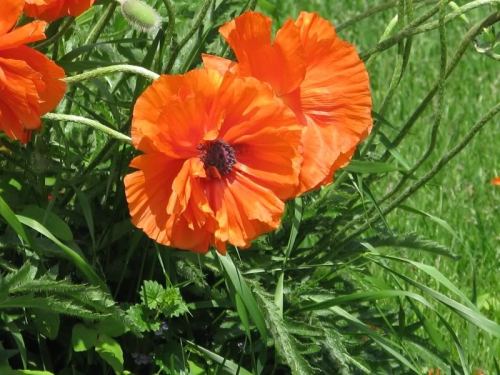
bright ruffled poppies

bright ruffled poppies
dance along the garden wall
bowing and nodding

Here’s to the women in my life who mothered me along the way! You didn’t even know you were doing it. Sometimes I didn’t know, either. I’ll never forget the friend who invited me to a makeup demo. I’ve never been a big makeup fan. It was the devil’s paint when I was growing up–also a sad and sorry sign of being a ‘loose’ woman.

Nonetheless, by the time I got to the seminary as a professor in the early 1980s, I was in dire need of mothering. This little makeup demo was a tiny step that helped give me more confidence than I ever had as a child, teenager, or young adult.

Along with the makeup demo came a little tutorial on colors that would complement my summer beauty! Imagine that…thinking of myself as a ‘summer.’ Even more spectacular, these two little tips became the foundation of everything I wore or gently applied to my face. Colors that actually made me happy to look in the mirror.

Then there was my emotional/physical/spiritual storm during the late 1980s and 1990s. This time it wasn’t about what was on the outside. It was about what was eating me away on the inside. It took a while to get there, but in the early 1990s I met a gifted psychotherapist who actually listened to me and wanted to hear about my life. Without meaning to, she mothered me for decades, and still plays a role in my life. Encouraging me through this last chapter.

I wouldn’t be here at all without my birth mother. She was beautiful on the outside and inside, and her life was fraught from the beginning. Sadly, she never talked much about herself. I think she carried a lot of shame, along with physical pain and the challenge of living with my father for over 60 years. Some of what she wasn’t able to give me, a great host of women have given me in small and large ways. Often when least expected.

For these women, past and present, I’m sending these poppies. Small signs of the beauty to which you introduced me. I see bits and pieces of beauty in life, in nature, in friendships, in myself, and in hard places I thought I would never experience. All because you showed me your beauty from the inside out.

Yesterday afternoon I visited my neighbor’s backyard garden. He had planted a row of oriental poppies against his garden wall. They were magnificent. Hence the haiku and the photos above of gorgeous, crepe-paper-like oriental orange poppies.

Here’s to a Happy Mother’s Day and Year to all Mothers–including those we never expected to cross our paths along the way.

Elouise

©Elouise Renich Fraser, 12 May 2018
Photos found at cbsally.com

the old woman + photos

the old woman sits
staring beyond the window
into her future
hovering beneath the sky
dancing in the setting sun

The words came to me this morning while I was sitting at my kitchen table, looking out the window at our back yard. Being with my adult children and their spouses always puts me in a pensive mood–along with the sheer joy of being in their company. Each visit feels a bit more precious than the last.

Our daughter and her husband have been here for several days. So far we’ve had a mix of cold and now very warm, moving toward hot weather later this week. I’m happy to say the attic guest room is a huge hit! On Monday we visited Longwood Gardens for an afternoon of picture-perfect weather. Yesterday we went for a late-afternoon walk along forested trails in Valley Forge Park. I’ll post photos later.

In the meantime, here are three more from our Longwood visit on Monday afternoon. Proof that Spring has arrived for sure.

© Elouise Renich Fraser, 2 May 2018
Photos taken by DAFraser, 30 April 2018, Longwood Gardens

Listening to Rhiannon Giddens

Have you met Rhiannon Giddens? She was recently chosen to become a MacArthur Fellow which includes receiving a MacArthur Genius Grant. You can see a list of all recipients since 1981 at the link above.

So why was Ms. Giddens chosen? Not for anything she had already accomplished, but as an investment in her originality, insight, and potential as a musician. The award has been given out every year since 1981, always to a group of persons with potential in a range of areas. A committee chooses the recipients; there is no application process.

Ms. Giddens is the daughter of a White father and a Black mother. They met and married in North Carolina in the 1970s, just three years after the USA legalized interracial marriage. The song above, accompanied by Ms. Giddens on her banjo, uses two voices. Julie is a Black servant; Mistress is her White mistress. Each verse is in a different voice. This is Ms. Giddens’ way of drawing on her bi-racial identity. Particularly given the history of North Carolina that led to the brutal massacre of 1898.

The song takes us back to 1898 and the moments leading up to the arrival of White men intent on killing as many Black men, women and children as possible. In the last stanzas we learn the truth about Julie and her Mistress.

Lectures and books about our current racial issues are important. Yet they don’t move me or give me as much insight into the tangled mess we’ve inherited than do music, poetry or stories of this depth from artists such as Ms. Giddens.

©Elouise Renich Fraser, 24 April 2018
Video found on YouTube

White Supremacy

I’ve lived in majority White neighborhoods most of my life. I’ve also lived through the drama of early desegregation, beginning with the 1960s. Back then the drama was chiefly about Black and White Americans. However, it now includes other immigrant and refugee populations. Especially those without financial security or steady jobs with decent wages and health benefits.

Despite the dreams and goodwill of many US citizens, things don’t seem to have changed that much. Especially in our cities. But also, increasingly, in the suburbs. Not in the shopping malls, but in our neighborhoods. It’s good to attend a church that’s visibly open to all comers. But even this doesn’t take the place of neighborhoods.

It’s simple. If I don’t have daily contact in my neighborhood with people who don’t look or act like I do, I won’t get very far on my own. I know this, because I now have Muslim, Roman Catholic, and Jewish neighbors. Plus other White Protestant neighbors. I have no Black neighbors.

My attitudes and behaviors are important. Nonetheless, I can’t solve this alone. This a national problem and disgrace, especially given decades-old legislation against discriminatory practices in the housing industry. The problem began early in this nation’s history, and has only become more deeply entrenched as we’ve made ‘progress’ toward what I would call semi-integration (sometimes takes good pictures, but it isn’t real).

Here’s a fact I heard this weekend on a reputable radio station. With the exception of President Obama, none of our recent Presidents took housing discrimination on as the monster it is. In addition, Mr. Trump has further weakened these efforts with his choice of staff, his tweets, his attitudes, and his macho White Supremacy approach to governing.

In other words, we have great legislation and ineffective or nonexistent follow-through. Neighborhoods don’t happen on maps; they happen in hearts and everyday lives. On streets, porches and sidewalks. In back yards and corner grocery stores. We need to rub elbows with each other. Share the news; help with the snow shoveling; watch the kids from time to time. Talk about the weather and then maybe about something more important than that.

Over the weekend I heard an interview that gave me a starting point. A place and way to begin writing about this. So here’s the deal for today. I bring you a quote. That’s all. It gives me a chill every time I read it.

The Anglo Saxon planted civilization on this continent and wherever this race has been in conflict with another race, it has asserted its supremacy and either conquered or exterminated the foe. This great race has carried the Bible in one hand and the sword [in the other]. Resist our march of progress and civilization and we will wipe you off the face of the earth.

Major William A. Guthrie, 28 Oct 1898, in Goldsboro, NC, speaking to a crowd of 8,000 at what was called “A White Supremacy Convention.” From Raleigh News and Observer, 29 Oct 1898. Quotation excerpted from Wikipedia article on The Wilmington (NC) Insurrection of 1989. 

Nuanced for the year 2018, versions of this quote are still filling the airwaves and social media. The question is how to combat this assault on our common humanity and on our increasingly isolated neighborhoods.

©Elouise Renich Fraser, 23 April 2018
Photo found at whqr.org