Telling the Truth

connecting the dots of my life

Tag: Trauma

remember then thy fear | George MacDonald

The sonnet below blows me away. Not because it’s beautiful, but because it’s timely, true, and thought-provoking. Especially now, when we’re surrounded on all sides by friends and strangers haunted by dismay and death. The possibilities are endless: suicide, warfare of all kinds, bombing, Covid, lynching old style or new style, aging….

George MacDonald (1824-1905) dealt with his own incurable tuberculosis, witnessed the early death of six of his children, and was not well received by many church leaders. He also wrote amazing novels such as Lilith, and books for children such as At the Back of the North Wind. Dismay and death were regular visitors in his life.

Here’s MacDonald’s March 24 sonnet from The Book of Strife in the Form of the Diary of an Old Soul, also known as The Diary of an Old Soul.

O Christ, have pity on all folk when they come
Unto the border haunted of dismay;
When that they know not draweth very near–
The other thing, the opposite of day.
Formless and ghastly, sick, and gaping-dumb,
Before which even love doth lose its cheer;
O radiant Christ, remember then thy fear.

George MacDonald (1824-1905), author
First published in The Book of Strife in the Form of the Diary of an Old Soul
© 1994 Augsburg Press, Diary of an Old Soul
Sonnet for March 24 found on p. 36

The last line of the sonnet says it all. MacDonald is praying on behalf of human beings “haunted of dismay.” They know death has moved too close for comfort. Too close for cheer.

This is what moves me. Instead of asking the “radiant Christ” to restore their cheer, he asks Christ to “remember then thy fear.” In other words, he’s asking Christ to accept and thus honor their fear, anguish, and anger. Including, I would add, MacDonald’s and that of our friends and family, plus our own.

Thanks for visiting, and for remembering friends and neighbors dealing with their own deaths.
Elouise

© Elouise Renich Fraser, 30 March 2022
Photo found at amazon.com, Kindle

Life gone missing

1963 Aug Elouise Double Exposure flipped

Disoriented
and out of touch
the old woman
blinks hard peering
at old photos
in scrapbooks–
traces of life
now gone missing

Is that building
still standing and
did the hurricane
demolish the
lovely roller rink
firmly rooted in
yesterday’s pristine
sand washed clean
with every tide?

Questions.
Nothing more
rises to the surface
of my weary mind trying
to visualize the way
back home

Yes, this could be about getting old. It’s also about how quickly we, as a conglomeration of nations, seem to be sinking into quicksand. Are we ready for this? How are we to live in the face of death and destruction at every turn?

Though victory has sometimes been snatched from certain defeat, I’m not convinced that will happen anytime soon.

Which brings me to the big question: Am I ready to die?

This is about more than being spiritually ready to die. It’s about not knowing what will happen next, no matter how carefully I may have planned for today or tomorrow. It’s about being bold in the way I live each day, knowing it could end at any moment. Not just from health issues, but from worldwide chaos, festering anger, lust for power, or attempts to wipe out people based on gender, color, religion, or whatever those in power love to hate.

One more question: What does it mean to make chaos my home? In the poem I end up trying to remember the way back home. Perhaps the poem is challenging me to find my way home. Not to what’s old or familiar back there, but to what’s real and certain right now, 21st-century style.

Am I ready for this? If so, how does that mean for the way I live today?
Elouise

© Elouise Renich Fraser, 17 March 2022
Double exposure taken (by accident) by DAFraser and a friend, August 1963 at Tybee Island Beach

Sometimes…I cannot pray | George MacDonald

The news from Ukraine and neighboring countries is more than grim. No matter who ‘wins’ this obscene standoff, too many have already lost. How, then, am I to pray?

Today I read this sonnet from George MacDonald. His life was full of unwanted tragedy, death, pain, and strife.

Sometimes, hard-trying, it seems I cannot pray–
For doubt, and pain, and anger, and all strife.
Yet some poor half-fledged prayer-bird from the nest
May fall, flit, fly, perch–crouch in the bowery breast
Of the large, nation-healing tree of life;–
Moveless there sit through all the burning day,
And on my heart at night a fresh leaf cooling lay.

From George MacDonald’s Diary of an Old Soul, p. 13
© Augsburg Publishing House (1975) and Augsburg Fortress (1994)

It seems not knowing how to pray isn’t the end of the world. Perhaps it means we’re in touch with reality. And what then?

I hear George MacDonald, whose life was filled with strife, pain, anger and doubt, suggesting it’s OK. I don’t have to know what to say. In fact, not knowing what to say might be the most honest way to approach strife such as he endured, and many are enduring right now in Ukraine and beyond.

In the middle of seeming chaos, do I have the courage of the half-fledged prayer-bird to “sit through the burning day”? Waiting, watching, staying close to the “large, nation-healing tree of life” until this little bird brings a “fresh leaf” to cool my troubled heart?

May our Creator have mercy on us all.
Elouise

© Elouise Renich Fraser, 14 March 2022
Photo of young fledgling found at birdguides.com

A poem I can’t get out of my mind

It doesn’t take much effort to see what’s happening daily in many if not most of our neighborhoods, towns or cities.

Nonetheless, when it comes to actively joining efforts on the field, many of us would rather stay put in the grandstands. Glued to our seats. Gasping from time to time, but not joining the fray, or putting ourselves in harm’s way.

I’m no extroverted star. I’d rather stay on the sidelines. Study what’s happening on the field. Pray. Give money. Or read more about poverty in cities and surrounding towns, and what others are doing to come alongside with help. Certainly all those good things are important and necessary.

Here’s a poem that challenges me every time I read it. G. A. Studdert Kennedy served on the ground as a World War I army chaplain to British soldiers. Many of his poems reflect realities of life in the warzone. This one, however, reflects the reality of life in the city of Birmingham.

Indifference, by G. A. Studdert Kennedy (aka Woodbine Willie)

When Jesus came to Golgotha they hanged Him on a tree.
The drave great nails through hands and feet, and made a Calvary;
They crowned Him with a crown of thorns, red were His wounds and deep,
For those were crude and cruel days, and human flesh was cheap.

When Jesus came to Birmingham they simply passed Him by.
They never hurt a hair of Him, they only let Him die;
For men had grown more tender, and they would not give Him pain,
They only just passed down the street, and left Him in the rain.

Still Jesus cried, “Forgive them, for they know not what they do.”
And still it rained the wintry rain that drenched Him through and through;
The crowds went home and left the streets without a soul to see,
And Jesus crouched against a wall and cried for Calvary.

“drave” – drove

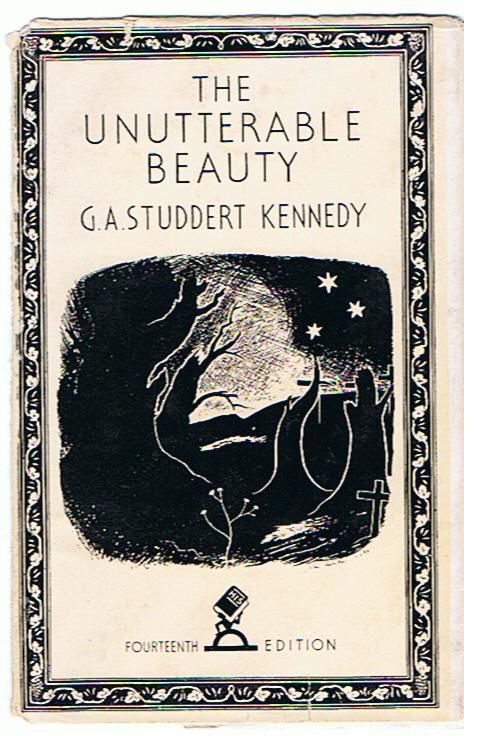
Indifference found on page 21 in The Unutterable Beauty – The Collected Poetry of G. A. Studdert Kennedy
First published by Hodder and Stoughton Limited, London (March 1927), reprinted June 1928
Second publication by Pendlebury Press Limited, Manchester, U.K., August 2017

There’s no end of women, children, young people and men who would welcome even a small sign of genuine interest from another human being. Maybe they’re next door, just down the street, sitting beside us in church or on a bus, or even sitting lonely in that big mansion up on the hill. In the end, Woodbine Willie was known for his commitment to being there. Not with answers, but with a listening ear and a praying heart.

Thanks for stopping by today.
Elouise

© Elouise Renich Fraser, 24 February 2022
Photo found at backwatersman.wordpress


The Uses of Sorrow | Mary Oliver

Have you ever dreamed a poem? Here’s one from Mary Oliver. Short and to the point. My comments follow.

The Uses of Sorrow
(In my sleep I dreamed this poem)

Someone I loved once gave me
a box full of darkness

It took me years to understand
that this, too, was a gift.

© 2006 by Mary Oliver
Poem found in Thirst, p. 52
Published by Beacon Press

I first read Mary’s dream poem several years ago, then hurried on to the next page. I didn’t want to think about it. How could a box full of darkness be a gift?

In German, “das Gift” means poison. In some ways this blog was my way of beginning to take ‘das Gift’ seriously. When I began blogging, I agonized over what to say and how to say it. What was in my “box full of darkness,” and who gave it to me? Or, better put, who passed it on to me so that it became My Problem?

Sorrow isn’t a throw-away event, or series of events. As Mary Oliver says in the title, sorrow has its uses.

Nonetheless, real life doesn’t usually invite us to see a box full of sorrow as a true gift. Instead, we’re supposed to play the game ‘their way’ because that’s what the box of darkness is about. Put another way: It perpetuates the angst and anger of generations, without recognizing or fighting today’s poison. Easier all round for everyone, right?

Wrong. Understanding ‘das Gift’ as a true gift to be explored was and still is dangerous. Beginning to investigate the past brings an avalanche of consternation, anger, tears, honesty and humility. It dares me to turn my so-called gift into light. The kind that illuminates truth and empowers me to be the woman I am.

At this age, I’m still finding ‘stuff’ not yet examined from the box of poison passed on to me as a child and young adult. However, when I’m willing to step back and take a deep breath, I’m also able to take one more step in the right direction. For better and for worse, being in my elderly years means I have lots of material to work with, whether I like it or not.

Thanks again for stopping by. I’m doing quite well most days. Especially when I follow my heart instead of my head or my forever-lists of things to ‘do.’

Cheers!
Elouise

© Elouise Renich Fraser, 18 February 2022
Image found at pinterest.com

Old habits die hard

I’ve been thinking about this poem for several days. I wrote it two years ago, not expecting we would find ourselves in today’s mess. My comments follow.

The Resistance

Bursting dams explode
fueling unhinged tongues

Roiling water floods old landscapes
scarred beyond recognition

The end of this world collides
with the untimely birth
of a new world ruled by
winners of a rigged lottery

How shall we then live
with death-dealing word-bombs
hanging over our heads
seeking to silence the resistance?

I posted this poem in February 2020. That was after Mr. Trump’s loss to President Biden, and after the attack on both houses of Congress by followers of Mr. Trump. I considered myself then, as now, part of the resistance — not part of those who hoped to change the outcome of the 2020 Election.

We’re still living in the aftermath of this attack. We’ve become a country at war with itself. The war is about more than Covid masks and vaccinations, or even who won the 2020 Presidential Election.

It’s about what it means to be a law-abiding citizen of the United States, who gets to decide whether to obey the laws and requirements of citizenship, and how to deal with centuries of unequal justice.

In the end, it’s about perks that come or don’t come with money–gobs, a lot, some, or virtually none. Or what kind of attention your voice gets or does not get. Or what color your skin is, your gender, where and how you live, and whether you’re considered dispensable or not.

I don’t have answers. When I wrote this poem, I wasn’t thinking about the mess we’re in today. However, now as then, it’s still time to take risks on behalf of truth and justice. Like some of you, I was brought up in a family, religious organizations, and workplaces that expected me to sit down and keep my poor white female mouth shut.

Thanks for reading and doing what you can on behalf of truth and justice for All.
Elouise

© Elouise Renich Fraser, 15 February 2022
“The Resistance” was first published on 6 February 2020
Photo of bursting dam found at pinterest.com

The Meeting with My Parents

Diane and Elouise standing by the Savannah River
20 Nov 1993, the day after meeting with my parents

On 19 November 1993 I met with my parents in Savannah, Georgia. A gift to myself on the eve of my 50th birthday.

It took 1 ½ years to prepare for the meeting. It wasn’t a declaration of war. It was an attempt to see whether my parents and I could begin talking about my childhood. Put another way, could I hold my own viewpoint without trying to change my parents’ viewpoints?

The biggest unknown was how my father would respond. His habit was to talk over and down at me.

Now I’m in Savannah. My father is sitting directly across the table from me, with my mother next to him. I’ve asked a pastor we all know to be present. He convenes the meeting and turns it over to me. David is on my left hand; my sister Diane is on my right—both instructed not to talk or try to argue on my behalf.

I read from a single-spaced, 1 ¼ page statement. Here’s the heart of what I said about the way my father punished me as a child and teenager.

The spankings were abusive. I was very small; you were very big. I had no power; you seemed to have all the power. The spankings happened regularly for most of my growing-up years. They were terrifyingly predictable. I dreaded nothing as much as I dreaded being spanked. Worst of all, the spankings were administered in a way that shamed, humiliated, and silenced me. . . .I have been lost for most of my adult years. Lost in a sea of shame, humiliation, and fear–fear of opening my mouth and saying directly to you what I need to say: I did not deserve to be shamed, humiliated, and silenced.

Though my parents were in this together, my mother wasn’t in the room when I was being punished. My question for her was simple: What was it like for you when I was being punished? Where were you? What was it like to hear us crying and pleading? She didn’t remember hearing anything.

From my father, I wanted one thing: an apology for the way he shamed, humiliated, and silenced me. I asked for an apology, which was immediately denied. Thankfully, getting an apology wasn’t my goal.

There was one unexpected disruption during the meeting. My father abruptly walked out of the meeting, left the building, and sat in his car. We could see him through the window. No one said anything. It was my meeting. I waited several minutes. Then I signaled to David to come with me for moral support. We stood on the sidewalk beside the car while I talked with him for a long time. Eventually he agreed to come back and finish the conversation. I was astonished and relieved.

After this meeting, D and I visited my parents (in Savannah) on several occasions. I always had a list of questions to ask. I learned a lot from these informal conversations, though my father was clearly set in his ways and unwilling to change. Still, these conversations were a gift I hadn’t anticipated. Not surprisingly, many of my father’s rough ways reflected my grandfather’s unpredictable, harsh beatings of my father. A sad legacy.

Thanks for stopping by today.
Elouise

© Elouise Renich Fraser, 8 November 2021
Photo taken by DAFraser on 20 November 1993; Diane (on the left) and I are at the Savannah River waterfront.

What Boundaries?

Fake power exercises ruthless control
In vain attempts to nurture sisterly virtues

Bible-grounded communication floods my ears
With thou shalt and thou shalt not

Beleaguered sisters throw group loyalty to the winds
In favor of loyalty to one’s fragile female self

Being docile sometimes becomes a stand-in for
Being truthful or angry or distressed

Like cookies born of one cookie cutter
We stare at our unknown selves in consternation

Who we are together remains a mystery
As we strain to survive apart from each other

I’m aware of being watched by Daddy night and day
Without so much as a polite knock at the door

Driven to precarious survival techniques
My heart and stomach drown beneath anxious fear

During the past week I reviewed dated notes I kept when I began working with a psychotherapist in the early 1990s. I was in my late 40s, drowning in depression. One of my first tasks was to connect with my three younger sisters.

By then we were scattered over the USA and beyond. What we knew about each other personally was fragmented at best. We were aware of the large outlines of our adult lives. However, we didn’t have an informal network for safe, sisterly communication.

I never talked with any of my sisters about the rules in our family, or our father’s corporal punishment doled out regularly to enforce the rules. Nor had we talked together about who our father favored, or why.

Sometimes life felt like a war between sisters. I could deduce which sister was the favorite of the day. I also knew I was a favorite target for ‘Let’s get Elouise in trouble.’ No sibling likes to have the oldest sister designated as the parental stand-in.

As you might guess, we weren’t there to console or encourage each other. We were focused on staying out of trouble or deflecting attention to another sister’s behavior.

I began my adult work on boundaries with telephone calls to each of my three sisters. Would you be willing to talk with me privately (no reports back to Mom or Dad) about our experiences living at home? I was starving for sisterly conversations. Each of my sisters, in her way, helped me come out of my lonely closet of indirect communication, depression, and denial.

My next hurdle wasn’t nearly so easy. How would I name and maintain adult boundaries with my parents? Stay tuned!

Thanks for your visits and encouragement. Tomorrow I have tests to determine how much damage peripheral neuropathy has done to my feet and legs.

Praying for calm in these troubled days, here and abroad.
Elouise

© Elouise Renich Fraser, 21 October 2021
Photo taken by JERenich, Easter Sunday, 1953

Whatever lies ahead

Walking toward me this morning,
the fortyish adult woman seemed
unhappy and despondent,
clutching her light jacket
and looking away

Just across the street,
grade school children shouted
in frenzies of laughter, competition
and the need to be seen and heard

How does it happen so quickly —
This fierce need to be part of the gang?

And how is it that some of us
were held back by heavy rules
and unnumbered regulations?

I’ve rarely felt so lost as I do today
during this unruly period between
diagnosis and unpleasant tests
coming toward me down a road
I never thought I would travel

Yes, I have health issues on my mind. I’m also thinking about my writing. The physical impact on my body is taking a toll. I’ll be relieved when the next set of tests has been completed.

For years, I’ve had a storyline in my head: Eldest daughter of a strict pastor/father gets married and finally has a life of her own. Rules for Good Girls go out the window. Free at last, she flies away and finds out she is a real human being.

I wish. It’s wonderful to celebrate the moment I spoke truth to my father. It was the eve of my 50th birthday. I did not deserve to be shamed, humiliated, or silenced. What was taken from me in my childhood and youth is gone forever.

Until now, I’ve hesitated to write about what it was like to study, teach, and serve as dean in academic and seminary settings. Nor have I written much about my life as a member of Christian churches.

Something tells me this is an opportunity to be welcomed. Right now I’m not so sure. Yet I know it’s time.

Thanks for listening,
Elouise

© Elouise Renich Fraser, 12 October 2021
Photo taken by DAFraser, 10 September 2021 in the Longwood Meadow Garden

A lament for 9/11/2001 and today

I wrote the lament below for an open seminary forum held one month after the 9/11/2001 attack. Today, 20 years later, the lament rings painfully true.

We haven’t had more unexpected attacks on skyscrapers or the Pentagon. Instead, we’ve had a home-grown physical attack on Congress; home-grown political attacks masquerading as MAGA; routine home-grown attacks on people of color, immigrants, and women; unprecedented fires, floods, drought and tornadoes; and daily fallout from protracted global warfare and upheaval.

Back to 2001. I was one of several faculty members asked to open the forum. I’m speaking in our seminary chapel. A large wooden crucifix is on the wall behind me. Hence my reference below to Christ’s death being in the room.

It’s difficult to focus.
Voices and images
clamor for my attention,
my response,
my analysis of what is beyond all reason.

I force myself to stay close to the bone,
close to home, close to my Christian roots.

Death is in the room.
Not a new presence,
not even unexpected.

It, too, clamors for my attention,
masquerading in terrible new configurations.

I don’t want to die,
especially if I must suffer in my death.

From the throne of his cross,
the king of grief cries out….
‘Is it nothing to you, all ye who pass by?’

There is no redemption
apart from suffering and death.
None.

I want to be redeemed.
I do not want to die, or to suffer.
I’m not a very likely candidate for redemption.

Death is relentlessly in this room.
My death.
Your death.
Christ’s death.

Unfinished family business is in this room.
Violent behaviors and attitudes
passed down from father to daughter;
Habits of not telling the truth,
passed down from mother to daughter;
Withholding of love and affection,
Relentless inspection and fault-finding,
Love wanting expression but finding no voice,
Truth wanting expression but finding no listening ear.

Unfinished family business is in the room with death–
A gnawing ache more than my body can bear.

I like to think I’m ready to die.
But I am not.
Nor will I ever be.
Not today, not tomorrow,
Not in a thousand tomorrows.

If I say I am ready to die,
I deceive myself,
and the truth is not in me.

There’s always more work to be done–
Unfinished family business
Unfinished seminary business
Unfinished church and community business
Unfinished personal business

Christ died to relieve me
of the awful, paralyzing expectation
that one of these days
I will finally be ready to die.

Christ finished his work so that
I could leave mine unfinished
without even a moment’s notice.

The Heidelberg Catechism says it all–

“What is your only comfort in life and death?

“My only comfort, in life and in death, is that I belong–body and soul, in life and in death–not to myself but to my faithful Savior, Jesus Christ….”

Praying for ways to maintain lifegiving connections with those we love and those we too often love to hate.

Elouise

© Elouise Renich Fraser, 11 September 2021
Quote from the Heidelberg Catechism found at etsy.com