Telling the Truth

connecting the dots of my life

Tag: Trauma

Scars upon scars

Scars upon scars
cover futile attempts
to distance pain
of yet another blow
to my body, soul, dreams
or soothing denial

It’s nothing
I can take this
I don’t need to talk about it
I dealt with that long ago
Didn’t I?

And how can I help you today?
I have plenty of time.
I can proofread that if you’d like.
It’s nothing. Really. Nothing at all.
No problem. It won’t take long.
No need to apologize
for anything, really.
We all make mistakes.

Time passes
skin thickens
spine goes rigid
demeanor tentative
neutral eyes scan
from the periphery
avoid other eyes
awkward at best
antennae soar heavenward
nothing and nobody is
safe but this last remnant of
body-soul on alert
not to be lulled into
carelessness

It wasn’t being born female that scarred me. It was overtime, double duty hyper-vigilance plastered layer upon layer with each attempt to control, use or fix me.

Over time petrified limbs of my body and soul cowered whether I wanted them to or not. I fell into protective behaviors that stifled every hint of unhappiness or, God forbid, revulsion. I was physically and emotionally exhausted.

Each woman is different. Internal scars from child abuse, and sexual harassment or unjust workplace practices that disadvantage women are not the same as external scars or physical challenges. Sometimes the best way to begin healing is to find a trusted friend or referral service to suggest next steps that might work for you.

I was initially helped by a twelve-step group of over 20 women meeting weekly in a church basement. It didn’t cost me anything but my pride plus $1 a week (optional) in the basket. For 5 years I showed up 2 or 3 times each week for this and other twelve-step meetings. All while I was teaching full-time at a seminary. It took me that long to realize I needed professional help. By then I was in my late 40s.

I began blogging four years ago to break silence about my childhood and teenage years. Today it’s about more than that—though dealing with my past helped free me to write as I do today.

When we women invest wisely in our emotional, spiritual and physical health, we do the most important work of our lives. We don’t deserve to carry heavy layers of scars. Some can be laid aside. Others we get to keep. They connect us to sisters and brothers, and can, from time to time, add to our beauty and wisdom.

© Elouise Renich Fraser, 10 January 2018
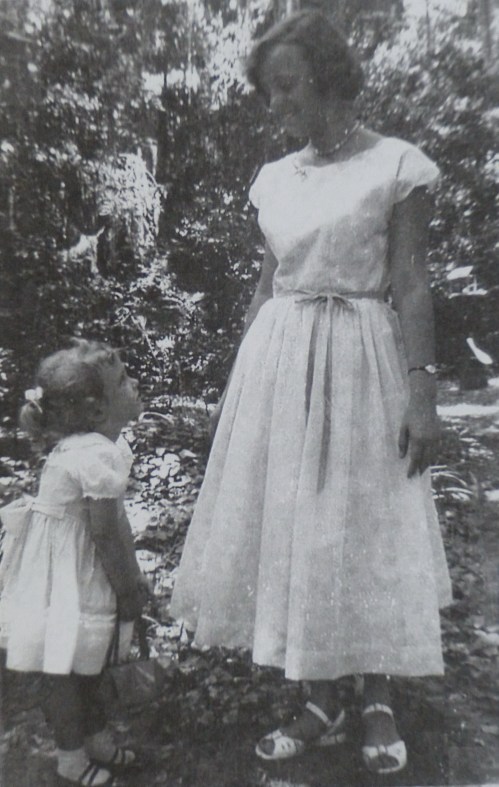
Photo taken by my father, 1954/55, my youngest sister and I, Savannah, Georgia
Listening to Extreme Poverty

An article this morning about Australian Professor Philip Alston’s survey of extreme poverty in the USA did me in. It’s Advent. A time for hope, joy and expectation. Yet for over 41 million Americans there is no expected arrival of anything but escalating hunger, despair, disease, death, and promises not kept. Professor Alston’s written report will go to the United Nations next May.

It’s easy to blame politicians and corporations. Or the super rich. But that doesn’t cut it.

Taking time to listen deeply is a spiritual discipline. I love pondering a beautiful flower or sunset. It’s something else, though, to ponder a problem this large. What is this reality trying to tell me?

There’s a growing divide between those who care to understand extreme poverty, and those who choose to ignore it or put the blame somewhere else. For example, we know charitable agencies, churches, outreach programs and governmental services work daily to ease the anguish and dehumanization of USA-style extreme poverty.

We may also believe that if extreme poverty isn’t addressed systemically, our personal efforts are mere bandages–a waste of time, effort and money. Yet the message of Christianity and other faiths includes the importance of showing hospitality to strangers. Especially those in distress.

So what can I do about any of this?

I don’t have answers. The easiest thing would be to shake my fist at politicians and super-rich ‘one-percenters.’

I’m reminded of Dorothee Soelle’s book on Suffering. What’s needed from me isn’t outrage, shaking my fist, or solutions to solve the problems of people trapped in extreme poverty. What’s needed is simpler than that, and a thousand times more difficult.

I need to listen in silence, the way Dorothee Soelle listened to victims of the Viet Nam war. That might mean listening to long, painful silence before words are found and haltingly spoken with anguish or rage.

Yet if I don’t learn to listen patiently for the story of a person trapped in the despair, humiliation and disenfranchisement of extreme poverty, I won’t understand my story. ‘Their’ story is another piece of my story, whether I like it or not. It’s also part of the story of the USA, whether we like it or not.

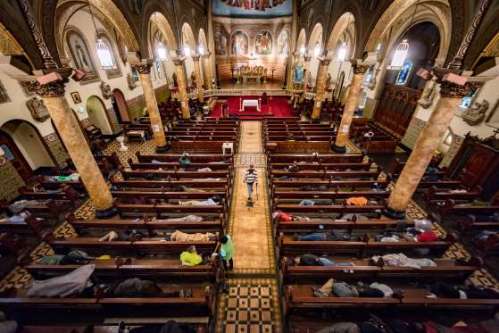
The photo at the top shows the sanctuary of a church in San Francisco that opens its doors weekdays from morning through mid-afternoon for homeless persons to rest and sleep. It came from the article I read this morning.

Praying each of you will have a hope-filled Sabbath rest.

© Elouise Renich Fraser, 16 December 2017
Photo of St. Boniface in San Francisco found at msn.com in “A Journey through a Land of Extreme Poverty: Welcome to America” 

Our original sin

I wonder…
Does each nation
Each country
Have an original sin
The seed of its
Particular ignominy
Running through veins
Shot full of raging
Hormones escalating
Into tragedies
Of historic proportions
Played out in
Unnumbered permutations
Of seduction and flattery
Designed to deceive
And subdue?

It isn’t just the daily revelation of predatory behavior by public figures and officials. It’s the reality that various permutations of predatory behavior undergird the earliest foundations of our nation.

I’d describe it this way: The subduing and disappearing of some in order to pursue the welfare of a select group that viewed and still view themselves as more entitled than others.

Layer upon layer. Decade after decade. And now we’ve come to this juncture in our history without a clear understanding of how we got here, and how many were and still are subdued and disappeared. Buried beneath mountains of inspiring proclamations, and promises not kept.

So what am I doing about it? Besides writing, I’m reading. Today I’m focused on books that invite me to open my mind and my heart. Not simply to what happened when our country was founded, but what’s still happening today. Unrecorded, unexamined, and unacknowledged.

My newest book is Sing, Unburied, Sing, written by Jesmyn Ward. I’m also reading Maya Angelou’s I Know Why the Caged Bird Sings. One painful chapter at a time.

© Elouise Renich Fraser, 29 November 2017
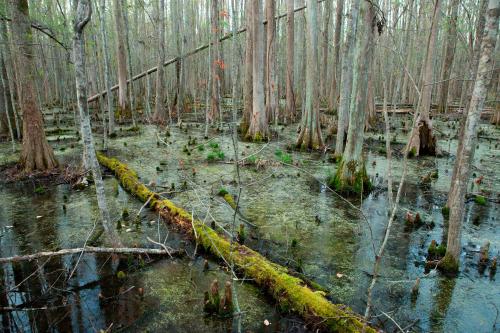
Photo of Great Dismal Swamp found at smithsonianmag.com
The swamp, located in Virginia and North Carolina, once served as a refuge for Native Americans and fugitive slaves.

A Bird came down the walk —

Here’s another childlike poem from Emily Dickinson that’s filled with adult insight. My comments follow.

A Bird came down the Walk –
He did not know I saw –
He bit an Angleworm in halves
And ate the fellow, raw,

And then he drank a Dew
From a convenient Grass –
And then hopped sidewise to the Wall
To let a Beetle pass –

He glanced with rapid eyes
That hurried all around –
They looked like frightened Beads, I thought –
He stirred his Velvet Head

Like one in danger, Cautious,
I offered him a Crumb
And he unrolled his feathers
And rowed him softer home –

Than Oars divide the Ocean,
Too silver for a seam –
Or Butterflies, off Banks of Noon
Leap, plashless as they swim.

c. 1862

Emily Dickinson Poems, Edited by Brenda Hillman
Shambhala Pocket Classics, Shambhala 1995

Here’s how I see this poem today—informed by my own observations, and the article I mentioned earlier about possible trauma in Emily’s life. The author saw multiple signs of this, especially in poems written around 1862 and beyond. Emily was about 32 years old when she wrote this poem.

  • Despite the childlike language and scenario, Emily’s poem conveys a sense of mystery. The Bird hopping down the walk is being watched and doesn’t know it. Might it have done something else if it had known someone was looking?
  • Though the Bird does something natural, the unnoticed onlooker doesn’t simply say the Bird ate a worm. Each action gets a full line in this short poem, perhaps to emphasize the suddenness and horror of the unsuspecting Angleworm’s demise. Is it important to identify the Angleworm? Or are they just a dime a dozen or more. Dispensable.
  • Stanza 2 seems to say life goes on as normal for the Bird. Still, it isn’t clear why this Bird hopped aside to let a Beetle pass, since birds regularly eat beetles.
  • Beginning with Stanza 3, Emily seems to know this Bird. She sees a vigilant, even frightened Bird whose eyes and head can’t rest. Constantly scanning for what?
  • The opening line of Stanza 4 is ambiguous. Who is in constant danger, Cautious? Perhaps both the Bird and Emily. Emily cautiously offers the Bird a crumb. Is this all she has to offer? In other poems she describes herself as starved. Yet we already know this Bird isn’t starving. Instead of taking the crumb from her hand, it spreads its wings like oars and heads for home.
  • Stanza 5 almost painfully highlights the ease and beauty with which the Bird and Butterflies, row softly and soar brightly above this ocean world in which vigilance is a constant companion.

I think Emily wishes she were a Bird or a Butterfly—beautiful in flight as she soars silently, through and above this ocean-like world of danger. Somewhere above the Banks along the seashore, making her way to a place called home.

© Elouise Renich Fraser, 4 October 2017
Photo found at favim.com

We don’t marry disaster

We don’t marry disaster
It marries us
Unrelenting drought
Genocidal ethnic cleansing
Polio and opioid epidemics
Avalanches of pain and anguish
Wild fires breathing fury
Hurricanes and floods of destruction
Nature’s fury turned inward
Human fury turned outward
Multiplied exponentially

See the pictures in my scrapbook?
Like pages of a newspaper
Good news one day
Disaster the next
See that man who’s smiling?
That beautiful woman over there?
Those precious children looking your way?
The young people who think no one is looking?
There they were just yesterday
And now…..

What’s to become of us?
The ‘us’ that doesn’t exist anymore
Families torn apart
Friends for life now foes forever
Enemies within and without
In whom do we trust?
In whom do we place our hope?
False saviors arise from glowing ashes
Snake oil dealers hawk their sleazy wares

I get up in the morning
And look outside, up toward the heavens
Where the bright face of a newly waning moon
Reflects the light of a new day just dawning.
Two birds swoop silently together into an oak tree
High overhead a silver airplane leaves a misty trail
Fluffy clouds drift beneath a deep blue sky
Signs of hope and reason enough to get up
And live yet another day in my small corner
Of this world filled with small people,
Large hearts and infectious smiles.

© Elouise Renich Fraser, 8 September 2017
Response to WordPress Daily Prompts: Finite; Crescendo

Why I haven’t buried God

I can’t count how many times people ask why I haven’t given up on God. Why I don’t curse God. Why I still call myself God’s beloved daughter-child.

Even though I’m a theologian, my reasons are deeply personal. Rooted in childhood experiences with my father who insisted I call him Daddy.

Daddy, a preacher, had his own kind of God. He desperately hoped his God would have mercy on him, though I never knew exactly why. Daddy also hoped his God would straighten me out into the submissive little girl and young woman Daddy thought proper and seemly for his #1 of 4 daughters, no sons.

So why didn’t I curse God, or at least bury God with honors? After all, Daddy kept saying he was following God’s law. God’s order. God’s instructions for parents and for children. And then he would beat me. All within a strangely church-like ritual that required my full attention, cooperation and submission to Daddy as God’s servant.

It wasn’t church. And it didn’t feel like a safe home. It was worse than being left out in the cold. Furthermore, I now know the God on which Daddy called was not God. He was more like a quixotic bully to be avoided and feared. Friendly one moment; cold and calculating the next.

So why haven’t I buried God? Because my parents did something for me, early on. My primers weren’t little Jack and Jill reading books. They were hymns, choruses, verses and entire passages from the Bible. All memorized and reviewed at home, and later in my grade school Bible classes from grade 2 through 7.

My father had a phenomenal memory and was eager for me, his daughter, to exercise her memory as well. Especially Scripture, but also hymns and poetry. I took to it like a duck to water.

My favorite was Psalm 23. Yes, it’s beautiful. And it’s more. It helped me endure many beatings. Daddy wielded his rod. But Jesus used his to comfort me. To shield my soul and give me strength to endure.

I also grew up hearing and reading the Bible. I loved the story about Jesus welcoming the children when large, grownup know-it-all disciples tried to send them away. Jesus rebuked the disciples, called the children to him and blessed them.

I don’t know what God looks like. But I know what God’s Son Jesus did with children just like me. The kind who seem to make too much noise. A distraction from the serious things of life. Always getting into trouble, or wanting to talk to Jesus about trivial stuff—not theology, or when the kingdom is going to arrive.

Like Jesus, God never sent me away, but offered a safe haven, especially when things weren’t safe. I never felt rejected or unwelcome. Nor do I today. I like to think that as God’s beloved daughter-child, I look a bit like one of Jesus’ sisters from time to time.

Why would I ever want to bury this God?

© Elouise Renich Fraser, 12 July 2017
Image found at pinimg.com

Response to WordPress Daily Prompt: Bury

How to write my life backwards

No one ever taught me to do this. Not directly. Yet I find myself wanting to write my life backwards. And with a feather, no less!

I’ve already written many posts on my childhood, youth and beyond. I drew on memories, records and old photos to describe my interior life along the way and how all that affected me as an adult.

It’s one thing to describe and reflect upon my experience as a traumatized child in a Christian family. Just doing that has been more daunting and rewarding than I ever dreamed it would be.

Yet when I read what I wrote three years ago, I’m aware of perspectives I didn’t consider back then. I want to name and explore them. Not for my sake, but for the sake of the little girl and young woman I was back then.

Here’s a small example from one of my first posts. In The Shopkeeper, I describe what happened to me that day, how I felt, and how I concluded that I didn’t really need to tell my parents about it and why. I dreaded, for good reason, that the consequences for me would be grim.

Yet now, over three years since I posted that memory and my reflections on it, I have at least one more question. Not for me, but for my parents. It’s simple.

Why did you send me into that shop in the first place?

This was the only shop near the campground we stayed at during those summers. More than likely, one of my parents had already been buying milk there and collecting the deposits. One or both had likely seen the filthy environment and experienced first-hand the unkempt, uncouth old man who ran the place.

I never thought about this back then. My job wasn’t to question my parents. It was to answer their questions—and accept the consequences.

Yet the question remains, and looms large today. Larger than dread about questions my parents would ask, and the possible verdict that I was, as usual, somehow at fault. Or that this wasn’t really all that important when I knew it was.

In going back, I don’t want to retell what’s already been told. I want to give a voice to this young girl that I am. She already seems to believe that no matter how she talks about what happened to her, she’ll be found guilty.

I believe she deserves to be heard, especially at this distance. Her courage astonishes me, even though she didn’t feel brave most of the time.

How to do this is the great discovery I have yet to make!

© Elouise Renich Fraser, 10 July 2017
Image found at pinterest.com

writing life backwards…

The past
a muddled conglomeration
bits and pieces
scraps
in colors drab
dripping red
rags

Socks with holes
that hold no water
no deep thoughts
nothing worth saving
but my embodied soul
such as it was
small
scared
scarred
hypervigilant and
anguished

Dressed for church and company
Awkward, unseemly nice
Plain and forgettable

I will not forget

I write obsessively now
since the dam burst

Is this my confession?
Relieved capitulation to truth?
Sorrowful search for a little girl lost?

Yes Yes Yes and Yes –
All that and more

Written with a feather–
Backwards

***

© Elouise Renich Fraser, 7 July 2017
Image found at salon.com, previously featured in Crazy Happy Lady
Response to WordPress Daily Prompt: Quill

About Awards and Me

End-of-Year Awards

The first time a blogger nominated me for an award, I didn’t know what to do. Was I happy? Yes! Thrown into inner turmoil? Yes! It felt like an interruption that would derail my writing.

I decided Read the rest of this entry »

Three Days, Three Quotes Challenge | Day 3

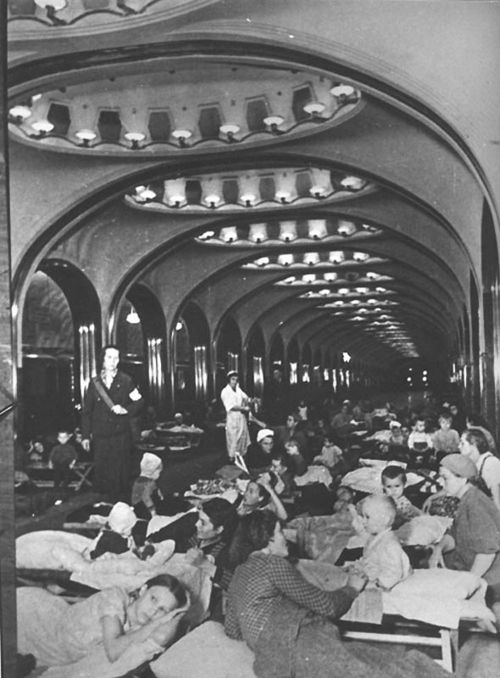
Russian women and children in undergrnd bomb shelter, 1942

Russian women and children in underground bomb shelter, 1942

Women will always fear war more than men because they are mothers.
A woman will always have a baby, her own or her children’s in her arms.
She will always be tormented by fear for her children,
the fear that one day she might be a witness to their own deaths.
Natalya Baranskaya, Russian Writer

It’s easy to think that in the USA we don’t have a long history of overt warfare. We do, however, have a history of covert warfare that is traumatic for those living with it daily on the streets, at home, in prisons, or in places of employment.

I recently began  following Fiction & Development, a blog that uses fictional literary works to discover and highlight international development issues. I’ve linked to their recent review of selected literary works about women and children during times of war.

The reviewer points out that protection of women and children has often been used as a propaganda tool to persuade citizens to support war efforts. To this I would add, to persuade citizens to vote for this or that politician. Look at the box of quotes (not fictional) at the end of the review to see how world leaders have done this in recent years.

What woman or child doesn’t want safety? How does one vote against propaganda that assumes wartime creates lack of safety for women and children, or that going to war will make things safer for ‘our’ women and children? Put another way, how does one vote for the reality that all women and children are vulnerable at any time, and that the rhetoric of war denies this truth?

* * *

Thanks to my blogging friend Herminia for inviting me to take part in this challenge! If you don’t know her already, check out her blog. Herminia is a go-getter. She doesn’t waste time or words. Every post is short and to the point.

Here are the rules for this challenge:

  1. Post one quote a day for 3 days (your quote or someone else’s)
  2. Thank and create a link to the blogger who nominated you
  3. Nominate 3 other bloggers (per post) to take part in the challenge

Here are my last three nominees:

  1. You! Are you still sitting on the fence, wavering? Just do it!
  2. Mum C Writes
  3. Verseherder

No Rush and No Obligation ~ You don’t have to report in to anyone!

© Elouise Renich Fraser, 29 Sept 2015
Photo credit: Arkady Shaikhet, 1942, found at pinterest.com