Telling the Truth

connecting the dots of my life

Tag: Vulnerability

Dear Friends | Monday morning update

Life as a blogger is pressing on me these days. Not to stop writing, but to make the most of the time I still have.

I can’t begin to describe how much I love this unexpected gift—blogging. Nonetheless, it’s frustrating to experience my energy dwindling a bit with each passing day.

When I got up this morning I saw two comments left last night that got me all teary. Writing is rewarding. It’s also a bit lonely, even though it’s a way of reaching out. I never know how my words will touch people I know well and not so well. I took my tears and the two comments as a sign that I’m not finished yet.

Nonetheless, I have a few challenges coming up. My heart and my kidneys need to have a conversation. This really means I’ll have conversations with my kidney and heart doctors in the next month. And then make some decisions about what I might do next.

In the meantime, I’m living in the one day at a time mode. Yesterday, Mary Oliver’s poem got me through. I’m still learning to live what she describes. That would be how to expect, recognize, welcome and delight in the gift of each created day. Sunny or not.

Thanks for all your visits, and for reading this. Right now I’m off to the kitchen to make another super-healthy smoothie.

Happy Monday to each of you,
Elouise

© Elouise Renich Fraser, 28 October 2019
Photo of Lakeshore Grasses at Dawn, Canada, found at army.file

For Elijah Cummings, with Gratitude

How sad I never knew you –

Your full-throated voice thundered
Truth without apology or rancor
Within halls of justice and injustice
On streets and off streets
It really didn’t matter

You were a man with a mission
To heal what has been broken
Since the beginning of our time

Others with and without eloquence
Have spoken honorably of you —
The citizen I never knew
Yet counted on to be there
Someone we the people needed
In this hour of deafening bereavement
Now marked by your personal demise

What are we to do without you
Without your one-of-a-kind voice
Calling the shots loudly and boldly

WE the people must ultimately
Make the difference one day at a time
Give up our posturing
And begin again to make our way
Through this world in which
We too are no longer at home

Click here for more about Elijah Cummings.

© Elouise Renich Fraser, 24 October 2019
Photo found at yahoo.com

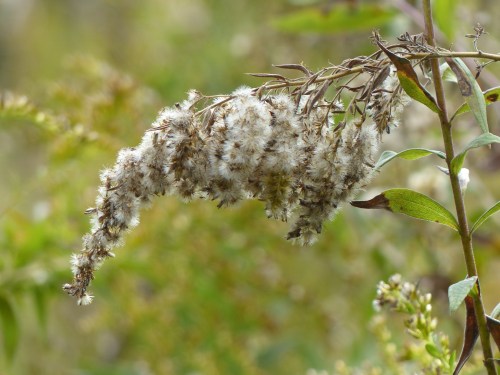
fragile remnants

fragile remnants
whisper thin bits
pieces unkempt
and overlooked
burn out
in late autumn’s
unforgiving march

wisps of fluff
pressed for time
drift on currents
of unpredictable air
hoping to become
early spring’s
beauty queens

eager to be born anew
the next generation
dies unnumbered
silent deaths

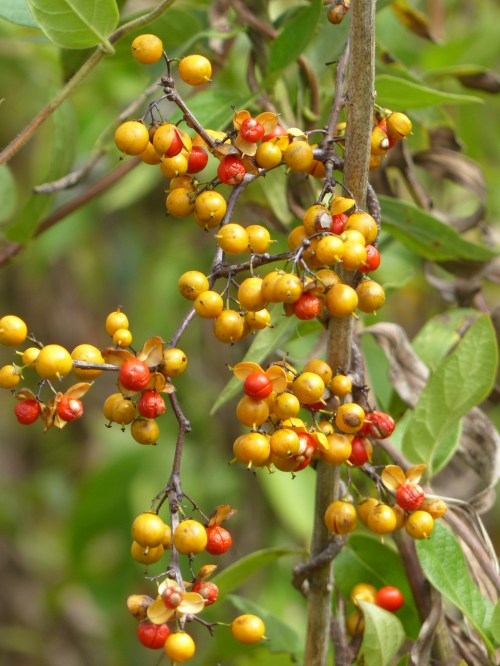
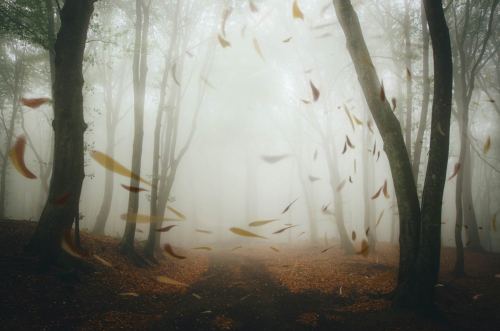
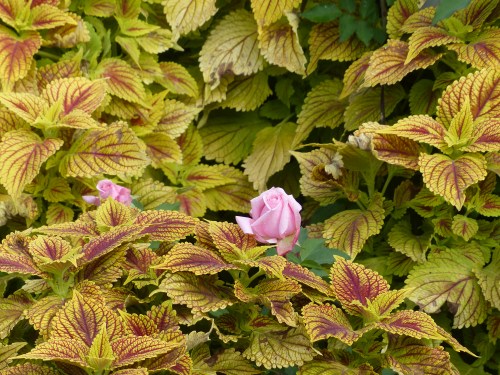
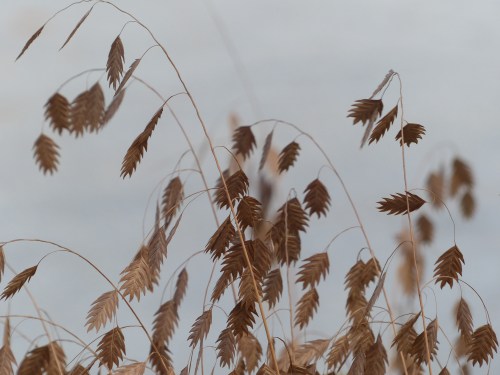
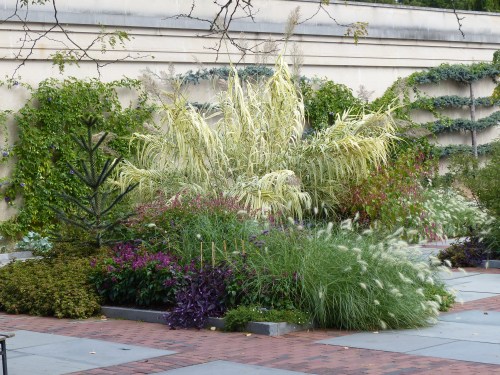
Thanks for stopping by on this chill Monday in Pennsylvania. D took the photos above when we visited Longwood Gardens Meadow two weeks ago. The Meadow’s strange, familiar fall beauty draws me in, despite the general messiness of the Meadow and my life from time to time. Happy Monday!

Cheers,
Elouise

© Elouise Renich Fraser, 21 October 2019
Photos taken by DAFraser, 7 October 2019 in the Longwood Gardens Meadow

chill wind screams

chill wind screams wailing
through tree branches caught off-guard
in dawn’s early light
souls of the departed soar
beyond this realm of sorrow

I wrote this short poem early this morning. I didn’t have Representative Elijah Cummings in mind. Nonetheless, the shoe seems to fit.

Cummings died last night at the age of 68. He was a son of sharecroppers, a civil rights warrior, a member of Congress from Maryland, and a fearless leader in the House of Representatives’ inquiry into Donald Trump’s dealings as POTUS, here and abroad.

According to Nancy Pelosi, Speaker of the House of Representatives, Cummings recently said,

When we’re dancing with the angels, the question will be asked:
In 2019, what did we do to make sure we kept our democracy intact?

Indeed. A tough question for each of us, no matter which political party we prefer.

© Elouise Renich Fraser, 17 October 2019
Image found at rd.com
Thanks to Reuters for the quotation above.

Monday morning photos | Longwood Fall 2019

What would we do without nature’s stunning beauty? Especially now, in the midst of disappointment, betrayals, upheavals, back-stabbings and fury. Here’s a quick Monday-morning peek at the way nature reaches out to us.

Granted, it isn’t always pretty. It is, however, a reminder that whatever I think I am on this speck of dust, I’m not alone or forgotten.

The roses above are in a small rose garden at Longwood. It’s being redesigned, and will make its debut next spring. In the meantime, the gardeners created a mixed company of compatible plants, including roses.

Everything doesn’t always need to be in bright colors. On the way into the Visitor’s Center, we saw several gorgeous examples of fall beauty in browns and grays.

Finally, one last look at the small garden arrangement just outside the Visitor’s Center. An autumn extravaganza of enthusiasm!

The last several weeks have been filled with unexpected challenges. Last week’s visit to Longwood reminded me that we’re not alone, and that autumn has its own gracious and graceful beauty, unlike any other season.

Happy Monday to each of you, whether you’re in the autumn flameout years of your life or not.
Elouise

© Elouise Renich Fraser, 14 October 2019
Photos taken by DAFraser, 7 October 2019, Longwood Gardens

With thanks to Emily

Pierless Bridge - pinterest

Something about aging. I don’t know what it is. I only know what it feels like. A journey into mists, slow and sometimes laborious. Wondering where all that energy went. And how I ever accumulated so many bits and pieces from my past.

Today it’s about clearing the bits and pieces out. Getting to something else, beyond the false fog of my fortressed life.

For decades, I relied on bits and pieces. Every carefully sorted, filed and piled item was a bit of insurance. Proof of my value, resources to be used next term, a hedge against false charges, reminders of why I was here and what I had agreed to do. Plus gems stashed away for later perusal.

Then, in April 2016, I fell and broke my jaw. Life changed. Immediately.

Out of that anguish, I wrote a post that has become one of the top ten posts visited on this site, with 589 views as of today. It’s my commentary on Emily Dickinson’s lovely poem, Faith — is the pierless bridge.

I read it several times in the last few weeks of chaos and confusion about many things.

There’s fog and then there’s smog. Fog is good. Smog is rotten–the stuff that hung in the air in the late 1940s when I lived in the Los Angeles area. I don’t mind a bit of fog, though it sometimes puts me on edge. I think of all the accumulated clutter of my life as smog. Things and attitudes about ‘things’ that throw me off balance. That keep me from living and dying to each day.

So here’s the last paragraph of my comments about Emily’s poem, reformatted a bit to catch the heart of the matter for me then, now, and tomorrow. The question is how do I get from here to there? And whose faith really matters?

Before my faith and before my birth
there was something else

The Source of my life greets me
from within the Veil
to which Faith leads

Here waits the One who birthed me
Who boldly and courageously watches for me
from the other side of my human life
spinning out a fragile steel-buttressed thread of Faith—
my Creator’s Faith in me
Faith that leads me home
just as I am and yet will be

© Elouise Renich Fraser, 3 October 2019
Image found at pinterest.com

For pastors, church leaders and followers

In light of today’s political and social challenges
What might I say today to pastors and church leaders?
Not just in churches that call themselves evangelical
but in churches and religious communities of any kind

How are you today?

Better yet, the question a friend recently suggested:
I wonder what it’s like for you right now?

Right now
Given lines set in concrete
The growing breakdown of everyday norms and expectations
Daily eruptions on social media and in families
and congregations gathering each week
Expecting a word of challenge and encouragement
in the midst of chaos and fear

I can only imagine what it’s like for you right now —

How do you maintain your sanity as a pastor or leader
and your integrity as a human being
affected by our current frenzy of tongues unleashed
or lips tightly sealed?

Are there political differences within your own family?
How do you deal with these along with
political and social differences within your congregation?

If we could be together in a classroom
what would you want to explore first?
What might help you reframe the daily deluge
of unchecked words flying through the air?

Of maybe you just want us to know
what it’s like for you right now
No matter what comes next in this unscripted journey

© Elouise Renich Fraser, 27 September 2019
Image found at wikimedia.org

The underbelly of the Church – because it matters NOW

I’m feeling small these days. Are you? The challenge at the end of this post is meant for all of us who feel unprepared or small.

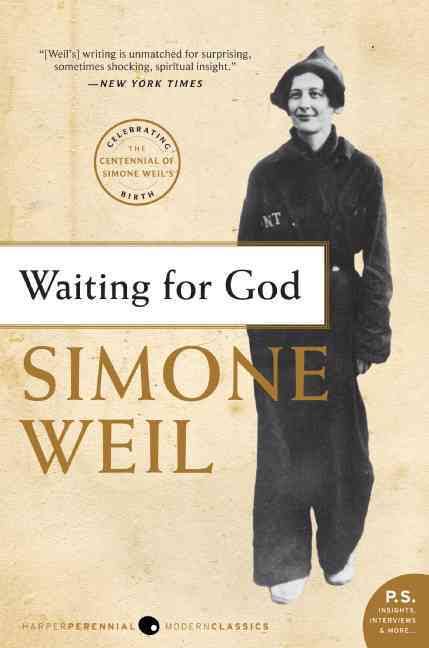
Below is a quote from Simone Weil about the social and patriotic power of the Church. Not church as we know it on Sunday mornings, but the Church as a powerful institution within a political setting.

Weil wrote during the Nazi era. Her words are troubling, given the rise of the white Evangelical church’s political influence in the USA. Sometimes on Sunday mornings, but also in public arenas where religious language virtually baptizes political figures as agents of God, up to and including Mr. Trump.

In light of the Nazi era, this turn of events is more than troubling. Many, though not all German Protestant and Catholic churches, including pastors and revered theologians, colluded in the rise of Hitler. Their open support amounted to baptizing Hitler as God’s agent sent as their Great Leader at this time. Yes, there would be some bloodshed. But in the end, life will be better for those who survive, and Germany itself will gain esteem throughout the world.

Here’s what Simone Weil had to say about herself and the Church during the Nazi era. I read this as a comment on both Protestant and Catholic churches in Germany, though she refers to the Catholic Church. Highlights are mine.

All things carefully considered, I believe they come down to this: what scares me is the Church as a social thing. Not solely because of her stains, but by the very fact that it is, among other characteristics, a social thing.

Not that I am by temperament very individualistic. I fear for the opposite reason. I have in myself a strongly gregarious spirit. I am by natural disposition extremely easily influenced in excess, and especially by collective things. I know that if in this moment I had before me twenty German youth singing Nazi songs in chorus, part of my soul would immediately become Nazi. It is a very great weakness of mine. . . .

I am afraid of the patriotism of the Church that exists in the Catholic culture. I mean ‘patriotism’ in the sense of sentiment analogous to an earthly homeland. I am afraid because I fear contracting its contagion. Not that the Church appears unworthy of inspiring such sentiment, but because I don’t want any sentiment of this kind for myself.

Simone Weil, Waiting for God
Published by Harper Perennial in 1950 to celebrate 100 years since Weil’s birth

I couldn’t agree more. I’m also troubled by the silence of many white Evangelical churches that (rightly) choose not to get on the Trump bandwagon. Silence often enables the abuse of power. I don’t want to catch the silence virus. Hence this post and others to remind me that I have a voice, it counts, and I must exercise it regularly.

©Elouise Renich Fraser, 28 March 2018, reposted 26 September 2019
Image found at books.google.com

A Bitterness | Mary Oliver

This poem by Mary Oliver hooked me a few months ago. I think it’s about her father. In Upstream: Selected Essays, Mary describes what she did in order to have a life of her own. This included taking a different route in life than her father took. In this poem, she describes his life as she understands it after his death.

A Bitterness

I believe you did not have a happy life.
I believe you were cheated.
I believe your best friends were loneliness and misery.
I believe your busiest enemies were anger and depression.
I believe joy was a game you could never play without stumbling.
I believe comfort, though you craved it, was forever a stranger.
I believe music had to be melancholy or not at all.
I believe no trinket, no precious metal, shone so bright as your bitterness.
I believe you lay down at last in your coffin none the wiser and unassuaged.
Oh, cold and dreamless under the wild, amoral, reckless, peaceful flowers of the hillsides.

© by Mary Oliver in 1992; published by Beacon Press in New and Selected Poems, Volume One, winner of The National Book Award; poem found on p. 43

I wonder what Mary Oliver’s father would say about this description. It strikes me as a perceptive and honest lament. This is the father she left in order to save her own one precious life. It’s also the bitter man who never found the comfort he craved.

In the last lines, Mary Oliver points to the strange disconnect between his ‘cold and dreamless’ world (in life and in death), and the beautifully wild yet peaceful flowers now covering the ground above his coffin. The contrast couldn’t be more painful.

As a young girl, Mary Oliver endured brutal mistreatment from her father. Her poem entitled “Rape” leaves no doubt. Nonetheless, Mary Oliver’s relationship with her father didn’t disappear. She comes back to it in several poems in this collection.

In this poem, she points to a sad irony about her father. Here he rests, “cold and dreamless under the wild, amoral, reckless, peaceful flowers of the hillsides.” Clueless about what he missed in life and, even more painful, what he missed in his daughter’s life. All because of his undying bitterness.

The poem reminds me of my father, and the circumstances that shaped his outlook on life and on me. What poem might I write about my father? What might be his identifying characteristic? If not ‘bitterness,’ then what? And how does that affect me today?

© Elouise Renich Fraser, 20 September 2019
Photo found at fineartamerica.com

What’s the hurry?

Why the rush?
Why so many accidents?
Why the impatience
To get somewhere —
Anywhere but here

On any day of the week
Another set of lives
Is lost to this world
Thanks to our addiction
To what? Waiting until
The last minute? Rushing
To make it through
The intersection before
What?

And then there’s that
Annoyingly impatient
Horn honking from behind
As if that would force me to
Collude with the driver’s
Deep need to hurry to
What? At what cost?

I look in the mirror
And see myself
Not in the driver’s seat
But in mundane events
Of my mundane life
Racing in spirit if not
In body to the next thing
Waiting in the shadows
Of my deep need for
What?

I’m just back from a lovely walk around my neighborhood. Right now the weather is perfect for morning and afternoon walks. What more could I want?

Yet in the half hour before I left the house this morning I thought of at least three things I needed to get done right now. Even though I didn’t. Three excuses for putting the walk off until later in the day. Or tomorrow.

Thankfully, my inability to decide what to do next forced the issue. I went for a walk. It was lovely!

When I returned, D was talking with our painter about a horrible automobile accident in which several lives were lost, including one of his friends. All because of one driver who was in a hurry and couldn’t or wouldn’t slow down to stop for a red light.

I wonder what I’m avoiding when I begin honking the horn at myself. And at what cost?

Here’s to a Wednesday devoid of horn-honking. Especially at ourselves.
Elouise

© Elouise Renich Fraser, 18 September 2019
Photo found at medium.com