Telling the Truth

connecting the dots of my life

Tag: Vulnerability

Keeping on the sunny side

Last night I opened my journal to make a short entry about the day—generally gray and dismal, including a computer-related crisis. Instead, this is what came out:

A thought just came to me. I’m almost afraid to write it down.

For every day and night I live without Alzheimer’s, I want to be grateful – and take advantage of things that bring me joy. I don’t want to live each day under a growing cloud of fear and anxiety about my future or our future [mine and D’s].

I grew up consumed by anxiety, dread and fear. They followed me every day of my life. They were in the air, even when we were having fun. Never too much fun, of course.

I enjoy life, and I generally enjoy being myself and not someone else. Yet often hanging over all of it are clouds of anxiety, dread or fear.

Today it’s easy to point to fear of Alzheimer’s as the chief culprit. But it isn’t. Sometimes it seems I inherited a gene that predisposes me to the dark side of life.

I can’t stop the bad stuff from happening, and I can’t get back what I’ve already lost.

So instead of focusing on what might happen today or tomorrow, I’m choosing to focus on things that bring me joy. No matter how small or ordinary they may seem to others.

If you’re scratching your head wondering why this is such a revolutionary thought, I don’t blame you.

In my family of origin, community and church settings, the struggles of life were often celebrated and even rewarded with attention. Or so it seemed to me. The fun stuff was cake and ice cream we might get to enjoy someday if we were good girls.

I’m choosing instead to feast right now on the sunny side of life. With gusto and without apology, no matter how small or insignificant my choices seem to anyone else.

As for the other stuff, it is what it is. I can’t make it go away. I can, however, shower it with small gifts of joy and delight as often as possible.

Thanks for listening!
Elouise

©Elouise Renich Fraser, 26 July 2018
Keep on the Sunny Side found on YouTube
Live performance by The Whites and Jerry Douglas (Oh Brother, Where Art Thou arrangement)

gray clouds

gray clouds
hang overhead
ready to burst
at will

my umbrella
small and fragile
the only solace
I might carry
hangs on a doorknob
in my bedroom

unknowns pile on
one after another
an alphabet soup
of indecipherable
medicalese pointing
to things I cannot see
in this dim light

How long oh Lord?

brinkswomanship
does not become me
with so much planning
and packing to do
before that last trip
home

©Elouise Renich Fraser, 25 July 2018
Photo found at AccuWeather.com

their own foolishness

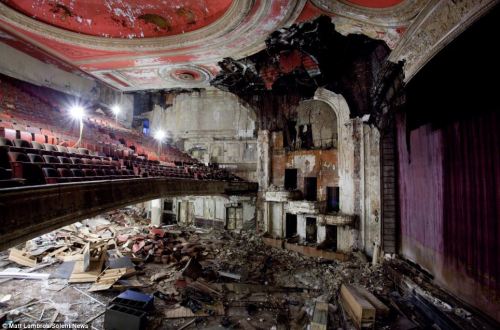
Crumbling beneath the weight
Of their own foolishness
Kicking hard-won ground
From beneath their feet
Fools crown themselves
With honor and glory

Sporting signs of faux nobility
Grown thin and ragged
They flaunt flimsy garments
Of shifting sand and ironclad
Beliefs now hanging precariously
In the balance of truth and justice

Passersby stop to gaze at the
Horror of this new world now
Showing in museums everywhere
As bluster turns to tired old mantras
Long past their overdue dates not
Likely to appear in deserted cinemas

It’s a matter of time.

©Elouise Renich Fraser, 18 July 2018
Photo found at dailymail.co.uk; the old Paramount Theater in Newark, New Jersey, USA

a matter of time

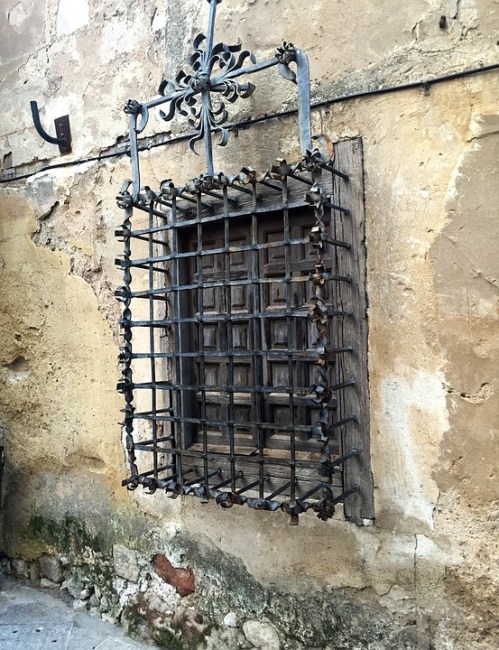
fortressed in iron cage
aging shutters tightly sealed
window to nowhere

supporting walls crack
crumbling to ground defeated
a matter of time

©Elouise Renich Fraser, 18 July 2018
Photo found on pixabay.com

An everyday lament

For dying orchids, catbirds
and other occupants —

Paper-thin creamy petals
of an orchid blossom fold
and bow in death

Scattered feathers and small entrails
of a gray catbird litter the road this morning

Prisoners in and out of cells hang on
by spider-thin threads of hope

Children lost and abandoned
have no get-out-of-jail cards

Women and men found wandering
find few if any life-sustaining options

And that little mouse is now gone
except for its small helpless head

Written after my morning walk, and after discovering the first orchid blossom expired in my kitchen during the night. Likewise the little mouse a few days ago, set upon by a determined predator. You’ll find the rest in the news and in our neighborhoods any day or night of the week.

Not very likable, I admit. Yet our tears for losses great and small are invaluable connections to ourselves, to others, and to our Creator. We are, after all, living on borrowed time within a growing breakdown of human kindness and decency. We don’t have to be persons of a certain faith or even age to see, understand and grieve these daily realities.

Sabbath rest gives time to think not simply about the glories of creation, but about how much we’ve lost and how sad it all is. Our Creator honors our tears and, I believe, weeps with us. Tears of lament aren’t signs of weakness, but signs and sometimes celebrations of small connections we must renew if we want to thrive together.

©Elouise Renich Fraser, 14 July 2018
Image found at blogs.covchurch.org

distant voices | Mom

distant voices
ride waves of morning air
cicadas drone

Today is the anniversary of my mother’s birthday. Born in 1921, she died in 1999. Today would have been her 97th birthday. Though I’ve done a lot of work on my relationship with her, I’m still finding words to describe the impact she had on my life.

My mother’s main task in life was to raise four daughters and to be unquestioningly obedient to one husband. Though not in that order. For most of her life, loyalty to him came first, not her daughters.

In her last years of life, for reasons I don’t understand, something clicked on for her. More than once she became unusually feisty with Dad, letting him know (with witnesses present) exactly where he stood and didn’t stand with her. She didn’t shut him out completely. She did, however, shut him out and down on more than one occasion. As though she’d reached her last straw.

It’s difficult to imagine Mom as a role model for me in my marriage to D. I don’t have memories of her being particularly affectionate with my father (or with me). Obedient? Absolutely. Quiet and industrious? Absolutely. On his side when he was discouraged? Absolutely. Modest and unassuming? Absolutely.

But not an equal partner given to overt affection. No matter how you describe it. When she married Dad in 1942, she abandoned huge pieces of her one-and-only life. It was part of the deal.

Today I applaud and love her for her courage, persistence, creativity, love of making music, intelligence, resourcefulness, and ability to run circles around my father intellectually without putting herself at risk. She was a survivor whose physical voice and body were impaired by polio from the time she was 28 years old. Yet she rode the waves and storms of life gracefully until she just couldn’t do it anymore.

My one huge regret is that she didn’t advocate on my behalf, or question my father’s beatings of me. I know she knew. Everyone in the house knew. Perhaps she also knew what that would mean for her, and the cost was too high to bear. The lives of women are fraught with life-endangering choices. She made hers, and to her credit, never stopped loving me, even though she didn’t know how to come to my defense.

If she were here today, I, ever the introvert, would take her for a lovely stroll in her wheelchair around our neighborhood, and let her meet and greet some of my wonderfully extroverted neighbors. Then we would go through the neighborhood park, enjoying this lovely summer day together, listening to the birds, and meeting and greeting every friendly dog along the way. Plus their owners, of course.

And I would hug her close, giving her what I can.

©Elouise Renich Fraser, 12 July 2018
Photo found at mybrownnewfies.com

friendly inhumanity

not large but small things
echo in hollow chambers
the sound of life denied
drips from human souls
into ground saturated
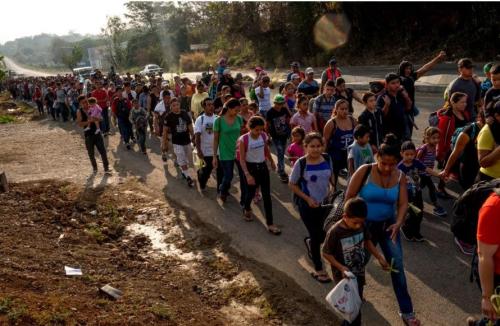
with the life-blood of refugees
halted at the border
of the promised land
of plenty caught in webs
of grief and disbelief
the latest casualties
of friendly inhumanity

Yes, I’m still at it. Why? Because our national inability to govern wisely is breaking down in front of our eyes. Most of us have to get up and go to work. I don’t.

This is my work: to keep in front of my eyes the tragedy of national leaders who seem to have lost the will to govern wisely and solely on behalf of the most needy among us. From the ground up, not from the heights of make-believe trickle down theory.

When I was working at the seminary, I experienced up close the chaos one ill-placed leader could wreak within a community. The scramble was on, not just among staff who desperately needed their jobs, but within the hearts of every member of the organization.

What do we do now? Do we shut up and pretend we’re doing business as usual? To what extent do we voice our concerns? And how?

Things that were straightforward, or at least manageable, became fraught with nuances and consequences to be avoided. Telling the truth was dangerous, even when supported by clear data and research.

And yet we stayed on. Not because we were cowards, but because we believed in the greater good of our students and of each other as trusted colleagues. We did what we could, and watched the rest being taken over by the hands of others. Not a fun way to work.

It wasn’t always that way, for which I’m grateful. Nonetheless, the last years of my tenure were fraught with conflict, uncertainty, promises that turned into something else, scoldings from time to time, and the breakdown of good will among people of good will. In the end, I chose to leave what had become punishing for my body and spirit.

Why this strange link between refugees and my work at the seminary? Because in each case a leader (dean or president) chooses to govern by creating chaos. The chaos at the seminary was somewhat controlled by those who governed differently. In the end, however, even that couldn’t save us from being exploited and taken over as an institution.

Mr. Trump governs by creating chaos within the White House and within our nation. This won’t save us from ourselves or others. Sadly, there isn’t much business ‘as usual’ anymore. Instead, we’re invited to witness and experience chaos every day.

My hope and my prayer is that I’ll be a grounded, hope-filled, prayerful neighbor, doing what I can to offer hospitality to strangers. Especially those unable to speak freely for themselves.

©Elouise Renich Fraser, 11 July 2018

Small things fall to the ground

Small things
Fall to the ground
Combs and toy cars
Toothpaste and tuna
Rosaries and animal crackers
The sound of life denied
Drops into ground
Reverberating
With dashed hopes of migrants
Halted at the border
Of the promised land
Caught in webs of fear
And red tape
Studiously practiced
Perfected and delivered
By bureaucratic officials
Carrying in their pockets
Items deemed unnecessary
For human life from
The south side
Of the border

It might be easier if this were an isolated event or period of in our history. However….

In one way or another, the USA has practiced the fine art of dehumanizing perceived threats from the day the fathers and mothers of this nation set foot on its soil. The trail of destruction runs wide and deep like a river of blood through the Grand Canyon of our collective history.

Like an evil tide, forces of greed, pride and fear have overtaken and eroded the beaches of our shared life, fashioning mansions of sand and wreaking environmental havoc along our eastern and western coasts, and in our interior.

So now we’ve turned our attention to the southern border. As though sealing this up will remedy what we helped break into isolated bits and pieces now destined to remain fixed in concrete for the foreseeable future.

Thankfully, unnumbered children, women and men of good will, including courageous politicians, have stepped up to help ease the wounds. Not just those we perpetrate on migrants, but on each other. These human angels have been here from the beginning. They deserve our thanks and our support, especially now.

Here’s a link to Charity Navigator with  lists of trust-worthy groups that help immigrants and refugees. Take a look. They’ve done their homework.

Praying you have a life-renewing weekend and Sabbath rest.
Elouise

©Elouise Renich Fraser, 6 July 2018
Photo found at censored.today

Images I can’t get out of my mind

It’s July 4th. Our nation’s great big birthday party day. Yet as much as there is to love about our nation, right now there’s way too much of the other stuff happening. Whatever happened to the American dream?

On 2 July 2018, The New York Times featured an article by Laura M. Holson about Tom Kiefer and his collection of photographs, “El Sueño Americano” (The American Dream). Now retired, Mr. Kiefer worked as a janitor at a border crossing between Mexico and the USA. Holson writes,

There, he collected tens of thousands of items that were confiscated and thrown in the trash by Border Patrol agents from undocumented migrants crossing the border from Mexico into the United States. He began photographing the items in 2007.

“I couldn’t leave them,” he said.

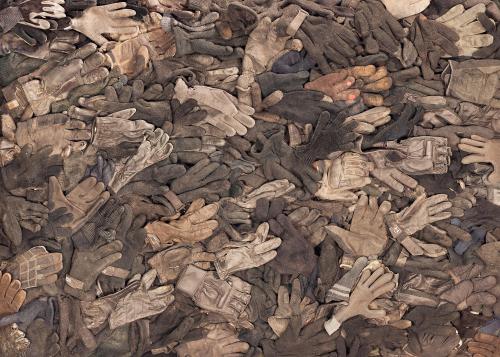
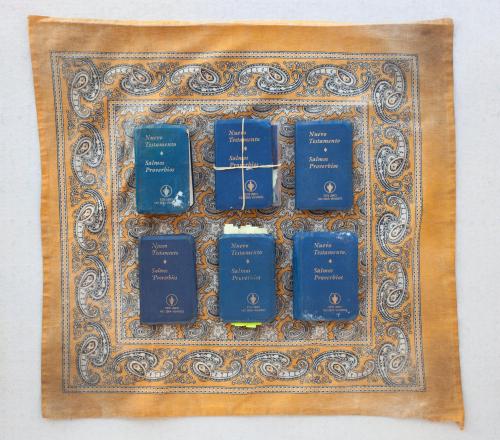
Below is a small selection from his collection of over 600 photographs. Each photo includes Kiefer’s explanation about why these items were routinely confiscated. On one level, they document the stripping away of life-sustaining items from women, children and men crossing the border. They also say something (what is it?) about our nation’s ongoing obsession about ‘them’ and ‘us.’

You can find scores more at Tom Kiefer’s website. I find his contribution to our current conversation about immigrants seeking asylum invaluable. Worth more than written commentaries or debates about the fine points of the law. If you live in Michigan, over 100 of Mr. Kiefer’s photos will go on exhibit in October at the Saugatuck Center for the Arts.

Each photo includes Kiefer’s brief explanation about why these items were confiscated. The small toothpaste tubes and toothbrushes at the top were considered potentially lethal non-essential personal property, and disposed of during intake. Mr. Kiefer notes that “while in custody, most migrants will not have access to toothpaste and toothbrushes.”

Here are four other examples. The first two were considered personal items and non-essential. In addition, the combs and brushes were considered potentially lethal.

Next we have cans of tuna. Along with other food items confiscated such as beef jerky, granola bars, dehydrated soup and powdered milk, they were considered contraband and disposed of during intake. Mr. Kiefer notes that tuna is an efficient, compact source of protein, and that this particular brand had a pull-top lid.

Next we have heavy-duty gloves used for many purposes. However, given the desert and mountain terrain of the border, plus sometimes below-freezing winter temperatures, they were invaluable. Yet they, too, were considered non-essential personal property and discarded at intake.

Finally, a photo of an item migrants carried in their bandanas. Non-essential personal property. Discarded.

What’s going on here? I don’t know. But I’ll make my comments in another post, and would love to hear from you as well.

©Elouise Renich Fraser, 4 July 2018
Photos found at the New York Times and on Tom Kiefer’s website (see links above)

In the presence of my enemies

It’s January 2006. I got to my office early, and was preparing to drive to the airport and catch a flight to Houston, Texas, to be with my sister Diane who was dying of ALS. She had opted for comfort care at home. No food and no medication. Just fluids and whatever would comfort her. This might be my last visit with her.

As I was about to leave my office, the phone rang. It was D. His premonitions were correct. The president of the university had just requested D’s resignation. So here it was, after several years of difficult personnel and budget issues.

No, D didn’t want me to cancel my flight. Instead, I flew to Houston in a stupor of spousal pain and rage, and gave D a call that evening. I continued as dean at the seminary. D was now free to follow his heart and eventually accepted a position with an international organization he’d helped birth.

Now it’s August 2008. I’m on a platform in the university gym along with other dignitaries. We’re in full regalia, ready for the fall convocation, installation of new faculty, and installation of the new chancellor of the university. The man chosen as the next provost, one of D’s friends and faculty colleagues, would be installed as the new chancellor. My job was to offer the installation prayer.

Inside, I was a mess. When the time came, I stood at the lectern facing the university faculty along with our seminary faculty. A number of university faculty had been unhappy with D’s administration. Some bitterly so.

On the outside I was a professional. On the inside I was in melt-down, shaking in my spirit and fully aware I was facing some university faculty who felt like enemies, along with many others who still grieved D’s resignation.

The newly minted chancellor stood next to me, and I invited everyone to stand with me for the prayer. It was simple and direct. And yes, it was a prayer for me and for D, not just for the new chancellor.

The prayer made use of Psalm 23. I couldn’t find the original script. It went something like this:

Because the Lord is your shepherd and knows everything about you, you will never lack for anything you need.
When you’re weary, may you find rest in green pastures, and follow your shepherd to pools of quiet waters.
When your soul is troubled, may you find restoration, and be guided in paths of right relationships that bring honor to your shepherd.

When you go through times of deepest darkness and despair, may you fear no evil;
Your shepherd will be with you, to find and comfort you no matter what happens.
When your shepherd prepares a banquet for you, and your enemies are looking on or sitting at the table, know that you are an honored guest in the Lord’s house, worthy of the best wine in the world.

Finally, remember that this goodness and mercy will be with you all the days of your life, and you will dwell in the house of the Lord, your good shepherd, forever.

Amen

I don’t understand all the dynamics of this event. Nonetheless, when I sat down I was calm inside, ready for whatever came next.

©Elouise Renich Fraser, 28 June 2018