Telling the Truth

connecting the dots of my life

Tag: Vulnerability

Going to Seminary | Part 10

Cherish Children

In 1973 I arrived at seminary with an empty bucket. Indeed, when I married D I was already lugging it around. I thought marrying D would more than fill my empty bucket. I needed to be cherished. Read the rest of this entry »

“Cherish is the word I use….”

Cherish image, happy_married_couple

I, Elouise, take you, D….
To love, honor and cherish….

Cherish is the word I use
To complain as in
You don’t have a clue
How to cherish me Read the rest of this entry »

Going to Seminary | Part 9

Zaida

~~~Zaida Pannell Swift (1894-1988)

California 1974. I’m in my second year of seminary. The telephone rings. It’s my mother, calling from Savannah, Georgia. Her voice sounds hesitant. She isn’t sure whether to tell me this or not. Read the rest of this entry »

Poems for Elders

I

elders
cling close
old age
unseen
kindly eyes
drill deep
tap light
unseen
by youth
or passersby

II

Sweet Jesus
Could I not wave
A magic wand
But once? Read the rest of this entry »

What I never wrote to my father

Dear Dad, thenextfamily.com


When it came to disciplining his daughters, my father often referred to several verses in the King James Version of the Bible.

I love the King James Version (KJV). All my scripture memory work was in its now unfamiliar language. To my ears it’s still beautiful, though somewhat dated, and evokes awe in its choice of pronouns and verbs (thee, thou, goest, comest). Once memorized, it flows easily by heart.

Yet it has limitations. In addition, the language chosen by the 54+ men who translated it between 1604 and 1611 is often stark.

When it came to dealing with me, one of my father’s key verses was Proverbs 16:18 (KJV):

Pride goeth before destruction, and an haughty spirit before a fall.

My father believed he was responsible for beating pride out of me. From his perspective, my anger proved I was a prideful little girl intent on getting my superior way. According to him I thought I knew better than he when it came to punishment, rules or decisions.

If I didn’t comply with his will, another proverb told him what to do. I’ve changed the personal pronouns. Proverbs 23:13-14 (KJV) says,

Withhold not correction from the child:
for if thou beatest her with the rod, she shall not die.
Thou shalt beat her with the rod, and shalt deliver her soul from hell.

Before you get angry with my father, think about this: Like many other parents, he passed on what his father did to him. I can’t exonerate him. He  did what he did. He was responsible for what he did; I was not. I do, however, have compassion for him. I know from experience how difficult it is to raise children.

Last week I was reading the Good News Version (TEV) of the same verses in Proverbs 23:13-14:

Don’t hesitate to discipline children.
A good spanking won’t kill them.
As a matter of fact, it may save their lives.

I would still suggest that even a “good spanking” can kill a child’s spirit. Do you or I know a child’s inner spirit? Do you know the spirit this child may be too terrified to show because right now because the main agenda is to grit her teeth and get through whatever you or I decide to do to her vulnerable body?

What is a “good spanking” anyway? Sometimes I needed discipline. Yet I never needed the kind of corporal punishment I received. Corporal humiliation is never a “good spanking.” It’s humiliation of the weak by the powerful. An abuse of power.

Whatever this “good spanking” is about, it isn’t about humiliating a child’s body or spirit. If the point of the proverb is to say parents mustn’t hold back when it comes to disciplining their children, that can be done in other ways.

Here’s how I see it. As an adult, I’m responsible for welcoming children and young teenagers into my life. They’re strangers I’m privileged to get to know and learn to discipline appropriately. It isn’t always easy. Yet hospitality offers me another way to relate to them and to myself.

  • Hospitality welcomes children and young people God sends into my life.
  • Hospitality isn’t overbearing and doesn’t make quick assumptions.
  • Hospitality asks questions and listens.
  • Hospitality gets interested in what children and young people think and feel.
  • Hospitality doesn’t pry or spy on others.
  • Hospitality listens, affirms, and collaborates to solve problems.
  • Hospitality isn’t rude, bossy, impatient or quick to take offense.
  • Hospitality creates and maintains reasonable, healthy boundaries.

I think hospitality is a form of love. I love my father.

Here’s what I never wrote to my father:

Dear Dad,
Please treat me as a human being created in the image of God. That’s all I want. I don’t want to fight with you or disappoint you. I want to be myself and count on you to help me without humiliating me. I want to be proud of myself and proud of you.
Your first-born daughter,
Elouise

© Elouise Renich Fraser, 27 November 2015
Image from thenextfamily.com

All things are shadows | From an Old Soul

July 21, Diary of an Old Soul

All things are shadows of the shining true:
Sun, sea, and air—close, potent, hurtless fire—
Flowers from their mother’s prison—dove, and dew—
Every thing holds a slender guiding clue
Back to the mighty oneness: hearts of faith
Know thee than light, than heat, endlessly nigher,
Our life’s life, carpenter of Nazareth.

George MacDonald, Diary of an Old Soul
Augsburg Fortress Press 1994

* * *

This sonnet makes my heart sing.
As wonderful as nature is,
with its “slender guiding clues,”
One rises above all others.
More than a shadow of shining truth,
The heart of every flower or drop of dew,
holding all things together,
Life of my life: “carpenter of Nazareth.”

I can’t help asking why? Why this man Jesus, carpenter of Nazareth, who lived for so few years on this earth? Why this man on his way to death from the beginning? Not known for being beautiful or easy to follow. Why this carpenter of Nazareth?

I’m not given to rational answers or apologetic reasoning. Yet without this carpenter of Nazareth in my life, I would have no life.

Without him I would see shadows,
but not the “shining true” within the shadows.
I would miss the “slender guiding clues” that point beyond.
Beyond the sun, sea and air;
beyond the flowers, doves and dew
to One who is closer and dearer than light and heat,
breath of my breath—“carpenter of Nazareth.”

A carpenter, vulnerable as am I. Not visibly glorious like a sunset, or majestic like galaxies spread over the universe. Vulnerable. Like a newborn infant, a flower or dove. Vulnerable like a frightened child, a painfully self-conscious teenager, a clueless young adult or new parent, a jaded war-weary adult, or an aging senior citizen.

Vulnerable to what? Being mocked, loved, rejected, abandoned, hated, ignored, disbelieved, understood, misunderstood, sick, hungry, thirsty, weary, sad, forsaken, fed up, angry, passionate, stalked, watched, betrayed, arrested without cause, convicted in a mock trial, beaten, paraded as a criminal, strung up to die.

He wasn’t a power-monger; he lived a human life and dealt with his human situation as one of us. A carpenter of Nazareth doing his best to remain faithful to God who gave him life and a seemingly impossible mission.

He showed us what to do and what not to do, how to be and how not to be. He showed us the way home and the way to die, and offered to walk with us.

I know him because he first knows me. His life tells me so.

© Elouise Renich Fraser, 21 November 2015

Photos melt my heart | Photos #1

1969 Jun Scott Trip to Beach

Photos melt my heart. Especially when they capture someone I love in a moment of truth. Read the rest of this entry »

Three Days, Three Quotes Challenge | Day 3

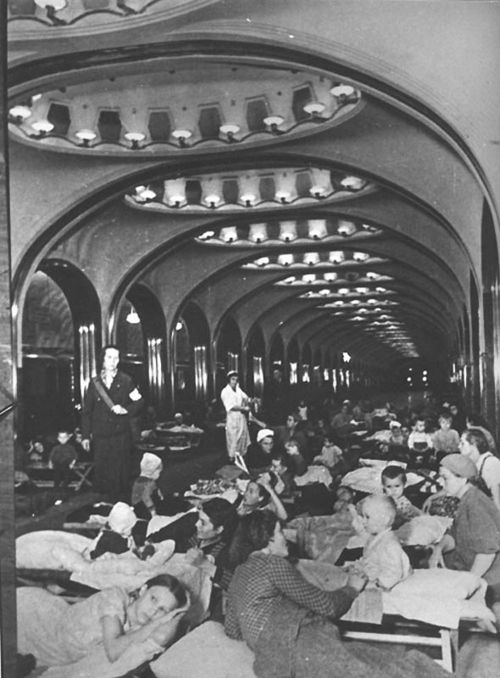
Russian women and children in undergrnd bomb shelter, 1942

Russian women and children in underground bomb shelter, 1942

Women will always fear war more than men because they are mothers.
A woman will always have a baby, her own or her children’s in her arms.
She will always be tormented by fear for her children,
the fear that one day she might be a witness to their own deaths.
Natalya Baranskaya, Russian Writer

It’s easy to think that in the USA we don’t have a long history of overt warfare. We do, however, have a history of covert warfare that is traumatic for those living with it daily on the streets, at home, in prisons, or in places of employment.

I recently began  following Fiction & Development, a blog that uses fictional literary works to discover and highlight international development issues. I’ve linked to their recent review of selected literary works about women and children during times of war.

The reviewer points out that protection of women and children has often been used as a propaganda tool to persuade citizens to support war efforts. To this I would add, to persuade citizens to vote for this or that politician. Look at the box of quotes (not fictional) at the end of the review to see how world leaders have done this in recent years.

What woman or child doesn’t want safety? How does one vote against propaganda that assumes wartime creates lack of safety for women and children, or that going to war will make things safer for ‘our’ women and children? Put another way, how does one vote for the reality that all women and children are vulnerable at any time, and that the rhetoric of war denies this truth?

* * *

Thanks to my blogging friend Herminia for inviting me to take part in this challenge! If you don’t know her already, check out her blog. Herminia is a go-getter. She doesn’t waste time or words. Every post is short and to the point.

Here are the rules for this challenge:

  1. Post one quote a day for 3 days (your quote or someone else’s)
  2. Thank and create a link to the blogger who nominated you
  3. Nominate 3 other bloggers (per post) to take part in the challenge

Here are my last three nominees:

  1. You! Are you still sitting on the fence, wavering? Just do it!
  2. Mum C Writes
  3. Verseherder

No Rush and No Obligation ~ You don’t have to report in to anyone!

© Elouise Renich Fraser, 29 Sept 2015
Photo credit: Arkady Shaikhet, 1942, found at pinterest.com

Flowers of Hope | from Amy

P1060217

Amy Carmichael wrote this delightful poem for children whose lives and wellbeing were at risk. Amy’s major life work was to rescue or receive these children and offer them an alternative. They lived together with staff members at the Dohnavur Compound in South India. Over the years, scores of children found safety and hope for a different future. Read the rest of this entry »

morning birdsong

P1060334

~~~Young Song Sparrow, Longwood Meadow

morning birdsong
calms my troubled heart
centers my soul

* * *

Yesterday’s Sabbath was a challenge.
Not because my spirit didn’t welcome it,
but because my body kept voting No
to all the delights I’d planned. Read the rest of this entry »