Telling the Truth

connecting the dots of my life

Category: Death and Dying

I have not told my garden yet

This poem from Emily Dickinson caught my eye this week. I found it in a volume of her poems for young people. Nonetheless, I heard it as an adult poem about adult pain. My comments follow the poem.

I have not told my garden yet,
Lest that should conquer me;
I have not quite the strength now
To break it to the bee.

I will not name it in the street,
For shops would stare, that I,
So shy, so very ignorant,
Should have the face to die.

The hillsides must not know it,
Where I have rambled so,
Nor tell the loving forests
The day that I shall go,

Nor lisp it at the table,
Nor heedless by the way
Hint that within the riddle
One will walk to-day!

Emily Dickinson: Poetry for Young People, edited by Frances Schoonmaker Bolin, illustrated by Chi Chung. Published by Sterling Publishing Co. (2008)

This poem is about death: Emily’s preoccupation with death, and her own death. Whether final or as daily reality. Each stanza adds depth to her poetic riddle.

Stanza 1. Emily thinks about her garden, the place that brings her happiness and peace. It seems she’s afraid she might not survive breaking the news, though we’re not yet certain what the news is. It’s clear this won’t be easy or happy news. Not for the garden, the bee, or her.

Stanza 2. Emily thinks about village shops that stare at her when she’s out and about. There she’s known as shy and perhaps ignorant. She has no intention of letting the shops know her plans. They wouldn’t believe that she, of all people, would have “the face to die.”

I take this “face to die” as setting her face toward death, which she names in the last line of the stanza. She faces death with determination, perhaps the way Jesus ‘set his face’ toward Jerusalem—the city in which he would die.

For Emily, it doesn’t matter what the shops or shoppers might think about her. She’s stronger than she’s given credit for. Indirectly, she’s saying they don’t know her at all. So why should she tell them anything at all about her “face to die.”

Stanza 3. Emily now thinks about the hillsides and the forests. She loves both settings yet determines to keep them in the dark. It seems that if she doesn’t tell the hillsides about it, they won’t tell the forests. Perhaps they’ll think she doesn’t love them anymore? Or perhaps the hillsides and forests will die of sorrow?

The verb ‘rambled’ has more than one meaning. It could mean rambling around in the woods, as well as the rambling of Emily’s voice speaking freely to the trees and hillsides. Not to ramble anymore would be a great loss for them and for her. Here she can speak out loud freely and directly. Yet she isn’t going to tell them the day she’ll “go.”

Stanza 4. Finally, Emily has no intention of talking about this at “the table,” which I take to be her family circle. Not even in what we might call baby talk that’s less than clear. She’s also determined not to suggest that “within the riddle” is a hint that “One will walk to-day!”

The last stanza seems to have two meanings: one about her family circle; the other about the poem itself. Which has me wondering whether this is ‘only’ a riddle, or a veiled clue to her unhappiness and desire, if not clear intention, to “walk to-day.” To die to her family and her beloved garden, and never return. A form of death no matter how you read the poem.

I don’t know whether Emily wrote this poem before or after she wrote I Years had been from Home. I do know these are the words of a woman in distress who chooses to tell the truth but tell it slant.

Yes, my heart goes out to her. Emily has a level of courage I haven’t often seen or heard in this life.

Thanks for visiting and reading, and leaving your own interpretive comments or questions if you’d like.

©Elouise Renich Fraser, 29 July 2018
Photo found at correntewire.com

On this side of death

On this side of death
Life seems far away
Cold and unforgiving
A half-remembered song
Of dreamers now turned
A certain age still pushing
The limits of what body
And soul can take without
Warning or a notice in
The mail reminding us
The deadline for renewal
Is approaching

This morning the calendar
Says Spring is in the air
Yet all I see are fog and the
Stubborn snow of Winter
Still frozen on the ground
Hanging on for dear life
Reluctant to cede even
Half an inch of space to
Birds announcing it’s time
For warmth and loveliness
In the face of barrenness
And last Fall’s rot

Cars rush by outside
Perhaps they know what
I don’t know about what’s
Happening and where to
Find it when wheels are
Greased and running smooth
No hiccups or tremors
Or faintness of muscles and
Limbs aiming to make it
From one room to the next
Without colliding into
One’s own precarious
Body and soul

© Elouise Renich Fraser, 29 March 2018
Photo of the Gazebo at Longwood Gardens found at tripadvisor.com

Why writing feels dangerous

Last night I read about a woman who couldn’t get in touch with sensations in her body because she felt disconnected. Numb.

I relate to her. All my life I’ve experienced numbing out—sometimes on purpose; other times as the general go-to mode of my body. That means I feel out-of-place, lost, or just not interested in the vulnerability of connecting.

Years of neglect also hang out in my body. No wonder I get weary and can’t always stay awake emotionally. Perhaps some part of me has lost its memory or its ability to function with and for me.

And so I move on to something else instead of sitting with it. Or wondering about it, loving or even soothing it. Or welcoming it as a major part of the woman I’ve been and have become.

I’m a writer. I want to connect with what’s going on inside me, not just with thoughts running through my mind. I want to listen to myself, speak from within myself. Yet I’ve guarded so much for so long.

Can numbness lead to death? I don’t know. Perhaps I’m hiding from my voice. Sometimes I’m apprehensive about what I might discover or write and then let go. Even before I understand it fully.

From the moment I became a living human being, You’ve been there. Even when I was too terrified to be there. Too terrified to sit quietly with whatever was going on inside this woman I keep calling ‘me.’

Am I afraid right now? I want to believe You hold me close and won’t let me stray far from home. Yet I still think it’s my job to keep myself from straying. Maybe that’s why writing feels dangerous. My words are out there. I can’t control how they’re read or used or abused. Or heard and dissected.

A voice seems more fragile than a body. More connected to soul. More vulnerable to attack. Yet when I’ve done my best to be truthful, and have given it away so that the river moves on within and through me, I’m not sure what else I can do except build a dam.

I know about dams. I’ve constructed many in my lifetime. Little dams. Big dams. Complex, contorted, impenetrable dams. Trying desperately to escape the truth about me.

And what if the truth about me is beautiful? Lovely? What then? Have I killed it?

A small Christmas cactus blossom rests in front of me on my desk. A lovely, fading pinkish magenta. Its fragile petals look like limp gauze wings folded around its core. It isn’t ugly; it’s dying. Doing what lovely flowers do after giving themselves away.

It’s the only way to live. Not forever, but in this present moment. My calendar lies to me daily. It promises more than it or I can deliver. I want to live this one day as if there were no tomorrow. No more, and no less.

© Elouise Renich Fraser, 15 January 2018
Photo found at pxhere.com

yesterday’s memories


bluer than blue
greener than green
yesterday’s memories
filter deep water
refocus depth of perception
brilliance and light
shadows and darkness
in this transient season
not of our making
or understanding

Photos of reflections on water often capture more depth of perspective and color, along with greater detail than we could see in the moment the camera clicked. And, strangely, there’s often truth and beauty in these photos that captures my heart even more than it did when the camera clicked.

In the end, Truth lives beyond our individual perceptions. All the more reason for humility, openness, and listening ears. For me, this means at least a twofold commitment to spiritual elasticity that

  • doesn’t give away or abandon Truth,
  • and fully understands and even loves that it cannot see or own all Truth.

It isn’t all up to me. My part is to follow Truth and report what I’m seeing. Not what you’re seeing.

The Truth I follow is a person, Jesus Christ, who leads by way of life wisdom, not folly. The path is difficult. Never crystal clear, not engraved in stone, always dangerous and always evolving. I pray for spiritual elasticity to yield and stretch faithfully, in keeping with Jesus’ life, death and deceptively brief ministry on this earth.

A few thoughts for this weekend and Sabbath rest, given the world in which I find myself today. Not bereft of beauty, comfort and hope, and equally no longer the world I thought I knew. Now, more than ever, I need and am grateful for companions on this journey.

© Elouise Renich Fraser, 7 October 2017
Photo taken by DAFraser, May 2017 at Longwood Gardens
Daily Prompt: Elastic

A Poem and Reflection on Death

Death haunts the pages
Of our minds and hearts
A shadow reality bearing down
On irreplaceable relationships

Who am I without you?
Where am I to go without you?
How much agony can one soul bear?

Each beginning moves
Ineluctably toward its end
Knowing and not knowing
How the plot will play

Your death becomes my death
Bankrupt dreams and hopes
Why didn’t we see it coming?
As though we were omniscient

I’m left asking myself what must I/we do to be ‘ready’? The question is urgent, and yet…

It’s always too soon, until it’s too late.

Dr. Ira Byock, M.D., quotes this saying in his book The Four Things That Matter Most. The book isn’t just for people facing imminent death of a loved one. It’s for anyone, anytime, anywhere.

The four things are simple and life-changing. They won’t take away the pain of death. They will, however, help the people we leave behind deal with the reality of our absence.

Here they are, four things to say to those you love before it’s too late:

Please forgive me.
I forgive you.
Thank you.
I love you.

I can’t recommend this book highly enough. Especially now, in light of multiple tragedies here and around the world. Death piled on death. Expected and unexpected. Close to home and in our news feeds daily.

Of course there are things that ‘need to be done’ to decrease the kinds of death we’ve witnessed already this year. Yet none of that will prepare me for my death or the deaths of those I love. That’s what’s on my heart this afternoon.

Blessings of peace,
Elouise

© Elouise Renich Fraser, 2 October 2017

The Life we have is very great

Here’s a second look at Emily Dickinson’s poem about Life, Infinity, and the Human Heart. A good poem for today when we’re missing family members or friends for any reason, plus Covid-19, political standoffs, hate crimes, or the harsh reality of wildfires, avalanches and hurricanes. My comments follow.

The Life we have is very great.
The Life that we shall see
Surpasses it, we know, because
It is Infinity.
But when all Space has been beheld
And all Dominion shown
The smallest Human Heart’s extent
Reduces it to none.

c. 1870

Emily Dickinson Poems, Edited by Brenda Hillman
Shambhala Pocket Classics, Shambhala 1995

It doesn’t matter how many worlds we discover beyond this world. It doesn’t matter how far the distance is from here to there and beyond. It doesn’t even matter that the universe is still expanding.

None of this, as surpassingly great or expansive as it may be, holds a candle to the smallest of human hearts.

According to Emily, the Life we now have is ‘very great.’ The Life we’ll have beyond this Life is even greater. Yet it’s infinitesimal compared to what our hearts can see and grasp right now.

Emily describes the heart’s capacity to love Life. Especially when we can’t see those we love. She suggests that the expansiveness of one small human heart outshines infinity itself.

Yes, it’s fascinating to explore the universe, what may lie beyond it and how it’s ordered. Yet what we discover externally will never match the capacity of one small human heart to connect with another human heart.

It doesn’t matter whether that heart is what we call dead or alive, here or there, or somewhere in between. Nor do we need to understand exactly what Space encompasses, how it is governed, or where Infinity resides.

This isn’t about measuring or mapping Life beyond our present Life. Or discovering where those we love now reside.

It’s about connections. All it takes is one small human heart to leap beyond unmapped, immeasurable boundaries, expanding outward in a heartbeat to enfold the hearts of those we love. No matter where they or we may be.

© Elouise Renich Fraser, first posted 28 May 2017, lightly edited and reposted 10 December 2020
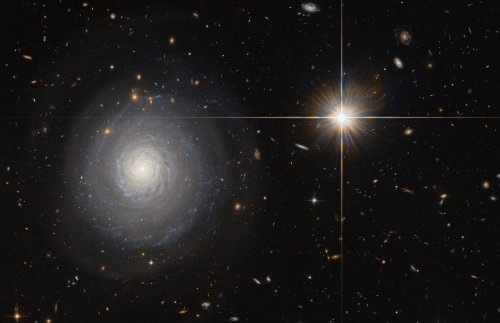
Image taken from Hubble Spacecraft, found at nasa.gov

What will they say about me?

I was late getting to bed last night. In the evening we’d attended a memorial service at our church for a long-time member. Kathleen made a difference in the lives of uncounted family, friends, neighbors and strangers. The sanctuary was filled with witnesses.

Kathleen’s life was long and lively. Always full of energy, joy, encouragement of others and raucous support for our local baseball team—the Philadelphia Phillies. Her husband died suddenly 17 years ago, a grief-fed love she carried with her every day of her remaining years on this earth.

The memorial service was outstanding. A collage of shared memories, a meditation on life and death, several of her favorite hymns, and multiple genres of music performed by visitors and members whose lives she touched.

I knew Kathleen, but not from way back. Until last night I had no idea how deeply she had immersed herself in the lives of others—via music, Phillies baseball games, family relationships, her neighborhood, and of course, the life of our church. Even though she had officially retired as music director years ago.

When I got home I felt sad and teary. I wondered what people might say about me when I’m gone. And how full the sanctuary would be for my memorial service.

Without intending to, I began comparing myself with my friend. The kind of comparison that leads to unhappiness. That gnawing sense of being ‘less-than.’ Feeling shame and even regret for my life and what I have and have not accomplished. Wandering around, trying to find myself, trying things on, wanting desperately to be somebody. And to be loved.

It’s Lent. Time to practice letting go my desire for affection and esteem…among other things.

Here’s what I wrote down before I went to sleep last night.

Remember the white stone! Your white stone! The one God will give you, with your new name. Not comparable to anyone else’s distinct new name. This isn’t a competition. Yet (comparison) has been a source of much discontent in my life.

Last night I was painfully aware of my desire for esteem and affection. I don’t want to fall off the cliff into a thicket of jealousy or envy. And I don’t want to be left hanging. I believe there’s another side of this practice.

Letting go isn’t about going away empty-handed. It’s about keeping my hands open, ready to receive my white stone and new name. My one-of-a-kind name. Inscribed by my Creator on the white stone. My one-of-a-kind ‘well done, beloved daughter.’

Plus any other gifts my Creator wants to give me before I receive the white stone. So long as my hands are open and receptive.

© Elouise Renich Fraser, 14 March 2017
Photo found at yldist.com
Response to WordPress Daily Prompt: Immerse

What I’m giving up

I didn’t grow up in a church tradition that required me to give things up for Lent. Yet today I’m asking what I’m giving up for Lent.

Why now? I think it’s related to my health, my age, my ability to live as an independent woman, my need to have things go my way at this time in my life.

I feel quite well most of the time. Perhaps weary and a bit stressed out now and then, but not awful. Yet sometimes I fall over the edge–into anger or fear. It’s usually triggered when something doesn’t go the way I anticipated it would. It’s like throwing a lighted match into a dry haystack. Or going over a cliff. Too late to step back and do something different.

So what to do? I don’t have a magic formula. However, I’ve been reading a wonderful book about prayer. It’s Cynthia Bourgeault’s book called Centering Prayer and Inner Awakening. It seems connected to what’s happening.

Her book is helping me reconsider these episodes. They flare up when I hit moments of extreme frustration. Sometimes they’re about my health and wellbeing. Other times they’re triggered by memories of things that happened to me as a professional woman.

The goal I’m after is this: to learn ways of interrupting what’s about to happen before I go over the cliff. I know I won’t learn this overnight. Still, I want to recognize, welcome and listen to those small signs before I go over the cliff or say things I’ll regret. Sometimes that’s not possible. Other times, it is.

As part of this discipline, Cynthia offers a litany written by a friend. It’s a prayer to be offered as often as needed, without having to make it up myself. It’s for the moment I realize my frustration and anger are escalating, ready to overflow. It won’t work if I’ve already exploded.

I grew up believing everything unwelcome in me needed to be  ‘fixed’ if not denounced and forsaken. Slam the door in its face! Send it packing! Or at least keep it hidden in a closet. It’s not the ‘real me.’

This, however, is about the real me. The person I am in God’s presence. Just as I am. Especially when I’m unhappy about the way things are going. What’s happening in me has something to tell me. Instead of slamming the door in its face or denying its presence, perhaps I could welcome it. Listen, and learn from it. After all, it’s part of me whether I like it or not.

So here’s the litany, an active giving up of something. Not just for Lent.

I let go my desire for security and survival.
I let go my desire for esteem and affection.
I let go my desire for power and control.
I let go my desire to change the situation.

Quoted by Cynthia Bourgeault in Centering Prayer and Inner Awakening, p. 147 (Cowley Publications 2004)

I long to stay fully present to God and, so far as possible, to the truth about myself. No matter what rises to the surface or comes at me without warning. Whether it’s anger, fear, pain or death itself.

© Elouise Renich Fraser, 11 March 2017
Image found at kairosjourney.org

Trembling Heart | for Diane

Trembling heart sits on edge
waiting.

Unseen by human eyes
she calculates in vain
the cost of knowing
or not knowing
looking for solace
if not release.

Piece by painful piece
mortal heaviness
strips proud bravado
as bare as truth standing defenseless
in the dock of human finitude,
calm, grieving and grateful.

***

Today I had a checkup with my electro-physiologist. I sat waiting, trembling inside, wondering what the doctor might discover in the data from Lucy, my pacemaker.

I toyed with the possibility of not keeping these appointments. After all, for generations before me there weren’t gadgets that could make visible the rhythms of our beating hearts. Maybe there are things it’s better not to know.

When I got home, I was still teary and pondering all this. I was also aware that February marks the death anniversary of Diane, my Sister #2. She lived ten years with ALS, enduring the loss of almost everything we take for granted as human beings. I’ve posted multiple pieces about and from Diane. You can read them by clicking on the category Dear Diane, at the bottom of this post.

I wrote this poem based on my experience today at the doctor’s office. However, it also applies to Diane’s situation. I’m proud to offer it in honor of her courage, good humor, honest emotions and struggles with God and with herself. Though she lost almost all voluntary capacities (such as speech and voluntary muscle movement), she never lost her mind or her great heart.

© Elouise Renich Fraser, 7 February 2017
Response to WordPress Daily Prompt:
Tremble

To fill a Gap —

Here a short poem from Emily Dickinson. Appropriate, I think, for the second Sunday in Advent. My personal response follows.

To fill a Gap
Insert the Thing that caused it –
Block it up
With Other – and ‘twill yawn the more –
You cannot solder an Abyss
With Air.

c. 1862

Emily Dickinson Poems, Edited by Brenda Hillman
Shambhala Pocket Classics, Shambhala 1995

Irreplaceable loss. The Gap can’t be disguised, no matter how hard you try. Denial magnifies gaping emptiness, draws attention to it. The missing Thing is one of a kind, Irreplaceable.

Emily’s poem reminds me of my vain attempts to ‘make it better.’ Or worse, Read the rest of this entry »