Telling the Truth

connecting the dots of my life

Category: Death and Dying

Peace | Dorothee Soelle
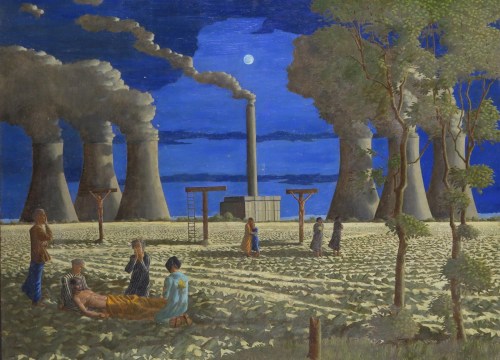
Last night we lost yet more citizens to a so-called ‘lone gunman.’ This time in Boulder, Colorado. Today I woke up thinking about one of Dorothee Soelle’s poems from the Vietnam War era. The war lasted officially from 1 November 1955 to 30 April 1975. My comments follow.

Peace

1

Asked to write a poem about peace
I feel shame for those who ask
do they live on a different planet
what are their hopes
and for whom

Gases meant for rice farmers
have been tested
they can be harmless
if the humidity and the wind
are right

So I’d suggest
we talk about the wind

2

Speaking of the wind
it can be lenient
rice plants can be merciful
sometimes
how friendly the jungle rain is
it delays attacks
and the twenty-fourth of december
lowers the casualty count
all these things provide cover
for st sebastian
for peace

3

He’s leaning against a tree
the wood has been sold
the land leased
the water poisoned
the rain kills birds
somebody takes aim at him
he raises his arms against the black wood
it is not finished

Dorothee Soelle, Revolutionary Patience, pp. 33-34
English translation © 1977 by Orbis Books

Sometime during the night yet another citizen of the USA walked into yet another public business and committed mayhem. This time in Boulder, Colorado. We miss the point if we think this was a lone male. No matter what prompted his actions, he is one of millions of men and women in the USA outfitted for killing with firearms, without warning.

And here we are in Lent. How ironic. Dorothee Soelle is correct: The death of one man (in this case, St. Sebastian) did not end the killing. Nor did the death of Jesus of Nazareth end the enmity burning like fire in the veins of many who see no way out except to take aim and fire.

“Surely he has born our griefs, and carried our sorrows….” (Isaiah 53:4, King James Version)

May God have mercy on us all.

© Elouise Renich Fraser, 23 March 2021
Image of painting by Roger Wagner found at mutualart.com

Haunted by fear

Forcing my eyes away
From today’s headlines
I catch myself also avoiding
What’s already captured
In our history and multi-media

It begs me not to forget
And not to believe the lie
That by solving this one
Crime we will solve all
Crimes against humanity
Or prove ourselves more
Committed to human rights
Than other countries that
Never seem to get it right
In our self-righteous eyes

Daily distractions
Continue unabated
Headlines and reports
boldly steal attention
from what’s happening
in our back yards and streets
now haunted by fear
of unannounced annihilation

Is this our pro-USA reflex action kicking in? The one that doesn’t want to acknowledge the truth about our nation? Many news reports seem determined to focus on the perpetrator at the expense of victims. Especially when the so-called ‘lone’ perpetrator is a white male.

The most recent killing targeted mainly Asian women. Much news coverage went into various profiles of the perpetrator, though not the significance of his victims’ race and gender. I applaud news organizations that chose to investigate connections between our nation’s history, and our past and current treatment of Asian citizens and immigrants.

Another lone white male gunman? I don’t believe it. I see it in large part as the result of coddling white boys and men of all ages and ranks in life when they ‘misbehave.’ And then, adding insult to injury, refusing to pursue justice for their victims.

On top of that, there’s this. Many life-denying behaviors have deep roots in family histories and wartime experiences. We haven’t dealt adequately with this reality. It seems we prefer looking the other way because it’s easier than facing reality, and our own unintended collusion.

Elouise

© Elouise Renich Fraser, 19 March 2021
Photo found at democracynow.org

Who am I now?

My computer screen
Is as blank as my mind
Weary and disoriented

Even the weather
Can’t decide whether
It’s mid-winter or early spring

Days pass in a chaotic
Parade of not knowing the
End from the beginning

Inviting me to look beyond
Myself and my small world
To the dead and the dying

Since early March 2020, I’ve taken Covid-19 restrictions seriously. I’ve also had both shots, so I’m now in a relatively safe category. Plus I’m white, have a retirement income, and live in a relatively safe neighborhood.

So how do I assess what’s good and right for me to do with regard to Covid-19? Are we at a turning point for the better? Or are we on the verge of yet another spike in deaths and confirmed cases? What about the majority of citizens who haven’t received a vaccination?

Or from another angle, have we begun an undeclared war in this country? A war in which Covid-19 attitudes and behaviors stand in for Us against Them? A war in which winning is defined by overt defiance, fake bravado, and making the headlines?

Nation-wide, I wonder what our churches and religious organizations are doing today to push back against the kind of thinking that helped get us into this mess in the first place.

Yes, we had a POTUS who failed the test of leadership when we most needed it. Now we have President Biden and a new team. However, it takes an entire country to meet a pandemic crisis head on. This includes churches and church leaders with guts and vision to do what still needs to be done.

To our chagrin, we are not a country that offers liberty and justice for all. Strangely, we have Covid-19 to thank for making this unwelcome truth painfully visible. So what can we do about this as individuals?

Just some of what’s going through my mind these days. More questions than answers. How about you?

Elouise

© Elouise Renich Fraser, 17 March 2021
Illustration by Brian Stauffer for foreignpolicy.com

when life goes south

when life goes south
as they love to say
the weary get up
and get going

anywhere
it doesn’t matter
just so there’s
a sunrise tomorrow

and stars above
when evening calls
to carry me away
beyond these hollows

seeking to prepare
I don my travel clothes
now old and worn
from years of waiting

in the distance
a lone owl sings
its screeching song
chilling my weary bones

Time is short no matter when it began.

Signs of old age are incontrovertible. Also not to be argued: I’m in the exit line. How close to the last moment of the last day or night? I don’t know. But I’m feeling it. Partly due to pandemic unknowns. But more because of a year of not being the ordinary human being I think I was in February 2020.

It’s never too early or late to prepare for the end. In fact, I’d argue that something like preparation begins the moment we’re born into this world, whether we realize it or not.

Today the sun is out, still melting mounds of stubborn snow in our back yard. Our resident pigeon pair is already hoping for an early-bird hatching. A male red-wing blackbird has been visiting our feeder along with all the other regulars. A good day for an afternoon walk. Time is short, and I love life.

Elouise

© Elouise Renich Fraser, 10 March 2021
Image found at forbes.com

Living with loss

It’s always in my face
until it isn’t anymore
With a smirk and a sigh
energy slides to the floor
of my waning ambitions

Time races by
without much effort
as I sit watching birds
and freezing rain
drift through the air

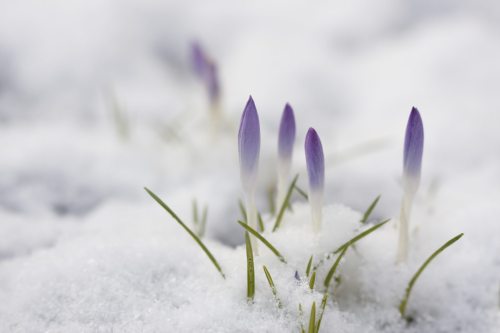
It’s time for lavender crocus
to push their sweet petals
through layers of packed snow
now coating the back yard
like a fake movie set

I sit at the kitchen table
reluctant to move
taking in the calm of
a day just begun
despite my growing lassitude

I must admit to a case of weariness. Physical, mental, emotional weariness.

I don’t mind messes. In fact, I’m challenged by them. I used to enjoy sorting things out into neat piles. Not for my own pleasure, but because things go better when they’re arranged in a sensible way. So we know who’s who and where things are and how to access truth.

We seem to have less sense than usual about us these days. Not as individuals, but as citizens of these weary, mostly disunited states. It isn’t too much to say we’re in a hunkered down war-like posture. We’ve been there for decades, growing wearier by the day.

No one has declared open warfare, though we’ve come close. On a regular day, those who feel the heat most often are our best barometers. Women, children, the unemployed, prisoners, immigrants, and sometimes anyone who lingers too long to watch the sunset.

It feels as though our government has become the new war zone that guarantees we’ll not cross over to the ‘enemy.’

And yet, for this and much more, Jesus of Nazareth turned his face toward his enemies and toward death. One wearying day after another.

I pray we’ll find reason to hope not in ourselves, but in a power greater than we are. Even though it means learning to die.

Elouise

© Elouise Renich Fraser, 6 March 2021
Photo found at gardeningknowhow.com

What we don’t have

In the opening pages of his Journal of an Ordinary Grief, Mahmoud Darwish writes these haunting words:

What are you doing, father?

I’m searching for my heart, which fell away that night.

Do you think you’ll find it here?

Where else am I going to find it? I bend to the ground and pick it up piece by piece just as the women of the fellahin pick up olives in October, one olive at a time.

But you’re picking up pebbles!

Doing that is a good exercise for memory and perception. Who knows? Maybe these pebbles are petrified pieces of my heart. And even if they’re not, I would still have gotten used to the effort of searching on my own for something that made me feel lost when it was lost. The mere act of searching is proof that I refuse to get lost in my loss. The other side of this effort is the proof that I am in fact lost as long as I have not found what I have lost.

Mahmoud Darwish, Journal of an Ordinary Grief, pp 3-4. Translated from Arabic, with a foreword by Ibrahim Muhawi. Archipelago Books, English translation published in 2010; first published in Beirut in 1973.

When I read these words I can’t help thinking about our national crisis. Not Covid-19, or even political wars waging night and day in cities and towns everywhere.

Our most pressing crisis is our identity. Who are we as a nation?

Mahmoud Darwish’s father struggles with an “ordinary grief.” Ordinary because the grief never goes away. It’s the grief of a Palestinian whose heart has been broken. The grief of an old man without a country. Grief that won’t let go of memories because they’re the last link to what once home. The place where hearts were nourished and cherished. Memories now represented by pebbles. Bits and pieces of stone standing in for what was lost.

The USA is no paradise. Those brought here or captured against their will have already attested to this.

They and their descendants are still looking for something. Dare we join them in their search? Stone by stone, bullet by bullet, bone by bone. Small connections to the past, and reminders of what they and we still don’t have: liberty and justice for all.

© Elouise Renich Fraser, 3 March 2021
Painting of old man found at lettalkknowledge.wordpress.com

Thank you, Marian Anderson


Today is the anniversary of Marian Anderson’s birth in 1897. You may remember that James DePreist, musician and poet, was her nephew. Some might even remember that she was born in Philadelphia, Pennsylvania. Ms. Anderson died on  April 8, 1993.

This morning I watched and listened to a number of YouTube videos. Most focused on Anderson’s amazing voice. After listening to more than one recording of “They Crucified My Lord,” I chose the one you see above. It isn’t dressed up, and we don’t hear or see the audience. Instead, we’re invited to hear and feel the full weight of Anderson’s interpretation. One tragic note at a time.

I hear connections between Anderson’s interpretation of this song and James Cone’s book, The Cross and the Lynching Tree.  Not just in the music itself, but in her subdued yet determined delivery of the song. Often followed by silence from the audience.

I wonder. How many white people felt pierced in their hearts, as I do now, when they heard and saw her interpretation of it? We’ll never know. However, the fact that this song was often met with silence instead of enthusiastic hand-clapping suggests the message was clear to all.

Jesus of Nazareth didn’t say a ‘mumbling word’ and was known to be innocent of charges brought against him. It follows that we dare not applaud this travesty (lynching in its changing costumes) that continues to haunt us in the USA.

© Elouise Renich Fraser, 27 February 2021
Image and song thanks to YouTube.com

o

When Death Comes | Mary Oliver

Death is on my mind. Not just because we’re in the season of Lent, but because it’s impossible to escape death. Here’s Mary Oliver’s take on death. My brief comments follow.

When Death Comes

When death comes
like the hungry bear in autumn;
when death comes and takes all the bright coins from his purse

to buy me, and snaps the purse shut;
when death comes
like the measle-pox

when death comes
like an iceberg between the shoulder blades,

I want to step through the door full of curiosity, wondering:
what is it going to be like, that cottage of darkness?

And therefore I look upon everything
as a brotherhood and a sisterhood,
and I look upon time as no more than an idea,
and I consider eternity as another possibility,

and I think of each life as a flower, as common
as a field daisy, and as singular,

and each name a comfortable music in the mouth,
tending, as all music does, toward silence,

and each body a lion of courage, and something
precious to the earth.

When it’s over, I want to say all my life
I was a bride married to amazement.
I was the bridegroom, taking the world into my arms.

When it’s over, I don’t want to wonder
if I have made of my life something particular, and real.

I don’t want to find myself sighing and frightened,
or full of argument.

I don’t want to end up simply having visited this world.

© 1992 by Mary Oliver, published by Beacon Press
From New and Selected Poems, Volume One (pub. 1992), pp. 10-11

It’s impossible to get through Lent without pondering death. Not just the death of Jesus of Nazareth, but my own death. How do I prepare to die?

Writing about death helps. So does revisiting deaths of family members and friends. Also, acknowledging holes in my life that will never be filled. And my own fear of dying before I think I’m ready.

So what does it mean to live each day as potentially my last day on this earth? Mary suggests I pay attention to the now of this world. Become more than a visitor. Become amazed at this world and its inhabitants. Especially those flowers of the field that have put up with the likes of us from the very beginning.

As for going through what Mary calls the “the door” of death, yes, I’m curious. Though not as curious as Mary. Still, the focus is today, the only way to prepare for tomorrow.

Elouise

© Elouise Renich Fraser, 25 February 2021
Image found at wwwreligionlac.net

Life shrinks daily | Lent 2021

Is it not enough
That I have survived?
That You have never
Turned away from me?

Life shrinks daily
A wrenching letting go
Of many things

Masks and pandemic protocols
Shroud me in a deathlike dream
From which I cannot wake
Before the next stanza
Takes me down

The sun is out today, though the air is still below freezing. White mounds of snow look like small mountain tops invading the back yard. The birds are basking in chilly sun, taking their turns at the birdfeeder.

I sit in my kitchen, an onlooker to life, wondering how and when things went sour.

Then again, this is the first Sunday in Lent. My heart tells me it’s time review what I’m giving up yet again for Lent. No, it hasn’t gotten any easier to say this prayer. Especially the last line.

I let go my desire for security and survival.
I let go my desire for esteem and affection.
I let go my desire for power and control.
I let go my desire to change the situation.

Quoted by Cynthia Bourgeault in Centering Prayer and Inner Awakening, p. 147 (Cowley Publications 2004)

I wonder what Jesus of Nazareth felt and thought as he approached his coming death?

Praying for an accepting heart and a grateful spirit.
Elouise

© Elouise Renich Fraser, 21 February 2021
Image found on Facebook via Google search

Now read this, if you dare

Yesterday my longtime blogging friend in Australia posted a thought-provoking piece about Australia and the USA. John is now a retired history teacher, and a superb writer. His mind wanders back and forth, here and there, before coming to the end of it all. This short piece is about where our two countries find ourselves today. Read it, if you dare.

I’ll start you off with the opening paragraph, followed by a link to his piece.

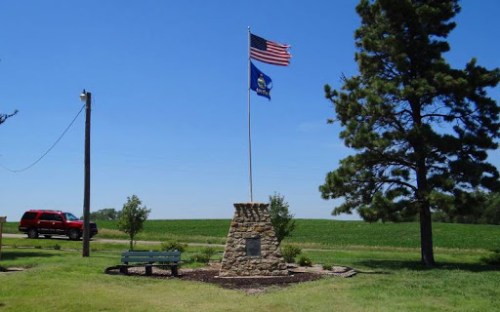
Lebanon, Kansas, USA

There is a small stone pyramid about two miles northwest of Lebanon, Kansas. Lebanon has a population of something a little over two hundred people. It is on the crossroad of highway 36 and highway 281. Highway 36 runs in an almost straight line about 1400 miles or 2200 kilometres from Ohio to Colorado. In the middle, near where the town of Lebanon lies the country is flat wheat fields and looks a lot like much of Australia – small towns with few people and huge grain silos. And the highway isn’t a big highway. As in much of wheat farming Australia, the road is two lanes and narrow.

None of this is relevant but it does add to the poetry that is to come. . . .

Thanks for visiting. Yesterday’s post raised a number of questions. We like to talk about our ‘exceptionalism’ here in the USA. I’m grateful for another viewpoint from the other side of the globe.

Elouise

© Elouise Renich Fraser, 9 February 2021
Photo found at KansasTravel.org