Telling the Truth

connecting the dots of my life

Category: Devotional Writing

Sabbath for My Body


Dear Friends,

It’s been a while since I wrote about Sabbath Rest. I’m learning the hard way that this isn’t just one day a week. It all began a year ago, in April 2016, and now includes a new health challenge I found out about this month.

On April 6, 2016, I received my spectacular pacemaker, Lucy. She’s now one year old, and has demonstrably changed my life for the better. Lucy is my upbeat (!) silent, invisible champion. She’s on call 24/7, making sure my heart rate doesn’t wander below 60 beats a minute. No more fainting spells.

Then, on April 21, 2016, my first day out alone with Lucy, I tripped on uneven pavement and fractured my jaw. Full stop.

Things will never be the same in my mouth. Wired jaws, lessons in how to use my Vitamix, pain and agony, sheer exhaustion as night became day and day became night. No description can capture it. I thought it would never end.

It’s still difficult to form some words. Still, most of the pain is gone and I’ve regained significant lateral movement in my lower jaw, though my bite will never be the same.

My broken jaw pushed me over the cliff into adrenal fatigue. Thanks to my integrative doctor, I now have a regular pattern each day and night. That means I have energy most mornings, and am ready to sleep most nights. No more erratic nighttime insomnia, or falling asleep in the middle of eating during the day.

Regular rest stops are my new normal. This means putting my feet up, taking short naps, and meditating as needed during each day. I want to stay grounded in what really matters.

Then about 2 weeks ago my doctor confirmed a new challenge: Chronic Kidney Disease, Stage 3a of 5 stages. This came with little warning; my emotions have been all over the map. I’ve had several tests this past week to measure the extent of the damage.

Just for today I want you to know what’s happening. I’ve talked about end of life matters several times this year. The Shape of Forgiveness series was one such issue. So is this.

Are end of life issues my present calling in life? I don’t know. I do know that today, tomorrow and thereafter every part of me is invited into Sabbath Rest. Even though it may not always feel restful or inviting.

Praying you’ll find rest for yourselves each day of this coming week, beginning now. Blessings of inner peace in these troubled times.
Elouise

© Elouise Renich Fraser, 22 April 2017
Photo found at kellyjohnsongracenotes.com

Monday Morning Jolt

Fair warning, my friends. I’m writing this primarily for myself. I woke up this morning feeling gray, drippy and overcast. Just like the weather. Miserable.

Were there reasons? There always are, aren’t there? Still, if I don’t put one foot in front of the other, this day will take longer to traverse than it otherwise would.

On my way down to make my morning smoothie, I picked up a small book I read when I was in graduate school. Less than 100 pages. Written in honor of one of the most beloved preachers of the Nazi era, Christoph Blumhardt. Speaking on behalf of those begging for a cup of cold water, he wrote the following:

We must not be silent. The social struggle of millions in our time is not a coincidence….The ferment in the nations, the agitation of the poor, the crying out for the right to live—a crying, given into the mouths of even the most miserable of [us], which can no longer be silenced—these are signs of our Lord Jesus Christ…They do not know that it is Jesus who wants it.” (Action in Waiting, p. 8)

Yet Blumhardt didn’t pour his entire life’s energy into political life. He saw that neither political nor church movements for social justice could deliver a final solution to the world’s agony. Instead, we long for human fellowship that both waits for and experiences the fulfilment of that for which we are created. Not simply in our places of worship, but in everyday life.

Was Blumhardt a dreamer? I don’t think so. I believe he saw within the misery of his world the seeds of something greater. Yet not so overwhelming that we can ignore right now the work to which we’re called daily. Especially in the midst of political, national, social, religious and economic warfare in which some are winners at great cost to everyone else.

Even so, he argued we’re not called simply to work for social justice. We’re called to delight in the beauty of each day:

The earth is so beautiful, the earth is so lovely and full of joy, every little midge rejoices, every tree rejoices; all things are arranged delightfully and beautifully by God so that we too can live and move among them in joy and graciousness…. (Action in Waiting, p. 25)

Finally, just as all nature is ordered toward its Creator, so too are we:

God has already put into us what God is and what God wanted to put into us so that we should become God’s image. (Action in Waiting, p. 27)

I’m not an outlier, and neither are you. We’re already in the vision held close in our Creator’s great heart. My work is to move in the right direction, do what I’m called to do, trust, fear not, and keep my eyes on the goal.

© Elouise Renich Fraser, 17 April 2017
Photo found at pixabay.com, Golden Regulus

All quotes from Karl Barth, Action in Waiting, Plough Publishing House, 1969
Response to WordPress Daily Prompt: Jolt

Living in a haze

Living in a haze
of trance-like ghosts
we move through life
reenacting scenes
from childhood
played by ear
with great skill
and small vision

I’ve been thinking about my father, and the strangle-hold of symbolic behaviors I adopted in order to survive with my will intact.

My father lived in a haze of his own trance-like ghosts and scripts. A small world in which he was determined to survive my grandfather’s brutality.

Almost invisible and automatic, his ghosts and scripts drove him to replay the roll he learned by heart as a child. He hoped to keep himself safe, and demonstrate his superiority without disrespecting his father.

When he was in his 80s, Dad shared with me a recurrent dream. It troubled him greatly. So much that he sometimes began crying as he talked about it. The dream returned from time to time right up to his death at age 96.

In the dream, he’s in a physical fight with his father. Fighting for his life. No one else is in the room. It seems they’re in a barn. Both my grandfather and my father were tall, strong men shaped by years of hard physical labor on family farms.

Eventually, Dad wrestles his father to the floor, wins the match, and wakes up, caught in a nightmare of guilt and self-judgment. He disrespected his father. A cardinal sin, according to Dad. According to him, just having the dream proved his guilt.

Taking the measure of my father’s struggle against his guilt and self-judgment, along with his early, harsh judgment of me, helps me understand him. It doesn’t take away any blame for what he did.

It does, however, invite me to pray to our Creator, “Forgive him, for he knew not what he did.” Dad lived in the haze of his own trance-like ghosts and scripts. Unable to see beyond his own survival.

This also invites me to face my trance-like ghosts. Scenes from childhood played by ear with great skill and small vision of myself and others.

It’s Good Friday. A good day for self-examination and forgiveness.

© Elouise Renich Fraser, 14 April 2017
Response to WordPress Daily Prompt: Measure

Some keep the Sabbath going to Church —

This poem from Emily Dickinson makes me smile every time I read it. My comments follow.

Some keep the Sabbath going to Church –
I keep it, staying at Home –
With a Bobolink for a Chorister –
And an Orchard, for a Dome –

Some keep the Sabbath in Surplice –
I just wear my Wings –
And instead of tolling the Bell, for Church,
Our little Sexton – sings.

God preaches, a noted Clergyman –
And the sermon is never long,
So instead of getting to Heaven, at last –
I’m going, all along.

c. 1860

Emily Dickinson Poems, Edited by Brenda Hillman
Shambhala Pocket Classics, Shambhala 1995

From about 1860 until her death in 1886, Emily lived as a recluse, writing and serving as a caretaker for her family and servants. She left her family’s house only rarely. Today’s poem comes near the beginning of this prolific period of her life.

Imagine Emily looking around, seeing and hearing life in a great outdoor Orchard Dome. Perhaps leafy branches overhead? Like a cathedral dome, this one echoes with music–birdsong, a bell tolling and a soloist. And then there’s that noted Clergyman God, whose sermons are never long. Emily doesn’t need special Sunday clothes. She just dons her Wings and joins the chorus! Is she an angel? I doubt it. I think she’s probably a little bird. Perhaps the Bobolink?

The contrast is clear. Unlike others who keep the Sabbath by going to Church, Emily keeps it by staying at Home. Is this by choice, or due to the circumstances of her life? Probably by choice, temperament and the circumstances of her life.

In any case, Emily isn’t explaining or defending herself. Instead, she imagines a great advantage in her situation. She also suggests there’s more to Sabbath than meets the eye when we confine it to one day out of seven days. In fact, her situation is far better than the one-day-a-week slow track to Heaven.

Emily isn’t arguing a point of theology. Nor is she explaining why she isn’t showing up in church every Sabbath.

Rather, she celebrates God’s presence in the created world, and the delightful participation of all creatures great and small. As she sees it, she’s going to church daily in God’s outdoor cathedral! A mysterious world of truth that invites her to draw nearer to Heaven. Unlike the slow trackers, she doesn’t have to wait until the end to get to Heaven “at last.” She’s going there every day!

For me, this poem is about more than sunny days and a beautiful orchard. It’s also about more than Emily’s religious practices. I hear an invitation to view every day as a day of rest. A Sabbath. Why? Because Heaven is reaching out, wanting to connect with me every day. Not simply one day a week.

As for my part, I don’t need special clothes. I just don my Wings, retreat to the orchard, listen expectantly for nature’s music, join in when I feel like it, and listen to a short sermon from God. I, too, could be going to Heaven all along — with Emily! Even though I may never leave the house.

© Elouise Renich Fraser, 25 March 2017
Photo found at midewinrestoration.net

Strange Visitors


Unplanned events
Crash into my life
Force change and create confusion

Chaos
Leers at me
Foils attempts to ‘sort things out’

Indecision
Haunts my behavior
Especially on days without sunshine

Lethargy
Creeps from head to toe
Lulls me into dreary gray oblivion

Dare I welcome
These strangers in
For tea and conversation?

I fight the urge
To show them the door
As though they didn’t exist

I want them to disappear
Like the unrealities
I want them to be

***

As a girl child I was instructed at home, in school and in church to avoid or get rid of all things negative. That included lying, cheating, pouting, complaining to my parents or fighting with my sisters.

Though this was supposed to make me good and happy, this negative approach seemed to border on magical thinking.

Avoid this or stop doing that, and you’ll win the Good Girl Lottery! It might not always be fun right now, but it will be spectacular later on—especially after you die and wake up in heaven.

And yet, with all that goodness drummed into me, I wasn’t protected then or now from difficult situations. Instead, my upbringing instilled voices and unhelpful habits that drive my behavior more than I like to admit. They kept me from exploring and celebrating my voice, and the woman I was becoming then and now.

I’m just beginning to recognize the way these drivers work in me, and let them go. They’re named in the litany I wrote about here:

  • My desire for security and survival
  • My desire for esteem and affection
  • My desire for power and control
  • My desire to change the situation

Saying I’m letting go is relatively easy. Living it out is difficult. It’s difficult to let go of what I’m not willing to understand. I want to welcome these desires as the realities they are, capable of supporting life or of putting it at risk. I don’t want to slam the door in their faces. They might be my best coaches—or at least helpful visitors I dare not silence or ignore.

So how do I welcome these strangers and listen to them? How and why did they become powerful and controlling in me? Who put their insistent, insinuating voices in me, and why? And how does this affect my responses to unplanned events, chaos, indecision and lethargy?

More fodder for self-reflection during and beyond this Lent season. Thanks for reading!

Elouise

© Elouise Renich Fraser, 18 March 2017
Photo found at islamforchristians.com

What I’m giving up

I didn’t grow up in a church tradition that required me to give things up for Lent. Yet today I’m asking what I’m giving up for Lent.

Why now? I think it’s related to my health, my age, my ability to live as an independent woman, my need to have things go my way at this time in my life.

I feel quite well most of the time. Perhaps weary and a bit stressed out now and then, but not awful. Yet sometimes I fall over the edge–into anger or fear. It’s usually triggered when something doesn’t go the way I anticipated it would. It’s like throwing a lighted match into a dry haystack. Or going over a cliff. Too late to step back and do something different.

So what to do? I don’t have a magic formula. However, I’ve been reading a wonderful book about prayer. It’s Cynthia Bourgeault’s book called Centering Prayer and Inner Awakening. It seems connected to what’s happening.

Her book is helping me reconsider these episodes. They flare up when I hit moments of extreme frustration. Sometimes they’re about my health and wellbeing. Other times they’re triggered by memories of things that happened to me as a professional woman.

The goal I’m after is this: to learn ways of interrupting what’s about to happen before I go over the cliff. I know I won’t learn this overnight. Still, I want to recognize, welcome and listen to those small signs before I go over the cliff or say things I’ll regret. Sometimes that’s not possible. Other times, it is.

As part of this discipline, Cynthia offers a litany written by a friend. It’s a prayer to be offered as often as needed, without having to make it up myself. It’s for the moment I realize my frustration and anger are escalating, ready to overflow. It won’t work if I’ve already exploded.

I grew up believing everything unwelcome in me needed to be  ‘fixed’ if not denounced and forsaken. Slam the door in its face! Send it packing! Or at least keep it hidden in a closet. It’s not the ‘real me.’

This, however, is about the real me. The person I am in God’s presence. Just as I am. Especially when I’m unhappy about the way things are going. What’s happening in me has something to tell me. Instead of slamming the door in its face or denying its presence, perhaps I could welcome it. Listen, and learn from it. After all, it’s part of me whether I like it or not.

So here’s the litany, an active giving up of something. Not just for Lent.

I let go my desire for security and survival.
I let go my desire for esteem and affection.
I let go my desire for power and control.
I let go my desire to change the situation.

Quoted by Cynthia Bourgeault in Centering Prayer and Inner Awakening, p. 147 (Cowley Publications 2004)

I long to stay fully present to God and, so far as possible, to the truth about myself. No matter what rises to the surface or comes at me without warning. Whether it’s anger, fear, pain or death itself.

© Elouise Renich Fraser, 11 March 2017
Image found at kairosjourney.org

The White Stone

To each who overcomes,
I will …give a white stone with a new name written on it,
known only to the one who receives it. (Revelation 2:17, NIV)

Imagine you’ve come to the end of your life. What are you expecting? I was brought up to expect judgment. The kind that points out how much I’ve failed, and assigns demerits for failures.

Will my failures outweigh the good? According to my childhood theology, that would be entirely in God’s hands. Woe to me if I fail to live up to expectations.

This made for a peculiarly nervous mode of life. Like nervous tics my failures sometimes seemed to have gained eternal life. Poking at me, cropping up at the most vulnerable moments, shadowing me like bad dreams. Casting a pall of loneliness around me and my closely guarded secrets.

I’ve been reading short excerpts from George MacDonald in the last few weeks. His comments about the white stone are nothing like my childhood theology.

The white stone and the new name are indeed God’s judgment. But with a difference. This is a judgment of grace. One white stone with a new name for each son and each daughter.

The stone with the new name makes visible what has already come into being. Not a hideous monster, but a breathtakingly beautiful daughter or son of the Creator. In fact, to receive the white stone with one’s own new name is the equivalent of ‘well done, good and faithful servant.’

It is only when the person becomes his or her name that God gives the stone with the name upon it. (George MacDonald: An Anthology: 365 Readings; C. S. Lewis, ed. (Harper One)

The secret name given only to me will capture perfectly what God saw in me from the moment I was created. Especially when I or others don’t or can’t see this. The name sums up the woman I will have become—through many dangers, toils and snares.

I can relax, take each day as it comes without a clear roadmap. When I get there, my Creator who kept faith with me will give me my white stone with my new secret name. One of a kind. I don’t need to keep asking “Am I there yet?” I’m already in good hands.

© Elouise Renich Fraser, 8 March 2017
Image found at ahnsahnghong.blogspot.com

Quotation  from the NIV
Response to WordPress Daily Prompt: Nervous

Still Learning to Pray

learning-to-pray-by-talking-less

Today is a quiet day. Not because I’m sick, but because I need to take care of myself. So I’m revisiting several books on prayer. Why? Because current events in the USA tug me this way and that way. Sometimes I feel as though I’m wandering, lost in the trees. Uncertain how to pray or how that might help my focus from one day to the next.

Here’s what I’m certain of today.

  • The human confusion into which I was born multiples daily, and isn’t going away of its own accord. Ever. There are things I’d like to undo and re-do in this world and in myself. I want us to sort things out and be good neighbors. Yet I fear it isn’t going to happen, even though we’re all part of God’s good if not perfect creation, and need each other to survive.
  • Human confusion seems to have a life of its own. It feeds on itself, creating ever-more-shocking statements, behaviors, attitudes and reactions. It thrives when we’re fearful and distracted. On guard. Looking over our shoulders as we try to figure out what just happened, and miss what’s already brewing for tomorrow.
  • In my small world, confusion shows up in anguish about what I’m to do from one day to the next. I’m not utterly lost or clueless; yet I don’t feel grounded in a clear approach to what’s happening around me. I don’t have a clear goal for each day that calms my heart and helps shape my actions. I often feel uncertain and lost, especially when I start checking out tantalizing, infuriating headlines that pop up every minute of the day.

For the last few weeks I’ve been thinking about prayer. Granted, our pastor is preaching about it every Sunday, so it’s difficult not to think about it! At the same time, I wonder how I am to pray, given confusion around and within me.

I used to think once I learned to pray, I’d have it all figured out. As though it were like theology. I think about theology as dialogue with Scripture, traditional documents, other conversation partners, the newspaper and my experience as a woman. It works!

However, when I consider prayer, my major dialogue partners have been God or Scripture or what my parents or the church told me to do. The newspaper has been a secondary partner. And though I’m aware of myself as this woman (not just any woman), I haven’t figured out how that shapes my approach to prayer. Sometimes I fear there’s something wrong with me–even though I know there is not.

So I’ve decided to look into this and begin writing about it from time to time. I want to live boldly with the courage of my convictions, as this follower of Jesus Christ who is this woman living in these troubled times. Somehow, I believe my dilemma about prayer lies at the center of my anguish about who I am and how that shapes my prayers from day to day. Especially now.

© Elouise Renich Fraser, 25 February 2017
Photo found at parentingupstream.com

purple carpets

crocus-carpet-at-longwood2-mvg222-blogspot-com

purple carpet waves
soft lavender on cold ground
golden eyes twinkle

***

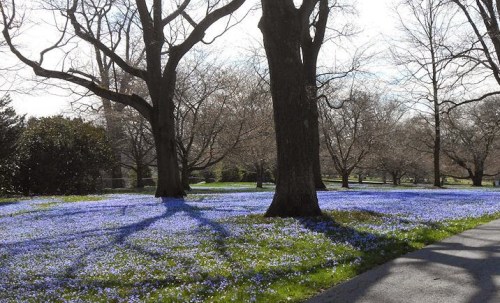
I’m just back from a morning walk through my neighborhood. Birdsong filling the air, lazy sounds on near-deserted streets, sun bright, cool air breezy, and several lovely carpets of crocus.

My eyes filled with tears, and I recalled one of my favorite college choir choral pieces. It seems fitting for this time of year and this time in world history. The words come from Isaiah’s vision of arid ground blossoming and flourishing in every possible way. Spoken not when things were going well, but when they were going downhill at breakneck speed.

I’m heartened by these words. Encouraged not to give up, but to keep my eyes and my heart focused on what matters most. And, like Isaiah, willing and able to stand before God and speak truth to corrupt power. Isaiah’s vision comes as a stark contrast to the corruption he spoke against and lived with day and night. It’s a promise to each of us who’s willing to listen, live through and with the hard times, do what we can and must, and keep our eyes on God’s larger picture. God has not forgotten us or rainbows.

Isaiah 35:1 (New International Version)

The desert and the parched land will be glad;
    the wilderness will rejoice and blossom.
Like the crocus, it will burst into bloom;
    it will rejoice greatly and shout for joy….

Praying you’ll have an encouraging, revitalizing Sabbath rest.

© Elouise Renich Fraser, 25 February 2017
Photo found at mvg222.blogspot.com; taken at Longwood Gardens, Pennsylvania
Response to WordPress Daily Prompt: Arid

Riding the Storm

william-cowper-quote-i-seem-forsaken

Following President Trump’s inaugural address yesterday, I toyed with the idea of writing a letter and posting it. It would have gone something like this:

Dear World,
The new President of the USA does not speak for me. Please don’t judge me or my neighbors harshly because we’re from the USA. You and I have gotten along quite well so far. In fact, I wouldn’t be who I am today without you. I’d like to think I’ve contributed a bit to your life, as well.

If you’re reading this, I know you won’t treat me poorly because I’m from the USA. Still, a cold chill went up my spine when I heard President Trump’s angry determination to put America first. And last, it seems, since there weren’t any other countries that came in second or even third.

Thank you for your friendship and hospitality. I sincerely trust this ‘new’ approach to the rest of the world won’t stop us from welcoming each other and working together on things that matter for all of us.

Sincerely,
Elouise

So I didn’t post this letter. Instead, I’m thinking about the storm of uncertainty, confusion, disillusionment, anger and fear that surround Trump’s presidency. Where do I stand? How do I keep my footing? Especially since I don’t know where the storm is going.

Ever since the presidential election results were announced, I’ve thought about William Cowper (‘Cooper’). He was a poet and hymn writer from Britain. Born in 1731; died in 1800. His life was filled with hard times such as the death of his mother and most of his siblings, bullying at school, and his father’s refusal to allow him to marry his sweetheart who happened to be his cousin.

As an adult Cowper struggled with deep depression and manic episodes. He attempted suicide on several occasions, was put in an institution and declared insane. He was also a prolific writer of hymns, poetry and occasional prose.

Two stanzas of one of his hymns, possibly the last he wrote, keep going through my mind. In the hymn a fierce storm rages. Surprisingly, God doesn’t calm the storm; God uses it to do something else. Something mysterious.

In order to do this, God steps smack into the middle of the storm and rides it like a chariot. This could be Cowper’s personal storm or our personal storms. It could also be our current political storm, with its global implications.

Cowper’s words help focus me. They’re also calming, reassuring and challenging. We haven’t been left to our own devices.

Here are the stanzas I’ve been thinking about and singing to myself. You’ll find all stanzas here.

God moves in a mysterious way
His wonders to perform;
He plants His footsteps in the sea
And rides upon the storm. . . .

Ye fearful saints, fresh courage take;
The clouds ye so much dread
Are big with mercy and shall break
In blessings on your head.

c 1770

William Cowper, published by John Newton in Twenty-six Letters on Religious Subjects, 1774

Without ignoring the storm, Cowper’s hymn invites me to focus on what God is going to do. Not without, but by way of the storm. Blessings will fall. Not on a calm sea, but in the midst of stormy adversity. A sweet flower will bloom from what seems to be a bitter bud.

My part is to keep the faith so that I can recognize and celebrate the work of our Creator in the midst of what seems a chaotic mess.

Thanks for reading and listening.
Elouise

© Elouise Renich Fraser, 21 January 2017
Quotation found at QuoteHD.com