Telling the Truth

connecting the dots of my life

Category: Spiritual Formation

A vexing situation – Sexuality 5

I’m tired of dancing around the politics of sexuality, whether proclaimed by the church and church-related institutions, or by political parties on both sides of all aisles.

All my life I’ve lived by other people’s agendas. Toed the line (most of the time). Made sure I didn’t cause a problem for the powers that be (even though I did).

For a change, this is my agenda: As a follower of Jesus Christ, I am to

  1. love the Lord my God with all my heart, soul and mind
  2. love my neighbor as I love myself
  3. love myself

It couldn’t be simpler or more terrifying than that. Those three, taken together, are my bottom lines. Any attempt to gain my loyalty or affirmation falls short if it requires me to add or subtract from this list.

If I were applying to teach at a seminary and made the first cut of candidates, I might say something like this to the search committee.

  • I would like to hear from each of you about your personal journey, including things you’ve struggled with in your life, and how this affects the way you relate to seminarians, particularly regarding sexuality. In return, I’m committed to sharing the same thing with you about my struggles, and the way this has affected my work with seminarians, both male and female.

Perhaps this is unrealistic or unfair. In any case, I don’t think I would get many takers.

I am now and have always been an outlier about sexuality. Partly due to my troubled past with my father. But also because of multiple friendships with gay men and lesbian women, my own troubled past, and fear of being drummed out if people don’t believe me or, more likely, find me unworthy.

When it comes to sexuality, no one has an undamaged mind, heart or body. In addition to relentless private victimization, the advent of ritualized, commercialized pornographic images and social media voyeurism makes a mockery of our felt need to root out those who flagrantly (publicly or privately) violate their own sexuality or the sexuality of others. We have been sinned against, and we have knowingly and unknowingly passed along our anguish.

Finally, though this post is about men as well as women, we women have more to lose when it comes to sexuality.

Nonetheless, if we women keep arguing and distancing ourselves from each other, we’ve lost even more. It doesn’t matter whether we’re homosexual, heterosexual, transgendered or bisexual. It doesn’t matter what color we are or how many husbands or partners we’ve had, or what we have or haven’t done in our pasts. What matters are areas of common concern, and taking initiative to meet each other around those issues, even though it may mean meeting some sisters for the first time.

I’m a dreamer. So was Jesus Christ. As one of his followers, how can I refuse to go where he went? Yes, it’s a kind of death. But the kind that passes life along to our daughters and sons, grandchildren, nieces and nephews, neighbors, and even to ourselves.

As always, many thanks for listening.
Elouise

©Elouise Renich Fraser, 9 April 2018

A vexing situation – Sexuality 4

When I interviewed for a faculty appointment at the seminary in 1983, no one asked about my sexuality or sexual history. I was married and had two children. I was an active member of the Presbyterian Church. I was interested in women’s studies and issues of importance to women, and as a theological student I had a good record and outstanding references. Besides, my guest lecture was well received.

Years later, I’m the dean, responsible for having a confidential conversation with each final candidate about sexuality and other topics. This includes conversation about the now-official standard of the seminary on human sexuality and moral conduct, questions they might have about this area, and questions I was expected to ask them. Which I did.

In order to help us through this sometimes awkward conversation, I used a one-page handout excerpted from a 1996 memo to the faculty. It was about the new board-approved policy on human sexuality and moral conduct. I sent it in advance to our final candidates, with other material about the seminary.

If the candidate was already inclined in the direction of the seminary’s policy, there was no hesitation. However, if the candidate had questions, it was sometimes awkward. Not just for them, but for me.

I couldn’t pretend that living with this policy wasn’t important. To my surprise, some were reassured by my history with students struggling with sexual issues. The same was true about ways I dealt with classroom presentations and dynamics. There might be room for them here, and it wouldn’t be easy. Especially in the classroom.

The new policy, nearly 10 years in the making, included a statement about behavior, and two implications for faculty.

  • Regarding behavior, those who affirm and practice forms of sexual intimacy contrary to the seminary’s guidelines will not be admitted as students, or employed at the seminary. A further sentence, for the benefit of faculty members hired earlier than 1996 said, “This item is in reference to all decisions subsequent to the adoption of this policy.”

Regarding faculty, there were two stated implications.

  • First, we were to make sure seminarians dealt with the range of positions about current moral issues the Church faced. These included human sexuality and moral conduct.
  • Second, in our teaching we couldn’t argue against the seminary’s policy about sexuality (whether heterosexual or homosexual). We could, however, tell students about our own struggles regarding human sexuality and moral conduct, including our present understanding of difficult issues related to sexuality. Nonetheless, we could not “undermine or invalidate” the seminary’s policy. Furthermore, when speaking publicly or privately on behalf of the seminary, we were to articulate clearly and uphold the seminary’s policy.

The first implication was fairly straightforward. The second, however, felt late and one-sided. I’d learned the hard way which questions I could and could not answer in large required courses. Now, however, any sign that I was still ‘struggling’ with these issues sounded to some like the equivalent of teaching against the seminary. The only safe professors were those in full and complete agreement with the policy as stated.

I keep wondering what I would do differently if I were being interviewed today for the same faculty position.

Thanks so much for reading, and for your comments along the way. One more post coming (I think)!

©Elouise Renich Fraser, 6 April 2018

A vexing situation – Sexuality 3

It’s now 1986. I’ve been an assistant professor of theology for three years. A new academic dean has just arrived, as have recent newspaper articles about one of our recent graduates. She had been one of our more conservative students, and was now an ordained pastor.

According to newspaper accounts, our graduate, happily married with two sons, left her conservative denomination to become pastor of a church for gay men and lesbian women. She had become disenchanted by her denomination’s anti-gay/lesbian rhetoric as well as concrete actions taken against homosexual women and men. I applauded her courage, as did some of my colleagues.

Our new dean circulated to the faculty a copy of the newspaper account along with a brief memo letting us know we would be talking about this. In the account, our former student identified herself as a graduate of our seminary.

Thus began a long conversation in the faculty that ended after nearly 10 years of anguished discussion about what we as a seminary should do. Not about this one graduate, but about gay men and lesbian women who might be already enrolled or applying for admission to our seminary. And about what faculty could or could not teach in the classroom.

The seminary hadn’t made attitudes or beliefs about homosexuality (or heterosexuality) an official requirement for admission in the past, so why did we need to clarify our ‘standing’ at this time? And why, given the recent history of the seminary’s heterosexual president, as well as hints of stories that might be told about one or two male professors of the past, were we suddenly consumed by angst about homosexuality? Wasn’t heterosexuality of equal weight and importance?

During my first three years at the seminary I became known, along with several colleagues, as a ‘safe’ person to talk with about matters of sexuality. Especially homosexuality. That meant I knew how to listen, how to be supportive without being directive, and how to help seminarians think about options. It didn’t take many conversations to realize I had no clue about the inner and family lives of gay and lesbian seminarians.

Some, now full adults, had never come out of the closet with their families, much less their friends. The thought of appearing before a board or session of a church to be interviewed for ordination was terrifying. Some ordination exams were public. Open to members from other congregations. Questions could be asked by anyone in the room, including questions about candidates’ personal lives.

I attended scores of these public exams. Nothing was more brutal than knowing ‘visitors’ from other churches could sway the outcome of an exam. The sessions sometimes functioned as semi-political social and theological warfare. If that sounds harsh, so be it. The possible consequences for the woman or man standing up front were harsh. Especially if the moderator wasn’t skilled and politically savvy.

Finally, in 1996, the seminary published internally a new policy on human sexuality and moral conduct. It included implications for present and future members of the seminary community and for faculty members in their responsibility as teachers.

I like clarity. I like knowing what’s expected of me. Yet this new policy sent a double message.

To be continued.

©Elouise Renich Fraser, 4 April 2018

Gumdrops, Spring and Dr. King

Like gumdrops
Filling a candy jar
Seconds of daylight
Pile up helter skelter
Cheery gold and lavender
Green, purple and red
Steal the show
From winter’s icy grip
One precious drop at a time

Snow and sleet this morning; sun promised this afternoon. Crocus and forsythia bloom no matter what falls from the sky. Relentlessly, they’re taking back their space and sending winter packing.

On 4 April 1968, the Reverend Doctor Martin Luther King, Jr. was assassinated. I can’t think of another religious or political leader who has, in my lifetime, spoken truth to power as effectively as he did. Not once, but many times over.

Dr. King’s approach offers an alternative to Mr. Trump’s Make America Great Again. Dr. King’s option is about hope for our future, though not because we’ll all be Great in the Trumpian way.

Instead, like the silent approach of spring, we’ll join others to steal the show from our long national winter of discontent. It will take no more and no less than small acts of nonviolent hope, listening as we’ve never listened before, and one courageous vote at a time.

We don’t have to wait until we’re part of an army or national movement to do what needs doing. Nor are we promised rose gardens or fame in return for our service. Instead, we’re promised the soul-satisfying, dangerous work of living and speaking truth to overweening, soul-destroying power.

©Elouise Renich Fraser, 2 April 2018
Photo found on pinterest.com

The underbelly of the Church

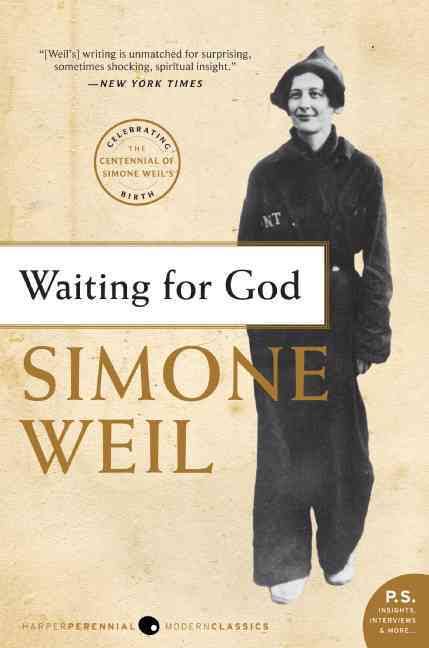
Below is a quote from Simone Weil about the social and patriotic power of the Church. Not church as we know it on Sunday mornings, but the Church as a powerful institution within a political setting.

Weil wrote during the Nazi era. Her words are troubling, given the rise of the white Evangelical church’s political influence in the USA. Sometimes on Sunday mornings, but also in public arenas where religious language virtually baptizes political figures as agents of God, up to and including Mr. Trump.

In light of the Nazi era, this turn of events is more than troubling. Many, though not all German Protestant and Catholic churches, including pastors and revered theologians, colluded in the rise of Hitler. Their open support amounted to baptizing Hitler as God’s agent sent as their Great Leader at this time. Yes, there would be some bloodshed. But in the end, life will be better for those who survive, and Germany itself will gain esteem throughout the world.

Here’s what Simone Weil had to say about herself and the Church during the Nazi era. I read this as a comment on both Protestant and Catholic churches in Germany, though she refers to the Catholic Church. Highlights are mine.

All things carefully considered, I believe they come down to this: what scares me is the Church as a social thing. Not solely because of her stains, but by the very fact that it is, among other characteristics, a social thing.

Not that I am by temperament very individualistic. I fear for the opposite reason. I have in myself a strongly gregarious spirit. I am by natural disposition extremely easily influenced in excess, and especially by collective things. I know that if in this moment I had before me twenty German youth singing Nazi songs in chorus, part of my soul would immediately become Nazi. It is a very great weakness of mine. . . .

I am afraid of the patriotism of the Church that exists in the Catholic culture. I mean ‘patriotism’ in the sense of sentiment analogous to an earthly homeland. I am afraid because I fear contracting its contagion. Not that the Church appears unworthy of inspiring such sentiment, but because I don’t want any sentiment of this kind for myself.

Simone Weil, Waiting for God
Published by Harper Perennial in 1950 to celebrate 100 years since Weil’s birth

I couldn’t agree more. I’m also troubled by the silence of many white Evangelical churches that (rightly) choose not to get on the Trump bandwagon. Silence often enables the abuse of power. I don’t want to catch the silence virus. Hence this post and others to remind me that I have a voice, it counts, and I must exercise it regularly.

©Elouise Renich Fraser, 28 March 2018
Image found at books.google.com

A vexing situation – Sexuality 2

Almost all my life I’ve been aware of sexuality, especially my own. Since my birth in 1943, I’ve been a member or participant of multiple religious communities that have talked about sexuality only when necessary. Usually when cultural pressures seemed to endanger ‘our’ young people.

I don’t remember sermons or safe conversations about everyday situations such as how to have a safe conversation with someone whose heart is aching or carrying a heavy secret. Nor have I had much training in how to watch or change my behavior so that I’m as clear and safe as possible when it comes to my sexuality.

For me, this unspoken agreement not to talk openly about sexuality made things worse. Especially after I arrived at the seminary in 1983, one of a small number of female faculty members. I felt alone and confused, left to figure things out by myself.

So here I am, a new assistant professor at a theologically conservative seminary with socially responsible roots and programs, along with a still-fresh wound from the former president. My new colleagues and students have their luggage from the past, and I have mine.

Perhaps the approach of ‘Don’t ask, don’t tell’ was the seminary’s way of allowing us to feel safe. Which, of course, many of us did not.

The first three years of my appointment I was exhausted, confused, anxious and fearful. Not because of what I knew, but because of how much I didn’t know. Not chiefly about how to teach or how to deal with classroom situations (though that was no cakewalk), but about being an academic advisor to each of my assigned advisees.

They appeared at my door, several times a year. Women and men with multiple issues about scheduling, grade point averages, work load, childcare, job requirements, immigration requirements, culture shock and yes, secrets. Heavy, untold stories about past history, realities about current history, sometimes things they’d locked away in a closet as though that would take care of it.

I think back to those three years as my Apprenticeship in Real Life. Classroom dynamics were nothing compared to the atmosphere in my office when an advisee or other student decided to tell me a secret about his or her sexuality. My job was to respond appropriately and with integrity.

Did I stumble around? Absolutely. Was I confident? NO! Did I have all the answers to life’s burning questions? No. Did I make mistakes? Yes, I did. And I learned a lot.

The most painful thing I learned was that my own sexual issues from childhood were still haunting me. Things I thought I’d left behind were suddenly right there in front of me or inside me. They demanded a hearing, even though I was there to listen and offer guidance to others.

I didn’t know it then, but I was beginning a personal curriculum that eventually humanized me. My closely guarded secrets about childhood and teenage years as well as secrets about my adult years weren’t the end of the world. They were keys to joining the human race, especially in the one area of my life I couldn’t understand no matter how much I tried to normalize it.

And I wasn’t there yet. In fact, things became more difficult after my first three years of teaching.

To be continued.

© Elouise Renich Fraser, 27 March 2018

hands clasped tight

hands clasped tight
behind Dad’s broad back
head resting face forward
on Dad’s right shoulder
the young man exits
held in Dad’s strong arms

~~seen yesterday in the beauty shop

The young teenager had just had a haircut. Both parents were there. Mom did the talking; Dad did the heavy lifting, bodies face to face; their son’s feet and legs dangled limp. The shop was full of women of all ages; huge mirrors covered nearly every inch of wall space. Multiple witnesses to courage and perseverance against all odds.

©Elouise Renich Fraser, 25 March 2018

restless wind

I.
restless wind
whips through ice-cold air
branches bow and scrape

II.
pale  green buds
reach for the sky
defiant

I saw this from my kitchen window, though not on the same day. The first was a week ago; the second was yesterday. All things considered, I’d rather be a pale  green bud defiantly reaching for the sky, than a branch bowing and scraping before restless wind.

There’s a lot of restless wind in the White House these days. Comings and goings. Bowings and scrapings. Tweets and retweets. Fed by an overload of anxiety, frustration, rage and intrigue.

Given the direction of the latest eruptions, I’m sorely tempted to give up hope. Not hope for a great conversion–though that would be welcome. But hope that we’ll make it through the next three years without destroying ourselves and others.

Yet I still have hope. Like those pale green lilac buds and against all odds, I’m committed to doing what I’m meant to do, no matter what’s on the ground or in the air. Those tiny buds point defiantly to a higher Power that calls forth life, not death and destruction.

I want to be one of them, defying a religion or politics of despair and retribution. And without losing my roots in the messiness of this world that God loves so much.

© Elouise Renich Fraser, 24 March 2018
Photo of lilac buds found at videoblocks.com

A vexing situation – Sexuality

When I arrived at the seminary in 1983, it didn’t take long to figure this out. The seminary had an unspoken policy when it came to sexual behavior. Don’t ask, don’t tell.

This left me in a quandary. I’ve just walked into a seminary with a still-fresh wound inflicted by the former president. It wasn’t about homosexuality. It was about another sexual preference, though no one in her or his right mind would have called it that back then.

He had an arrangement with a second ‘wife’ with whom he enjoyed getaways for at least a couple of years. It seems no one knew what was going on until one of the seminary’s capable staff members noticed a strange charge to his credit card.

The well-kept secret was out, and his time at the seminary came to an abrupt end. No one was happy about it. He was a highly respected man, well spoken, still in the prime of his life, and one of ‘ours.’ Which means he was a member of the church denomination that had birthed the seminary.

When I was interviewed to become a professor at the seminary, the still-fresh wound was never mentioned.

‘Don’t ask, don’t tell’ already had a life of its own at the seminary. It seemed  to work. The seminary seemed to have good standing with constituents in the area. And if the word got out (which, of course, it did), the seminary had done the right thing. And attention quickly moved on to the bright future ahead now that this sad and unfortunate anomaly had been dealt with.

How did the seminary community process this crisis? I don’t know. I don’t recall much conversation about what had happened or how it might have changed the seminary’s thinking about sexual ethics and the abuse of power.

Doing the right thing when it comes to matters of sexuality is dicey at best. I don’t find the usual assumptions and exhortations from pulpits or other platforms helpful, though I believe we must talk about sexuality openly and honestly.

And there’s the rub. Because sexuality is complex, attempts to be open and honest can quickly devolve. Though we say we want an open conversation, we prefer a controlled environment. Many of us also arrive with our own unexamined baggage or our belief that we’ve got our own sexuality under control.

Trust, already in short supply, can quickly become nonexistent. Sometimes followed by resort to tired stereotypes and untested assumptions about people. It takes great skill and commitment to keep an open conversation open.

It seems we’re allergic to conversations that make us uncomfortable. Not simply as speakers, but as listeners. We prefer boundaries, no matter which side we’re on. Sometimes we argue about boundaries instead of talking about ourselves and our own painfully isolating secrets.

From my perspective, the seminary wasn’t skilled as a community when it came to creating safe space for open and honest dialogue about sexuality. ‘Don’t ask, don’t tell’ was the unofficial, accepted way of dealing with things. This covered the seminary’s past history as well as the past and current histories of students, faculty and staff. Unopened, unexamined pieces of luggage full of confusion and heartache.

To be continued.

©Elouise Renich Fraser, 22 March 2018

Yesterday evening – a prayer of lament

Most evenings I take time to jot down how I’m feeling. Sometimes I’m so weary I can scarcely keep my eyes open.

But yesterday evening was different. I’d spent time that evening going through old files from years of teaching and being a graduate student. Part of me was laughing and enjoying seeing some of the cheeky things I’d written in my younger years. The other part of me kicked in near the end—a little voice that wouldn’t let me go.

So when I sat down in the late evening with my journal, this is what I wrote to God—a prayer of lament, I think.

Oh God, I feel so empty tonight—so out of touch with the woman I am today. It seems my best work and my most memorable efforts are all in the past. Filed away in boxes of paper crammed with words—so many that I scarcely recognize myself back then.

Where did they all go? — Those words, ideas, images, insights, sparkling clear roadmaps to my past life and thinking and feeling.

They seem much more alive and important than anything I might manage to eke out today or tomorrow. Such high hopes and noble ambitions. And now this?

Please look kindly on my confusion through the eyes of Your merciful providence, and give me gratitude.

Then I went to bed and promptly fell asleep. A bit sobered, yet grateful for memories of so many good women and good men. And for the privilege of having touched their lives, and been touched by theirs.

I’m not the woman I thought I was when I arrived at the seminary to study or to teach. Or even when I began this blog.

Today I’m working on a piece for later this week. It’s about one of the most difficult subjects I’ve had to deal with personally and institutionally, as a member of various churches and as professor and dean at the seminary. Sexuality.

Thanks for reading and listening. And for helping grow me into the woman I am today.
Elouise

©Elouise Renich Fraser, 21 March 2018
Photo found at pixabay.com