Telling the Truth

connecting the dots of my life

Category: Writing

Christmas Eve 2020

Torn between competing worlds
I can’t remember when life felt
this precarious on the eve
of Your birthday celebration

Would You understand
if I told You I don’t feel like
celebrating this year?

Instead I want to be in that
stable with Mary and Joseph
Not just because it’s wonderful
But because it’s dangerous

No, I’m not looking for trouble. I’m wondering what it takes to put myself out there at this age. Can I hope for anything but being treated like a little old lady?

Not that I mind being a little old lady. In fact, WordPress makes it as easy as possible for me to speak my mind freely. So do my followers and visitors.

Nonetheless, I wonder what would happen if I said in my large family circle or in my church, straight-out, what I often say here when I’m blogging. I don’t know the answer, though I expect some might be distressed, or try to fix me. Others might pray for me, which is never a bad idea.

I’m no revolutionary. Still, sometimes the effort of putting out just one post lets me know I’ve had a relatively easy life. In addition, I wasn’t given the gift of confidence in my own voice when I was growing up.

Today the stakes are painfully high. We’re caught here together on this planet. It’s Christmas Eve, and too many of our political, social and religious leaders already know the script. The one called “How to Pretend I’m God and You’re Nobody.”

I don’t mean to sound cynical. Instead, it strikes me as miraculous that Jesus of Nazareth was born as a Nobody. The kind who kept getting in the way, until what amounted to a lynch mob tried to take him down. Yes, he died, and yes, the dance goes on.

Praying you have a thoughtful, encouraging Christmas Eve and Day.
Elouise

© Elouise Renich Fraser, 24 December 2020
Night sky image found at astronomytrek.com
What next? | Dear Friends

Dear Friends,

As some of you know, I’m a survivor of childhood PTSD. My father’s behavior toward me was the most difficult part of my growing-up years. It cost time, money and effort to become the woman I am today.

Yet I still haven’t faced what it means to be a white woman right now. Specifically, this particular white woman whose childhood set the table for racial blindness. It’s ironic. Nearly every day of my life from age 7 ½ to 14 I rode through colored town, and witnessed the realities of colored life in the Deep South.

My father’s approach to Deep South manners amounted to ‘be polite, smile a lot, and just keep going.’ Don’t ask questions, don’t debate anything, and remember you’re the eldest daughter of the white preacher who speaks from time to time at the Colored Community House.

Still, I was inquisitive. I remember asking my father more than once why things were this way. I’d lived most of my early life on the West Coast. I don’t remember seeing black people in Seattle or in Southern California.

According to my father, it all came down to the way colored people ‘like’ to live. Or what they found ‘most comfortable.’ Or how much money they made, or how they spent it. That was their choice.

Every school day during my grade school years, my father or a neighbor drove us through colored town on our way to and from school in the city. Colored town was about a quarter of a mile from our house.

Yet my father never talked with us about why colored town was there in the first place, why most of the houses needed repair, or what this meant in the larger picture of the Deep South. Perhaps he’d never looked into it.

I’ve decided I can’t avoid looking into it. Not as an academic exercise, but to face what happened before, during and after Jim Crow years, and how I’m now part of the problem.

Thanks for reading. This is a busy month for everyone, so I appreciate your visits even more than usual!

Gratefully,
Elouise

© Elouise Renich Fraser, 8 December 2020
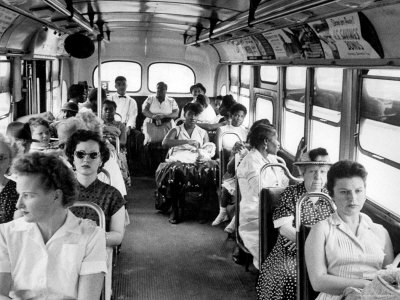
Photo of segregated city bus in the 1950s found at aapf.org

James Baldwin | The Fire Next Time

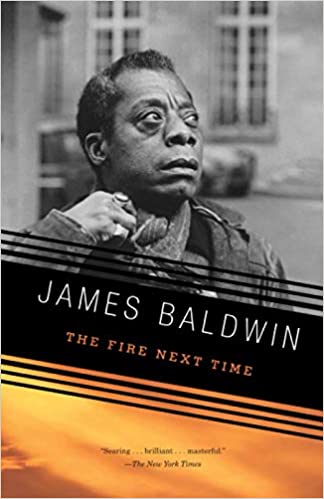
In the mid-1960s I first read James Baldwin’s The Fire Next Time, a collection of two published pieces. Each deals with how to survive as a black person in the USA. The first is a painfully realistic letter to James Baldwin’s nephew. The second describes Baldwin’s own struggle as a black Christian, beginning at age 14.

Now, at the end of 2020, I’m reading Baldwin’s small book again. Sadly, most white citizens of the USA still haven’t figured out how to do the right thing by our black citizens.

Instead, we’ve formed factions for which we ‘need’ an enemy (who isn’t necessarily our enemy). Something or someone to squabble about. A diversion from painful realities. Sadly it seems to offer a way of winning, even though we’re all losing.

Remember divide and conquer? As children, we played it all the time.

Sadly, people in power love to see us fighting each other instead of fighting against an unjust system in which some human beings continue to pay an unjust price. Given our history, it seems white citizens would rather fight each other than deal with injustice to people of color.

Early in his second essay, Down at the Cross, James Baldwin describes our perennial problem. I’ve highlighted the line that caught my attention.

There appears to be a vast amount of confusion on this point, but I do not know many Negroes who are eager to be “accepted” by white people, still less to be loved by them; they, the blacks, simply don’t wish to be beaten over the head by the whites every instant of our brief passage on this planet. White people in this country will have quite enough to do in learning how to accept and love themselves and each other, and when they have achieved this—which will not be tomorrow and may very well be never—the Negro problem will no longer exist, for it will no longer be needed.

The Fire Next Time, pp 21-22;
First published by The Dial Press, NY, 1963
Vintage International Edition first published 1993

If this is the biggest question we white citizens face, it doesn’t matter which way we voted. What matters is whether we can learn to “accept and love ourselves and each other.”

We don’t need our perennial “Negro problem” in order to feel good about ourselves. Why not? Because this never was a “Negro problem.” It’s been a White problem from the very beginning.

Highly recommended, even if you read it way back when.
Elouise

© Elouise Renich Fraser, 3 December 2020
Book cover image found at amazon.com

The Cross and the Lynching Tree

breathless morning sky
fiery orange shades of red
light pierces darkness

Often we live and die in self-imposed darkness. Not the dark of night, but the darkness of our understanding, our motives and our ignorance.

For several weeks I’ve been reading James Cones’ latest book, The Cross and the Lynching Tree. It’s a tough read. Cone challenges my white understanding of the role too many Christian churches and politicians have played in the history of lynching.

When I grew up, Jesus’ death was all about appeasing God’s anger for our sin. Dying as an innocent on an ordinary criminal’s cross was payment for our sin. Yes, we deserve to die, but Jesus died for all of us, so that God’s anger toward us wouldn’t be our undoing.

If, however, Jesus’ death was a lynching, what does that mean for Christianity in the USA?

According to our history of lynching, white Christians have managed to do to black women, men, children and unborn babies what Roman and Jewish leaders did to Jesus of Nazareth. Yes, it was death on a Roman cross/tree. Yes, it was death on a White cross/tree.

Now, in our supposedly more enlightened age, we think we’re beyond lynching. After all, Jim Crow style lynching is illegal.

Is it? Really? Look around. We’ve developed neat, more anonymous ways of doing the deed. Out of sight and out of mind, except for the occasional uproar over what’s been happening for decades.

White fear and a deeply ingrained false sense of superiority lie at the heart of our White problem. It isn’t about God’s anger at sin, so-called “Christian” values, or even our own wellbeing.

Each morning, like clockwork, we’re invited to let light pierce the darkness of our understanding. It doesn’t take much light. Just a candle here and there in a window will do. That, plus time to appreciate the light we’re offered each day, and a trustworthy guide to prick our consciences and challenge our sight.

Thanks for listening.
Elouise

© Elouise Renich Fraser, 23 November 2020
Photo found at unsplash.com

off-pitch and stumbling

off-pitch and stumbling
the first notes of a sweet song
fall on hungry ears

I spotted him just as we were finishing a quiet walk through the cottage garden display at Longwood Gardens. The young gray catbird was making an enormous amount of noise. Some on key, some petering out and falling to the ground.

From my perspective, he was practicing to become a concert catbird, struggling with new melodies and his still brand new voice.

I have a weakness for catbirds. They don’t have flashy feathers; instead, they have some of the most beautiful songs I’ve ever heard. Happily, they like our yard. Sometimes we get an extra treat: they seem to be competing with each other for the best voice of the day!

Shifting gears, here we are on the ground with a new Presidential situation. We face monumental problems for which we need monumental solutions. As a writer, I want to find a different, somewhat new voice. Not to parrot what I hear from the White House or from disgruntled or elated citizens, but to keep naming truth about myself and our situation, as I see it.

When I first started blogging, I wasn’t prepared for this kind of writing. The kind where I get to put the words out there, but have only small clues about how my audience is responding—or not. So I’m going to stay with what works for me—focusing on myself, and making connections with what’s happening in my back yard—literally and figuratively.

I don’t have what that young catbird has. I do, however, have a voice that needs exercising. I look forward to the coming months, though with trepidation.

Elouise

© Elouise Renich Fraser, 14 November 2020
Photo taken by DAFraser at Longwood Gardens, May 2012

Absence

absence eats slowly
into edges of presence
morning rises late

It isn’t just the season. It’s my life slowly diminishing one day after another.

The 2020 Election has opened a door for substantial change. I want to be part of the geriatric action. I wonder how many others raised in my generation (1940s and 50s) feel this as well. Here we are, often carrying painful bodily and emotional damage. What will this Election mean for us?

I’ve been thinking hard lately about my schedule, and how to manage daily routines without cutting into writing time. I’m not there yet, but I’m seeing a little light. Which is all I need right now. A little light of day and a little light of hope for our future as a nation.

Praying for small and large gifts of kindness, gratitude and hope to rise like the sun, against all odds.

Elouise

© Elouise Renich Fraser, 10 November 2020
Photo of November sunrise in Ashland, Oregon found at outdoorexposurephoto.com

What I’m thinking about | 2020 Election

How are you doing today?

I’ve been better. This week is still a roller coaster, though I’ve kept busy with other things than the election. Here’s what I’m thinking about today. (No, the photo above is not a mistake! Read on.)

First, the drama playing out right now is sobering. Am I paying attention? Or am I caught up in the number of votes tallied so far. No matter who is named the next POTUS, this election is as much about us as it is about the candidates. What will that mean for our efforts post-election?

Second, I can’t remember another election in which citizens had to wait in long lines for so many hours to cast their votes. Why weren’t their regular voting places made available? Voter suppression is real. It’s about who’s in power, where you live, the color of your skin, the size of your income and more. All those long lines weren’t just unfortunate realities. Will we ever correct this?

Third, Trump has shown and will keep showing his true colors. Unfortunately, so have many churches that seem wed to Mr. Trump no matter what he does. The slow roll-out of votes and tallies has opened a window to realities I’d rather not hear or see. One of them is the church. What is the church these days? When is a ‘church’ not a church, but a political player with a political agenda?

On Monday of this week I had a routine appointment with my cardiologist. As it happened, he and his associates had just moved out of a wonderful suite of offices in a large hospital. They’re now near the hospital, in what was the chapel for the seminary I served for 28 years. (See above.)

Walking into the front doors was a shock. The beautiful, graceful chapel now had a set of small offices dropped into it. I could see parts of the soaring ceiling, and the top third of the soaring windows that graced each side of the chapel. I couldn’t help tearing up. Nothing was the same.

That night I woke up at about 2am and had a good cry for what was and will never again be. Today, my hope for this election is that we’ll find a way to finally care about who we say we are. One nation under God, with liberty and justice for ALL.

Watching for whatever comes next,
Elouise

© Elouise Renich Fraser, 6 November 2020
Photo found at hippostcard.com

sweet hush of silence

sweet hush of silence
fills the old woman’s ear
lulling her to sleep

I wrote this haiku just before I went to bed last night. Not because it’s fun (though it is!), but because the process requires focus on the present moment. Letting go of everything. Beginning to ‘see’ what’s staring me in the face. A gift, waiting for me to acknowledge its presence and then capture the moment on paper.

On 1 December 2017 I wrote my first haiku. It’s in my first haiku mini-notebook with about 100 others. Here’s what I wrote that day.

silence descends
over dismal swamp —
a child weeps

Though I haven’t written one a day for many months, I’m drawn to them during our current upheavals: Covid-19, Black Lives Matter, Climate Change, Loss of Protected Habitat, Building the “Wall” and Divide and Conquer moves having babies.

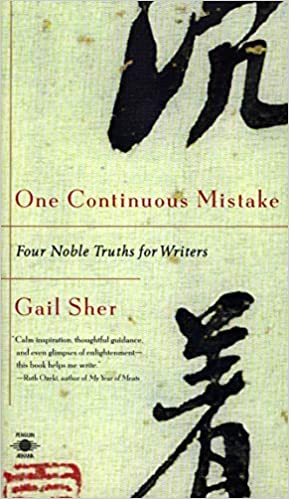
Gail Sher wrote one of the most helpful books I’ve read about writing. It’s called One Continuous Mistake. Actually, the title is about life and writing. Without mistakes, how will we learn? How will we discover and accept our humanity?

Haiku opens up insights and connections I wouldn’t otherwise notice. I’m not an expert. Still, I’m fascinated by the way writing haiku helps me see deeply into what’s in front of me, especially in nature and in human nature.

These days, writing haiku beats the TV screen, ubiquitous radio news feeds, and photos used to create shock, if not awe. It also reminds me that this is not my final home. I’m coming to feel more comfortable about being a wayfaring stranger passing through this life. Haiku helps me look for more than meets my eye.

Hanging in there with all of you. I can’t wait until this election is over, if not done with. Then the real work can begin, no matter who becomes the next POTUS.

Elouise

© Elouise Renich Fraser, 1 November 2020
Book cover image found at amazon.com

How do we vote for this earth?

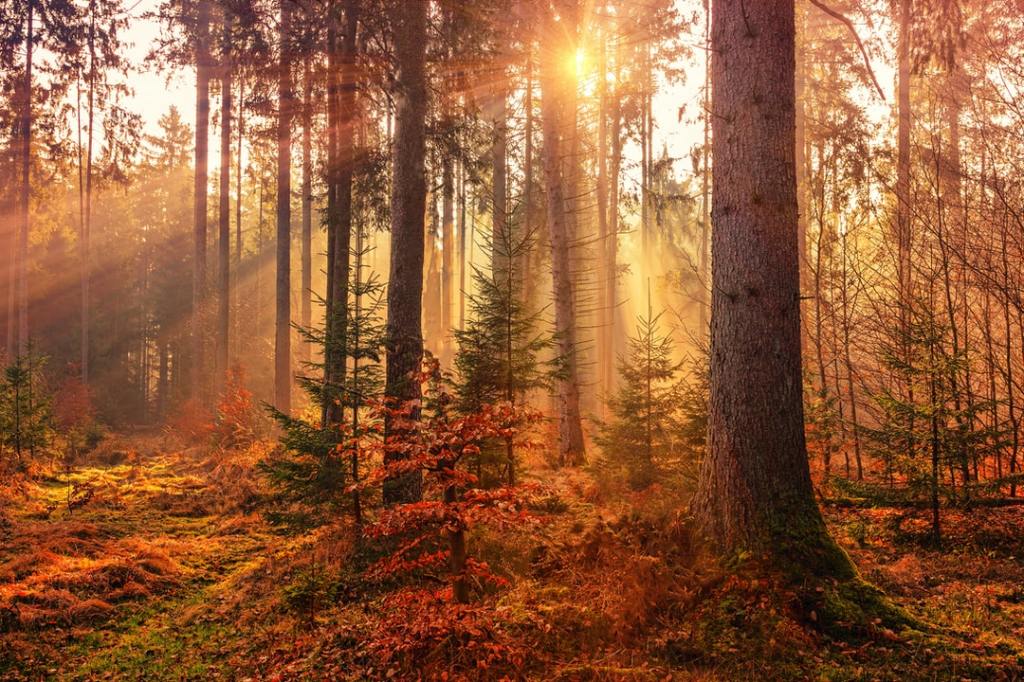
This gorgeous photo is a tiny reminder of how much our climate is changing. Whether you’re a climate change believer or not, one thing is clear. Fire with a mind and life of its own is taking us down.

I’m not a climate scientist. I’ve been on this earth for nearly 77 years. Yet I’ve never seen so many apocalyptic-like fires ravaging the West Coast and middle states. To say nothing of drought, flooding, and the invasion of insects and pesticides that suck the life out of trees, crops and human beings.

This election isn’t just about who our leaders will be. It’s about this earth, and what we’re leaving to children and young adults.

We’re not Adam and Eve. We are, however, the current keepers of this earth, whether we like it or not. The next generations are already reaping the whirlwind we’ve unleashed on this planet. Do we know how to vote for this earth?

This topic wasn’t on my mind when I got up this morning. But being faced with Word Press’s latest surprise (no more automatic classic editor), I decided to face the music and see what I could do. I like simple. I like uncomplicated. Neither of those seems true of the Grand New WP Plan for my writing life!

Hoping your day is chugging along without unexpected reminders of how old and retro you are! Actually, I remember when retro was cool….

Elouise♥

© Elouise Renich Fraser, 27 October 2020
Image found at unsplash.com


What it looks like to be brave

This is my first attempt to clarify what it looks like for me to be brave today.

Being brave means

  • Not second-guessing myself or my language.
  • Not wondering whether people will like or believe what I say or write.

Given my age and health, bravery is chiefly about spoken and written speech.

  • How willing am I to be blunt, no matter who is listening/reading?
  • How willing am I to become a learner, not just by reading books, but by listening to what others say about me as a white citizen of the USA?

Signs I’m being brave:

  • Giving up more rules for good white girls and women, enforced directly and indirectly since the day I was born
  • Engaging in conversation or not, as I choose
  • Taking care of myself physically, emotionally and spiritually
  • Speaking my mind and engaging in conversations that matter
  • Feeling both clear and out of control

Being brave isn’t measured by

  • What my father would say or think
  • What my church friends, pastor, or former colleagues and students would say or think
  • What my readers think about what I write

So what’s at stake?

  • It isn’t whether we can get along.
  • It’s whether white citizens of the USA are willing to look into our long history of racism without making excuses or trying to explain things away.
  • It’s also whether churches and religious institutions will take racism seriously, no matter whether they supported it directly or indirectly.

It’s also about

  • What I do or write in response to what I’m learning and seeing daily.
  • Being clear about what I need to hear about from the pulpit regarding racism.

In the final analysis, the goal isn’t to change other people. It’s to change me.

Thanks for visiting, reading, and commenting if you’d like!
Elouise

© Elouise Renich Fraser, 20 October 2020
Quotation found at pinterest.com